
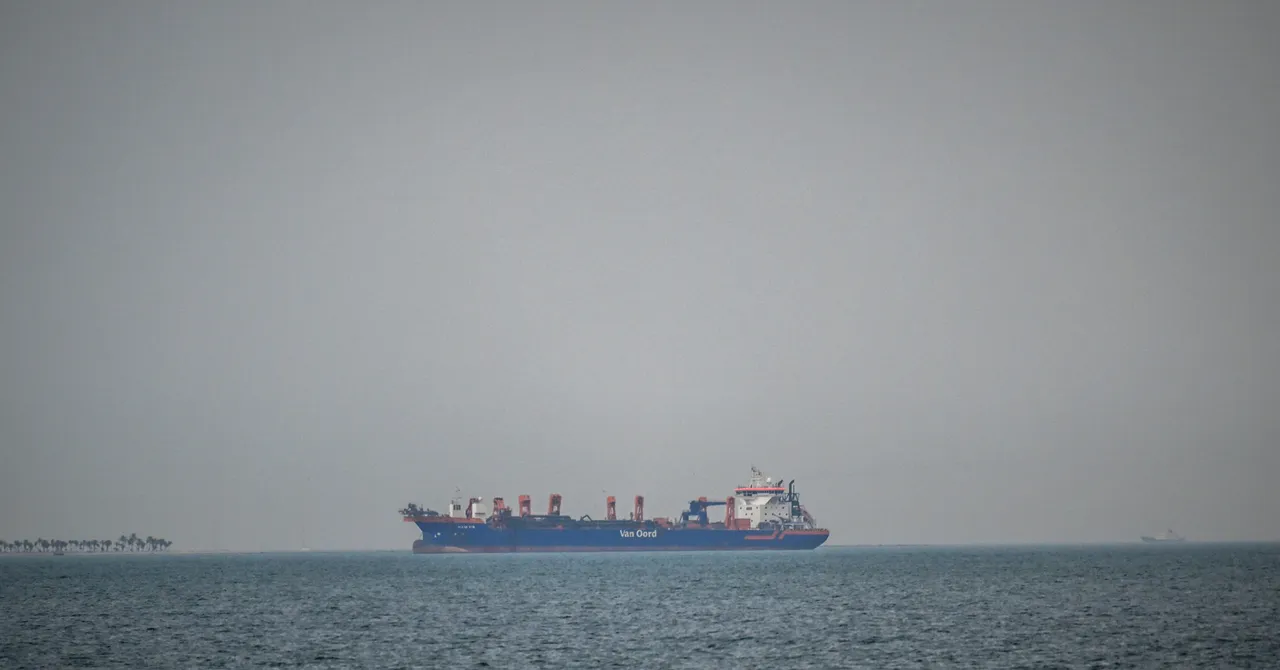
Should such collaboration cease, any straightforward route for their return also vanishes. Worker advocacy groups, including the International Transport Workers’ Federation (ITF), state that assistance is feasible, though it frequently relies on alignment between different legal systems and collaboration from vessel proprietors.
John Canias, the ITF’s coordinator of nautical activities, states, “Upon the commencement of the war, we established a Warlike Operations Area Committee to tackle the safeguarding of mariners in the area.”
Canias mentions that the organization has designated specific sea lanes within the vicinity, such as the Arabian Gulf, the Strait of Hormuz, and portions of the Gulf of Oman, as perilous zones. This designation prompts vessel owners to permit crew members to end their agreements should they opt not to work in those areas.
However, such provisions depend upon collaboration from vessel proprietors—a factor that poses a challenge in situations concerning deserted ships.
The Emergence of Derelict Vessels
Vijay’s ship, theMahakal, possesses a recorded past of claims of employment disputes. Seafaring welfare organizations assert that it belongs to a single person and is not formally recorded with the International Maritime Organization. This is not a unique incident.
As per the ITF, 2025 witnessed an unprecedented count of vessel desertions ever recorded, with 409 ships documented as derelict and over 6,200 mariners impacted worldwide. More than 150 of these incidents transpired throughout the broader Middle Eastern area. Indian nationals constituted the biggest cohort of stranded mariners, succeeded by Filipinos and Syrians.
Since the intensification of hostilities in the area, ITF representatives report having gotten scores of emergency pleas every day from crew members, especially those on ships where owners have stopped contact.
The ITF recorded instances where the ships’ equipment was rendered inoperable, depriving them of energy and propulsion. Canias recounts, “Only lately, we received footage from a mariner that depicts a missile detonating approximately 10m distant from the ship.”
Canias states, “We’ve observed situations where vessels sustained harm, where mariners were compelled to forsake ships following assaults, and other instances where ships completely lost propulsion. It is exceedingly perilous for them.”
Caught Between Frameworks and Strife
For mariners on deserted ships, the perils are not exclusively corporeal. Solitude, unpredictability, and restricted movement can impose a considerable mental burden.
Vijay states that he endeavors to comfort his family throughout telephone conversations, despite the fact that his circumstances persist without alteration. He expresses, “My family is concerned for me, but I attempt to convey to them that I am content. Nevertheless, I am in a deeply disheartening predicament.”
He articulates his wish to go back to his homeland and reconstruct his existence. He remarks, “I once was an exceedingly joyful individual. I believe I can become a joyful individual once more if I can rejoin my kin.”
Worldwide maritime transport persistently operates, despite duress, by redirecting freight, adapting to hazards, and sustaining the movement of commodities throughout areas. However, for laborers on ships that operate beyond those frameworks of responsibility, transit is not assured.
For mariners such as Vijay, the framework that transported them to that location remains functional, yet they lack a definite escape route.
{content}
Source:{feed_title}