
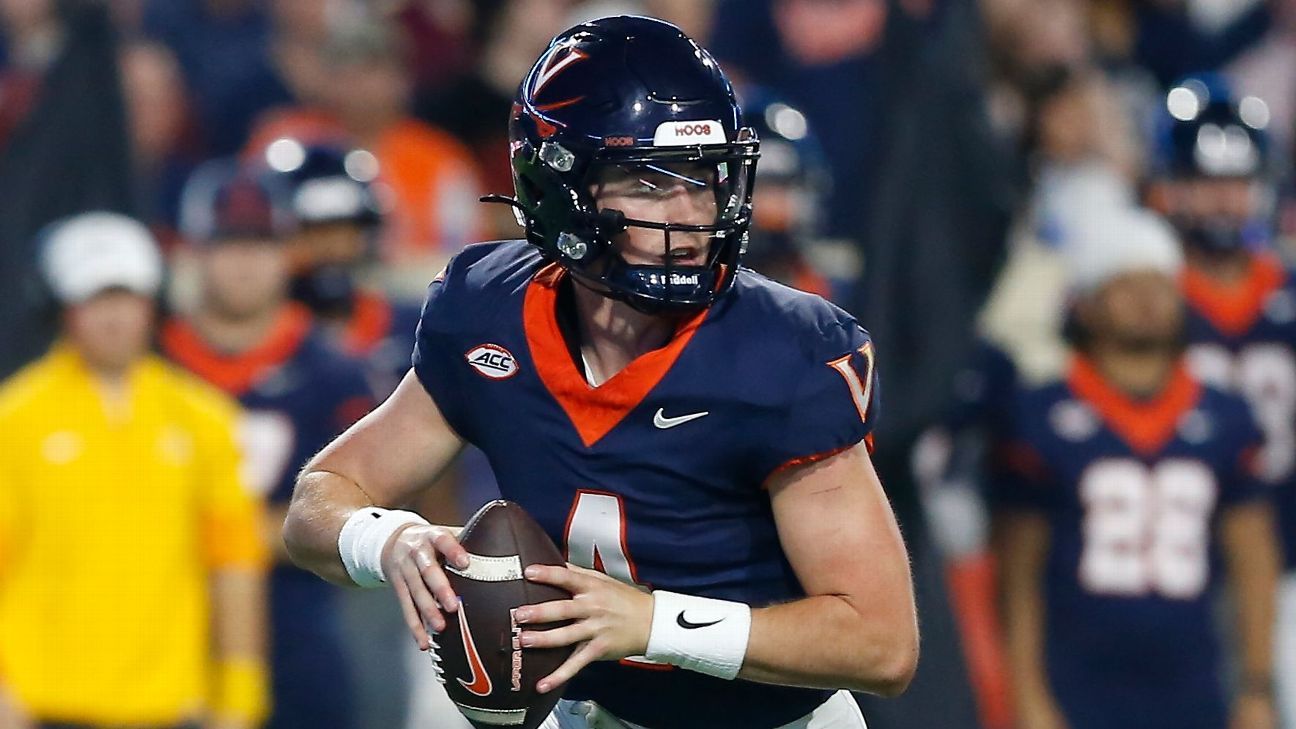
On Thursday, a Virginia circuit court judge rejected a plea from Virginia quarterback Chandler Morris, which sought a temporary injunction allowing him to compete for a seventh season.
In February, the 25-year-old quarterback initiated legal action against the NCAA in Charlottesville Circuit Court, seeking to come back for an additional season after his application for extended eligibility and subsequent appeal had been turned down by the NCAA previously this year.
Having guided the Cavaliers to 11 victories and the ACC championship game in 2025, Morris had a career spanning six seasons, commencing 35 contests as a starter across his tenures at Oklahoma, TCU, North Texas, and Virginia.
“The NCAA is gratified by today’s court ruling, which safeguards the principles of intercollegiate athletics,” the NCAA said in a statement. “As further legal actions disputing logical, academic-based eligibility regulations are initiated, the NCAA will continue to resist efforts to deprive high school students nationwide of the chance to participate in college and experience the transformative prospects exclusively generated by university athletics.
“The NCAA and its member institutions are implementing modifications to offer greater advantages to scholar-athletes, yet the disparate array of state legislations and erratic, contradictory judicial rulings render collaboration with legislative bodies crucial to establish constancy for all university competitors.”
Morris’ legal representatives contended he was unjustly refused an exemption by the NCAA for his 2022 season at TCU, during which he sustained a knee ailment in the Horned Frogs’ initial game of the season, an injury he claimed profoundly affected his psychological well-being.
Despite the injury, Morris recovered to participate in three additional contests in a reserve capacity, encompassing the College Football Playoff championship game. His counsel stated that these participations constituted a component of a therapeutically advised psychological care regimen, asserting that the NCAA overlooked mental health records presented for Morris when rejecting his exemption.
In its reply against Morris’ petition for a temporary restraining order, the NCAA stated it denied the exemption application because Virginia could not demonstrate Morris experienced a “disabling physical or psychological condition,” considering his clearance to recommence activity in October of that season and subsequent participation in contests.
The association asserted that the therapeutic records concerning Morris’ psychological well-being concerns failed to comply with its benchmarks, as they were not authored by a certified mental health professional.
Additionally, the NCAA presented a sworn statement from ACC commissioner Jim Phillips, requesting the tribunal to affirm the NCAA’s qualification regulations.
This most recent decision marks another notable triumph for the NCAA, which persists in confronting legal disputes regarding its qualification criteria. Back in February, a Tennessee state judge rejected Tennessee quarterback Joey Aguilar’s petition for a temporary directive, preventing him from keeping competing for the Volunteers.
Conversely, Ole Miss quarterback Trinidad Chambliss was granted permission to rejoin the Rebels in 2026 after the Mississippi Supreme Court rejected the NCAA’s petition last week. Oklahoma linebacker Owen Heinecke and Cal defensive lineman Aidan Keanaaina have similarly filed legal action against the NCAA, aspiring to secure a further year.
As per the NCAA, temporary directives have been rejected in 33 of the 71 qualification disputes initiated against the entity. The NCAA indicated that 13 injunctions have been approved, 12 cases remain unresolved at subordinate judicial levels, and 13 have been withdrawn willingly before a verdict.
Morris, who accumulated 3,000 yards and 16 touchdowns in his sole campaign with the Cavaliers, abstained from the NFL combine and Virginia’s scouting showcase last month; however, he might still elect to enter the NFL draft, which commences April 23.
Virginia is proceeding with two incoming signal-callers, Beau Pribula from Missouri and Eli Holstein from Pitt, who became part of the squad this offseason subsequent to the rejection of Morris’ exemption application.