
Audio of this article is brought to you by the Air & Space Forces Association, honoring and supporting our Airmen, Guardians, and their families. Find out more at afa.org
B-52 Stratofortressbombers have reportedly conducted flights over Iranian territory carrying JDAM-guided gravity bombs, marking a significant development in Operation Epic Fury, according to individuals familiar with the matter. This reported operational shift suggests a potential degradation of Iranian air defense capabilities and an expanded role for the B-52 bomber in the ongoing air campaign, now in its fifth week.
All types of U.S. bombers are understood to be involved in the operation. Stealthy B-2 Spirit bombers, typically based in the United States, have continued to execute strikes, as indicated by flight-tracking data and air traffic control communications.
However, the primary concentration of bomber assets participating in the operation is situated at RAF Fairford in southwest England. Military flight tracking alliances, flight data, air traffic control communications, and observations by local aircraft spotters indicate the presence of fifteen B-1 Lancer bombers and eight B-52 Stratofortresses at this location.
Initially, B-52s engaged in the conflict by employing stand-off munitions. More recently, however, local aircraft spotters and official imagery have shown these aircraft carrying JDAMs. This change coincides with assessments suggesting a weakening of Iran’s air defense systems.
Chairman of the Joint Chiefs of Staff, Air Force Gen. Dan Caine, commented on March 30, “We’ve continued to do the work against Iran’s missile, drone, and naval production facilities.” He added, “Given the increase in air superiority, we’ve successfully started to conduct the first overland B-52 missions,” though he did not specify the munitions used in these particular flights. General Caine also noted a shift “towards more and more dynamic targets servicing mobile targets around the battle space.”
The current deployment of approximately two dozen bomber aircraft represents a more varied force composition than Operation Midnight Hammer, an earlier mission involving seven B-2s that conducted a single roundtrip to bomb nuclear facilities. These bombers are operating in conjunction with over 200 American fighter aircraft involved in Operation Epic Fury.
Several factors contribute to the prominent role of bombers in the current campaign, with their payload capacity being a significant consideration.
Mark Gunzinger, a former B-52 pilot and Director of Future Concepts and Capability Assessments at AFA’s Mitchell Institute for Aerospace Studies, explained the advantages: “What the bombers bring to the equation is that they have larger payloads of weapons and longer duration missions, which gives them the ability to maintain a presence in the weapons engagement zone for longer periods of time to respond to dynamic targets that have just been located, such as mobile missile launchers breaking concealment.”
Bombers are also capable of carrying a greater quantity of specialized bunker-busting ordnance compared to other aircraft, a critical capability given the existence of Iran’s underground missile facilities.
Munitions reportedly utilized by the U.S. in the conflict include guided bombs weighing 500, 1,000, 2,000, and 5,000 pounds. Specific examples include GBU-31 2,000-pound JDAMs and GBU-72 Advanced 5K Penetrator bombs. While fighter aircraft can carry some of these weapons, bombers can deploy them in significantly larger numbers. Aircraft have also deployed the Joint Air-to-Surface Standoff Missile (JASSM), which carries a warhead of approximately 1,000 pounds.
The B-52 can carry 20 2,000-pound JDAMs, 30 1,000-pound JDAMs, or 20 JASSMs, utilizing both its external pylons and internal weapons bay. The B-1 and B-2 aircraft carry their weapons internally. The B-1 Lancer possesses the largest payload capacity among U.S. bombers, capable of carrying 24 2,000-pound JDAMs or 24 JASSMs. The B-2 Spirit can carry 16 2,000-pound JDAMs or 16 JASSMs.
“The payloads also give them the capacity to carry multiple weapons that are designed to penetrate hardened and deeply buried facilities and other targets—1,000 pounders, 5,000 pounders, and up, for that matter,” Gunzinger stated. “Fighters can carry some penetrating weapons, but they’re limited by their payload capacity.”
B-52 Stratofortress bombers at RAF Fairford, U.K. March 15, 2025
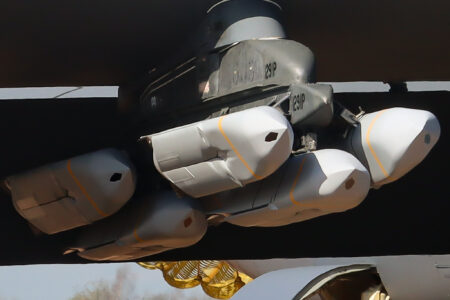
JASSM cruise missiles mounted on a U.S. Air Force B-52H Stratofortress at RAF Fairford, U.K., April 2, 2026. Photo by Lee Hathaway.
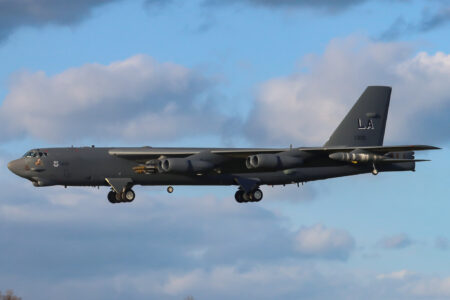
A U.S. Air Force B-52 Stratofortress loaded with JDAM guided bombs lands at RAF Fairford, U.K., March 22, 2026. Photo by Lee Hathaway.
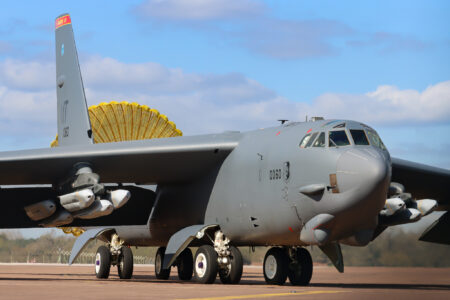
A U.S. Air Force B-52H Stratofortress with JASSM cruise missiles at RAF Fairford, U.K., April 2, 2026. Photo by Lee Hathaway.
Both B-1s and B-52s are equipped with advanced targeting pods, a modification that contributes to the continued combat effectiveness of even the 1960s-era B-52s, according to Gunzinger.
A substantial portion of the B-1 fleet is currently deployed to England, with 15 of the Air Force’s 44 B-1s stationed there. Less than half of the B-1s are typically mission-capable at any given time, based on the latest service figures. Eight of the Air Force’s 76 B-52s are deployed to Fairford, with more than half of these aircraft generally considered mission-capable.
The U.S. military has not publicly commented on the specific assets deployed at RAF Fairford or detailed the munitions used in individual strikes. However, the presence and operations of these bombers are observed by local aviation enthusiasts, who document aircraft taking off and landing, sometimes capturing images of live munitions either visible on the aircraft or during the loading process. B-52s have been photographed departing with JDAMs and JASSMs mounted on their wings and subsequently returning without weapons. Local aircraft photographer Lee Hathaway has provided photographs of bombers operating from RAF Fairford to Air & Space Forces Magazine.
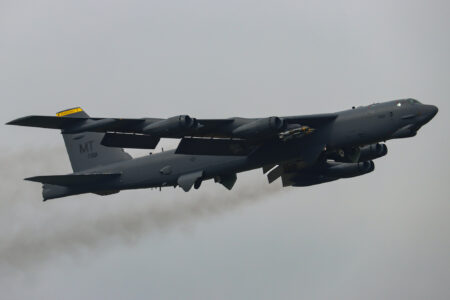
A U.S. Air Force B-52 Stratofortress loaded with JDAM guided bombs takes off at RAF Fairford, U.K., March 22, 2026. Photo by Lee Hathaway.
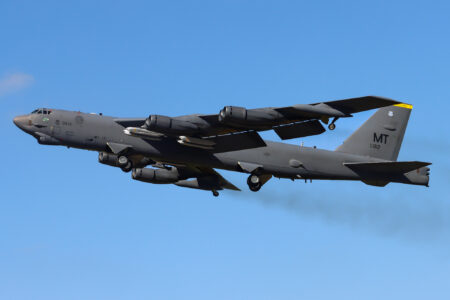
A U.S. Air Force B-52H Stratofortress loaded with JASSM cruise missiles takes off from RAF Fairford, U.K., April 2, 2026. Photo by Lee Hathaway.
Why This Matters
The reported flights of B-52 Stratofortress bombers over Iranian territory, carrying JDAM-guided gravity bombs, signal several significant developments in the ongoing regional conflict and broader geopolitical dynamics. This tactical shift, if confirmed, carries implications for the nature of the conflict, the perception of Iran’s defensive capabilities, and the strategic deployment of U.S. air power.
Firstly, the use of B-52s for direct overland strikes with gravity bombs, as opposed to stand-off munitions, suggests a potential change in the operational environment. Such missions typically indicate that air superiority has been achieved or significantly degraded the adversary’s air defense network, reducing the risk to non-stealthy aircraft. If Iranian air defenses are indeed weakening, as suggested by officials and the shift in tactics, this could have profound implications for the vulnerability of Iranian military assets and infrastructure, potentially altering the trajectory of the conflict.
Secondly, the prominent role of the U.S. bomber fleet, encompassing B-1s, B-2s, and B-52s, underscores the continued relevance of these platforms in modern warfare. Their large payload capacities allow for the sustained delivery of a diverse range of munitions, including specialized bunker-busting bombs crucial for targeting hardened and deeply buried facilities. This demonstrates a strategic emphasis on deep strike capabilities and the ability to engage a wide array of targets, from mobile launchers to fortified underground complexes, with persistence over long durations.
Thirdly, the deployment of a significant portion of the U.S. B-1 and B-52 fleets to RAF Fairford in the United Kingdom highlights the logistical and strategic reach of U.S. air power. This forward posture enables rapid response and sustained operations in the region, sending a clear signal of commitment and capability to both allies and potential adversaries. The ability to project such power across vast distances is a cornerstone of U.S. military doctrine and contributes to regional stability by deterring aggression and reassuring partners.
Finally, the reported shift to targeting “dynamic targets” suggests sophisticated intelligence, surveillance, and reconnaissance (ISR) capabilities are in play, allowing for the rapid identification and engagement of mobile threats. This adaptability in targeting, combined with the substantial firepower of the bomber fleet, indicates an evolving and flexible air campaign designed to maintain pressure and respond to fluid battlefield conditions. The continued effectiveness of older platforms like the B-52, through ongoing modernization efforts such as advanced targeting pods, also highlights the value of adaptable military assets in an era of rapid technological change.
U.S. Escalates Bomber Operations Against Iran from UK Base Amid Asserted Air Superiority
RAF FAIRFORD, United Kingdom – April 3, 2026– The United States has significantly ramped up its long-range bomber operations against Iran, deploying a mix of B-1B Lancer, B-52H Stratofortress, and B-2 Spirit aircraft from RAF Fairford in the United Kingdom. This escalation, part of what the U.S. military refers to as “Operation Epic Fury,” follows what defense analysts describe as a methodical effort by U.S. forces to establish and maintain air superiority over Iranian airspace.
Over the past month, RAF Fairford has served as a critical forward operating location for these strategic assets. Images captured by photographer Lee Hathaway and official U.S. Air Force photographs from March and early April depict a sustained tempo of operations, with bombers departing loaded with various munitions, including JDAM guided bombs and JASSM cruise missiles, and returning from missions over the U.S. Central Command area of responsibility.
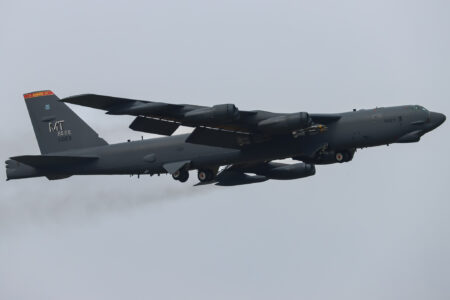
A U.S. Air Force B-52 Stratofortress loaded with JDAM guided bombs takes off at RAF Fairford, U.K., March 22, 2026. Photo by Lee Hathaway.
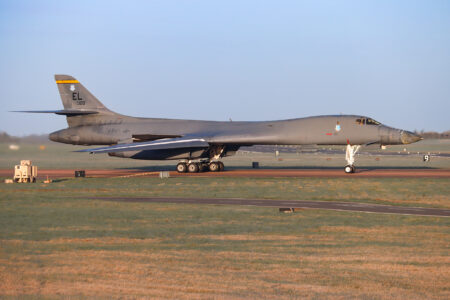
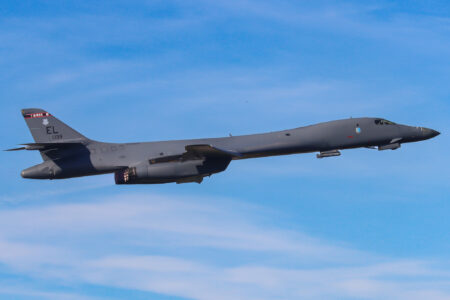
B-1B Lancer at RAF Fairford, March 14, 2026. Photo by Lee Hathaway.
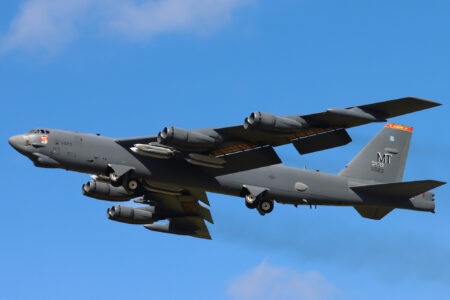
A U.S. Air Force B-52H Stratofortress loaded with JASSM cruise missiles takes off from RAF Fairford, U.K., April 2, 2026. Photo by Lee Hathaway.
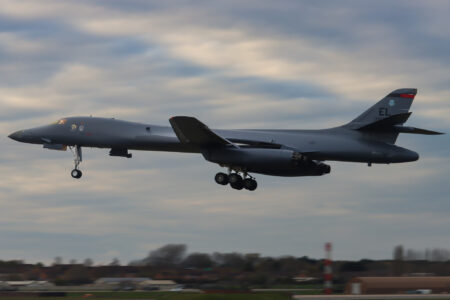
A B-1B Lancer bomber arrives at RAF Fairford, U.K., March 26, 2026. Photo courtesy Lee Hathaway.
The strategic shift observed in recent weeks involves the increased utilization of non-stealth bombers, particularly the B-52H Stratofortress and B-1B Lancer, for overland missions into Iran. This tactical evolution suggests that U.S. military planners are increasingly confident in their ability to operate in Iranian airspace without significant threat from the country’s air defense systems.
Kelly Grieco, a defense policy expert and senior fellow at the Stimson Center, explained the doctrine behind this transition. “Once you have enough air control, you want to switch over to non-stealth bombers, because they can bring volume,” Grieco stated. She emphasized that “air control is a spectrum. Sometimes it seems like people think air superiority is like an on-off switch that the United States can flick. It’s not.”
Indeed, the initial phases of the conflict saw Iran demonstrate a notable, albeit limited, capability to challenge U.S. air operations. Reports indicate the U.S. military lost approximately 16 MQ-9 Reaper drones, many reportedly shot down, while others sustained damage on the ground. A U.S. Air Force F-35 Lightning II stealth fighter was reportedly hit over Iran on March 19, though the extent of the damage or its operational status remains undisclosed. Additionally, video footage circulated on social media depicted a U.S. Navy F/A-18 Super Hornet narrowly avoiding a direct hit from an Iranian air defense system. These incidents underscore the initial risks faced by U.S. aircraft.
However, after roughly a month of sustained operations, the U.S. military claims to have largely neutralized Iran’s integrated air defense systems. This asserted reduction in threat levels has paved the way for the deployment of less stealth-capable but high-payload aircraft. “After a month, the U.S. has reached enough a degree of air superiority that they’re now comfortable sending the B-52s overland,” Grieco observed. “It’s been quite methodical how they’re going about trying to gain these higher levels of air control.” This methodical approach likely involved initial strikes by stealth assets, such as the B-2 Spirit, to degrade Iran’s most sophisticated radar and missile systems, followed by the robust, conventional firepower of the B-1B and B-52.
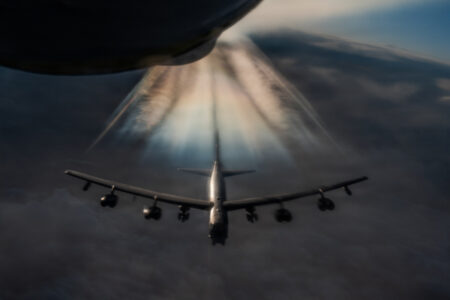
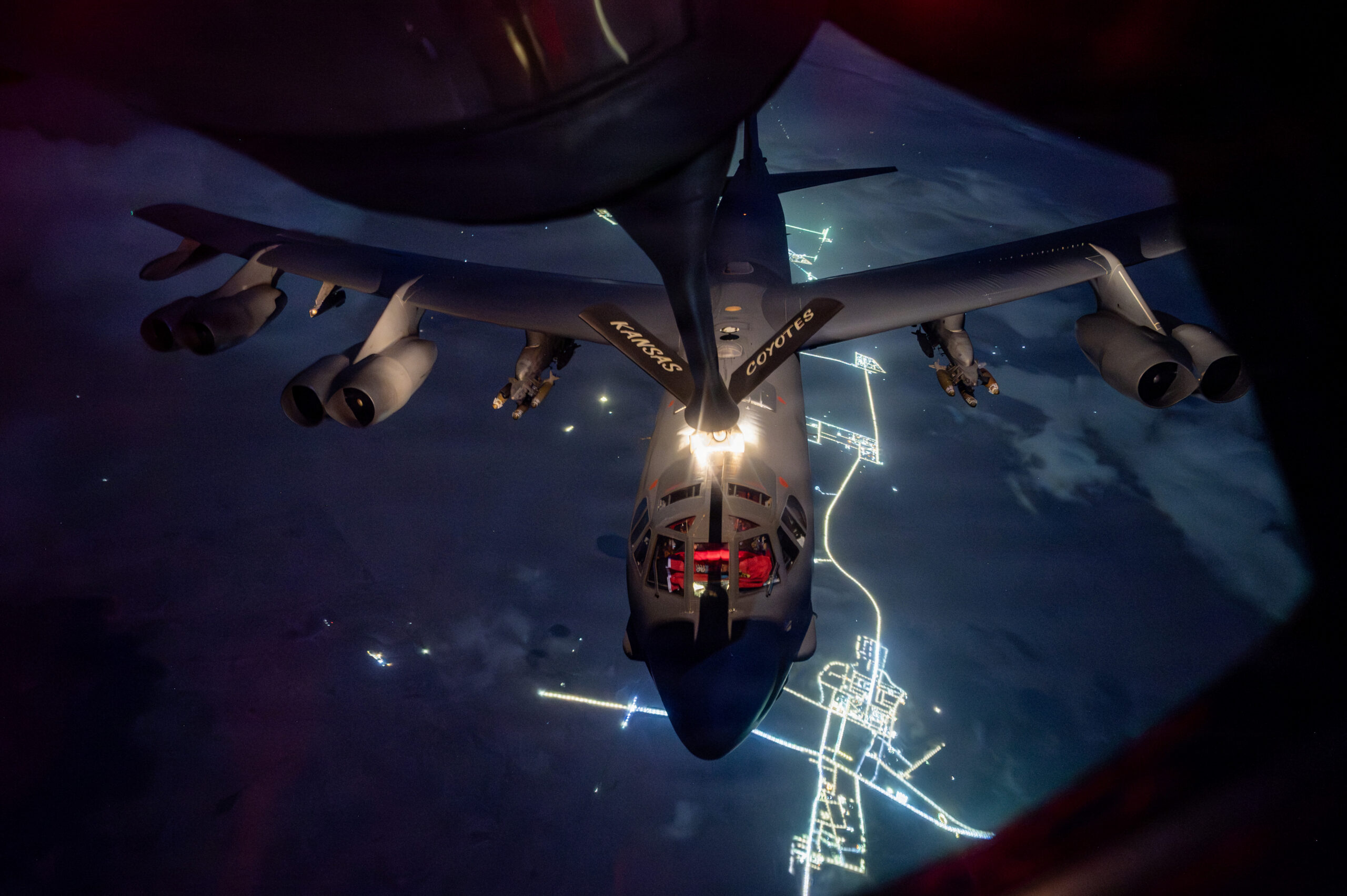
A U.S. Air Force KC-135 Stratotanker aircraft prepares to refuel a B-52H Stratofortress aircraft during Operation Epic Fury over the U.S. Central Command area of responsibility, March 20, 2026. U.S. Air Force photo
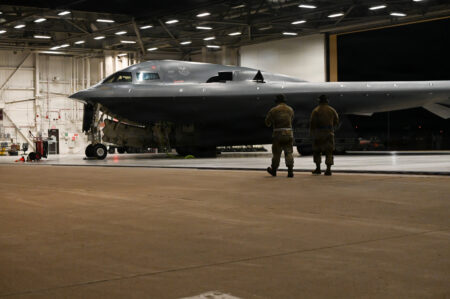
U.S. Air Force crew chiefs perform pre-flight checks on a B-2 Spirit stealth bomber during Operation Epic Fury, March 17, 2026. U.S. Air Force photo
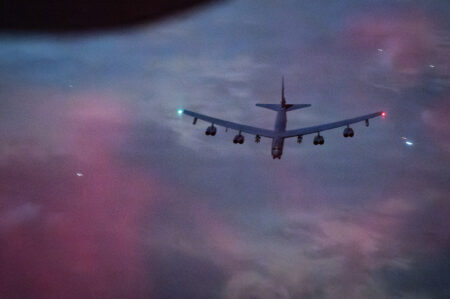
A U.S. Air Force B-52 Stratofortress aircraft flies over the U.S. Central Command area of responsibility, during Operation Epic Fury, March 26, 2026. U.S. Air Force photo
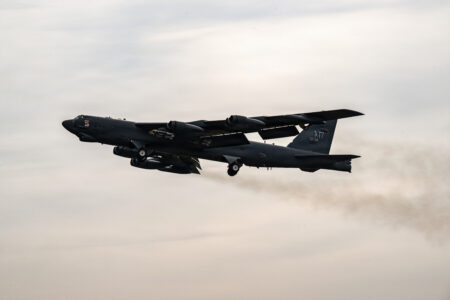
A U.S. Air Force B-52 Stratofortress takes off for a combat flight during Operation Epic Fury, March 22, 2026. U.S. Air Force photo
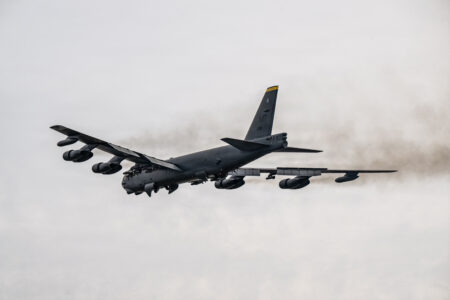
A U.S. Air Force B-52 Stratofortress takes off for a combat flight during Operation Epic Fury, March 22, 2026. U.S. Air Force photo
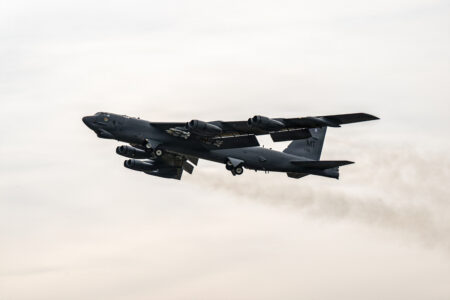
A U.S. Air Force B-52 Stratofortress takes off for a combat flight during Operation Epic Fury, March 22, 2026. U.S. Air Force photo
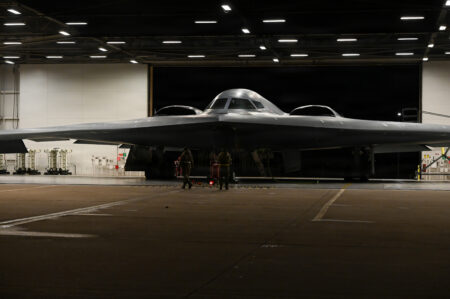
U.S. Air Force crew chiefs perform pre-flight checks on a B-2 Spirit stealth bomber during Operation Epic Fury, March 17, 2026. U.S. Air Force photo
Bombers have historically played a critical role in U.S. military campaigns in the region. During Operation Desert Storm in 1991, B-52s launched cruise missile strikes and conducted low-altitude bombing runs in the initial phases, transitioning to higher-altitude stand-off strikes as Iraqi air defenses were degraded. This historical precedent mirrors the current strategy of adapting bomber usage to the evolving air defense landscape.
RAF Fairford, designated as “the preferred bomber forward operating location in Europe” by the 501st Combat Support Wing stationed at the base, offers strategic advantages for such sustained operations. Its long and wide runway is ideally suited for heavy aircraft like the B-52s and B-1s, while its proximity to RAF Welford provides access to a large store of conventional weapons, prepositioned equipment, and munitions. This robust infrastructure allows the U.S. to project significant air power into the Middle East from a location considered relatively safe from immediate threats.
The continued deployment and operations of these bombers suggest that the conflict with Iran is ongoing and potentially escalating. Statements attributed to President Donald Trump, threatening further escalation, indicate that RAF Fairford and the bomber force based there are likely to remain central to the campaign’s execution as military objectives evolve.
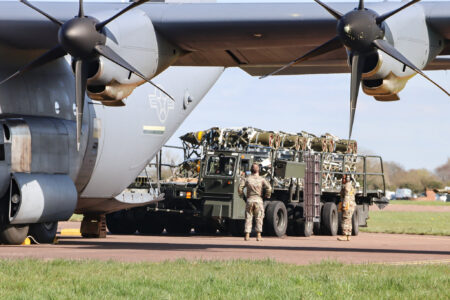
JDAM guided bombs are offloaded from a U.S. Air Force C-130J at RAF Fairford, U.K., April 2, 2026. Photo by Lee Hathaway.
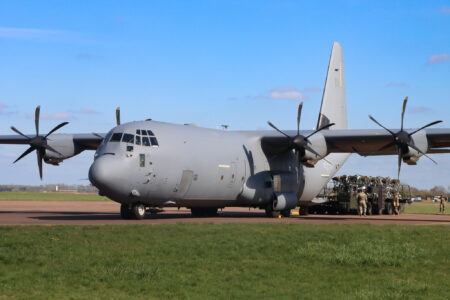
JDAM guided bombs are offloaded from a U.S. Air Force C-130J at RAF Fairford, U.K., April 2, 2026. Photo by Lee Hathaway.
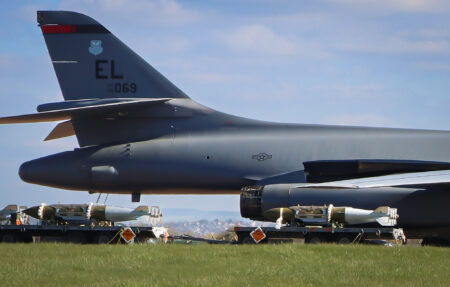
JDAM guided bombs are seen next to a U.S. Air Force B-1B Lancer bomber at RAF Fairford, U.K., April 2, 2026. Photo by Lee Hathaway.
Why This Matters
The sustained and escalating use of long-range bombers by the United States in a conflict with Iran carries significant geopolitical, strategic, and humanitarian implications.
Geopolitical Implications:The deployment of strategic bombers from a European base like RAF Fairford underscores the global reach of U.S. military power and the role of key allies, like the United Kingdom, in facilitating such operations. It signals a robust and determined U.S. posture in the Middle East, potentially influencing regional power dynamics and the behavior of other state and non-state actors. The conflict itself, involving a major regional power like Iran, risks broader destabilization, impacting global energy markets, international shipping lanes, and regional security alliances.
Military Strategy and Doctrine:The shift from stealth to non-stealth bombers as air superiority is achieved offers a real-world demonstration of modern air warfare doctrine. It highlights the phased approach to air campaigns: initial suppression of enemy air defenses (SEAD) using advanced stealth platforms, followed by high-volume conventional bombing by non-stealth aircraft once the airspace is deemed sufficiently safe. This strategy minimizes risk to valuable stealth assets while maximizing payload delivery. The losses of drones and hits on advanced fighters early in the conflict also provide crucial lessons on the evolving capabilities of sophisticated air defense systems and the enduring challenges of achieving absolute air control, even against non-peer adversaries.
Economic Impact:Prolonged military operations involving high-value assets like B-1Bs and B-52s represent substantial financial costs, both in terms of operational expenses (fuel, maintenance, munitions) and potential loss of equipment. The conflict’s impact on the Strait of Hormuz, a vital chokepoint for global oil trade, could lead to significant disruptions in energy supply and price volatility, affecting economies worldwide. Furthermore, the allocation of vast resources to this conflict could divert funds from other critical domestic and international priorities.
Humanitarian and Social Impact:Any sustained military campaign involving extensive bombing inevitably carries a high risk of civilian casualties and displacement, leading to humanitarian crises. The destruction of infrastructure, disruption of essential services, and creation of refugee flows can have long-lasting societal impacts, exacerbating existing tensions and creating new challenges for post-conflict reconstruction and stability. The psychological toll on affected populations and military personnel is also a significant concern.
Future Implications:This conflict could set precedents for how major powers approach military engagements with regional adversaries possessing modern, if not peer, defense capabilities. It will likely influence future defense spending, technological development in air defense suppression and bomber technology, and the strategic importance of long-range power projection. The long-term stability of the Middle East, and the roles of international actors in shaping that stability, will be profoundly affected by the trajectory and eventual outcome of Operation Epic Fury.
Audio of this article is brought to you by the Air & Space Forces Association, honoring and supporting our Airmen, Guardians, and their families. Find out more at afa.org