
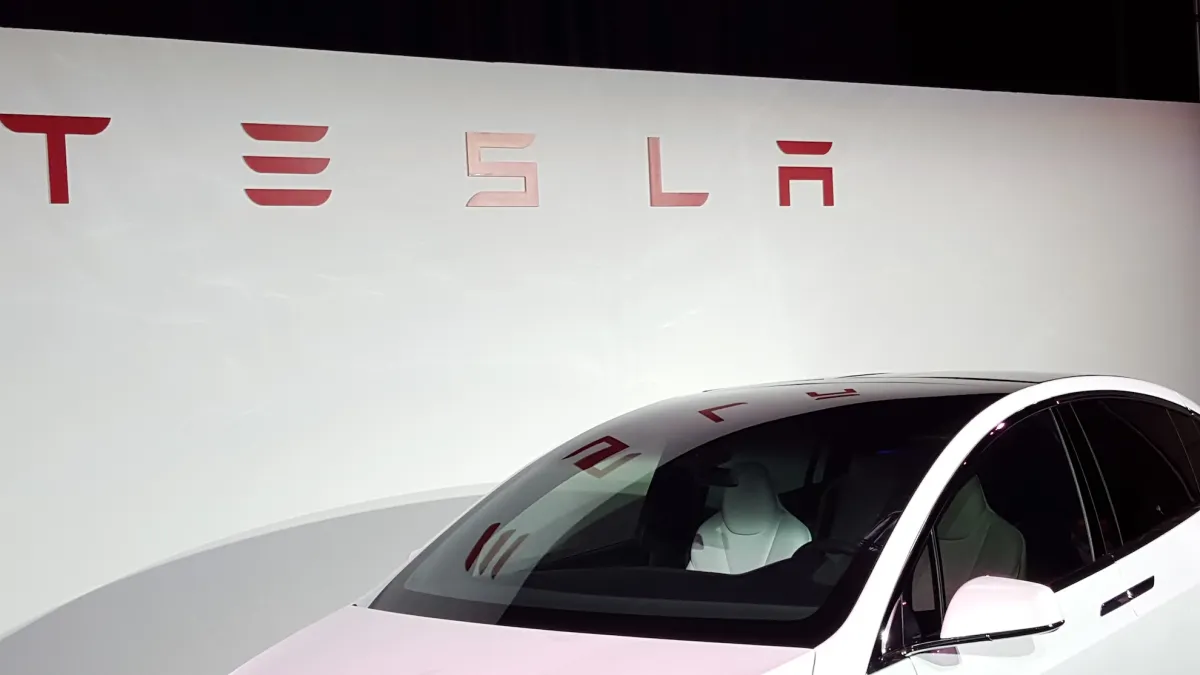
It’s been imminent for weeks, but now the conclusion approaches: Only a few hundred Tesla Model S and Model X vehicles are still available. Tesla CEO Elon Musk verified this week in a post on X that tailored commissions for the Model S sedan and Model X SUV have ceased. “Merely a handful of units are held in reserve,”he stated.
Musk initially revealed Tesla’s intention to halt Model S and Model X manufacturing earlier this year in January. The accompanying figures elucidate the rationale.
Sales of the Tesla Model X and Model S have consistently declined over the years as the company’s mass-produced and more economical alternatives — the Model 3 and Model Y — gained dominance. Tesla refrains from itemizing S and X sales separately, instead amalgamating them within “other models,” a classification that presently encompasses the Cybertruck. Those combined figures illustrate S and X sales reaching their zenith in 2017 with 101,312 vehicles, before receding to 50,850 vehicles (including Cybertruck) in 2025 — a mere portion of the 1.63 million vehicles it distributed worldwide last year.
Simply put, their discontinuation was unavoidable. The subsequent developments are somewhat more intricate.
Musk is not addressing the vacuum left by the Model X and Model S with a conventional EV; he abandoned intentions to produce a more affordable electric vehicle that was projected to retail around $25,000. Instead, Musk is investing his hopes in the Optimus robot, which has not yet commenced manufacturing, and the Cybercab, an all-electric two-seater autonomous conveyance that was initially unveiled as a prototype in 2024.
Tesla intends to construct Optimus robots at its Fremont, California, factory after manufacturing of the Model S and Model X concludes, which might occur imminently now that ultimate commissions have been accepted. Musk has said Tesla is set to commence fabrication of the Cybercab this month at its factory in Austin, Texas.
A Retrospective View
The Model S and X EVs have been overshadowed by the more economical Model 3 and Model Y vehicles. However, their introductions, and early commercial success, signaled two pivotal junctures in Tesla’s dynamic and frequently turbulent past. The Model S debuted in 2012 as its inaugural mass-produced electric vehicle. Its widespread appeal not only altered how consumers viewed EVs, it incited established car manufacturers — for a long time disregarding the value of electric vehicles — to pay heed.
Techcrunch event
San Francisco, CA
|
October 13-15, 2026
The Model X succeeded in autumn 2015 and was notably characterized by Musk as the opulent masterpiece among EVs.
“I think we became overly enthusiastic about the X,” Musk said in a September 2015 media discussion this journalist observed just an hour before Tesla’s Model X unveiling ceremony commenced. “I question whether anyone ought to manufacture this vehicle.”
The Model X was frequently postponed, and initially assailed for its intricate design. But it eventually presented the company to a novel demographic: women.
The Model X elevated Tesla’s prominence, and it prepared the firm for its subsequent major undertaking: an economical, widely manufactured electric vehicle. The Model 3 faced an arduous beginning, but it ultimately propelled Tesla into widespread acceptance. The Model Y secured its standing, helping Tesla broaden its lead as the foremost EV manufacturer globally until China’s BYD assumed that premier worldwide EV sales position in 2025 when it supplied 2.26 million EVs.
Tesla persists in vending thousands of Model 3 and Model Y, but its expansion has faltered, and indeed, receded. The company disclosed in January that it sold 1.69 million vehicles in 2025, a reduction for the second consecutive year. Its endeavors to augment sales with more economical, streamlined variants of the Model 3 and Model Y that were introduced in October have achieved a degree of triumph, as per first-quarter 2026 statistics released April 2.
Tesla supplied 358,023 EVs worldwide in the initial quarter of the year, about 6% more than the corresponding timeframe in 2025, which also happened to be the company’s poorest quarter in quite some time. The number fell short of market observers’ projections of around 368,000.
Disregard that, however. In Musk’s view — one which he is amply rewarded for — Tesla is neither a car manufacturer nor a renewable power enterprise, as he has previously articulated. Tesla is an AI company and his latest strategy fully embraces that objective.
Perils of the Cybercab
The Optimus robot is a component of Tesla’s AI initiative. But it is perhaps the Cybercab that most aptly symbolizes, and unveils the dangers inherent in, the company’s artificial intelligence-centric endeavor.
The Cybercab was conceived for operation as an autonomous conveyance without conventional interfaces like a steering wheel or pedals — implying that upon its introduction it will be devoid of preliminary human safety oversight.
The first Cybercab emerged from the Tesla factory assembly line in February and is scheduled to commence widespread manufacturing this month. Although that date might be postponed, a frequent occurrence throughout Tesla’s past.
In contrast to Tesla’s earlier models, the difficulties do not lie in its manufacturing (who can forget the manufacturing ordeal of the Model 3). Instead, it confronts a significant legislative obstacle prior to its deployment on public thoroughfares. Federal motor vehicle safety standards mandate certain features for automobiles such as having a steering wheel and pedals. There is no indication Tesla has sought a waiver, according to accessible public records with the Federal Register and the National Highway Traffic Safety Administration.
The vehicles will also depend upon Tesla’s Full Self-Driving software to traverse communal roads and securely transport occupants to their destination. Notwithstanding enhancements to FSD and restricted autonomous taxi trials in Austin, Tesla has not yet proven that its software can function consistently on a widespread basis.
And this aspect demands beyond technical proficiency. Autonomous taxi services are likewise intricate. And in states like California, they also necessitate authorization to implement and levy fees for transport in driverless vehicles.
Zoox, the autonomous vehicle company owned by Jeff Bezos’ Amazon, could ultimately pave the way for Tesla and its Cybercab. Zoox obtained a waiver from the National Highway Traffic Safety Administration that permits the firm to exhibit its specially constructed autonomous taxis, devoid of conventional controls like pedals or a steering mechanism, on public roads. Zoox is now undergoing a public review to have that waiver broadened for commercial deployment.
Musk endeavored to convince investors of the justification for the inherent hazard during the company’s financial results conference in January.
“The preponderance of distances covered will be self-driven in the future,” Musk said at the time, subsequently remarking that the CyberCab is highly engineered for lowest per-mile expenditure and also for a significantly greater operational uptime. “I would say probably less than, and this is merely my conjecture, but probably less than 5% of miles driven will be where an individual is personally piloting the vehicle in the future, maybe as low as 1%.”
{content}
Source:{feed_title}