
UK Ministry of Defence Awards £3 Million Contract for Unmanned Underwater Vehicle Support
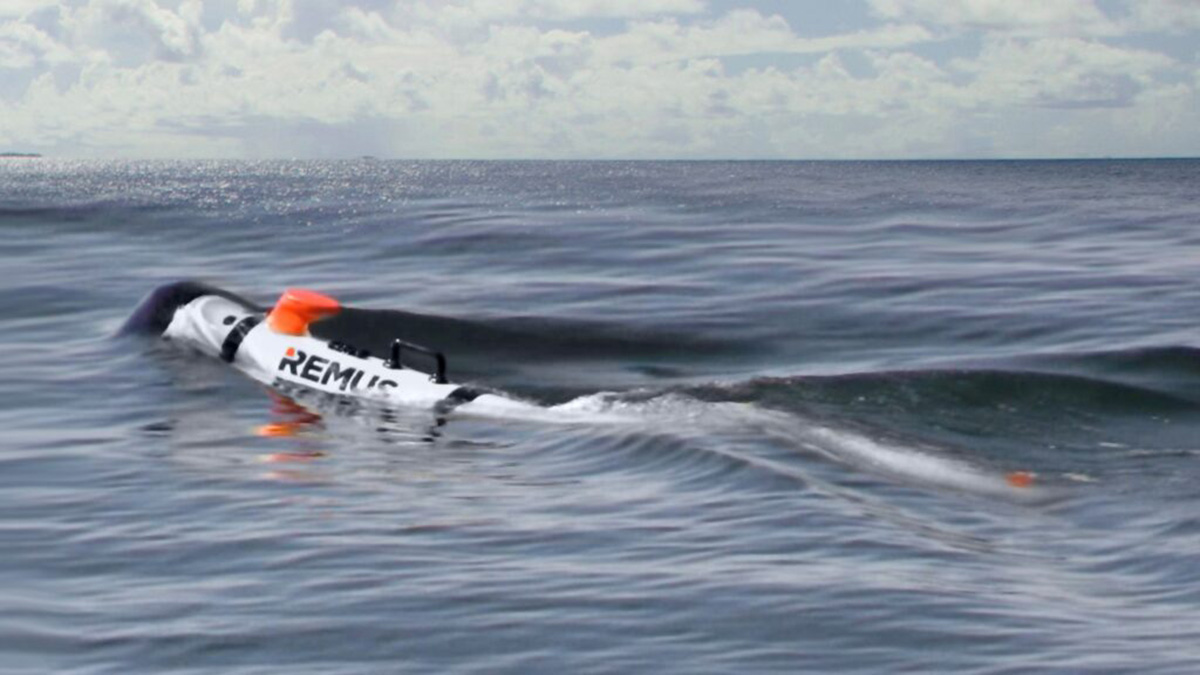
The United Kingdom’s Ministry of Defence (MoD) has announced the award of a GBP 3 million contract to HII Unmanned Systems Inc. This significant agreement is designated for the in-service support of the Royal Navy’s existing fleet of REMUS 100 and REMUS 300 unmanned underwater vehicles (UUVs). The contract encompasses a comprehensive suite of services, including project management, essential technical support, necessary repairs, specialized training for operators and maintainers, and ongoing maintenance to ensure the operational readiness of these critical autonomous systems.
The contract was formally awarded by the SALMO Delivery Team, a specialized unit within the MoD based in Bristol, United Kingdom. The recipient, HII Unmanned Systems, is a prominent subsidiary of Huntington Ingalls Industries, a leading American defense contractor headquartered in Pocasset, Massachusetts. This latest agreement represents a crucial follow-on support contract, indicating a continuation of an established relationship and sustained commitment to systems already integrated into the Royal Navy’s operational capabilities. Such follow-on contracts are common in defense procurement, reflecting confidence in the supplier and the existing platforms.
This award is particularly noteworthy when viewed against the backdrop of the Royal Navy’s ambitious strategic objectives, notably its increasing emphasis on developing and integrating autonomous and unmanned underwater capabilities. This drive falls under the umbrella of broader naval modernization programs, including the “Atlantic Bastion” initiative, which aims to enhance the UK’s maritime security and defense posture. Within this evolving framework, unmanned underwater vehicles like the REMUS family are becoming progressively central to a range of vital naval operations, particularly in areas such as mine countermeasures (MCM) and anti-submarine warfare (ASW).
The REMUS 100, one of the systems covered by the contract, is characterized by its relatively compact design. Measuring approximately 1.6 meters in length and weighing around 37 kilograms, its modest dimensions and weight make it highly versatile. A key operational advantage of the REMUS 100 is its ease of deployment and recovery; it can be launched and retrieved by a small team without the need for specialized heavy handling equipment. This characteristic makes it eminently practical for operations from a diverse array of naval vessels, ranging from agile rigid inflatable boats (RIBs) and smaller patrol craft to larger, more traditional warships, thereby significantly extending the Royal Navy’s reach in shallow water and confined environments.
Complementing its smaller sibling, the REMUS 300 offers enhanced capabilities designed for more demanding operational scenarios. While the REMUS 100 is typically limited to depths of 100 meters, the REMUS 300 is engineered to operate effectively down to 300 meters, providing crucial access to deeper coastal and shelf environments. Beyond its increased depth rating, the REMUS 300 incorporates a more sophisticated and capable sensor suite. This includes advanced synthetic aperture sonar (SAS), a technology that provides significantly higher resolution imagery of the seabed compared to conventional side-scan sonar. This superior imaging capability makes the REMUS 300 particularly well-suited for detailed mine hunting and intricate survey work, allowing for more precise detection, classification, and identification of underwater threats and objects.
Both the REMUS 100 and REMUS 300 systems are designed with an open architecture, a critical feature that underpins their longevity and adaptability. This open design allows for the seamless integration of new payloads and software updates as operational requirements evolve and technology advances. This inherent flexibility is a primary reason why the REMUS family has maintained widespread service across numerous NATO navies for well over a decade. Major naval powers, including the United States Navy, the Royal Navy, and a multitude of other allied services, all operate various configurations of the REMUS platform, a testament to its reliability, performance, and the benefits of shared technological standards among allies. HII initially acquired the REMUS program when it purchased Hydroid in 2016, and has since continued to develop the family further, introducing newer variants such as the REMUS 620 and REMUS 6000, which are specifically designed for even deeper water operations and extended endurance.
Why This Matters
This contract for the continued support of the Royal Navy’s REMUS UUV fleet is significant for several key reasons, impacting national defense, technological advancement, and international partnerships:
- Enhancing Naval Capability:The Royal Navy’s ability to conduct mine countermeasures (MCM) and anti-submarine warfare (ASW) operations is directly bolstered by these UUVs. Mines remain a persistent threat in modern naval warfare, capable of denying access to strategic waterways and posing significant danger to manned vessels. UUVs enable the detection and neutralization of these threats without exposing human personnel to risk. Similarly, in ASW, UUVs can act as persistent, covert sensors, significantly enhancing the ability to detect and track adversary submarines, thereby protecting vital shipping lanes and naval assets.
- Commitment to Autonomous Warfare:The follow-on nature of this contract underscores the Royal Navy’s sustained commitment to integrating autonomous systems into its core operations. This is not merely a tactical preference but a strategic imperative, aligning with a global trend among leading navies. Investing in UUV support ensures that the UK remains at the forefront of naval technology, capable of addressing future threats with innovative and efficient solutions.
- Personnel Safety and Efficiency:By deploying UUVs for dangerous tasks like mine hunting, the Royal Navy significantly reduces the risk to its sailors and specialized divers. This technological shift improves safety outcomes and allows human personnel to focus on more complex decision-making and strategic planning, maximizing the efficiency of naval operations.
- Technological Adaptability and Future-Proofing:The open architecture of the REMUS systems, emphasized in the contract’s context, is critical. It ensures that the Royal Navy’s UUV fleet can be upgraded with new sensors, software, and capabilities as technology evolves, protecting the initial investment and maintaining operational relevance against emerging threats for years to come. This adaptability is key in an era of rapid technological change.
- International Interoperability and Alliances:The widespread adoption of the REMUS family across NATO navies, including the US Navy, highlights the benefits of common platforms and standards among allies. This facilitates interoperability during joint exercises and coalition operations, strengthening collective defense capabilities and fostering closer technological collaboration between the UK and its partners, particularly the United States.
- Defense Industry and Economic Impact:The contract awarded to a U.S.-based subsidiary of a major defense contractor signifies the ongoing transatlantic defense industrial relationship. While the direct economic impact in the UK from this specific contract may be limited to support services, it reflects the broader globalized defense market and the reliance on specialized expertise, regardless of origin, to maintain advanced capabilities. It also ensures the continued development and refinement of a critical technology by a key industry player.