
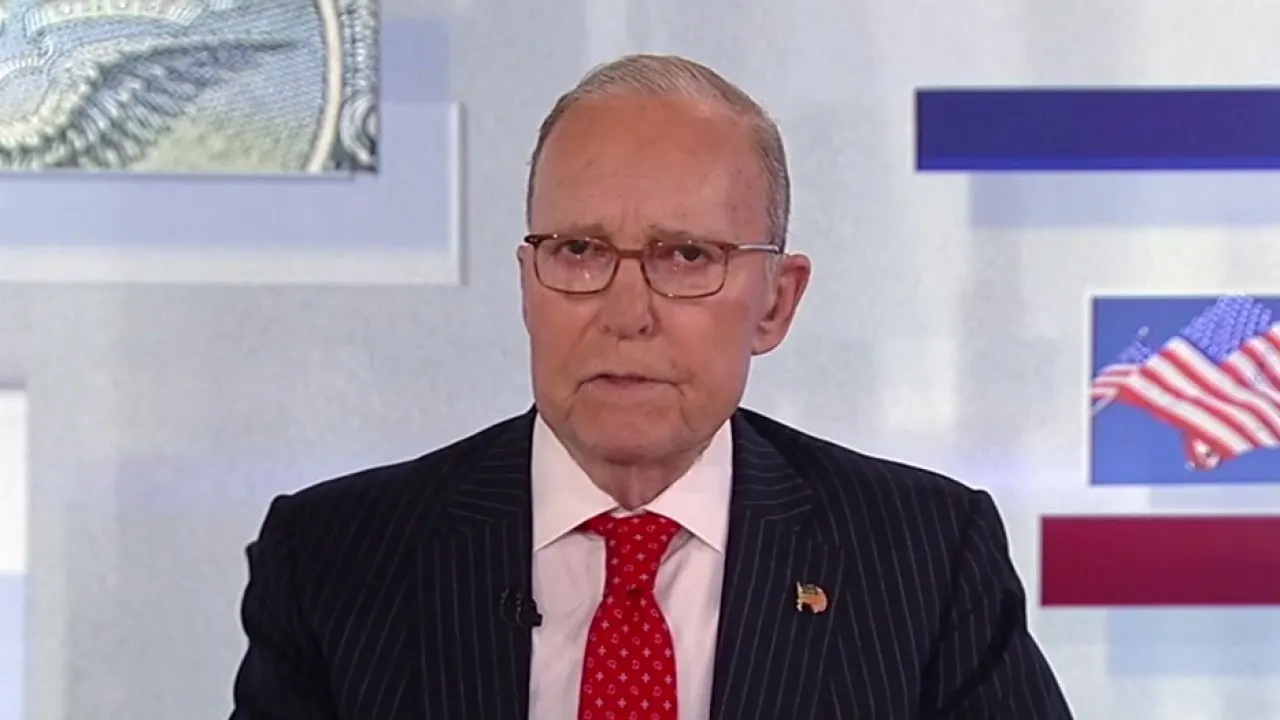
FOX Business host Larry Kudlow discusses the WHCA Dinner shooting and its aftermath on ‘Kudlow.’
Key Takeaways:
- Heightened Political Risk Premium:Repeated instances of political violence, particularly targeting high-profile figures, introduce an elevated risk premium into U.S. asset valuations, potentially fostering greater market volatility and a flight to perceived safe-haven assets.
- Policy and Security Spending Implications:Increased threats necessitate a reevaluation of security protocols and budgets, likely leading to expanded government spending in defense and security technologies, while also signaling potential for policy shifts that could affect various economic sectors.
- Erosion of Investor Confidence:Persistent political polarization and the threat of violence undermine the long-term stability and predictability that are crucial for robust domestic and international investment, posing a systemic challenge to sustained economic growth.
The recent shooting incident at the White House Correspondents Association Dinner, though thankfully not resulting in severe casualties, serves as a stark reminder of the escalating political risks permeating the U.S. landscape. From a financial journalist’s perspective, such events are not merely political theatre; they are critical markers of domestic stability that directly influence investor sentiment, market dynamics, and the broader economic outlook. While the immediate focus rightly falls on security and political commentary, the underlying message for financial markets is one of heightened uncertainty and the potential for a re-pricing of risk.
Former President Trump’s public remarks following the incident offered a study in crisis management, his demeanor aimed at projecting calm and continuity. This perceived “grace under fire,” as some commentators noted, is more than just personal fortitude; it’s a crucial signal to markets. In an environment where political instability can trigger swift and severe market reactions, a leader’s ability to maintain composure and assure the continuity of governance can mitigate panic. His praise for the Correspondents Association Chairman, a known critic, and his magnanimity towards the Secret Service, despite inevitable scrutiny, were actions that, intentionally or not, sought to de-escalate tensions. Such gestures, by fostering a semblance of unity or at least operational professionalism, can prevent an event from spiraling into a broader crisis of confidence that would invariably impact equity indices, bond yields, and currency valuations.
The president’s candid acknowledgment of the inherent dangers of his profession—noting that “it’s 5.8 percent and about 8 percent are shot at”—provides a stark, if somewhat anecdotal, quantification of political risk. For market analysts, these statistics, however informally presented, translate into a measurable political risk premium that gets factored into investment decisions. The “tough questions” awaiting the Secret Service, as rightly pointed out by Mr. Trump, suggest imminent policy reviews and potentially significant budgetary allocations. This could mean increased spending on advanced security technologies, personnel training, and intelligence gathering—areas that could see a boost for defense contractors and surveillance technology firms, creating opportunities even amidst the broader unease.
Rep. Jim Jordan, R-Ohio, discusses rising concerns over political violence following a shooting at the White House Correspondents’ Association Dinner on ‘Kudlow.’
The claim that this incident marked the third assassination attempt in two years targeting the former president introduces a deeply unsettling narrative for markets. Historically, political assassinations or serious attempts have sent shockwaves through global economies. The assassination of JFK in 1963 triggered a brief but sharp market sell-off before recovery, while the attempted assassination of President Reagan in 1981 likewise caused immediate market jitters, though its longer-term economic impact was limited by the swift assurance of presidential continuity. What makes the current context particularly concerning is the apparent frequency and the backdrop of an intensely polarized political climate. An increase in such incidents suggests a systemic erosion of political stability, which is a foundational pillar for a healthy investment climate. Investors crave predictability and stability; repeated challenges to the highest office inject profound uncertainty, making risk-averse behavior more prevalent.
Mr. Trump’s observation that “the most impactful people, the people that make the biggest impact, they’re the ones that they go after” resonates with market theory. Attacks on pivotal leaders, irrespective of their political alignment, are perceived as attacks on the very system of governance and the rule of law. This perception can deter foreign direct investment, dampen consumer and business confidence, and elevate the cost of capital as lenders and investors demand higher returns to compensate for increased political risk. Faith Bottum of The Wall Street Journal’s editorial page, by highlighting the 8.5 percent historical assassination rate for U.S. presidents, implicitly underscores a latent, but ever-present, political risk that investors must consider. While the U.S. has a long history of institutional resilience, a rising frequency of direct threats tests that resilience, and markets are acutely sensitive to such pressures.
The former president’s insistence on not letting “the criminal class or the political crazies shut down freedom of speech, or any political rallies for that matter” can be interpreted as a commitment to maintaining economic and social continuity. For businesses, the ability to operate without fear of disruption from political violence is paramount. Any perceived threat to public gatherings, whether political rallies or commercial events, has a chilling effect on economic activity and social engagement. His call for a “redo” of the dinner, while seemingly minor, sends a subtle signal that essential functions and social rituals of governance will persist, a form of normalcy that helps stabilize market expectations. However, the accompanying call for “unity,” though commendable, faces an uphill battle in the current deeply divided political landscape. From a market perspective, disunity translates into policy gridlock, unpredictable regulatory environments, and a lack of consensus on critical economic reforms, all of which are detrimental to sustained growth and investor confidence.
The lament about the changing nature of the country, recalling tragedies like the assassinations of JFK, MLK, and RFK, coupled with more recent attempts on Presidents Ford and Reagan, resonates deeply. For a financial journalist, this is not just an emotional reflection but a recognition of the deteriorating social capital that underpins economic prosperity. A nation grappling with escalating political violence and polarization often struggles with long-term economic planning, cohesive policy implementation, and attracting stable investment. The hope for America to “do better” is not just a moral imperative, but an economic one, as a stable and unified nation invariably presents a more attractive and predictable environment for capital allocation and wealth creation.
Market Impact:
The immediate market reaction to events like the WHCA Dinner shooting is often characterized by heightened volatility, particularly in equity markets, and a potential flight to safety, benefiting assets like U.S. Treasury bonds and gold. While the U.S. dollar may see initial strength as a safe-haven currency, sustained political instability could erode this perception over time. Sectors directly impacted could include defense and security stocks, which might see increased investor interest due to anticipated government spending. Conversely, broader consumer confidence and discretionary spending could face headwinds if a climate of fear and uncertainty persists. Beyond the immediate knee-jerk reactions, the long-term impact hinges on whether these incidents are seen as isolated events or indicative of a persistent and worsening trend of political radicalization. A sustained pattern of political violence could lead to a re-evaluation of the U.S. political risk premium, potentially impacting foreign direct investment, increasing the cost of capital for businesses, and dampening overall economic growth prospects. In an election year, such events intensify uncertainty around future policy directions, adding another layer of complexity for investors navigating the market landscape.