
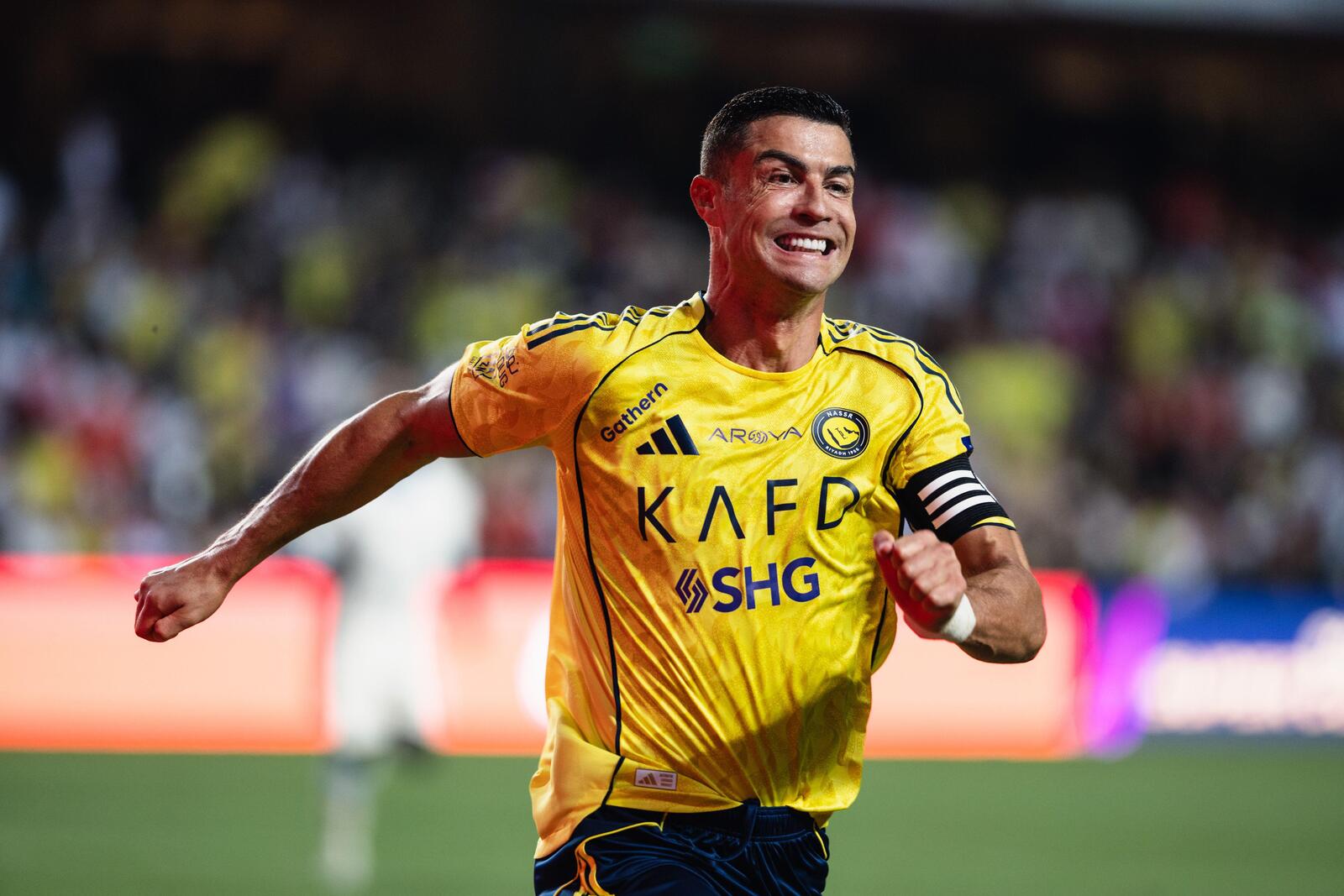
Ronaldo’s Crown Denied by Cruel Twist: Al-Hilal’s Unbeaten Streak Haunts Al-Nassr in Title Race Thriller!
The air was thick with anticipation, the Saudi Pro League title within Cristiano Ronaldo’s grasp, an eighth league crown to add to his unparalleled legacy. But football, as it so often does, had other plans. In a pulsating clash that epitomized the drama of a high-stakes title race, Al-Nassr, led by the evergreen Portuguese superstar, saw their coronation celebrations snatched away in the dying embers by a truly bizarre own goal, as Al-Hilal stubbornly preserved their remarkable unbeaten run with a 1-1 draw.
Ronaldo, at 41, continues to defy Father Time, his relentless pursuit of silverware undimmed. Having conquered England, Spain, and Italy, the Saudi Pro League was meant to be his latest conquest, a testament to his enduring brilliance across continents. A victory against their formidable rivals, Al-Hilal, would have sealed the deal, cementing Al-Nassr’s place atop the podium. Instead, the tantalizing prospect of glory evaporated with a moment of goalkeeping madness, leaving the title race precariously balanced with just two games remaining.
The Battle on the Pitch: A Game of Nerves and Near Misses
From the first whistle, the tension was palpable. Al-Nassr, under the astute guidance of Luís Castro, knew what was at stake. They approached the game with a blend of caution and attacking intent, understanding that Al-Hilal, managed by Jorge Jesus, were not just an opponent but a force of nature, boasting an enviable unbeaten record that they were desperate to protect. For much of the first half, it was a cagey affair, both sides probing, testing each other’s defensive resolve.
The deadlock was finally broken in the 37th minute, and it was Al-Nassr who seized the initiative. Following a well-worked corner, the ball fell to Mohamed Simakan, who unleashed a powerful drive that pierced through a crowded penalty area and nestled into the back of the net. The roar from the Al-Nassr faithful was deafening; the title was within touching distance, the dream becoming a vivid reality. Ronaldo himself was a picture of focus, orchestrating attacks, demanding perfection from his teammates, his presence alone a constant threat.

As the clock wound down in the second half, Al-Hilal, known for their resilience, pushed harder for an equalizer. Al-Nassr, perhaps succumbing to the immense pressure of the occasion, began to sit deeper, inviting their opponents forward. This tactical shift, while seemingly designed to protect their precious lead, ultimately proved to be their undoing. Ronaldo, substituted with seven minutes of normal time left – a move likely aimed at preserving his energy for the decisive final fixtures – watched from the touchline, a mixture of anticipation and anxiety etched on his face, reminiscent of his emotional vigil during Portugal’s Euro 2016 triumph.
Then came the moment of utter disbelief. In the 98th minute, deep into what felt like an eternity of added time, Al-Hilal launched a desperate long throw-in into the Al-Nassr penalty area. Under immense pressure, Al-Nassr goalkeeper Bento inexplicably punched the ball directly into his own net. A collective gasp rippled through the stadium, quickly followed by a cacophony of cheers from the Al-Hilal contingent and groans of despair from the Al-Nassr faithful. It was a cruel, almost farcical, twist of fate that ripped the victory from Al-Nassr’s grasp and kept Al-Hilal’s impressive unbeaten streak intact.
Game Highlights: The Moments That Defined the Match
- 37th Minute: Al-Nassr Goal!Mohamed Simakan expertly converts after a corner, sending the Al-Nassr fans into raptures and putting them on the verge of the title.
- Late Second Half: Tactical Shift.Al-Nassr retreats, attempting to defend their lead, inadvertently inviting Al-Hilal pressure.
- 83rd Minute: Ronaldo Substituted.Cristiano Ronaldo makes way, leaving the field with the title seemingly secured, only to watch the drama unfold from the sidelines.
- 90+8th Minute: Al-Hilal Equalizer!A truly bizarre own goal from Al-Nassr goalkeeper Bento, punching a long throw into his own net, levels the score and denies Al-Nassr the title.
- Full Time: 1-1 Draw.A result that keeps Al-Hilal’s unbeaten run alive and throws the Saudi Pro League title race wide open.
Analysis: The Psychological Battle Ahead
The draw leaves Al-Nassr with a five-point lead over Al-Hilal, with both teams having just two games left. While this still puts Al-Nassr in the driver’s seat, the psychological impact of such a late, dramatic concession cannot be underestimated. They were moments away from glory, and it was snatched away in the most agonizing fashion. The challenge for Luís Castro and his coaching staff will be to lift the spirits and refocus the squad, ensuring that this setback doesn’t breed doubt.
Conversely, Al-Hilal, despite trailing, will be buoyed by their resilience and the maintenance of their unbeaten streak. This draw, snatched from the jaws of defeat, will inject them with renewed belief, even if their title hopes remain slim. Their ability to fight until the very last second demonstrates a champion’s mentality, a quality that could trouble Al-Nassr if any complacency sets in.
Prediction: The Final Sprint
Al-Nassr’s path to the title now hinges on their upcoming fixture against Damac on May 20. A victory there would definitively clinch the league, rendering Al-Hilal’s result against Neom on May 16 irrelevant. While Damac are no pushovers, the sheer motivation and the desire to erase the memory of this frustrating draw should propel Al-Nassr forward. Ronaldo, no stranger to high-pressure situations, will undoubtedly demand nothing less than perfection from himself and his teammates.
Al-Hilal, needing Al-Nassr to drop points in their final two games and winning both of theirs, face an uphill battle. While their unbeaten run is commendable, catching a motivated Al-Nassr, especially after such a near-miss, seems a step too far. The recent draw, while dramatic, maintains the five-point gap, meaning Al-Nassr’s destiny remains firmly in their own hands.
Prediction: Despite the late heartache, Al-Nassr will regroup. Their veteran leadership, spearheaded by Cristiano Ronaldo’s insatiable hunger for trophies, will see them through. I predict Al-Nassr will secure a victory against Damac, thereby clinching the Saudi Pro League title in their penultimate match. The momentary stumble against Al-Hilal will ultimately serve as a catalyst, not a collapse, for Ronaldo and his determined squad.