
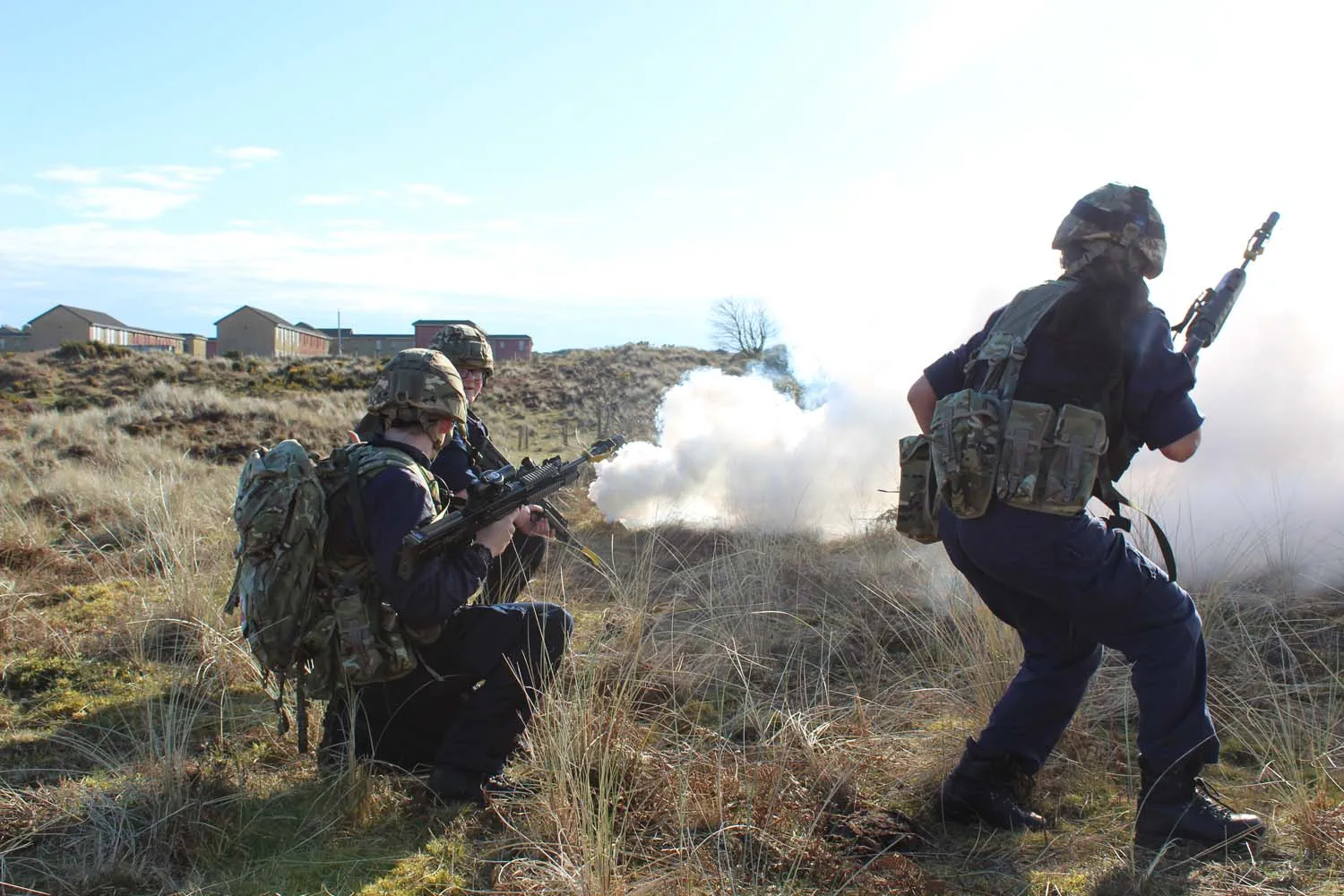
Ministry of Defence Awaits Review for Army Reserve Training Future Amidst Barracks Closure
The Ministry of Defence (MoD) has stated it cannot yet confirm how Army Reserve basic training will be delivered once Prince William of Gloucester Barracks in Grantham closes, nor can it provide an estimate of the associated costs. The department points to a comprehensive review of training across the United Kingdom, which is anticipated to report its findings in autumn 2026, as the basis for future decisions.
The inquiry into the future of reserve basic training was initiated by Gareth Davies, the Conservative Member of Parliament for Grantham and Bourne. His constituency encompasses Prince William of Gloucester Barracks, which serves as the home for Army Training Regiment Grantham. Mr. Davies specifically asked the MoD for clarity on several key issues: where the reserve basic training currently conducted at Grantham would be relocated following the barracks’ closure; what the financial cost would be to replicate this training capacity at an alternative site; and what modelling the department had undertaken regarding overall reserve training capacity once Grantham ceases operations.
In response to these parliamentary questions, Louise Sandher-Jones, the Parliamentary Under-Secretary for Defence, confirmed that the Army is actively conducting an Army Reserve Basic Training Review. This review is tasked with making recommendations by autumn 2026, which will outline various options for the future delivery of reserve basic training across the entirety of the United Kingdom. Ms. Sandher-Jones explicitly stated, “Until future plans are fully determined, we cannot provide costing estimates at this time.”
This response indicates that the fundamental questions regarding the new location for training, the logistical implications of such a move, and the financial investment required remain unaddressed. With the review’s recommendations not expected for approximately two years, a definitive decision on where this critical training will be transferred, and the financial commitments involved, is still some considerable time away.
The scale of the training operation at Prince William of Gloucester Barracks underscores the significance of these outstanding questions. Figures released by the minister, in response to further inquiries from Mr. Davies, highlight the barracks’ pivotal role in Army Reserve training. Army Training Regiment Grantham exclusively trains reservists and has consistently managed a substantial majority of all Army Reserve basic training over the past five years. In the 2025-26 training year, for instance, 609 out of 1,051 reserve recruits, equating to 58 percent, completed an element of their basic training at Grantham. This proportion was similarly high in preceding years, standing at 57 percent in 2024-25, 66 percent in 2023-24, 69 percent in 2022-23, and 67 percent in 2021-22. The annual throughput of recruits at the regiment has varied, ranging from approximately 545 to over 920 individuals in a given year.
The decision to dispose of Prince William of Gloucester Barracks, situated near Grantham in Lincolnshire, is part of a long-standing government programme aimed at reducing the overall size of the defence estate. Under this initiative, the Ministry of Defence has systematically been closing and divesting itself of sites deemed surplus to requirements or excessively costly to maintain. The objective is to consolidate defence activities onto a smaller number of more efficient locations. Army Training Regiment Grantham functions as one of the Army’s primary centres for the basic training of reserve soldiers, delivering the initial foundational course that all recruits to the Army Reserve must successfully complete before progressing to more specialised trade and unit-specific training.
The Army Reserve constitutes an integral component of the Army’s overall strength, designed to be mobilised and operate alongside regular units during both domestic and international operations. Consequently, the efficiency, consistency, and quality of reserve basic training are critical factors in the Army’s ability to generate and sustain this vital force. The geographical location of these training courses also significantly impacts their accessibility for reservists. These individuals balance their military service with their civilian occupations and typically travel to training in their own time, making convenient and accessible locations a key consideration in strategic decisions about where reserve training facilities should be situated. The impending closure of Grantham barracks necessitates careful planning to ensure that the vital function it performs is adequately replicated and remains accessible to the diverse population of Army Reserve recruits across the UK.
Why This Matters
The uncertainty surrounding the future of Army Reserve basic training following the closure of Prince William of Gloucester Barracks in Grantham has several significant implications, touching upon national security, military readiness, financial prudence, and the welfare of service personnel.
Firstly, **National Security and Defence Capability** are directly affected. The Army Reserve is not a supplementary force but an integral part of the UK’s defence capabilities, designed to augment regular forces in times of need. Grantham Barracks has historically been responsible for training a majority of these vital reservists. Any disruption or reduction in the capacity or accessibility of basic training could impede the timely generation of a capable reserve force, potentially compromising the UK’s ability to respond to domestic emergencies or international conflicts. Ensuring a robust and readily available reserve force is paramount for national resilience.
Secondly, the situation impacts **Recruitment, Retention, and Morale** within the Army Reserve. Reservists volunteer their time and effort, balancing military duties with their civilian lives. The location and accessibility of training centres are crucial factors in their decision to join and remain in service. If the new training arrangements are less convenient, involve significantly longer travel times, or introduce greater logistical hurdles, it could deter potential recruits and lead to higher attrition rates among existing reservists. This would further strain the Army’s ability to maintain its required reserve strength.
Thirdly, there are significant **Financial Implications and Accountability** at play. While the Ministry of Defence cannot yet provide cost estimates, the relocation and replication of training capacity for a majority of Army Reserve recruits will undoubtedly entail substantial public expenditure. This includes potential investments in new infrastructure, staffing, and logistical support. The delay in providing these figures until 2026 raises questions about the long-term planning and financial foresight associated with the defence estate rationalisation programme. Taxpayers will ultimately bear the cost, and transparency regarding these expenses will be crucial.
Fourthly, the closure and relocation reflect broader challenges in **Strategic Defence Planning and Estate Management**. The ongoing programme to consolidate the defence estate aims for efficiency and cost-effectiveness. However, the current situation highlights the complexities involved in such large-scale transitions, particularly when critical operational capabilities like basic training are affected. It underscores the need for proactive planning and clear communication to ensure that estate rationalisation does not inadvertently weaken operational readiness or create unforeseen logistical bottlenecks.
Finally, the issue touches upon **Regional Impact and Community Relations**. Military bases are often significant employers and contributors to local economies and communities. The closure of Grantham Barracks will have an economic and social impact on the local area, which must be managed. Furthermore, the decision on where to relocate the training will have implications for the chosen new locations, potentially bringing new opportunities but also new challenges for those communities.
In conclusion, the unconfirmed future of Army Reserve basic training is more than just an administrative detail. It represents a critical juncture for the UK’s defence strategy, with wide-ranging consequences for its military personnel, financial resources, and overall national security posture, demanding a clear, timely, and well-resourced resolution.