
Valvoline CEO Lori Flees discusses the used car boom, decreased interest in electric vehicles and more on ‘The Claman Countdown.’
Key Takeaways:
- The Trump administration’s “Connected Vehicles Rule” bans Polestar from selling new vehicles in the U.S. starting with the 2027 model year, citing national security concerns over China-linked data collection.
- Polestar, majority-owned by China’s Geely, faces exacerbated financial pressures and is strategically pivoting its focus and manufacturing efforts towards Europe and other international markets.
- This move intensifies the ongoing U.S.-China tech and trade war, signaling a broader trend of geopolitical de-risking in critical sectors like automotive, with ripple effects on global supply chains and investment.
In a significant escalation of geopolitical tensions impacting the global automotive sector, Polestar (NASDAQ: PSNY) announced Thursday that it will be forced to cease selling new vehicles in the U.S. market from the 2027 model year onwards. This directive stems from a new and stringent regulation by the Trump administration, specifically the Commerce Department’s Bureau of Industry and Security (BIS), which targets automakers with perceived ties to China under the banner of national security. The ruling, under the “Connected Vehicles Rules,” effectively blocks the importation and sale of vehicles equipped with advanced connectivity technologies if they are deemed to pose a risk due to their origin or ownership structure.
The Commerce Department’s Bureau of Industry and Security (BIS) confirmed its decision to decline Polestar authorization, citing the rigorous parameters of the Connected Vehicles Rules. These regulations restrict the importation and sale of cars leveraging connected vehicle technology linked to entities from “countries of concern,” primarily China, starting with the upcoming model year. This action underscores a growing governmental focus on data security and supply chain integrity within critical infrastructure sectors.
The “Connected Vehicles Rules” casts a wide net, encompassing essential modern automotive features such as Bluetooth, wireless internet, cellular connectivity, and certain satellite communications technologies. The Commerce Department justifies these restrictions based on profound national security concerns, arguing that such vehicles possess the inherent capability to collect vast amounts of sensitive data on American owners and their movements. This data, ranging from biometric information to geographic coordinates and even in-cabin conversations, could potentially be exploited by foreign adversaries, presenting a significant espionage risk. The rule was initially adopted in January 2025 during the final months of the Biden administration, underscoring a bipartisan consensus on the threat, and has been vigorously maintained and enforced under President Donald Trump, signaling a consistent and hardening stance against perceived Chinese technological infiltration.
TRUMP ADMINISTRATION PLANS NEW TARIFFS ON 60 TRADING PARTNERS OVER FORCED LABOR IMPORT ENFORCEMENT FAILURES
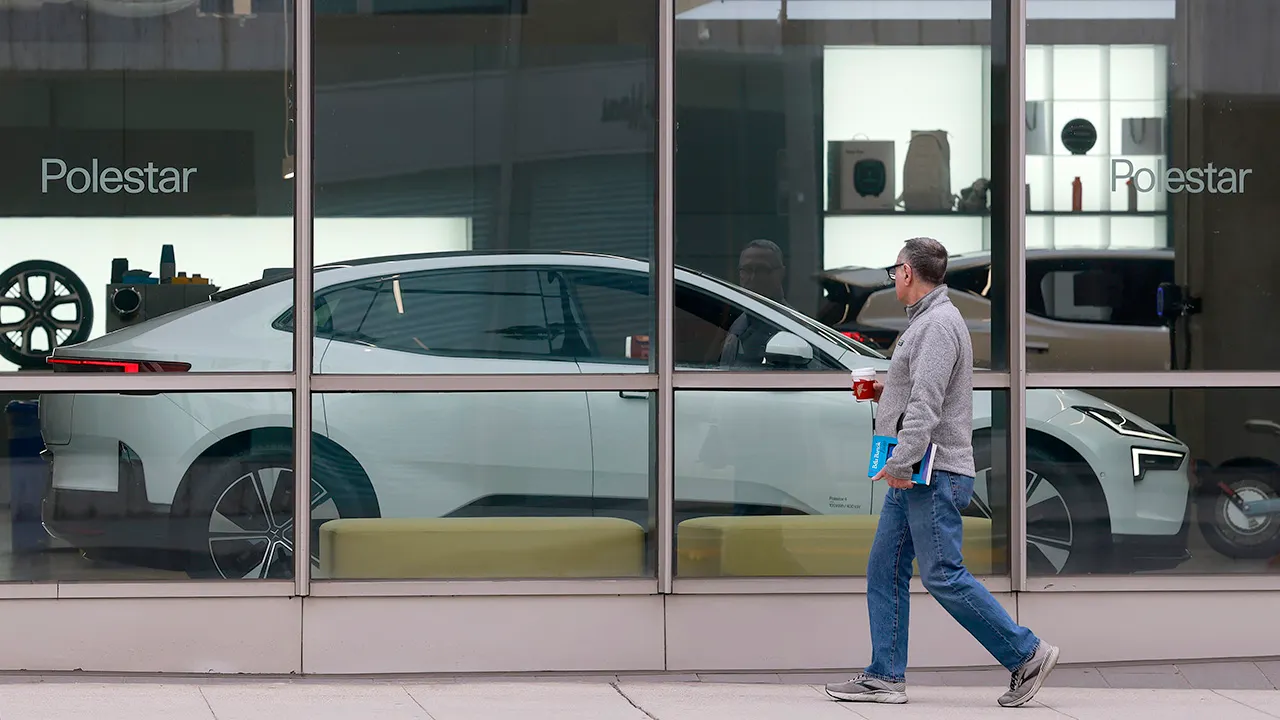
Polestar will be banned from selling EVs in the U.S. starting with the 2027 model year due to the Connected Vehicles Rule.(Justin Sullivan/Getty Images)
Polestar CEO Michael Lohscheller, in a statement responding to the ban, indicated a significant strategic pivot for the company. He affirmed that Polestar would place a greater emphasis on Europe in its corporate strategy going forward, reflecting an acknowledgment of the increasingly fragmented global automotive landscape driven by regional protectionism and geopolitical realignments. Lohscheller highlighted that 94% of Polestar’s retail sales volumes in the first quarter of 2026 originated from markets outside the U.S., suggesting that while the U.S. market is important, it hasn’t been the sole driver of the company’s growth.
Lohscheller elaborated on this shift, stating that the “automotive industry is entering a new phase, based on regional dynamics. Our strategy reflects that, with Europe being our largest growth engine and our plan to manufacture Polestar 7 in Europe.” This strategic reorientation includes expanding its footprint in growth markets across Southeast Asia, Eastern Europe, Latin America, and Canada, alongside its primary focus on Europe. The company’s “record sales in 2025 and the first quarter of 2026” were cited as evidence of strong progress, even amidst the looming U.S. market challenges. This move also aligns with broader concerns from figures like Gordon Chang, who has warned about the potential for Chinese EVs to become “rolling spy machines” if allowed unfettered access to Western markets, further justifying the U.S. administration’s stance.
GORDON CHANG WARNS CHINESE EVS ENTERING US VIA CANADA COULD BECOME ‘ROLLING SPY MACHINES’
| Ticker | Security | Last | Change | Change % |
|---|---|---|---|---|
| PSNY | POLESTAR AUTOMOTIVE | 17.43 | -1.54 | -8.12% |
| VLVLY | VOLVO AB | 33.25 | -0.51 | -1.51% |
Polestar, based in Sweden, is majority owned by China’s Geely Holding Co., a relationship that is central to the Commerce Department’s decision and the broader national security narrative. FOX Business reached out to the Commerce Department and Geely for comment, but neither immediately responded.
This U.S. market exclusion comes at a precarious time for Polestar, a company that has grappled with significant financial headwinds since its public listing. Despite its premium branding and innovative designs, Polestar has consistently struggled to achieve profitability, necessitating repeated and substantial capital injections from its majority owner, China’s Geely Holding Co. The company’s shares (NASDAQ: PSNY) have experienced a precipitous decline, reflecting investor skepticism about its long-term viability and growth trajectory. This downturn culminated in a reverse stock split last year, a drastic measure often undertaken by companies to boost their share price above minimum exchange requirements and maintain their listing on the Nasdaq. The immediate market reaction to Thursday’s announcement was swift and negative, with Polestar Automotive shares (PSNY) plummeting 8.12% to $17.43, clearly indicating how investors perceive this ban as a major setback to the company’s already challenging path to sustainable growth and profitability.
Following the Commerce Department’s decision, Polestar will continue to sell the existing stock of Polestar 3 and Polestar 4 vehicles in the U.S. and support customers through access to its established service network. This ensures that current owners and those purchasing vehicles before the 2027 model year will retain full support and warranty coverage, mitigating immediate consumer disruption.
INDUSTRY GROUP WARNS OF CHINESE CONNECTED VEHICLES
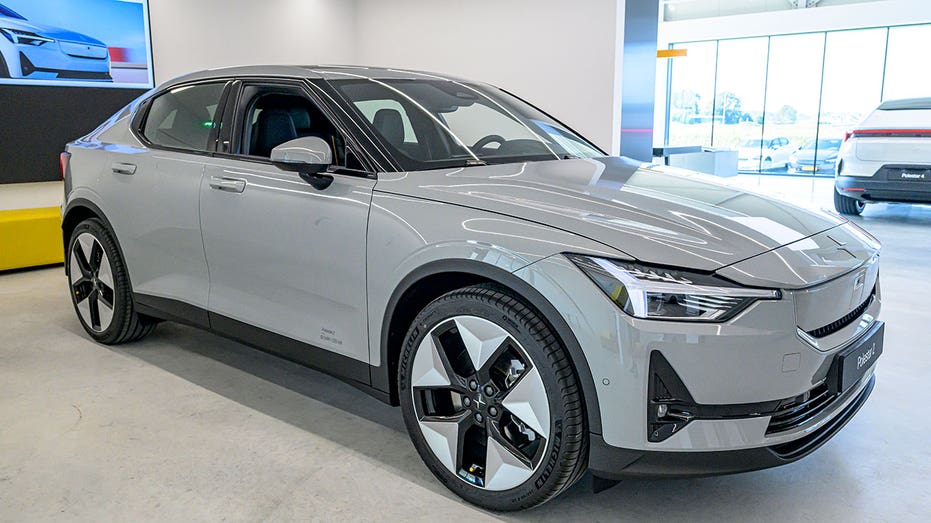
Most of Polestar’s retail sales have been in Europe.(Sjoerd van der Wal/Getty Images)
The implications of this ban also extend to Volvo (OTCMKTS: VLVLY), a sister brand to Polestar and a significant production partner. In March, Volvo had announced strategic plans to consolidate the production of the Polestar 3 SUV at its South Carolina plant, a move that was intended to mitigate supply chain risks and potentially benefit from U.S. incentives for domestically produced EVs. This decision was also aimed at diversifying away from a sole reliance on Chinese manufacturing for the Polestar 3. However, with the U.S. market now effectively closed off for new Polestar sales from 2027, the long-term viability and strategic rationale behind this U.S. production consolidation for Polestar models come under immediate scrutiny. Volvo stated it was “too early to say” how Thursday’s announcement would impact these plans, but the uncertainty adds a layer of complexity to its own North American manufacturing strategy and potentially future investment decisions. The Polestar 3 currently represents the company’s only model with U.S. manufacturing presence, making this ban particularly impactful on its localization efforts.
GET FOX BUSINESS ON THE GO BY CLICKING HERE
Reuters contributed to this report.
Market Impact:
The U.S. ban on Polestar sales from 2027 represents a significant inflection point for the global automotive market, particularly within the burgeoning electric vehicle sector. Investors will likely scrutinize other automakers with substantial ties to China, anticipating similar regulatory actions and potential market access restrictions. This move accelerates the trend of “de-risking” and “friend-shoring” supply chains, pushing manufacturers to regionalize production and source components from geopolitically aligned nations, potentially increasing costs and fragmenting global standards. For the U.S. EV market, while Polestar held a niche position, its absence, coupled with the precedent set, could reshape competitive dynamics, potentially benefiting domestic manufacturers and those from allied countries while reducing consumer choice and diversity. Furthermore, this regulation underscores the increasing weaponization of trade and technology in the ongoing geopolitical rivalry between the U.S. and China. It signals that national security concerns, especially those related to data privacy and potential surveillance, are now paramount considerations for market access, transcending traditional economic arguments and adding a profound layer of risk to international business operations in critical technology sectors.