
Key Takeaways:
- Lukewarm Nasdaq Debut:Finnish quantum computing firm IQM went public via SPAC at a $1.9 billion valuation, but its shares failed to pop, reflecting broader market skepticism towards SPACs and the nascent quantum industry.
- Quantum Advantage Uncertainty:Despite attracting significant investment and customers for current applications, IQM’s own prospectus highlighted the long-term uncertainty of “large-scale commercial traction” until the elusive “quantum advantage” is achieved.
- Strategic Dual Listing & Global Ambition:IQM is positioning itself globally with a U.S. Nasdaq listing and American partnerships, while simultaneously maintaining strong European roots and a dual listing on Nasdaq Helsinki, aiming for leadership in the global quantum race.
IQM’s Nasdaq Debut: A Quantum Leap or a Muted Whisper?
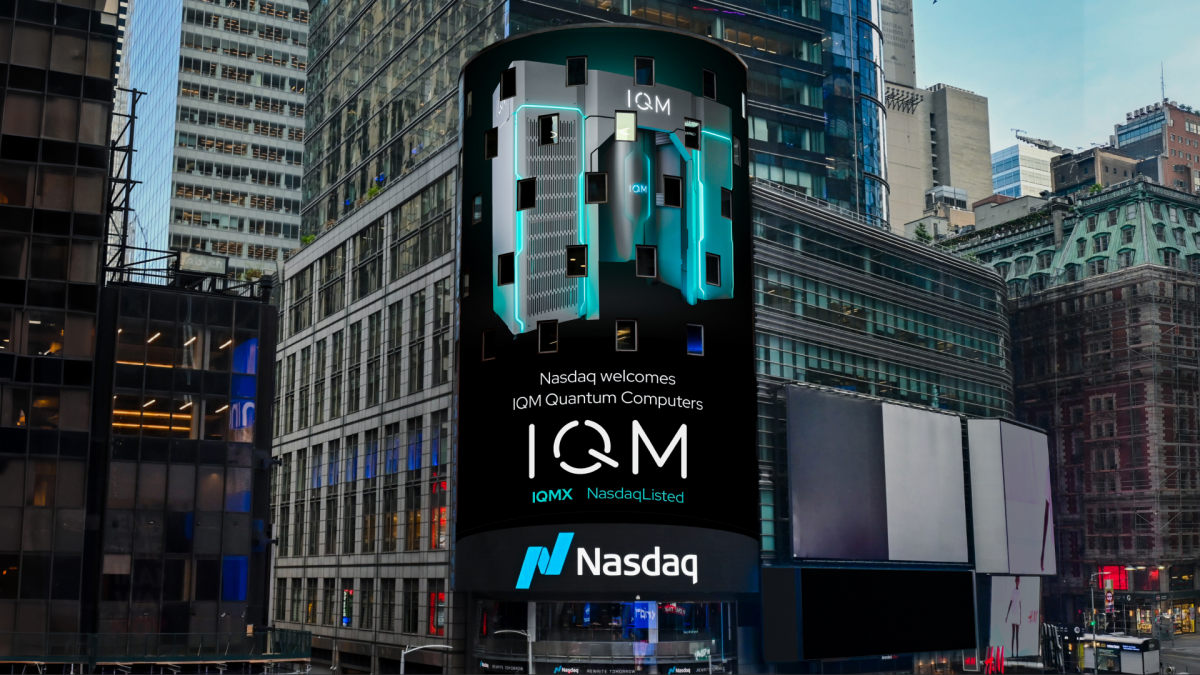
The world of quantum computing, a realm of immense promise and equally vast unknowns, saw one of its prominent players, IQM, make its public debut on the Nasdaq this Thursday. The Finnish full-stack quantum company, emerging from the vibrant tech ecosystem around Aalto University, completed a SPAC merger at an eye-watering valuation of approximately $1.9 billion. Yet, the market’s response was not the celebratory pop often associated with tech IPOs. Instead, IQM’s share prices spent most of the trading day below their initial public offering price, signaling a rather lukewarm welcome.
This muted reception is partly attributable to the broader market’s current disinterest in SPAC (Special Purpose Acquisition Company) mergers, which have often underperformed post-listing in recent times. However, for IQM, the fizzle was arguably compounded by a startlingly candid admission within its own prospectus: “large-scale commercial traction of quantum computing technology may never occur.” This bold statement, while a responsible disclosure for any company operating at the bleeding edge of an unproven technology, inevitably cast a shadow over investor enthusiasm.
The Quantum Paradox: Promise, Progress, and Perilous Uncertainty
Navigating the Elusive “Quantum Advantage”
The warning embedded in IQM’s prospectus is not unique to the Finnish firm; it’s a stark reality check for the entire quantum industry. The holy grail, known as “quantum advantage,” refers to the point when quantum chips can definitively outperform classical supercomputers for a significantly broader range of complex and lengthy tasks. This breakthrough promises to unlock transformative use cases across industries – from accelerating drug discovery and material science to revolutionizing financial modeling and potentially upending current encryption standards.
However, the precise timeline for achieving this quantum advantage remains an enigma, even for the companies building these futuristic machines. “No one, not even a company making quantum computers, can say when that might be,” as IQM’s CEO and co-founder Jan Goetz candidly acknowledges. This inherent uncertainty creates a unique challenge for investors attempting to value companies operating at the very frontier of scientific discovery.
Current Traction Amidst Future Unknowns
Despite the existential questions surrounding the future scalability of quantum technology, IQM is far from idle. The company, which offers both physical quantum computers and a cloud-based quantum computing service, has successfully attracted a growing roster of customers. These pioneers are utilizing the technology as it stands today for critical tasks like advanced simulations and optimization problems. Notable clients include the VTT Technical Research Centre of Finland and the Leibniz Supercomputing Centre in Germany.
Goetz elaborated on their business model, stating, “We sell computers into advanced supercomputing centers and data centers, and we sell computing time through the cloud.” The company has reported a significant growth trajectory, moving from eight customers in a recent year to a projected 22 by 2025, with two recent additions from the private sector marking an important diversification. While impressive for an emerging field, this growth also underscores the current niche nature of demand, suggesting that broader adoption is contingent on the arrival of quantum advantage.
Fueling the Quantum Race: Government and Investor Backing
The inherent risks and long timelines haven’t deterred a committed base of investors and governments from doubling down on quantum companies, both public and private. This enthusiasm is further fueled by high-level political directives aimed at accelerating quantum development. The U.S., for instance, under recent executive orders, has seen the Department of Energy (DOE) commit to deploying “the world’s first fault-tolerant, scientifically relevant quantum computer” by 2028. This ambitious goal follows similar announcements from other global powers like France, Germany, and the U.K., transforming the quantum race into a geopolitical priority.
For IQM, these governmental initiatives carry significant weight. The company has strategically established a quantum tech center in Maryland and deployed one of its computers at Oak Ridge National Laboratory, a critical facility within the DOE ecosystem. This deep integration allows IQM to “benefit directly from” these substantial public investments, as Goetz confirms, positioning them advantageously within the burgeoning U.S. quantum landscape.
IQM’s Dual Identity: European Roots, Global Ambition
Unlike many European unicorns that tend to shift their primary focus across the Atlantic, IQM is firmly committed to a dual identity. While its Nasdaq U.S. listing aligns it with most of its quantum peers, it is also set to debut on Nasdaq Helsinki. This strategy ensures continued support from key European stakeholders, including Tesi, Finland’s sovereign wealth fund, which has been instrumental in IQM’s journey.
IQM’s origins are deeply intertwined with Finland. Founded in 2018 as a spinout from Aalto University in Espoo—a recognized tech and quantum hub near Helsinki—two-thirds of its substantial 420-person team still operates from this Finnish base. The remaining workforce is strategically distributed, with a hundred individuals in Munich, Germany, and others spread across various global locations to support the company’s ambitious international deployment roadmap.
This unique duality was a key selling point for RAAQ, the blank check company that facilitated IQM’s SPAC merger. As noted in RAAQ’s board statement, “As evidenced by over €200 million in public support for IQM, European sovereign states and companies have supported IQM’s emergence as a prominent quantum computing company in Europe. IQM also demonstrated its ability to operate outside of Europe.”
Despite its global aspirations, Goetz expressed particular pride in IQM becoming the first European quantum company to list in the U.S.—a pioneering move, narrowly preceding French competitor Pasqal’s similar SPAC plans. “It always feels good to be first and to be a pioneer, but ultimately it’s about long-term success,” Goetz remarked, emphasizing the strategic importance of this early market positioning.
Strategic Positioning and Future Outlook
The Nasdaq listing is expected to generate significant new liquidity for IQM, approximately €198 million (or $226 million) after costs. This influx of capital comes on the heels of an already successful Series B funding round that raised $300 million just last September. Goetz highlighted the significance of this, stating, “It’s a big success raising very shortly after the Series B.” This financial strength underscores that while capital is crucial, IQM’s main objective for going public was to prominently position itself within an intensely competitive, yet still largely uncharted, global quantum race.
Bottom Line:IQM’s Nasdaq debut, while a landmark achievement as the first European quantum company to list in the U.S., underscores the complex dichotomy of the quantum computing industry: immense potential alongside profound uncertainties. The company’s strategic dual listing, robust customer base, and integration into national quantum initiatives position it as a key player. However, its long-term success, like that of the entire sector, hinges on navigating the challenging path toward a commercially viable “quantum advantage,” a future whose timeline remains shrouded in scientific and technological unknowns.
When you purchase through links in our articles, we may earn a small commission. This doesn’t affect our editorial independence.
Source:{feed_title}