
Welcome back to TechCrunch Mobility — your central hub for news and insights on the future of transportation. To get this in your inbox, sign up here for free — just click TechCrunch Mobility!
Key Takeaways
- eVTOL Sector Consolidates & Diversifies:The electric vertical takeoff and landing (eVTOL) aircraft industry witnessed significant strategic moves, including a surprising merger between former rivals Archer Aviation and Wisk Aero, and Joby Aviation’s acquisition of Resonant Sciences to expand into the defense sector, highlighting a push for consolidation and near-term revenue streams amid lengthy regulatory processes.
- Uber’s Strategic Pivot in Autonomy:Uber unexpectedly divested its entire stake in Serve Robotics, its former autonomous delivery robot spin-off, signaling a potential shift in its direct investment strategy in autonomous ventures, even as a commercial partnership remains.
- Global Mobility Funding Continues:Beyond the high-flying eVTOL news, the mobility sector saw continued investment, with Uber backing a Chilean fintech for motorcycle credit and electric mobility startup Yulu securing substantial Series C funding, underscoring diverse growth areas.
Mobility Takes Flight: Mergers, Missions, and Unexpected Moves Define a Pivotal Week
This week, the world of mobility wasn’t just moving; it was soaring, swerving, and making some truly unexpected landings. From the high-stakes skies of electric aviation to surprising shifts in ground-level autonomy, the industry showcased its dynamic nature, marked by consolidation, strategic diversification, and a few head-scratching maneuvers. The common thread? Companies are aggressively seeking viable pathways to profitability and deployment in a rapidly evolving landscape, even if it means burying the hatchet or making abrupt divestitures.
The High-Flying Drama of eVTOLs: Consolidation and New Horizons
The burgeoning electric vertical takeoff and landing (eVTOL) aircraft sector dominated headlines, proving that the future of air travel is not only taking shape but also undergoing significant strategic restructuring. Two major deals this week underscore the industry’s dual focus on accelerating development through consolidation and securing crucial revenue streams while navigating a labyrinthine regulatory journey.
Archer and Wisk: From Courtroom to Cockpit – An Unlikely Alliance
In one of the most remarkable turns in the nascent eVTOL industry,Archer Aviationannounced it now owns its former fierce rival,Wisk Aero. This dramatic reversal comes after a protracted two-year legal battle that saw Wisk sue Archer in 2021 over explosive allegations of “brazen theft” of confidential information and intellectual property. The bitter dispute, which included Archer’s countersuit for $1 billion in damages, concluded with an unusual settlement that not only extinguished the lawsuits but forged a new, collaborative path forward.
Under the terms of this groundbreaking deal,Boeing, Wisk’s primary backer, agreed to sell Wisk Aero along with two other subsidiaries—SkyGrid, a digital airspace and air traffic management software company, and drone maker Insitu—to Archer. In exchange, Boeing will receive a significant 16.5% ownership stake in Archer Aviation. This move is a powerful illustration of how established aerospace giants like Boeing are recalibrating their strategies, opting for strategic partnerships and equity stakes rather than sole ownership in the highly capital-intensive and risky eVTOL race.
Wisk’s journey itself has been a winding one. It originated as Kitty Hawk, an electric aviation startup co-founded by Sebastian Thrun (of Alphabet X fame) and backed by Google co-founder Larry Page. After Kitty Hawk shut down in September 2022, its Cora program, which had already spun off into a joint venture with Boeing, continued under the new moniker, Wisk Aero. This latest acquisition by Archer marks another pivotal chapter for the company, integrating its long-standing expertise and intellectual property into a larger, consolidated entity aiming for air taxi deployment.
Joby’s Flight Plan: To Defense and Beyond
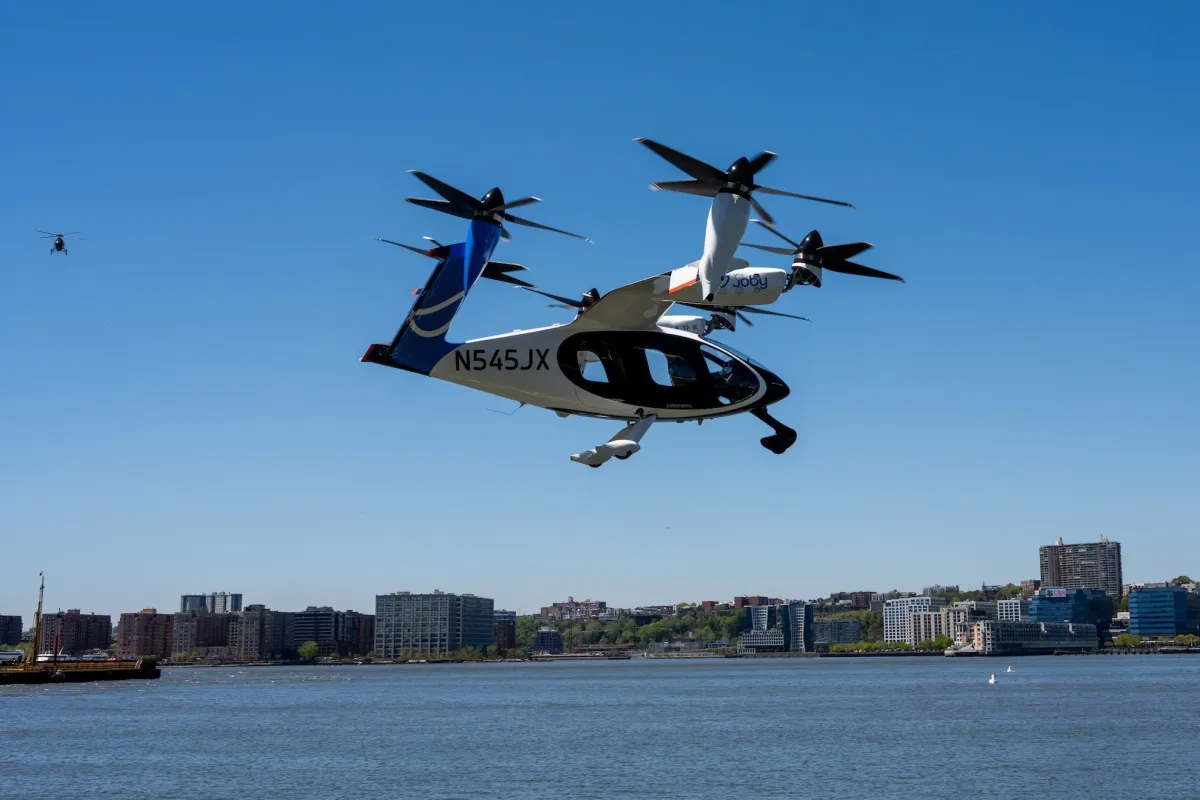
Meanwhile,Joby Aviation, another leading player in the eVTOL space, pursued a more predictable yet equally strategic acquisition. The company announced it had acquiredResonant Sciencesfor $500 million, a move that firmly establishes Joby’s push into the defense sector. Resonant Sciences, known for its expertise in radio frequency and sensor systems, will now operate asJoby Defense, a dedicated business unit.
This acquisition formalizes Joby’s gradual expansion into defense over the past couple of years. While the company remains steadfast in its primary mission to certify and manufacture eVTOL aircraft for urban air taxi services, the defense sector offers a crucial near-term revenue stream and additional avenues for technological development. The lengthy and expensive regulatory process for commercial air taxi deployment makes strategic diversification appealing, allowing companies like Joby to leverage their advanced aviation technology for immediate, paying applications while continuing their core development efforts.
Ground-Level Shifts: Uber’s Surprising Autonomy Retreat
While some companies were looking to the skies for new opportunities, others were making calculated moves back on solid ground. This week,Uber, a company that has been intensely focused on locking up partnerships with, and even investing in, autonomous vehicle technology companies, did the exact opposite: it divested its entire stake inServe Robotics.
Serve Robotics, the autonomous delivery robot company that initially spun out of Uber more than five years ago, was reportedly surprised by the sell-off. According to sources, Serve Robotics only learned of Uber’s decision when the regulatory filing was made public. This unexpected move suggests a recalibration in Uber’s strategy concerning direct equity ownership in autonomous delivery hardware, perhaps favoring a more asset-light partnership model. Despite the divestiture, Uber and Serve Robotics remain business partners, with their current contract—which integrates Serve’s delivery robots onto the Uber Eats app—set to expire in 2027. The long-term implications for this partnership, however, remain to be seen in the wake of Uber’s abrupt exit as an investor.
Deals on the Move: Funding Across the Mobility Spectrum

Beyond the headline-grabbing mergers and strategic pivots, the broader mobility ecosystem continued to attract significant investment, highlighting diverse areas of growth and innovation:
- Uberis extending its reach into Latin American fintech, reportedly investing in Galgo, a Chilean company specializing in providing credit for motorcycle purchases, as reported by Bloomberg. This move signals Uber’s interest in supporting its vast network of two-wheeled delivery partners.
- Indian electric mobility startupYulusuccessfully raised $93 million in a Series C round. This substantial funding round comprised $63 million in equity, led by GEF Capital Partners, and an additional $30 million in debt financing, underscoring strong investor confidence in the booming micromobility and electric vehicle market in India.
A Little Bird Whispers…
Got a tip for us? Email Kirsten Korosec at kirsten.korosec@techcrunch.com or my Signal at kkorosec.07, or email Sean O’Kane at sean.okane@techcrunch.com.
Notable Reads and Other Tidbits

The Bottom Line
This week’s mobility news paints a clear picture: innovation isn’t just about groundbreaking technology, but also about strategic agility. From former eVTOL adversaries joining forces to accelerate market entry, to established players diversifying into defense for immediate revenue, and even unexpected divestments, the industry is fiercely adapting. Companies are making bold, sometimes surprising, moves to secure their position and navigate the complex journey from ambitious vision to scalable, profitable reality, proving that the future of transportation will be shaped as much by shrewd business decisions as by technological breakthroughs.
Key Takeaways
This week in tech, the wheels of innovation spun rapidly, especially in autonomous vehicles and automotive manufacturing, while digital security remained a persistent concern. Here are the top three insights:
- Autonomous Mobility Accelerates:California is becoming a hotbed for self-driving truck testing, with Aurora and Kodiak AI securing permits. Meanwhile, Waymo further expanded its commercial robotaxi operations in key Californian cities, and Avride celebrated a significant milestone in Dallas, underscoring the rapid progression of AV technology towards wider public adoption.
- Cybersecurity Threats Persist Across Sectors:From in-flight network tampering on Delta Air Lines to a data breach impacting Uber Freight, digital security vulnerabilities continue to plague even established enterprises. This highlights the critical need for robust defense mechanisms and vigilance in an increasingly connected world.
- Automotive Industry in Flux:Ford is pushing ahead with a massive $2 billion investment in EV manufacturing, signaling a strong commitment to the electric future. Concurrently, the passing of Toyota visionary Hiroshi Okuda reminds us of the profound impact of strategic leadership on technological paradigms, such as the introduction of the hybrid Prius.
The tech landscape continues its relentless march forward, marked by significant strides in autonomous technologies, strategic investments in future mobility, and the ever-present challenge of cybersecurity. From regulatory approvals to major industry events, this week’s news offers a snapshot of an industry in constant motion.
Autonomous Mobility: Pushing the Boundaries of Self-Driving
The race to commercialize autonomous vehicles (AVs) saw several key developments, particularly in California, a critical proving ground for the technology.
BothAurora InnovationandKodiak AIreceived crucial permits from the California Department of Motor Vehicles, authorizing them to begin testing their self-driving trucks on public roads within the state. Kodiak AI wasted no time, already commencing its operations. These permits are a significant regulatory hurdle cleared, paving the way for advanced testing scenarios that move beyond closed courses and into real-world logistics environments. The increasing presence of autonomous trucks on California highways suggests a future where freight transportation could be significantly transformed, promising greater efficiency and potentially enhanced safety, although widespread adoption still requires extensive validation.
In the realm of robotaxis,Avrideannounced a notable achievement, surpassing 100,000 autonomous rides facilitated through the Uber app in Dallas. While this milestone signals robust user engagement and operational scale, it comes with the important caveat that a human safety operator remains behind the wheel for these rides. Avride’s rapid growth, reaching this figure roughly two months after reporting 60,000 rides, indicates a strong demand for its service, even in its supervised form. The company’s trajectory is closely watched as it inches towards fully driverless operations, a step that requires not just technological readiness but also public trust and regulatory approval.
Global expansion for robotaxi services is also on the horizon, withPony.aiandUberannouncing an ambitious plan to deploy 2,000 robotaxis across four European cities. This expanded partnership marks a significant push into international markets, demonstrating confidence in their joint autonomous driving technology and a strategic move to establish early market dominance in new territories. Such cross-continental initiatives highlight the global ambition of AV companies and the collaborative models emerging within the sector to accelerate deployment.
Closer to home,Waymocontinues to solidify its footprint in California. The state’s Public Utilities Commission approved an expansion of its commercial ride-hailing permit, allowing Waymo’s robotaxis to operate and charge for rides across a broader territory in the San Francisco Bay Area and Los Angeles. This approval also includes the potential for expansion into Sacramento and San Diego, although Waymo states these launches have not yet occurred. This regulatory nod is crucial for Waymo’s revenue growth and further establishes its position as a leading provider of commercial robotaxi services in the U.S.
Building public trust and understanding the rigorous safety protocols behind AVs is paramount. To that end,Zooxreleased its comprehensive safety case framework. This critical document details how and why the company believes its technology is safe enough for public roads. In an environment lacking a federally mandated “driver’s license” or universal test for AVs, such frameworks are vital. They serve as a transparent declaration of a company’s safety philosophy, engineering practices, and validation methods, aiming to reassure regulators, policymakers, and the public about the inherent safety of their autonomous systems.
Cybersecurity & Digital Trust: A Persistent Battle
As technology becomes more integrated into every aspect of life, the threats to digital security continue to evolve and challenge even the most robust systems.
Delta Air Linesinitiated an investigation into a cybersecurity incident where an unidentified passenger allegedly created a fake Wi-Fi network on a flight. This highly unusual incident prompted pilots to alert air traffic control, underscoring the potential for in-flight network vulnerabilities to create operational disruptions and safety concerns. It highlights the importance of securing not just ground-based systems but also the digital environment within an aircraft, and raises questions about passenger conduct and network integrity at 30,000 feet.
The logistics sector also faced a cyber threat, withUber Freightinvestigating a cyberattack and data breach claimed by the hacking and extortion group Helix. Such incidents in the supply chain can have far-reaching consequences, impacting operations, compromising sensitive data, and eroding trust among partners and customers. The increasing sophistication of hacking groups means that companies like Uber Freight must constantly fortify their defenses against a dynamic and persistent adversary.
Addressing concerns about digital privacy and accountability,Flockannounced a series of new policies and tools. These initiatives are designed to help curb the potential for abuse of its automated license plate camera reader systems and enhance accountability for its law enforcement customers. As public surveillance technologies become more prevalent, the need for stringent safeguards, transparent policies, and clear oversight becomes increasingly critical to protect civil liberties while aiding public safety efforts.
Automotive Evolution: EVs, Legacy, and Innovation
The automotive industry is in a transformative period, marked by significant investments in electric vehicles and a reflection on past leadership.
Fordreiterated its commitment to the electric future, announcing it is on track to complete a monumental $2 billion overhaul of its Louisville Assembly Plant in Kentucky. This massive investment is geared towards implementing a new assembly system specifically designed for its next-generation of electric vehicles, beginning with the midsize Fathom truck. This strategic move underscores Ford’s aggressive pivot towards electrification, aiming to streamline manufacturing processes and scale EV production to compete effectively in a rapidly changing market.
The automotive world also mourned the passing ofHiroshi Okuda, a revered longtime Toyota executive who served as president and later chairman. Okuda was known for his bold strategic decisions, most notably his tenacious advocacy for the gas-electric hybrid Prius vehicle. His vision helped usher in a new era of fuel efficiency and environmental consciousness in the automotive industry, demonstrating how a singular focus on innovation can lead to groundbreaking products that redefine categories and leave a lasting legacy. Bloomberg provided a detailed tribute to his impactful career.
Policy, People, and Public Interest
Technology’s intersection with policy, workforce development, and social commentary continues to offer intriguing developments.
Department of Transportation Secretary Sean Duffytook to X (formerly Twitter) to highlight an innovative recruitment strategy: seeking video gamers as air traffic controllers. According to Duffy, 2,000 candidates have already been hired through this program, though he did not specify if all were gamers. This initiative taps into the unique cognitive skills honed by gaming – quick decision-making, pattern recognition, and multitasking under pressure – as a novel approach to addressing critical workforce shortages in vital public services.
In a unique blend of art and activism,Ground Truth, an art project focused on housing affordability in New York, created a gadget designed to trigger the brakes on Citi rental bikes. Wired reported that this device makes it harder to pedal through rent-burdened neighborhoods, serving as a physical metaphor for the socio-economic burdens faced by residents. This creative and disruptive form of protest highlights the growing use of technology as a medium for social commentary and advocacy.
Industry Spotlight: TechCrunch Disrupt 2026
Looking ahead, one of the tech industry’s most anticipated events,TechCrunch Disrupt 2026, is just a few months away. We’re excited to announce a prominent guest who will be joining us on stage:Rivian CEO RJ Scaringe. Scaringe will participate in an exclusive interview, offering insights into the future of electric vehicles, Rivian’s strategic direction, and the challenges and opportunities within the evolving automotive landscape. We invite our readers to submit questions for Scaringe via email, providing a unique opportunity for direct engagement with a leading industry visionary.
Disrupt, our annual conference bringing together thousands of founders, investors, CEOs, policymakers, engineers, and media, will be held from October 13 to October 15 at the Moscone Center in San Francisco. It’s an unparalleled opportunity to network, learn, and discover the next wave of technological innovation. Check out theprogramming announced so far, and be sure to secure your ticket before our next price increase on August 22.
The Bottom Line
This week’s tech news paints a picture of dynamic growth and persistent challenges. Autonomous vehicles are moving rapidly from experimental phases to commercial deployment, particularly in urban and logistical settings, albeit with ongoing debates around safety and regulatory frameworks. The automotive sector continues its expensive but necessary pivot to electrification, underpinned by significant manufacturing investments and a reverence for past innovators. Meanwhile, the pervasive nature of cyber threats underscores an ever-present need for vigilance and robust security measures across all industries. Finally, the intersection of technology with public policy and social issues highlights its profound impact on society, from workforce development to creative activism. As we move forward, the convergence of these trends will continue to shape our digital and physical worlds.
When you purchase through links in our articles, we may earn a small commission. This doesn’t affect our editorial independence.
{content}
Source:{feed_title}