
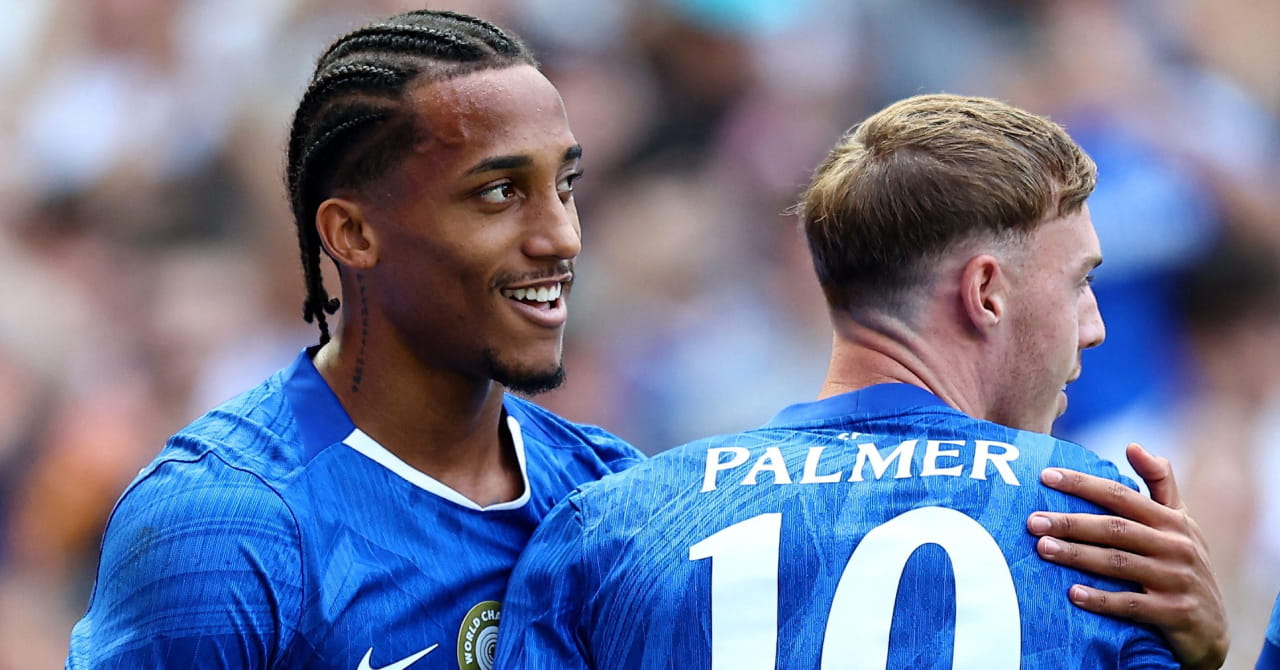
Boom! Just when the Craven Cottage faithful had settled into their seats, before the echoes of the opening whistle had even fully faded, Chelsea exploded into life. It took a mere 31 seconds for Xabi Alonso’s new-look Blues to announce their arrival, shattering the pre-match tension with a goal that screamed intent and ambition. This wasn’t just a goal; it was a statement, a declaration of a fresh, electrifying era under their highly-touted Spanish tactician.
The architect of this lightning strike? Joao Pedro, exhibiting the kind of predatory instinct Chelsea fans have craved. He chipped the ball elegantly over Bernd Leno, a finish imbued with both composure and audacity, after being exquisitely played through by the ever-influential Cole Palmer. But the move itself spoke volumes about Alonso’s immediate impact: a long, perfectly weighted header forward by the commanding Levi Colwill, bypassing the midfield entirely and setting the stage for a devastatingly direct attack. It was a blend of old-school grit and modern precision, a dizzying start that left Fulham reeling.
Watch Pedro’s opener below:
For Chelsea, this season isn’t merely about improvement; it’s about redemption. A dismal 10th-place finish in 2025-26 left a bitter taste, a stark reminder of the monumental task ahead. Xabi Alonso, poached from his stellar work at Bayer Leverkusen and with Real Madrid pedigree, represents more than just a new manager; he embodies a new philosophy, a promise of tactical acumen and a winning mentality. The pressure on his shoulders is immense, but this explosive start suggests he’s not one to shy away from it.
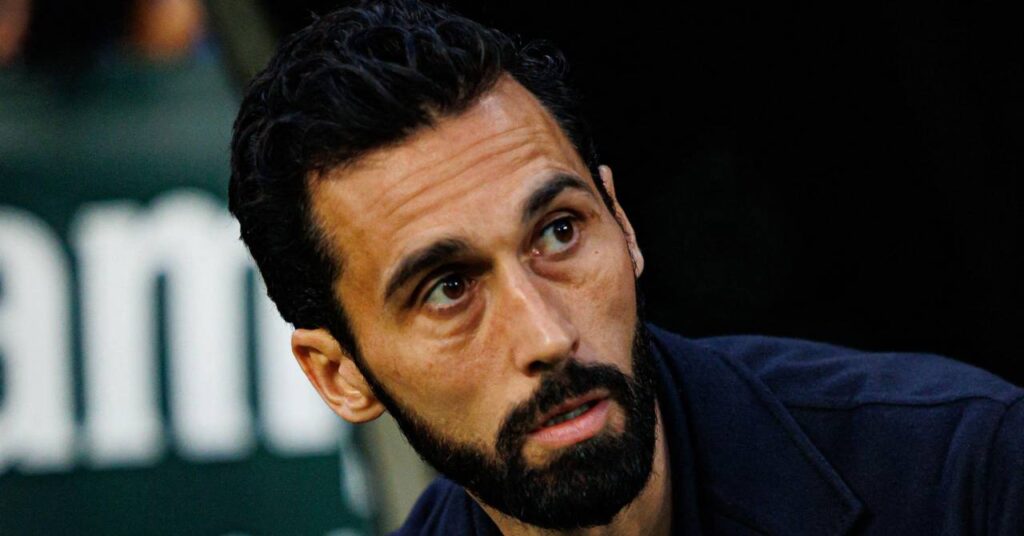
Across the dugout, Alvaro Arbeloa also marked his Premier League managerial debut, taking the reins at Fulham after Marco Silva’s departure. The narrative for this London derby was thus heavily weighted with new beginnings, untested strategies, and the palpable excitement of fresh leadership. Two former teammates, now rival managers, locking horns in the most unforgiving league in the world. As the stats tell us, this is a unique occurrence: the first time any manager’s first Premier League game has come against another manager he was a teammate of as a player in the competition – a fascinating subplot in an already compelling encounter.
Fulham’s Tactical Setup: Arbeloa’s Debut Gambit
Arbeloa’s Fulham lined up with a mix of familiar faces and fresh talent. New signings Cesar Palacios in midfield and Gonzalo Garcia in attack were thrown straight into the crucible, signalling Arbeloa’s immediate trust in their capabilities. Palacios, presumably tasked with adding steel and creativity to the engine room, and Garcia, looking to provide a new focal point up front, faced an immediate test against Chelsea’s invigorated defence. Notably, £30 million signing Shea Charles, a significant investment from Southampton, started on the bench, suggesting Arbeloa is easing him into the squad or has specific tactical plans for his introduction.
Fulham starting XI:Bernd Leno, Timothy Castagne, Calvin Bassey, Jorge Cuenca, Antonee Robinson, Sander Berge, Alex Iwobi, Josh King, Oscar Bobb, Gonzalo Garcia, Ezequiel Palacios
Fulham substitutes: Benjamin Lecomte, Kenny Tete, Harrison Reed, Rodrigo Muniz, Kevin, Shea Charles, Ryan Sessegnon, Emile Smith Rowe, Luc de Fougerolles
The Cottagers were looking to improve on their recent derby record, having lost their previous three Premier League openers against London rivals. Their home form in 2026, where they’ve won six of their last nine at Craven Cottage, offered a glimmer of hope, but the early Chelsea onslaught put that resilience to the ultimate test.
Alonso’s Blueprints: A Glimpse of the Future
Xabi Alonso’s Chelsea XI was equally intriguing, showcasing a blend of established stars and promising newcomers. Morgan Rogers and Maxence Lacroix made their competitive debuts, instantly integrating into the fabric of Alonso’s vision. Rogers, likely deployed in an attacking midfield role, aimed to link play and provide creativity, while Lacroix brought a new dimension of defensive solidity and ball-playing ability at the back. The sheer depth on the bench was staggering, with fellow newcomers Mike Penders, Pep Chavarria, Valentin Barco, and Geovany Quenda ready to make an impact. The presence of Danny Welbeck, set for his 19th Premier League season, added invaluable experience.
The biggest talking point, however, revolved around Enzo Fernandez. The World Cup winner, heavily linked with a sensational move to Manchester City, started on the bench – a clear indication of the ongoing transfer window drama and Alonso’s pragmatism amidst uncertainty. His eventual absence from the lineup could be either a tactical decision or a precursor to a blockbuster departure, adding another layer of intrigue to an already electric atmosphere.
Chelsea starting XI:Robert Sanchez, Josh Acheampong, Maxence Lacroix, Levi Colwill, Malo Gusto, Reece James, Romeo Lavia, Jorrel Hato, Cole Palmer, Morgan Rogers, Joao Pedro
Chelsea substitutes:Mike Penders, Pep Chavarria, Valentin Barco, Enzo Fernandez, Estevao, Jamie Gittens, Pedro Neto, Geovany Quenda, Danny Welbeck
This Chelsea lineup hinted at Alonso’s attacking philosophy: a dynamic midfield, wide players providing pace and incision, and a clear focus on getting the ball forward quickly. The combination of Lavia and Hato in midfield promised energy and control, while the attacking quartet of Palmer, Rogers, and Pedro provided a potent threat that Fulham found difficult to contain from the outset.
Game Highlights
- 1st Minute – GOAL CHELSEA (Joao Pedro):A long, probing header from Levi Colwill finds Cole Palmer on the half-turn. Palmer expertly slides a through ball to Joao Pedro, who lobs the advancing Bernd Leno with exquisite composure. A dream start for Xabi Alonso!
- 12th Minute – CLOSE FULHAM:Oscar Bobb shows flashes of brilliance, dribbling past Malo Gusto on the left flank before unleashing a curling effort that narrowly whistles past Robert Sanchez’s far post. Fulham respond with urgency, testing Chelsea’s early resolve.
- 28th Minute – YELLOW CARD (Romeo Lavia):Lavia, keen to assert his authority in midfield, commits a cynical foul on Alex Iwobi as Fulham attempted to launch a quick counter. A necessary foul, perhaps, but one that puts him on a tightrope.
- 39th Minute – PALMER’S MAGIC MOMENT:Cole Palmer, increasingly influential, dances through two Fulham defenders inside the box before his low shot is brilliantly parried wide by Leno. Chelsea are relentless, pushing for a second before the break.
- 55th Minute – GOAL CHELSEA (Cole Palmer):A slick passing move culminates with Reece James driving forward from right-back. His precise cut-back finds Palmer on the edge of the box, who takes one touch and dispatches a clinical finish into the bottom corner, leaving Leno with no chance. Chelsea double their lead, firmly taking control!
- 68th Minute – SUBSTITUTION FULHAM:Alvaro Arbeloa makes a double change, bringing on Shea Charles for Josh King and Rodrigo Muniz for Gonzalo Garcia, seeking to inject fresh legs and a different attacking dynamic.
- 75th Minute – SANCHEZ SAVE:Fulham’s substitute Rodrigo Muniz latches onto a flick-on from a long ball, unleashing a powerful volley that Robert Sanchez acrobatically tips over the bar. A crucial save to maintain Chelsea’s clean sheet.
- 82nd Minute – DEBUT FOR WELBECK:Danny Welbeck enters the fray for Joao Pedro, making his 19th Premier League season appearance. His experience will be vital in seeing out the game.
- 90+2 Minute – FULHAM CONSOLATION (Shea Charles):A late moment of brilliance from substitute Shea Charles, who, after a scrappy goalmouth scramble from a corner, fires home from close range. Too little, too late, but a debut goal to remember for the youngster.
Where to watch Fulham vs Chelsea: TV and online streams
Kick-off on Monday is at 20:00 BST (15:00 ET / 12:00 PT), with live coverage in the UK on Sky Sports Main Event, Sky Sports Premier League and Sky Sports Ultra.
Via Now TV, Sky Sports costs £14.99 for a day membership, £27.99 a month for a 12-month membership or £34.99 a month with no contract.
Fulham vs Chelsea stats: A Pre-Match Deep Dive
- Fulham will begin a Premier League season with a London derby for a fourth time, having lost the previous three: 2-1 Arsenal in 2007/08, 2-0 at home to Crystal Palace in 2018/19 and 3-0 at home to Arsenal in 2020/21. This history adds an extra layer of difficulty to Arbeloa’s debut.
- They have won their opener in one of their last six Premier League seasons (D2 L3), beating Everton away in 2023/24. Consistency in season openers has been an issue for the Cottagers.
- In 2026, only Manchester United (8) have won more Premier League home games than Fulham (6), with the Cottagers victorious in six of their last nine at Craven Cottage (L3). Craven Cottage has been a fortress, a statistic Arbeloa will hope to leverage throughout the season.
- This will be both Arbeloa and Alonso’s first Premier League match as managers. The pair played 46 league games alongside one another for Liverpool from 2007 to 2009, losing four of those (W28 D14). A unique reunion and a testament to their shared history.
- That makes this the first time any manager’s first Premier League game has come against another manager he was a teammate of as a player in the competition. A truly special occasion in Premier League history.
- Chelsea were beaten in their most recent meeting with Fulham (2-1 away in January in the Premier League) but haven’t lost consecutive games against them across all competitions since a run of three between April 1977 and October 1979. Revenge was certainly on the menu for the Blues.
- The Blues have failed to win their opening league game in each of the last three seasons (D2 L1), last going four in a row without a win between 1995/96 and 1998/99. Alonso broke this concerning trend with a resounding victory.
- Since the start of March, Chelsea have the fewest points of any side not to be relegated from the Premier League last season (7). They have lost eight of 11 league games in this period (W2 D1), which is the most of any top-flight club. This alarming stat underscored the need for a fresh start under Alonso.
- Alonso is set to be the 27th manager to take charge of at least one Premier League game with Chelsea, overtaking Tottenham Hotspur (26) as the most by any side (counting joint-managers as one). A club famed for its managerial merry-go-round, Alonso will be hoping to buck the trend.
- Two of Chelsea’s last eight managers have won their first league game in charge (D4 L2), although both were in London derbies: Graham Potter vs Crystal Palace in October 2022 and Liam Rosenior vs Brentford in January 2026. Alonso now joins this exclusive club.
- Welbeck is set to feature in his 19th Premier League season, playing at least once in every campaign since and including 2008/09. This will be the joint-most seasons played in by any striker in the competition’s history, equalling Jermain Defoe (19) and overtaking Peter Crouch (18). A testament to his longevity and dedication.
- These managers will be the 10th and 11th to take charge of a specific Premier League side for the first time this weekend, which is the outright most on matchday in a single campaign (excluding 1992/93) in the competition’s history (previously nine, in 2012/13 and 2016/17). A true managerial reset across the league.
The Alonso Era: A Glimpse of the Future?
This opening day encounter, despite its early fireworks and the promise of a fresh start, served as a potent microcosm of Chelsea’s potential and their immediate challenges. Xabi Alonso’s blueprint was clear: high intensity, quick transitions, and clinical finishing. The immediate impact of Joao Pedro and Cole Palmer, supported by the foundational work of Levi Colwill and the industrious midfield, signals a team ready to shed the malaise of last season. The fact that they secured a victory, even conceding a late goal, demonstrates a newfound resilience.
For Fulham, Arbeloa has a significant task ahead. While the Cottagers showed glimpses of spirit, particularly through Oscar Bobb and the late goal from Shea Charles, they were ultimately overwhelmed by Chelsea’s early pace and quality. Arbeloa will need time to stamp his authority and integrate his new signings effectively to avoid another relegation battle.
**Prediction for Chelsea:** While one swallow doesn’t make a summer, this performance, especially the rapid start and the dominant periods, suggests Chelsea are firmly on the right track. Alonso’s tactical prowess combined with the sheer talent in the squad, even with potential transfer window disruptions, should see them significantly improve on last season. I predict Chelsea will finish comfortably within the top four, pushing for a Champions League spot and potentially making a deep run in a cup competition. The early signs are incredibly promising, and the Stamford Bridge faithful finally have reason to believe again. The Alonso era has begun, and it promises to be a thrilling ride.