
Ultrahuman, an Indian startup best known for making smart rings, has raised $70 million in a new funding round that includes backing from Qualcomm’s venture arm, as it looks beyond sleep and health tracking to build a ring that can run software on the device and eventually power everything from AI interactions to games.
The round values Bengaluru-based Ultrahuman at $365 million, about three times its $120 million valuation in 2023, a person familiar with the matter told TechCrunch.
Qualcomm Ventures participated in the financing alongside U.S. diagnostics giant Labcorp, Alpha Wave, Blume Ventures, Nexus Venture Partners, and Alteria Capital. The round includes $65 million in primary equity and $5 million in debt, Ultrahuman founder and CEO Mohit Kumar said in an interview.
Ultrahuman is also working with Qualcomm on a new ring that will use the U.S. chipmaker’s silicon, Kumar told TechCrunch. The startup currently uses chips from Nordic Semiconductor in its rings and plans to continue using them alongside Qualcomm’s technology. The added computing power will allow more software and algorithms to run directly on the ring, reducing its reliance on a phone or the cloud, he said.
“All ring devices today are like trackers,” Kumar said. “You put on the ring, it measures your heart rate, your movement, your sleep.” Ultrahuman’s goal, he stated, is to make the ring more like a computer, where programs and algorithms can run on the device itself.
This could open the ring to use cases well beyond health and sleep tracking, something Ultrahuman rings are known for.
Developers, Kumar said, could eventually write their own programs for the device, while Ultrahuman is exploring ways for the ring to work as a pointer or mouse, a game controller, a car key, and an interface for interacting with AI.
“The future of AI is personal, ambient and always on,” said Quinn Li, global head of Qualcomm Ventures, adding that Ultrahuman is building a new generation of “personal AI devices.”
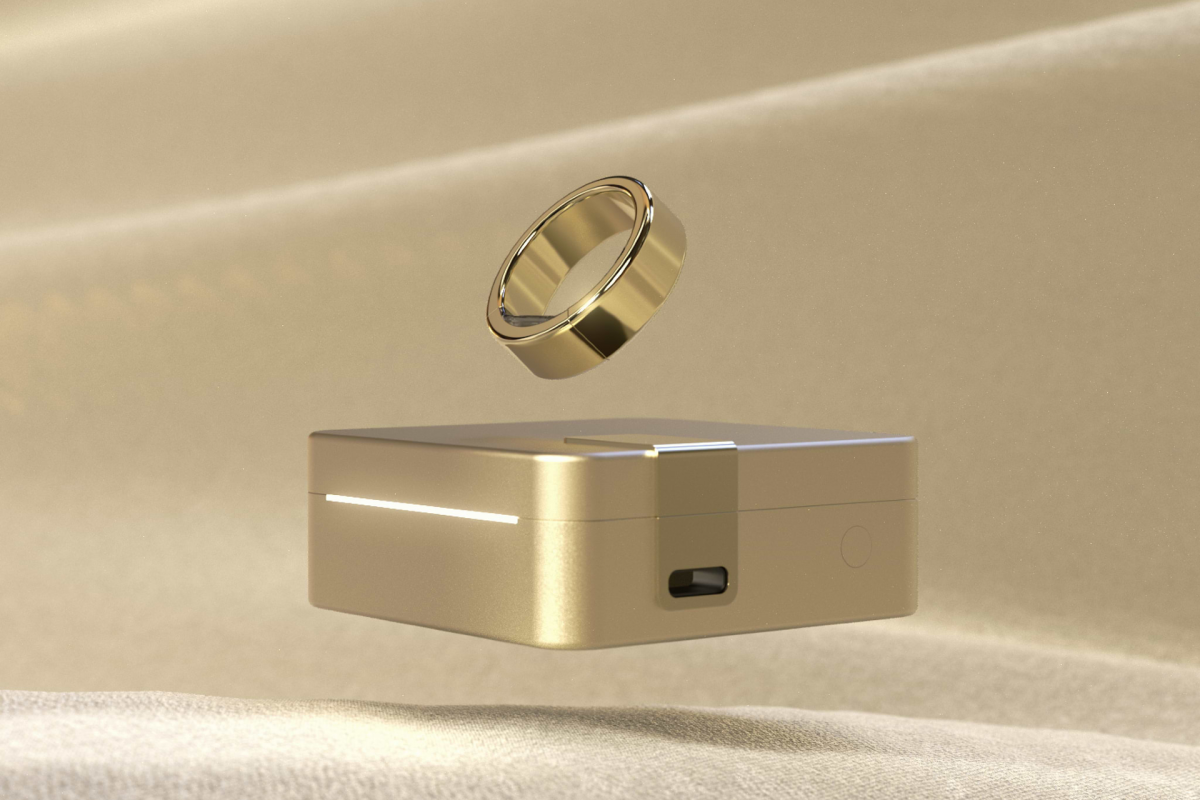
While the Qualcomm-powered ring is planned to come later, Ultrahuman is not waiting for the new hardware to start testing that idea. Kumar told TechCrunch that some of the new capabilities will arrive on the startup’s existing Ring Air and Ring Pro (pictured above) through a software update by the end of September, including features that would let the ring work as a game controller and interact with AI applications, as well as the ability to allow third-party developers to build new features.
Ultrahuman’s idea is to take advantage of the ring’s position on a user’s finger, Kumar said. Unlike a smartwatch, which he described as more akin to “a phone on the wrist,” a ring could act as a precise pointing and interaction device while also carrying physiological context such as a user’s heart rate, temperature, and movement.
“A game controller never reads your heart rate and your temperature, but this one does,” Kumar said. He continued by imagining games that could respond not only to a player’s movements but also to signals such as their heart rate and body temperature, making the ring both a controller and a source of physiological context.
The business behind the bet
Meanwhile, Ultrahuman’s existing business is growing even as the startup looks to expand what its rings can do. The startup, Kumar said, is currently at an annual revenue run rate of $140 million, up roughly 45% from a year earlier, and expects that run rate to reach $200 million by January 2027. It has sold around 800,000 rings to date, up from about 700,000 in February, Kumar mentioned. About 12% of its users also pay for PowerPlugs, Ultrahuman’s subscription-based software features.
Co-founded by Kumar and Vatsal Singhal in 2019, Ultrahuman initially debuted with its continuous glucose monitors to help people track their metabolic health. The startup, however, later moved into smart rings, which have since become the mainstay of its business. It also introduced blood testing and environmental sensing to build a broader health platform.
The U.S. remains Ultrahuman’s largest market, though the startup had to stop selling its Ring Air here for much of the past year following a patent dispute with rival Oura. Ultrahuman returned to the market with its redesigned Ring Pro this year. Demand for the new device, Kumar said, is currently running at 18 to 20 times the startup’s available supply in the U.S.
Kumar told TechCrunch that the startup expects to return to its previous U.S. sales volumes as soon as next quarter and aims to triple those volumes over the following four quarters as it ramps up supply. The U.S. has accounted for about 45% of Ultrahuman’s revenue this quarter, while India contributes about 11%, Kumar said.
Ultrahuman plans to use some of the new capital to deepen its presence in markets including India and the UAE, where it has found that physical stores and other offline touchpoints can help drive sales. However, that expansion, along with spending on clinical research and product development, has come at a cost. Ultrahuman, Kumar said, may not be profitable this year after investing more heavily in physical locations, its brand, and clinical studies.
Unlike rival Oura, which is reportedly eyeing a September IPO, a public listing is still some way off for Ultrahuman. Kumar told TechCrunch that the startup wants to demonstrate about eight quarters of profitability before going public, a track record he expects could take eight to 10 quarters to establish. However, he sees 2028 as the earliest window for an IPO.
In the meantime, Ultrahuman is also looking to work more closely with Labcorp, as it tries to push its rings deeper into health and diagnostics. The companies, Kumar said, are exploring whether the blood-flow signals captured by the ring, when paired with blood-test data, could help identify health risks in areas including cardiovascular health, fertility, and aging.
“By combining longitudinal wearable data with deeper biological signals, Ultrahuman is creating new opportunities in personalized health,” said Megann Vaughn Watters, vice president and head of Labcorp Venture Fund and Strategic Alliances.
The partnership could eventually lead to integrations with Ultrahuman’s products, Kumar said, though he declined to share details, adding that the startup expects to have more to announce soon.
When you purchase through links in our articles, we may earn a small commission. This doesn’t affect our editorial independence.
Key Takeaways
- Significant Funding & Valuation Leap:Ultrahuman secured $70 million, pushing its valuation to $365 million, a threefold increase from 2023, signaling strong investor confidence led by Qualcomm Ventures and Labcorp.
- Redefining the Smart Ring as an “On-Device Computer”:The startup is moving beyond basic tracking, partnering with Qualcomm to embed advanced silicon that enables on-device software, AI interactions, and even gaming, transforming the ring into a powerful, standalone computing platform.
- Ambitious Growth & Deepening Health Integration:Despite short-term profitability impacts from strategic investments, Ultrahuman boasts substantial revenue growth, aggressive market expansion plans, and a key partnership with Labcorp to merge wearable data with deep biological insights for advanced diagnostics.
The Smart Ring’s Metamorphosis: Ultrahuman’s Bold New Vision
Smart rings have long been synonymous with discreet health and sleep tracking, but a paradigm shift is on the horizon. Indian startup Ultrahuman, a prominent player in the smart ring space, has just announced a hefty $70 million funding round, spearheaded by Qualcomm Ventures. This significant capital injection isn’t merely for scaling existing operations; it’s fueling an ambitious strategy to redefine the smart ring entirely, transforming it from a passive tracker into an active, on-device computing platform capable of running software, facilitating AI interactions, and even powering gaming experiences.
The round, which also saw participation from U.S. diagnostics giant Labcorp, Alpha Wave, Blume Ventures, Nexus Venture Partners, and Alteria Capital, catapults Ultrahuman’s valuation to a staggering $365 million—a nearly threefold increase from its $120 million valuation just last year. This financial vote of confidence underscores the market’s belief in Ultrahuman’s audacious vision to push the boundaries of wearable technology. The funding package comprises $65 million in primary equity and an additional $5 million in debt, providing ample runway for this transformative journey.
Beyond Tracking: The “Computer on Your Finger” Vision
At the heart of Ultrahuman’s next-generation strategy is a pivotal collaboration with Qualcomm. Ultrahuman founder and CEO Mohit Kumar revealed that the startup is working closely with the U.S. chipmaker to integrate its advanced silicon into future rings. This move marks a departure from the Nordic Semiconductor chips currently used, though they will continue to be utilized alongside Qualcomm’s technology. The inclusion of Qualcomm’s processing power is critical, as it enables more complex software and algorithms to run directly on the ring, significantly reducing its reliance on a paired smartphone or cloud processing.
Kumar articulates this shift succinctly: “All ring devices today are like trackers. You put on the ring, it measures your heart rate, your movement, your sleep.” Ultrahuman’s goal, he emphasizes, is to evolve the ring into a true “computer,” capable of executing programs and algorithms directly on the device. This foundational change opens up an entirely new realm of possibilities, extending well beyond the health and sleep monitoring for which Ultrahuman’s rings are currently renowned.
Unlocking New Interactions: AI, Gaming, and Beyond
The vision for the smart ring as a self-sufficient computing device is breathtakingly broad. Kumar foresees a future where developers can create and deploy their own applications directly onto the ring. Imagine the device functioning as a precise pointer or mouse, a dynamic game controller, a secure car key, or an intuitive interface for interacting with artificial intelligence. Quinn Li, global head of Qualcomm Ventures, echoes this sentiment, stating that “The future of AI is personal, ambient and always on,” and positions Ultrahuman at the forefront of building this new generation of “personal AI devices.”
Crucially, Ultrahuman isn’t waiting for the new Qualcomm-powered hardware to debut. Kumar confirmed that some of these groundbreaking capabilities will be rolled out to existing Ring Air and Ring Pro devices via a software update by the end of September. This immediate upgrade will enable features like game control and AI application interaction, alongside the introduction of an SDK for third-party developers. The ring’s unique placement on the finger, Kumar highlights, offers distinct advantages over smartwatches. Unlike a “phone on the wrist,” a ring provides a precise interaction point while simultaneously gathering rich physiological data such as heart rate, temperature, and movement. This confluence of control and context could lead to immersive experiences, such as games that adapt not just to a player’s movements but also to their real-time heart rate and body temperature.
Accelerating Growth and Navigating Market Currents
Ultrahuman’s ambitious technological expansion is built upon a solid and rapidly growing business foundation. The company currently boasts an impressive annual revenue run rate (ARR) of $140 million, marking a substantial 45% increase from the previous year. Projections indicate this ARR is set to reach $200 million by January 2027. To date, Ultrahuman has sold approximately 800,000 rings, up from 700,000 in February, demonstrating robust consumer uptake. Furthermore, 12% of its user base subscribes to PowerPlugs, its premium software features, indicating a strong appetite for value-added services.
Founded in 2019 by Mohit Kumar and Vatsal Singhal, Ultrahuman initially focused on continuous glucose monitors before pivoting to smart rings, which have since become the cornerstone of its business. The company has also diversified into blood testing and environmental sensing, aiming to construct a comprehensive health platform. The U.S. remains Ultrahuman’s largest market, though it faced a temporary setback after a patent dispute with rival Oura led to a halt in Ring Air sales. However, Ultrahuman’s redesigned Ring Pro has re-entered the market with astounding success, with demand currently outstripping supply by 18 to 20 times in the U.S. Kumar anticipates a return to previous U.S. sales volumes next quarter, with plans to triple those figures over the subsequent four quarters as supply catches up. Currently, the U.S. accounts for about 45% of Ultrahuman’s revenue, with India contributing 11%.
The newly secured capital will be strategically deployed to deepen market penetration, particularly in India and the UAE, where physical stores and offline touchpoints have proven effective in driving sales. While these expansion efforts, coupled with significant investments in clinical research and product development, are critical for long-term growth, Kumar acknowledges they will impact short-term profitability, with the company potentially not being profitable this year.
Deepening Health Integration with Labcorp
Beyond its technological ambitions, Ultrahuman is also strengthening its ties with the diagnostics industry through its collaboration with Labcorp. This partnership aims to integrate the insights gleaned from the ring’s blood-flow signals with traditional blood-test data. The goal is to identify health risks with greater precision in critical areas such as cardiovascular health, fertility, and aging.
Megann Vaughn Watters, vice president and head of Labcorp Venture Fund and Strategic Alliances, articulated the potential: “By combining longitudinal wearable data with deeper biological signals, Ultrahuman is creating new opportunities in personalized health.” While specific product integrations are still under wraps, Kumar hinted at forthcoming announcements, signaling a future where wearable tech plays an even more profound role in proactive health management.
The Road Ahead: IPO Ambitions and Sustained Innovation
While competitors like Oura reportedly prepare for a September IPO, Ultrahuman’s path to a public listing is more measured. Kumar envisions a need to demonstrate eight quarters of consistent profitability before considering an IPO, a milestone he projects could take eight to ten quarters to establish. This places the earliest potential window for Ultrahuman’s IPO around 2028, reflecting a commitment to sustainable growth over a rushed market debut. In the interim, the focus remains on leveraging the new capital for strategic market expansion, intensive clinical research, and continuous product innovation—all vital components in cementing the smart ring’s evolution from a simple tracker to a sophisticated, on-device computing platform.
Bottom Line
Ultrahuman stands at a pivotal juncture, armed with significant funding and powerful partnerships that position it to profoundly reshape the wearable technology landscape. By boldly venturing beyond basic health tracking to create an “on-device computer,” the company is not just enhancing a product category; it’s pioneering a new paradigm for personal AI and human-computer interaction. While the journey to sustained profitability and an eventual IPO is a long one, Ultrahuman’s innovative vision, robust growth, and strategic integrations with the health sector suggest a future where the smart ring becomes an indispensable, intelligent extension of the user, unlocking unprecedented capabilities in daily life and personalized well-being.
Source:{feed_title}