
Key Takeaways:
- Systemic Vulnerability & Financial Contagion:A single point of infrastructure failure, such as a severed fiber-optic cable, can rapidly cascade through highly interconnected sectors like aviation, leading to significant operational disruptions and substantial financial costs for airlines and related industries.
- Exacerbated Operational Strain & Profitability Headwinds:Beyond immediate revenue loss from delays and cancellations, such “irregular operations” introduce escalating costs for airlines, including rebooking, crew repositioning, customer compensation, and increased fuel burn, further challenging profitability in an already high-cost environment.
- Infrastructure Resilience as an Economic Imperative:The incident underscores the critical need for robust and redundant national infrastructure. Investment in safeguarding essential telecommunications and transport networks is not merely an operational necessity but a key factor in maintaining economic stability and investor confidence.
Rich Davis, International SOS senior security advisor and former United Airlines chief security officer, explains how one telecommunications outage in the Northeast created ripple effects across airline networks.
A seemingly isolated incident – a severed fiber-optic cable in New Jersey – sent palpable tremors through the nation’s air travel infrastructure on Monday, serving as a stark reminder of how a single point of failure can trigger a costly ripple effect across highly interconnected systems. For the financial markets, this disruption was more than just an inconvenience; it highlighted the inherent vulnerabilities within critical infrastructure and the immediate, quantifiable impact on corporate bottom lines and investor sentiment.
Rich Davis, a senior security advisor at International SOS and former chief security officer at United Airlines, articulated the systemic risk inherent in modern aviation, telling FOX Business that even a localized outage can swiftly disrupt flights far beyond its origin. “It’s like a spider web of activity that’s happening and everybody is impacted, especially connecting passengers versus nonstop,” Davis explained. “… Something that is only happening in that Northeast corridor, it still impacts all of the connecting hubs.” This “spider web” effect translates directly into financial contagion, where delays at a major hub like Newark or Philadelphia create cascading costs for airlines across their global networks.
Passengers with connecting itineraries, often representing a significant portion of an airline’s revenue base, typically feel the greatest impact. For airlines, this translates into direct costs associated with rebooking, providing compensation or accommodation, and managing frustrated customers – all factors that erode profitability and can negatively affect future booking intentions.
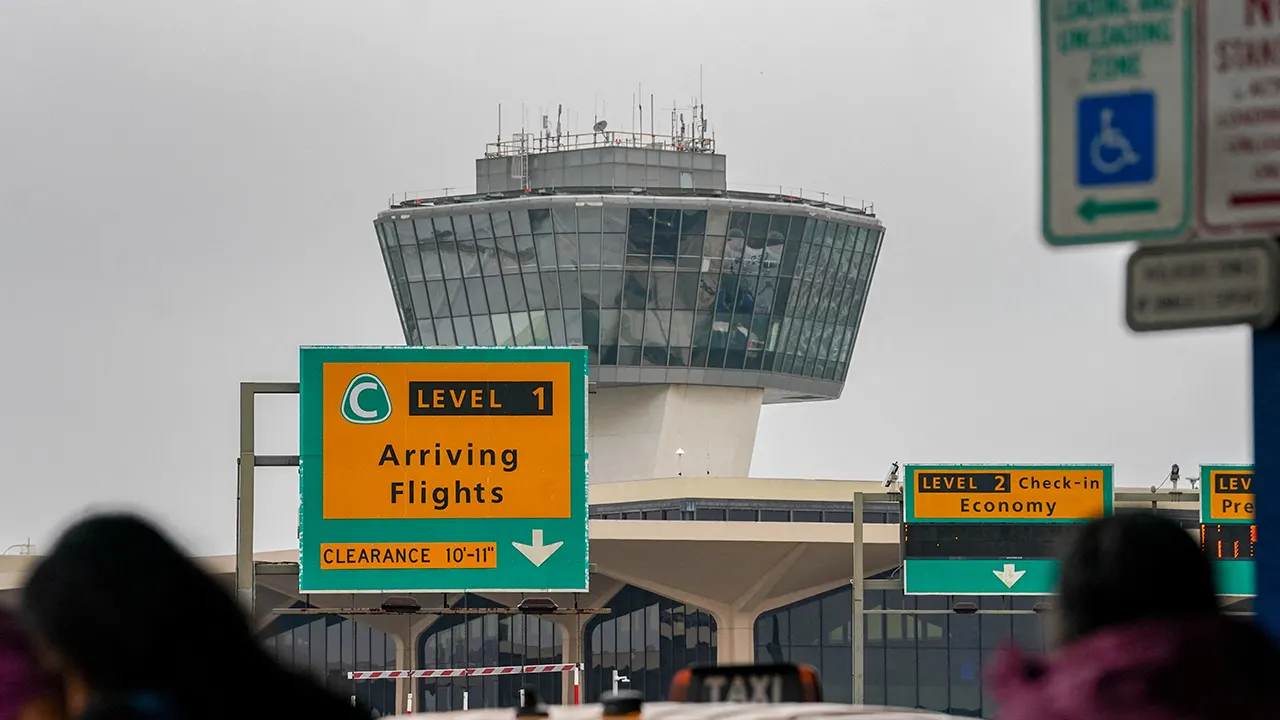
FAA GROUNDS FLIGHTS AT MAJOR NORTHEAST AIRPORTS AFTER FIBER LINE CUT
A severed fiber-optic cable in New Jersey prompted ground stops at major airports across New York, New Jersey and Philadelphia.(Michael M. Santiago/Getty Images)
The disruption, which commenced around 9:45 a.m. after an accidentally cut fiber-optic line in New Jersey caused a telecommunications outage, led to immediate ground stops at major airports spanning New York, New Jersey, and Philadelphia, according to Reuters. While Transportation Secretary Sean Duffy announced by Monday evening that repairs were complete and operations were resuming, the financial damage was already accumulating. The outage contributed to roughly 7,000 flight delays and cancellations nationwide, with approximately 1,400 concentrated at New York City’s three primary airports alone, as reported by FlightAware. Each delay and cancellation represents lost revenue, increased operational expenditure, and a hit to an airline’s reputation.
Davis categorized events like Monday’s outage as “irregular operations” – unexpected disruptions such as severe weather, technical glitches, or, in this case, infrastructure failure. For airline executives and investors, these “irregular operations” are not just logistical headaches; they are significant cost drivers. Airlines operate on razor-thin margins, and unexpected costs from flight disruptions can quickly turn a profitable quarter into a loss. The current environment, marked by persistently high jet fuel prices and ongoing labor challenges, leaves carriers particularly vulnerable to such shocks.
MAJOR AIRLINES CUT FLIGHTS AS HIGHER JET FUEL PRICES HIT CARRIERS
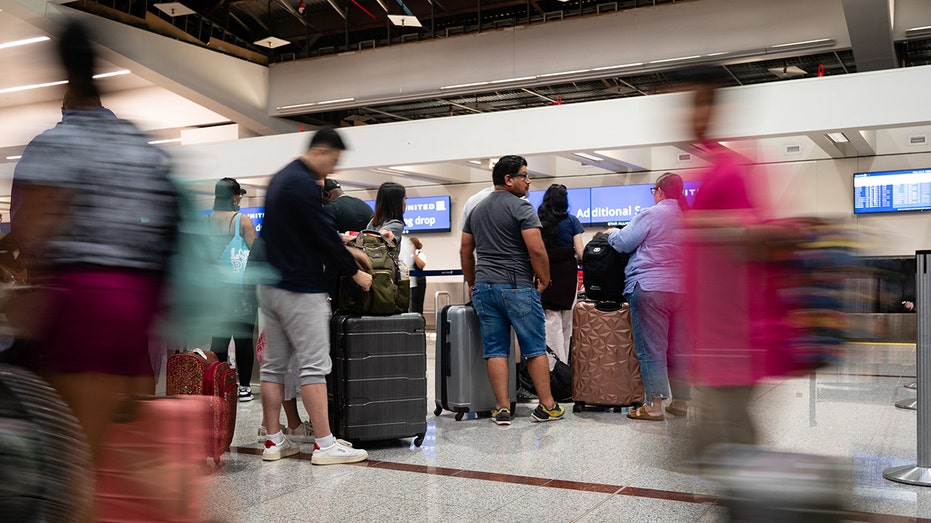
The outage contributed to roughly 7,000 flight delays and cancellations, including about 1,400 involving the three major New York-area airports.(Elijah Nouvelage/AFP via Getty Images)
The financial ramifications extend far beyond the initial ground stop. Even after the original problem is resolved, airlines face a complex and expensive process of repositioning aircraft, pilots, flight attendants, and passengers throughout their networks. This often involves paying for unscheduled crew hotel stays, overtime, additional fuel for rerouted flights, and potential maintenance issues arising from increased operational stress. “There’s always a downhill trickle of subsequent delays, diversions, cancelations,” Davis noted, underscoring the compounding financial drain. “It’s basically a fact of life.” While airlines have sophisticated systems to manage these disruptions, the sheer scale of the costs involved remains a significant concern for investors.
This incident also casts a spotlight on the broader telecommunications infrastructure. The accidental severing of a fiber-optic line highlights a critical vulnerability in the digital backbone supporting not just air travel, but countless other economic activities. For telecommunication providers, such events necessitate increased investment in redundancy, undergrounding critical lines, and robust incident response protocols. These investments, while costly, are essential for maintaining service reliability and, by extension, economic stability. A lack of such resilience can lead to public outcry, regulatory scrutiny, and a loss of market share for providers perceived as unreliable.
Despite the widespread disruptions and associated costs, Davis acknowledged the industry’s considerable experience in managing such events. “Having said all of that, the airlines and the airports are so experienced in handling irregular operations, they do their best within their controls to minimize the effect on passengers,” he said. This experience, while valuable, does not negate the financial hit. Airlines must constantly balance operational efficiency with the imperative of passenger safety and service recovery, a delicate act that directly impacts their financial performance.
AVELO CEO WARNS AIRFARES MAY RISE AS FUEL PRICES HIT ‘UNCOMFORTABLY HIGH’ LEVELS
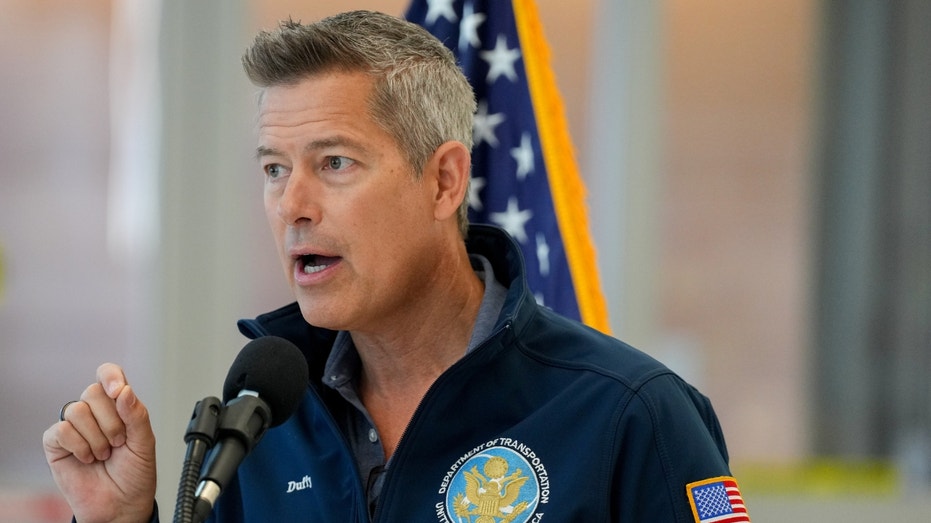
Transportation Secretary Sean Duffy said Monday evening that the telecommunications lines had been repaired and airport operations across the Northeast were resuming.(Adam Gray/Bloomberg via Getty Images)
Crucially, Davis stressed that airlines never compromise safety to restore schedules. “The number one priority every time, all of the time, is the safety of the passengers and the airline employees themselves,” he asserted. “That’s [the] number one priority. No shortcuts, no risks — follow the playbooks. Safety is more important than anything.” While this commitment is paramount from a human perspective, it also has direct financial implications. Safety protocols often dictate slower recovery times and adherence to stringent operational procedures, adding to the duration and cost of resolving “irregular operations.” Any perceived lapse in safety, whether real or imagined, can inflict long-term reputational and financial damage far exceeding the cost of a single disruption.
GET FOX BUSINESS ON THE GO BY CLICKING HERE
Reuters contributed to this report.
Market Impact:
The incident on Monday served as a sharp reminder to investors of the operational risks inherent in the airline and broader transportation sectors, particularly those reliant on critical, often geographically concentrated, infrastructure. Airline stocks, already contending with volatile fuel prices, labor shortages, and softening demand in some segments, are highly sensitive to such operational disruptions. While the immediate market reaction saw minor fluctuations, the event underscores a systemic vulnerability that could lead to more significant investor apprehension if such incidents become more frequent or prolonged. For telecommunication infrastructure providers, the incident highlights a potential catalyst for increased capital expenditure in redundancy and network hardening, which could translate into both opportunities for infrastructure solution providers and increased costs for network operators. Ultimately, the market will weigh the frequency and impact of such “irregular operations” against the industry’s ability to mitigate their financial consequences, influencing valuations and investor confidence in both the aviation and critical infrastructure sectors.