
## The Fleeting Glory of Free-to-Play Shooters: Is Highguard the Next Big Hit or Another Passing Fancy?
In the ever-evolving landscape of online gaming, a recurring phenomenon continues to captivate players: the sudden emergence of a vibrant, free-to-play shooter. These titles often explode onto the scene, quickly dominating discussions and download charts, sometimes with little prior fanfare or even a particularly memorable name. The allure of a fresh experience, especially one that costs nothing to jump into, creates an immediate surge of promise and anticipation. Yet, for many of these hopeful contenders, this initial honeymoon period often represents the pinnacle of their existence—a fleeting moment before the inevitable fade into obscurity.
### Highguard: A New Challenger Enters the Arena
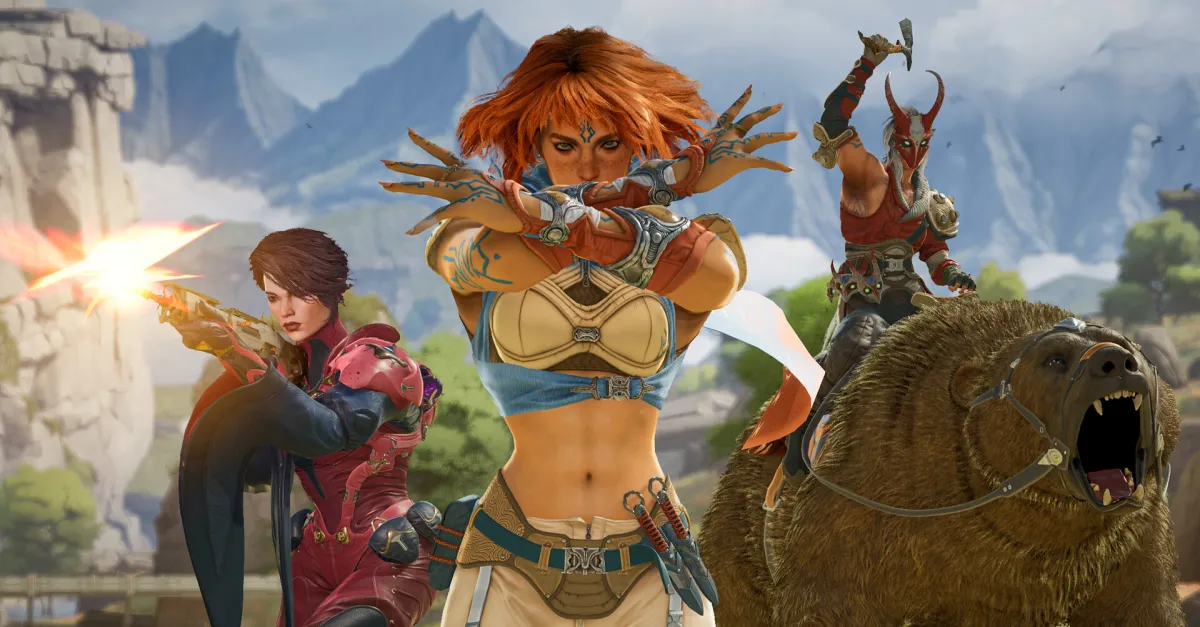
This narrative applies to countless titles, but the most recent example to fit this mold is **Highguard**, which has just made its debut across PS5, Xbox, and Steam. This 3v3 shooter represents the inaugural offering from Wildlight Entertainment, a new studio comprised of seasoned developers whose resumes boast significant contributions to industry giants like *Apex Legends*, *Titanfall*, and *Call of Duty*. Such a formidable lineage alone commands notice, positioning *Highguard* as more than just another throwaway release, especially after its dramatic reveal as the closing announcement at last month’s Game Awards.
What truly sets *Highguard* apart is its ambitious design. The developers themselves have coined the term “raid shooter” to describe it, though it might be more intuitively understood as a first-person shooter that skillfully integrates MOBA (Multiplayer Online Battle Arena) mechanics, akin to a *League of Legends* played from a first-person perspective. Each team operates from a fortified base, and success hinges on a delicate balance: acquiring enhanced gear, fortifying your own stronghold, and completing various objectives crucial for dismantling the enemy’s Headquarters. Oh, and did we mention you can ride a bear?
### Unpacking Highguard’s Core Gameplay
#### Initial Impressions & Accessibility Hurdles
This intricate design, while intriguing, presents a considerable learning curve. After several matches, I found myself still grappling with the optimal strategic flow and intricacies of the game, which could pose a significant barrier to wider adoption. Unlike the immediate accessibility of a *Fortnite*, *Highguard* demands a deeper commitment to truly understand and master its systems.
#### The Thrill of Combat and Heroic Abilities
Despite its complexity, the game shines in its moment-to-moment action. As one might anticipate from veterans of *Titanfall*, the combat feels exceptionally fluid, boasting responsive gunplay and seamless character movement. *Highguard* also embraces the hero shooter archetype, allowing players to select from a roster of distinct characters, each endowed with *Overwatch*-style ultimate abilities. When deployed strategically, these powerful skills can decisively swing the tide of engagement or punch through entrenched enemy defenses, delivering immensely satisfying moments of impact.
### The Double-Edged Sword of Innovation
When you’re immersed in the chaos of a desperate skirmish, perhaps defending teammates as they attempt to defuse an objective, the core appeal of *Highguard* becomes undeniably apparent. At its best, it’s a fast-paced, tense experience that demands swift decision-making and tactical precision.
#### The Mid-Game Lull and Map Design
However, this innovative complexity also introduces elements that can feel somewhat disjointed and, at times, even tedious. The sheer scale of the battlegrounds, coupled with modest team sizes of 3v3, often leads to surprisingly sedate early match segments. Players spend a significant portion of their time traversing expansive, often barren maps, diligently searching for loot chests to upgrade their armor or secure superior weaponry. While mounts are provided to mitigate this travel time, the initial phases of a match frequently feel slow and lack the immediate excitement one expects from a modern shooter.
### Navigating a Saturated Market: The Quest for Longevity
As the ill-fated *Concord* starkly illustrated, the most crucial differentiator for any new online shooter is its unique selling proposition. Yet, even a novel hook offers no panacea for triumph. To carve out a lasting niche, a new title must compete against entrenched behemoths like *Fortnite*, *Counter-Strike*, and the perennial powerhouse that is *Call of Duty*. Some, like *Battlefield 6*, have muscled their way to prominence through sheer force of will, while others, such as *Valorant*, *Helldivers 2*, and *Apex Legends*, have cultivated robust and loyal player bases, securing their place without necessarily dominating the top spot.
#### Learning from the Past: A Graveyard of Good Intentions
However, the graveyard of failed attempts is equally vast, littered with titles like *Anthem*, *Spectre Divide*, *XDefiant*, and *Spellbreak*. Many of these games arrived with intriguing premises—a fantasy-themed *Fortnite*, or the ability to control two bodies simultaneously—but ultimately, their unique concepts weren’t enough to sustain them.
### Highguard’s Uncertain Future
While *Highguard* certainly delivers moments of exhilarating entertainment in its nascent weeks, I remain skeptical that its blend of tactical gameplay, refined combat, and distinctive fantasy aesthetic will secure enduring prominence in such a fiercely competitive landscape. It is undoubtedly different, yet perhaps not sufficiently revolutionary, and it struggles with a clear, concise self-definition that resonates immediately with a broad audience. The statistical probabilities are daunting. So, for now, I’ll savor the current momentum and enjoy the experience while it lasts—all too aware that the gaming world, ever hungry for the next sensation, will undoubtedly turn its gaze to the next contender come spring.