
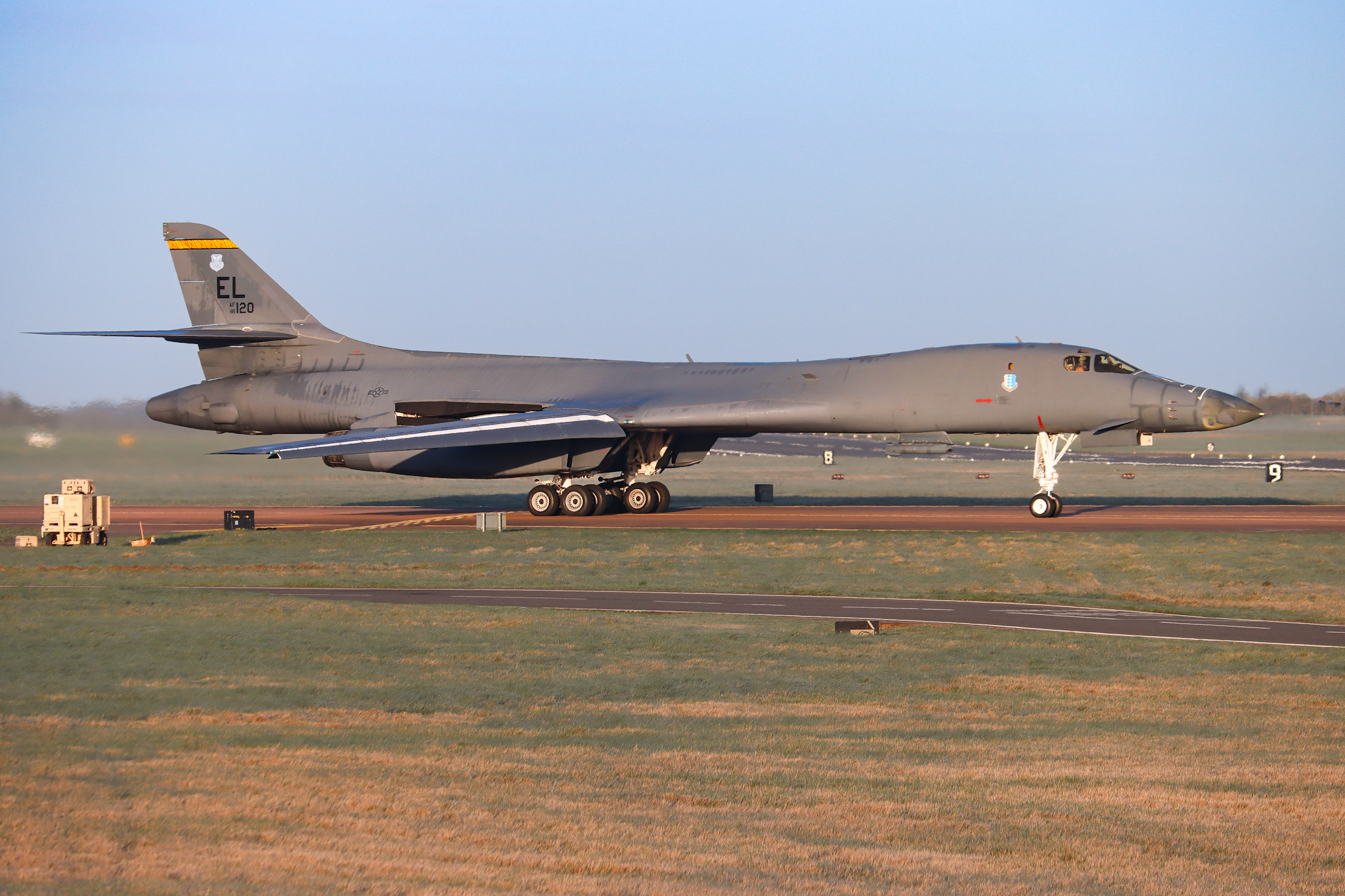
British authorities announced on September 27 that a suspected bomb plot targeting RAF Fairford, a Royal Air Force base in England frequently used by American bombers for operations, including those against Iran, had been disrupted. Five individuals were arrested in connection with the alleged scheme.
The arrests occurred near the strategic air base in Gloucestershire, southwest England, following reports of suspicious activity. Police detained five men on suspicion of terrorism and explosives offenses. Following the arrests, explosive ordnance disposal (EOD) technicians were dispatched to the scene to investigate. RAF Fairford currently hosts a contingent of U.S. Air Force B-1B Lancer strategic bombers, which have been stationed there for approximately seven months, supporting U.S. operations, including strikes against targets in Iran.
U.S. President Donald Trump commented on the arrests on September 27, stating that the suspects were “looking to do big damage” to U.S. interests at RAF Fairford. Speaking before boarding Air Force One, President Trump praised the arrests as “fantastic,” adding, “We had them under view for a long time and we got them. Working with Britain, it was an amazing job. We had them under investigation.”
Security measures at RAF Fairford had been reportedly heightened for several days preceding the arrests, including the deployment of additional vehicles around the base perimeter. Individuals familiar with the situation indicated that the threat level at the base had been elevated before the suspects were apprehended. A spokesperson for the U.S. Air Force declined to provide specific details regarding force protection measures, citing operational security concerns.
British Army explosive ordnance teams were called in to inspect the area where the arrests took place. Helicopter footage broadcast by multiple U.K. news outlets depicted a robot and personnel examining three white vans positioned near the base fence, with B-1B bombers visible on the airfield nearby. The deployment of specialist EOD units underscores the seriousness with which authorities treated the suspected plot.
British Prime Minister Andy Burnham issued a statement emphasizing public safety. “The safety and security of the public is our first priority, and I want people to know that we will always take every step necessary to protect our communities and keep our country safe,” Prime Minister Burnham said, reaffirming the government’s commitment to national security.
According to police, the incident began with a call from a local resident reporting three suspicious vehicles in the vicinity of RAF Fairford. The Metropolitan Police, which leads terrorism investigations in the United Kingdom, stated, “At around 12:45 a.m. today [September 27]… police received a call relating to three suspicious vehicles which appeared to be traveling towards the air base.”
Counterterrorism officials confirmed that the U.K. government’s investigation into the incident is in its preliminary stages. Vicki Evans, the counterterrorism policing senior national coordinator, stated, “We are in the early stages of an investigation, and five men remain in custody. As you would expect, we are working closely with our partners to understand the circumstances of the incident.”
RAF Fairford holds significant strategic importance as the primary U.S. bomber operating location in Europe. While it does not have permanently assigned U.S. Air Force aircraft, it hosts a dedicated wing responsible for supporting U.S. operations, particularly those involving long-range bombers. Its geographically central location in Europe makes it an ideal hub for projecting air power across various theaters.
A U.S. Air Force spokesperson reiterated the commitment to security, stating, “The 501st Combat Support Wing and our other U.K.-based wings remain vigilant and will take appropriate actions to ensure the safety and security of our U.S. service members, civilians, contractors, and their families. We constantly assess a variety of factors that determine what measures we institute or modify to protect our installations, our people, and their families.” This statement highlights the ongoing assessment of threats and the dynamic nature of security protocols at U.S. military facilities abroad.
In response to the incident, roadblocks were established, large machinery was deployed, and armed police officers were observed around the base perimeter. As a precautionary measure, 85 homes in the nearby village of Whelford were evacuated. Richard Ocone, Assistant Chief Constable for Gloucestershire Police, confirmed these measures, stating, “The emergency services have well-rehearsed plans for dealing with major incidents. A cordon is in place as a precaution and the public can expect to see an emergency services presence in the area for some time.”
The B-1B Lancers currently at Fairford played a prominent role in “Operation Epic Fury,” a large-scale air campaign against Iran conducted in the spring. During the peak of these operations, the base housed approximately two dozen bombers, including B-52 Stratofortresses, underscoring its capacity and strategic value. Since a conditional ceasefire in April, while most B-52s have redeployed, a significant number of B-1Bs have remained at Fairford, conducting occasional strikes and regular training sorties out of the U.K.
The U.K. government, under former Prime Minister Kier Starmer, granted permission for the base to be used in strikes against Iran in March, framing these actions as collective self-defense. Prime Minister Burnham reaffirmed this decision in July. This stance has drawn criticism, with Iran’s Islamic Revolutionary Guard Corps (IRGC) issuing warnings in July that it considered Fairford a legitimate target for attack. In response, the U.K. government affirmed its readiness to use British armed forces to defend the base and its personnel.
The U.S. Air Force affirmed its continued cooperation with the U.K. government to ensure the safety and security of its bases in Britain. Another key U.K. base hosting U.S. aircraft is RAF Lakenheath, which houses F-35A Lightning II and F-15E Strike Eagle fighters. These aircraft have been deployed to the Middle East for operations against Iran and Lakenheath also serves as a critical stopover location for fighter aircraft transiting from the United States to the Middle East. The U.S. Air Force spokesperson reiterated, “The safety and security of our Airmen, families, and surrounding communities remains our highest priority. We remain in close coordination with our U.K. partners to help ensure the safety and security of both our military and local communities.”
Why This Matters
The disruption of a suspected bomb plot targeting RAF Fairford carries significant implications for international security, counter-terrorism efforts, and geopolitical stability. Firstly, it underscores the persistent and evolving threat that military installations, particularly those involved in sensitive global operations, face from various actors. Whether driven by extremist ideologies or state-sponsored agendas, such plots highlight the vulnerability of even highly secured sites and necessitate continuous vigilance and intelligence gathering.
Secondly, the incident reaffirms the critical importance of robust international intelligence sharing and law enforcement cooperation. The reported long-term surveillance of the suspects, described by President Trump, suggests a sophisticated and coordinated effort between U.S. and U.K. agencies. This collaboration is indispensable in pre-empting attacks and dismantling networks that transcend national borders, demonstrating the strength of the U.S.-U.K. “special relationship” in defense and security matters.
Thirdly, the target itself—RAF Fairford, a key U.S. bomber hub used for operations against Iran—places the incident within the broader context of escalating U.S.-Iran tensions. Iran’s previous warnings that the base was a legitimate target, coupled with the ongoing deployment of U.S. long-range bombers, indicate that regional conflicts can have direct repercussions on allied territories. This necessitates a careful balance between strategic deterrence and ensuring the safety of personnel and infrastructure in allied nations. It also serves as a stark reminder that even seemingly distant conflicts can inspire or direct threats on Western soil.
Finally, this event will likely lead to a re-evaluation and potential enhancement of security protocols at military bases globally, particularly those hosting international forces or engaged in sensitive missions. The evacuation of nearby civilian homes illustrates the potential for broader impact beyond the immediate military target. The incident serves as a tangible reminder that national defense extends beyond direct combat operations to encompass the protection of critical assets and surrounding communities from both overt and covert threats, reinforcing the need for constant adaptation in an unpredictable global security landscape.