
Editor’s Note: This article was curated and enhanced for our readers.
Source: WIRED Italia
***
## The Alarming Ticking: Humanity at 85 Seconds to Midnight
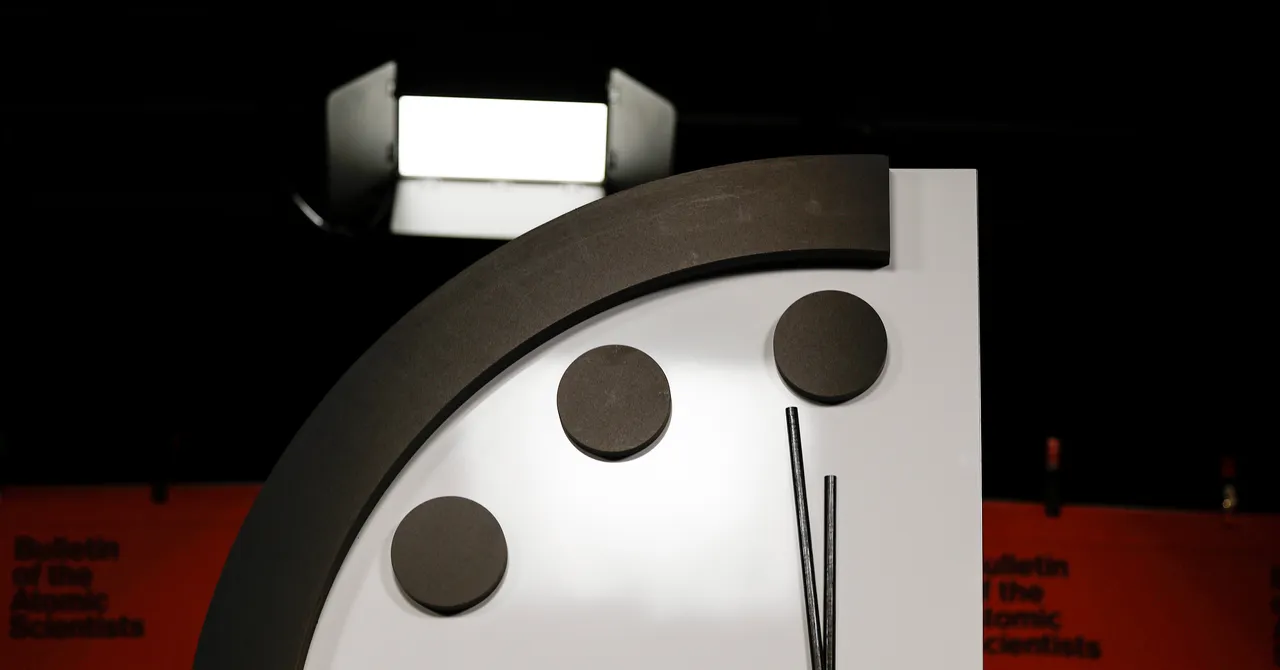
The world holds its breath as the iconic Doomsday Clock advances to an unprecedented 85 seconds to midnight. For nearly eight decades, this symbolic timepiece has served as a stark reminder of humanity’s precarious position, and never before has it pointed so perilously close to the brink of global catastrophe. This chilling update comes from the Bulletin of the Atomic Scientists’ Science and Security Board (SABS), the esteemed panel of experts responsible for its annual adjustment.
This year’s grim assessment shines a spotlight on a dangerous convergence of threats. The SABS specifically highlighted the escalating dangers posed by nuclear weapons, the unpredictable advancements of disruptive technologies like artificial intelligence, mounting concerns surrounding biosecurity, and the relentless march of the climate crisis. It’s a sobering panorama of existential risks demanding immediate attention.
### What is the Doomsday Clock, and Why Does it Matter?
Conceived in 1947 amidst the shadow of the Cold War between the United States and the Soviet Union, the Doomsday Clock is far more than a mere timepiece. It functions as a powerful, symbolic representation of how close humankind stands to rendering our planet uninhabitable. Midnight on this clock signifies the moment when human actions have irrevocably destroyed the Earth as we know it.
Last year, the hands rested at 90 seconds to midnight, a position that itself was a dire warning, indicating insufficient progress against a litany of global challenges: nuclear proliferation, the worsening climate crisis, emergent biological threats, the unchecked spread of disruptive technologies, and the corrosive influence of disinformation. “Every second of delay in reversing course,” members of the SABS cautioned, “increases the likelihood of a global disaster.” The recent move to 85 seconds underscores that, far from reversing course, we’ve accelerated towards peril.
## The Perilous Shift Towards Midnight
Despite these urgent warnings, the geopolitical landscape has, regrettably, only grown more volatile. Major global powers, including the United States, Russia, and China, have displayed increasingly aggressive and nationalistic tendencies over the past year. This worrying trend has directly contributed to the Clock’s alarming advancement.
### The Erosion of Trust
Daniel Holz, president of the SABS, articulated this concern powerfully: “The dangerous trends in nuclear risk, climate change, disruptive technologies like AI, and biosecurity are accompanied by another frightening development: the rise of nationalistic autocracies in countries around the world.” He emphasized that the monumental challenges we face demand a foundation of international trust and cooperation. A world fractured by an “us versus them” mentality, he warned, inevitably leaves all of humanity far more vulnerable.
## Leadership in Crisis: Time Is Running Out
The SABS report doesn’t shy away from identifying a critical vacuum in global leadership as these threats intensify. “Hard-won global understandings are collapsing,” the organization stated in its press release, “accelerating a winner-takes-all great power competition and undermining the international cooperation critical to reducing the risks of nuclear war, climate change, the misuse of biotechnology, the potential threat of artificial intelligence, and other apocalyptic dangers.”
This alarming breakdown of collaboration is exacerbated by what the experts perceive as complacency and indifference among many leaders. Far too often, their rhetoric and policies, rather than mitigating these existential risks, actively accelerate them. The stakes could not be higher.
## A Call to Action: Turning Back the Clock
While the Doomsday Clock serves as a stark reminder of our world’s fragility and its proximity to a point of no return, it also carries a crucial message of hope: there is still time to act. It symbolizes the window of opportunity we have to collectively pull humanity back from the precipice.
The path forward, though challenging, is clear and actionable. For instance:
* **Nuclear Diplomacy:** The United States and Russia could reignite critical discussions aimed at limiting their formidable nuclear arsenals.
* **AI and Biosecurity Governance:** Through robust multilateral agreements and thoughtful national regulations, we can establish appropriate safeguards to significantly reduce the potential for artificial intelligence to be weaponized or misused in creating biological threats.
* **Climate Action:** Legislative bodies, such as the U.S. Congress, could implement powerful incentives and strategic investments to drive a rapid and substantial reduction in our reliance on fossil fuels.
* **Military AI Protocols:** The United States, Russia, and China must initiate dialogue to develop clear guidelines for integrating artificial intelligence into their military operations, particularly within sensitive nuclear command and control systems, to prevent catastrophic miscalculations.
“National leaders, particularly those of the United States, Russia, and China, must take the lead in finding a way out of the abyss,” the experts concluded with a resounding call. But they didn’t stop there. They added, “Citizens must insist that they do so.” The responsibility, it seems, rests not only with those in power but with all of us. The seconds are ticking.