
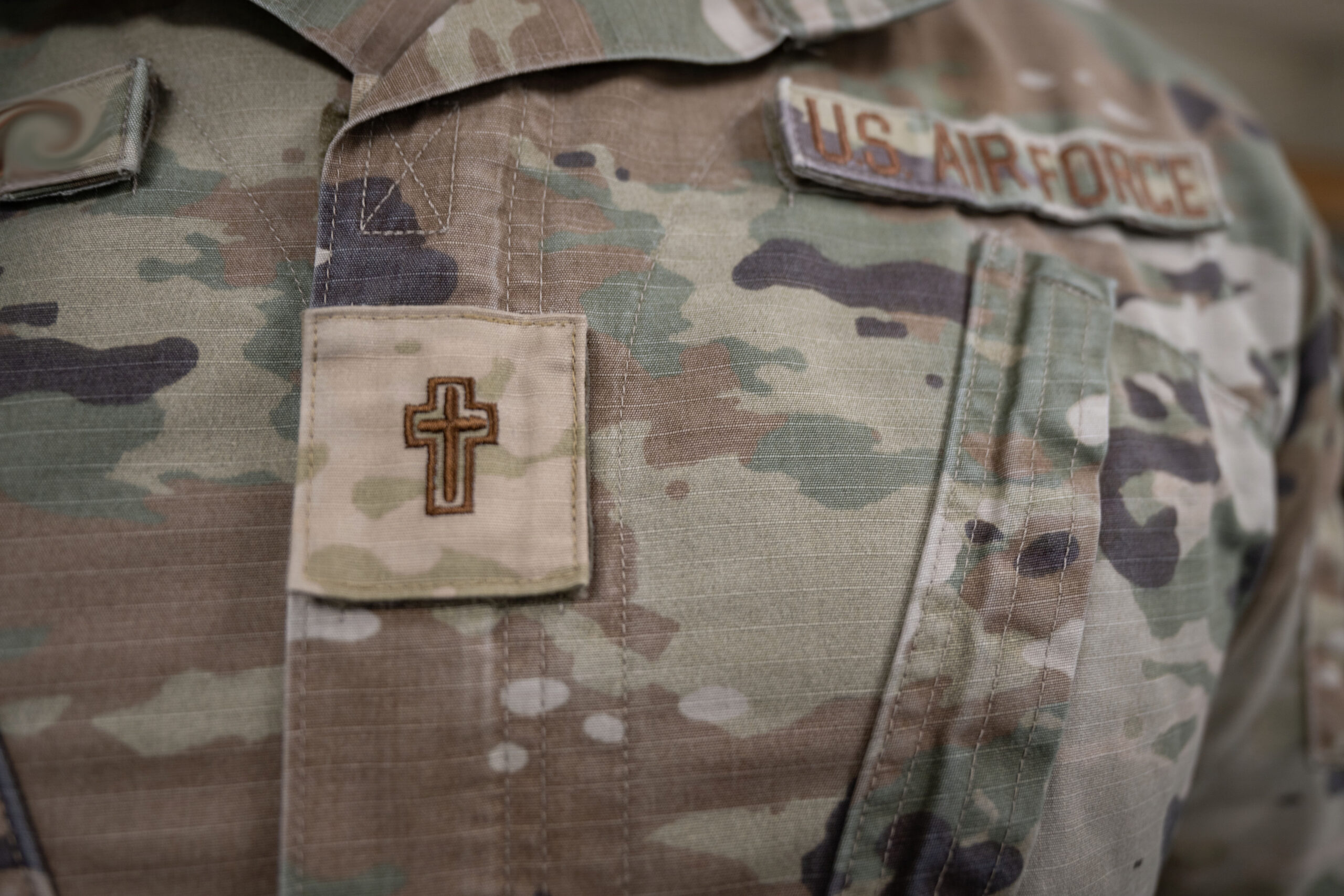
The U.S. Department of Defense has introduced a consolidated list of Religious Affiliation Codes (RAC) for active-duty Airmen and Guardians, requiring them to update their personnel records by mid-October. This initiative, mandated by Defense Secretary Pete Hegseth, significantly reduces the number of specified religious preferences within the Pentagon’s human resources systems, aiming to streamline data and enhance the chaplain corps’ ability to support service members.
The new directive slashes the previous list of over 200 distinct religious affiliations to approximately 30. Officials stated in June that this consolidation is essential for modernizing the recording of religious preferences and for strategically structuring the chaplain corps to effectively cater to the spiritual needs of a diverse military population. The process involved condensing roughly 170 Christian denominations into 21 categories, while also including widely practiced non-Christian religions such as Buddhism, Hinduism, Islam, and Judaism. Notably, faiths like Wicca and paganism, along with other nontraditional beliefs, have been removed from explicit listing and are now encompassed under a new “Other Religious” category.
According to a recent Department of the Air Force announcement, all active-duty members of the Air Force and Space Force are directed to select their new Religious Affiliation Code within the Virtual Military Personnel Flight (vMPF) system. They are also required to certify the accuracy of their emergency data records by October 16. Members of the Air Force Reserve and Air National Guard have been granted additional time, with a deadline set for November 9 to complete their record updates.
Richard Anderson, Assistant Secretary of the Air Force for Manpower and Reserve Affairs, emphasized the purpose of the change. In the official announcement, he stated, “Transitioning to these standardized codes ensures our chaplain corps has the accurate demographic data they need to provide tailored resources and support to our service members, while continuing to respect their individual convictions.” This statement underscores the Pentagon’s intent to balance administrative efficiency with the continued provision of religious support.
Service members who do not update their Religious Affiliation Code by the specified deadlines will have their records automatically assigned to a category that aligns with the new consolidated list. For example, an Air Force official indicated that a previous designation such as paganism would likely be automatically updated to the “Other Religious” category. The department has clarified that individual Airmen and Guardians will retain the freedom to identify their specific religious preference on their personal identification tags, commonly known as “dog tags.” These tags often play a crucial role in helping chaplains identify and address the religious needs of service members, particularly in situations where they may be wounded in combat.
Defense Secretary Pete Hegseth initially announced the initiative to consolidate religious preference lists in a social media video on March 24. At the time, he characterized the older list of Faith and Belief Codes as “impractical and unusable.” Hegseth also issued a directive for chaplains to replace their traditional rank insignia with appropriate religious affiliation insignia, a move intended to enhance their approachability, particularly for younger service members. These announcements followed Hegseth’s comments in September 2023, where he specifically addressed requests for religious exemptions to grow beards, singling out paganism in his remarks. Speaking to a gathering of general officers at Quantico, Va., on September 30, 2023, Hegseth stated, “If you want a beard, you can join Special Forces. If not, then shave. We don’t have a military full of Nordic pagans, but unfortunately, we have had leaders who either refuse to call BS and enforce standards, or leaders who felt like they were not allowed to enforce standards.”
Pentagon spokesman Sean Parnell has since provided further clarification regarding the new consolidated RAC list. In a social media post dated June 5, Parnell asserted that the list is not intended to provide a compilation of “officially approved” religions. Instead, he explained, its design is to “allow chaplains to quickly look at the religious composition of their units and determine how they structure resources to best provide for warfighters of all faith groups.” This statement aims to address concerns that the new list might be perceived as endorsing or de-legitimizing certain faiths.
The Pentagon did not publicly release the older list of Faith and Belief codes for direct comparison. However, service members seeking to understand the scope of the changes can refer to an earlier list derived from a March 2017 memo issued by the Armed Forces Chaplains Board to compare it with the newly implemented codes.
Why This Matters
The U.S. military’s decision to consolidate its religious affiliation codes carries significant implications for service members, religious freedom, and the operational effectiveness of its chaplain corps. First, it touches upon the delicate balance between maintaining military uniformity and readiness and respecting individual religious beliefs, a cornerstone of democratic values and military policy. By reducing the number of explicitly recognized faiths, the policy could be perceived by some as diminishing the official recognition of specific, often minority, religious traditions within the armed forces, potentially impacting morale and feelings of inclusion for those whose faiths are now grouped under broader categories like “Other Religious.”
Secondly, the stated goal of streamlining data for the chaplain corps is crucial for effective spiritual support. The chaplain corps plays a vital role in providing religious services, counseling, and ethical guidance to service members of all backgrounds. Accurate demographic data is essential for chaplains to allocate resources, plan services, and respond to the diverse spiritual needs of their units, particularly in high-stress combat environments. However, the consolidation raises questions about whether a less granular understanding of religious demographics might inadvertently hinder, rather than help, chaplains in providing truly tailored and sensitive support to service members from less common faiths.
Furthermore, Secretary Hegseth’s previous public statements, particularly those concerning paganism and religious exemptions for beards, add a layer of controversy and scrutiny to this policy change. While the Pentagon maintains the consolidation is for administrative and resource allocation purposes, these prior comments could lead some to interpret the changes as reflecting a particular cultural or religious bias, or an attempt to standardize religious expression within the military. This perception, whether accurate or not, can erode trust between leadership and service members from diverse religious backgrounds.
Finally, this policy sets a precedent for how the U.S. military will acknowledge and accommodate religious diversity moving forward. How the “Other Religious” category is managed, and whether service members within it feel adequately represented and supported, will be a key indicator of the policy’s success. The ability for service members to continue identifying their specific faith on their dog tags offers a limited but important individual safeguard. Ultimately, the effectiveness of this new system will be measured by its ability to provide comprehensive religious support to every service member, regardless of their specific faith, while upholding the principles of religious freedom within a structured military environment.