
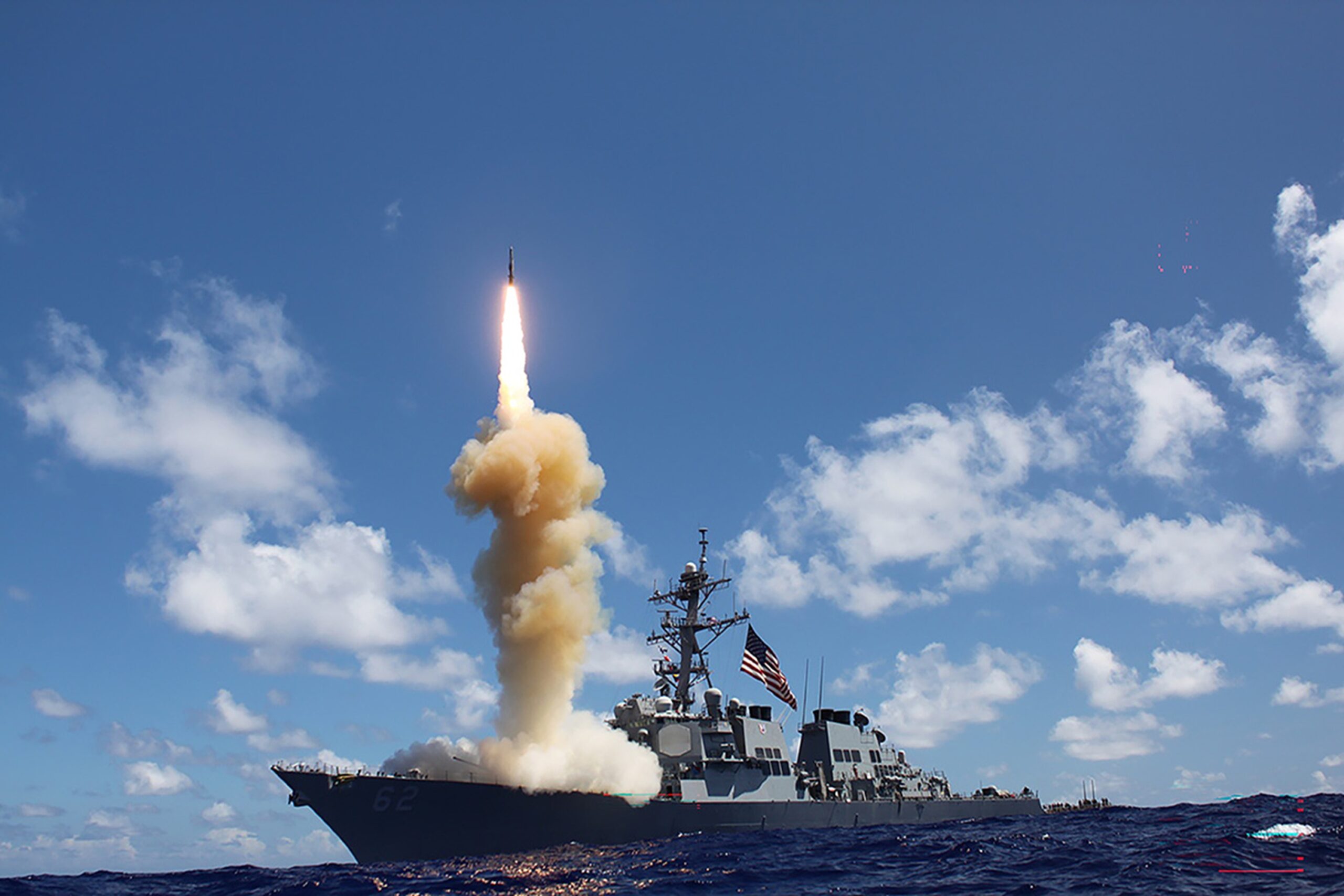
U.S. Navy Awards Raytheon $24.4 Billion Contract to Boost SM-6 Missile Production
The U.S. Navy has finalized a significant five-year contract with Raytheon, a subsidiary of RTX Corporation, valued at up to $24.4 billion. This multi-year procurement agreement aims to dramatically accelerate the production of the Standard Missile-6 (SM-6), a cornerstone of the Navy’s long-range air and surface defense capabilities. The announcement was made on October 1 by Acting Secretary of the Navy Hung Cao, underscoring a strategic push to enhance the Navy’s combat readiness and replenish weapon stockpiles.
The contract includes provisions for two additional option years, extending the potential duration and value of the commitment. This long-term approach, known as multi-year procurement, is designed to provide Raytheon with the stability and predictability necessary to make substantial investments in expanding its manufacturing capacity. By committing to sustained purchases over several years, the Navy anticipates achieving significant cost savings through negotiated pricing, compared to the less efficient process of annual, smaller-scale procurements. This method allows industry partners to plan workforce expansion, invest in new equipment, and optimize supply chains more effectively.
“Maritime strength demands weapons at speed and scale,”Acting Secretary Cao stated in the official release.“This investment expands production and delivers the firepower our warfighters need to fight, win, and come home safe.”His comments highlight the urgency the Navy places on bolstering its arsenal in an increasingly complex global security environment.
The SM-6 missile has emerged as one of the most versatile and critical weapons within the U.S. surface fleet’s inventory. Launched from the Mk 41 Vertical Launch System (VLS) – a modular, canister-based system found on key warships like Arleigh Burke-class destroyers and Ticonderoga-class cruisers – the SM-6 is capable of engaging a wide array of threats. Its multi-mission capabilities include intercepting advanced aircraft, cruise missiles, and ballistic missiles during their terminal phase. Uniquely, the SM-6 also possesses an anti-surface capability, allowing it to strike enemy ships, significantly expanding its utility in naval engagements.
A key technological feature of the SM-6 is its active radar seeker, which enables the missile to engage targets beyond the radar horizon of the launching ship. This “over-the-horizon” capability is made possible when the missile receives targeting information, or “cueing,” from other networked sensors, such as those aboard other ships, aircraft, or unmanned platforms. This integration is a fundamental component of the U.S. Navy’s Cooperative Engagement Capability (CEC), a system designed to share real-time sensor data across multiple platforms, creating a unified and highly effective air defense network.
The imperative to accelerate SM-6 production has been starkly demonstrated by recent operational demands. Since late 2023, U.S. warships deployed in the Red Sea and broader Middle East have actively employed SM-6 missiles in combat. These engagements have included successful interceptions of anti-ship missiles and unmanned aerial vehicles launched by Houthi rebels, underscoring the weapon’s effectiveness against contemporary threats. However, these sustained combat operations have inevitably drawn down existing stockpiles of the missile, each round of which costs several million dollars, highlighting the critical need for rapid replenishment and increased production capacity.
Adm. Daryl Caudle, Chief of Naval Operations, directly linked the new contract to the strategic importance of maintaining sufficient munition levels.“Combat credibility depends on having enough weapons, produced at the speed and scale the Fleet requires,”he remarked.“This SM-6 award gives industry the demand signal and stability to expand production, strengthen the munitions industrial base, and build the magazine depth our Fleet needs. That is the Foundry delivering for the Fleet – and ensuring our Sailors have the combat power to fight and win.”His reference to “the Foundry” signifies the collective effort to modernize and scale the defense industrial base to meet national security demands.
The management of this substantial award falls under the purview of the U.S. Navy’s Portfolio Acquisition Executive (PAE) Munitions. This specialized organization is tasked with overseeing the entire lifecycle of naval munitions, from research and development to procurement and delivery of strike capabilities. This SM-6 contract follows a recent, similar multi-year agreement for Tomahawk cruise missiles, which the Navy describes as part of a broader, concerted effort to expedite weapons production across its entire portfolio of advanced armaments.
Van Hendrey, Portfolio Acquisition Executive for Munitions, emphasized the innovative nature of the procurement.“This award demonstrates what is possible when the Department leverages innovative acquisition approaches to deliver capability at the speed of relevance,”Hendrey stated.“Through PAE Munitions, we are bringing together the authorities, resources, and partnerships needed to accelerate production, reduce costs, and strengthen the industrial base that supports our warfighters.”These “innovative approaches” are crucial for overcoming traditional bottlenecks in defense acquisition and manufacturing.
Raytheon manufactures the intricate components of the SM-6 at its facilities in Tucson, Arizona, with final assembly operations conducted at Redstone Arsenal in Huntsville, Alabama. The missile’s advanced capabilities have also made it a sought-after asset for key U.S. allies. The SM-6 has been cleared for export to a number of partner nations, with Japan and Australia notably pursuing the weapon to enhance the air defense capabilities of their own modern destroyers, thereby fostering interoperability and collective security in critical regions.
According to the U.S. Navy, the long-term agreement is projected to foster a larger, more skilled workforce, enable higher manufacturing throughput, and cultivate more robust and resilient supply chains for the missile’s complex components. This initiative is part of a wider, strategic push by the Department of Defense to rebuild and modernize the defense industrial base, ensuring a consistent and reliable supply of advanced weapons for both Navy and Marine Corps forces in an era of renewed global power competition.
Why This Matters
This massive $24.4 billion contract for the SM-6 missile is far more than just a procurement deal; it represents a critical strategic investment with profound implications for global security, economic stability, and the future of naval warfare. Firstly, it directly addresses the urgent need to replenish and expand the U.S. Navy’s inventory of advanced munitions, which have been drawn down by recent combat operations in regions like the Red Sea. In an era of increasing geopolitical instability and the rise of near-peer competitors, maintaining a robust arsenal is paramount for deterrence and power projection.
Secondly, the multi-year procurement strategy is a significant move to stabilize and strengthen the U.S. defense industrial base. By providing predictable demand, it allows companies like Raytheon to invest confidently in expanding production lines, hiring specialized labor, and securing long-term supply chains. This not only makes missile production more efficient and potentially cost-effective in the long run but also builds resilience against future disruptions, ensuring the nation can sustain its military operations and respond to crises effectively.
Thirdly, the SM-6 itself is a cornerstone of modern naval combat. Its multi-mission capabilities – from air defense against advanced threats to ballistic missile defense and anti-surface warfare – make it indispensable for protecting naval assets and projecting power globally. The ability to engage targets over the horizon, facilitated by systems like the Cooperative Engagement Capability, represents a technological edge that enhances the lethality and survivability of the U.S. fleet and its allies. Exporting this missile to partners like Japan and Australia further enhances interoperability and collective defense capabilities in vital regions like the Indo-Pacific.
Finally, this contract reflects a broader shift in U.S. defense strategy towards what military leaders refer to as “integrated deterrence” and “great power competition.” It signals a commitment to outpace potential adversaries in critical military capabilities and industrial capacity. For taxpayers, while the cost is substantial, it is presented as a necessary investment in national security, aiming to deliver capabilities more efficiently and ensure the U.S. military can “fight, win, and come home safe.” The success of this strategy will impact not only the U.S. military’s readiness but also the stability of international waters and the balance of global power for years to come.