
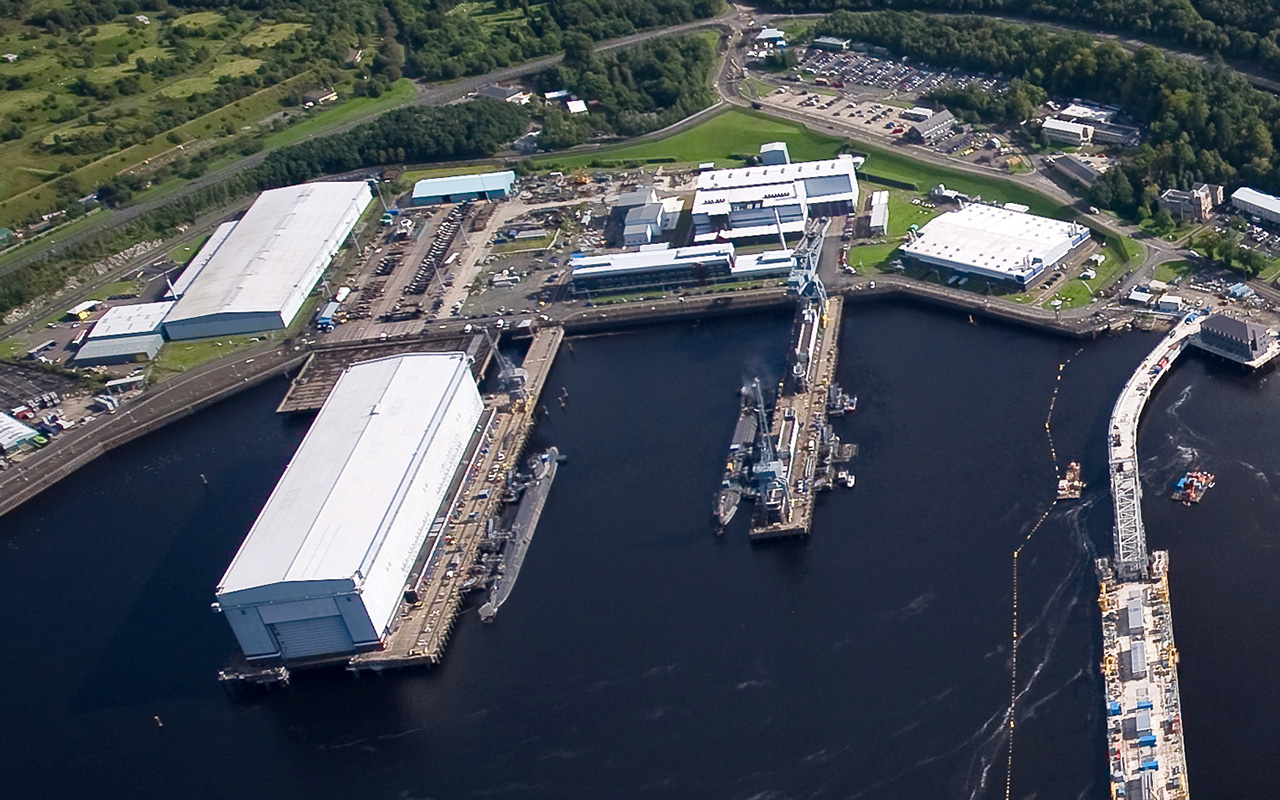
Significant Naval Activity at HM Naval Base Clyde with Arrival of US and UK Attack Submarines
HM Naval Base Clyde, a strategically vital facility on Scotland’s west coast, experienced notable activity on Friday with the concurrent arrival of two nuclear-powered attack submarines: a United States Navy Virginia-class submarine in the morning, followed later in the day by the Royal Navy’s newest hunter-killer, HMS Agamemnon.
In adherence to standard security protocols, neither the U.S. Navy nor the Royal Navy publicly identified the American submarine. Visits of this nature are routinely not announced in advance due to the sensitive operational considerations involved in submarine movements. U.S. submarines frequently call at Faslane, the operational base for HM Naval Base Clyde, for essential logistical purposes, including taking on stores, facilitating crew changes, and providing rest periods for personnel, particularly following extended deployments in demanding operational areas such as the North Atlantic and the waters north of Scotland.
The Virginia-class represents the forefront of the U.S. Navy’s attack submarine fleet. These formidable vessels displace approximately 7,800 tonnes when submerged and are equipped with a potent array of weaponry, including Mk 48 heavyweight torpedoes for anti-submarine and anti-surface warfare, and Tomahawk cruise missiles for land-attack missions. Later production blocks of the Virginia class incorporate additional vertical launch tubes, enhancing their strike capabilities. The United States Navy currently operates more than twenty Virginia-class submarines, with ongoing construction at major shipyards in Groton, Connecticut, and Newport News, Virginia. This class is also central to a significant international defense agreement: under the initial phase of the AUKUS security pact, Australia is slated to acquire Virginia-class submarines, marking a pivotal development in its naval capabilities and regional security posture in the Indo-Pacific.
The arrival of HMS Agamemnon marked her inaugural visit to her future home base at Faslane. As the sixth vessel of the Royal Navy’s advanced Astute-class, her journey from the BAE Systems shipyard in Barrow-in-Furness commenced on September 25th for contractor sea trials. This significant milestone occurred thirteen years after her keel was laid, underscoring the complex and protracted nature of modern submarine construction. The passage north to Clyde was completed over the subsequent week, allowing for initial assessments of her systems and performance in varied conditions.
Announcing the commencement of HMS Agamemnon’s sea trials, the First Sea Lord, General Sir Gwyn Jenkins, articulated the strategic importance of the event. He stated:“In an increasingly dangerous world, sea power remains fundamental to keeping our country and people safe. Our submarine fleet is essential to that effort, which is why I am delighted that HMS Agamemnon, the sixth of our Astute-class submarines, has now begun sea trials.”General Jenkins further emphasized the submarine’s significance, adding:“She embodies the best of British engineering and the professionalism of our submariners and will be one of the most advanced submarines ever operated by the Royal Navy. As we continue to strengthen our warfighting readiness, HMS Agamemnon will play a central role in keeping the United Kingdom safe, contributing to NATO’s collective defence and ensuring we are ready to lead, fight and win.”
These two advanced submarines, the Virginia-class and the Astute-class, share substantial commonalities in terms of their size, operational profiles, and designated missions. Both classes are designed for a comprehensive range of tasks essential to modern naval warfare. These include escorting ballistic missile submarines (SSBNs) to protect national nuclear deterrents, actively hunting other submarines and surface ships to maintain sea control, deploying special forces for covert operations, conducting intelligence gathering missions, and delivering precision strikes inland using cruise missiles. The close operational relationship between British and American attack submarines, particularly in the strategically critical waters of the North Atlantic, has been a cornerstone of NATO’s collective defense for many decades, fostering interoperability and shared tactical expertise.
This enduring strategic partnership is also deeply embedded in the development of the next generation of naval hardware. At the Barrow shipyard, construction is underway for the four Dreadnought-class ballistic missile submarines, which will form the future backbone of the UK’s continuous at-sea deterrent. A key element of this program is the missile compartment, which has been designed jointly with the United States for its own Columbia-class SSBNs, demonstrating a profound level of technological collaboration. Furthermore, the SSN-AUKUS, a novel British-designed attack submarine intended to replace the Astute-class, is slated for construction utilizing significant American technology and is also projected for sale to Australia, solidifying the trilateral defense pact. Concurrently, HM Naval Base Clyde itself is undergoing a comprehensive modernization under the Clyde Transformation Programme. This extensive initiative includes the construction of three new floating docks, a project which the Treasury recently confirmed will be competitively tendered exclusively among British shipyards, underscoring a commitment to bolstering domestic industrial capabilities while enhancing the base’s capacity to support current and future submarine fleets.
Why This Matters
The confluence of these events at HM Naval Base Clyde underscores several critical dimensions of global security, defense strategy, and international alliances. Firstly, the presence of both U.S. Virginia-class and the new Royal Navy Astute-class submarines highlights the enduring strategic importance of the North Atlantic. This region remains a vital corridor for maritime trade, a crucial area for undersea warfare operations, and a key zone for monitoring potential adversaries. The routine presence and advanced capabilities of these submarines are essential for maintaining deterrence, protecting allied interests, and projecting power in an increasingly complex geopolitical landscape.
Secondly, the arrival of HMS Agamemnon, the newest Astute-class submarine, signifies a substantial enhancement to the Royal Navy’s warfighting readiness. As General Jenkins articulated, these vessels are central to the UK’s national security and its commitment to NATO’s collective defense. Modern attack submarines, with their stealth, speed, and formidable firepower, are indispensable assets for intelligence gathering, special operations, and precision strike capabilities against both land and sea targets. Their commissioning represents a significant long-term investment in maintaining a qualitative edge in undersea warfare, a domain increasingly recognized as critical for global power projection and strategic advantage.
Thirdly, these developments powerfully illustrate the depth and evolution of the defense relationship between the United Kingdom and the United States. Decades of close operational cooperation in submarine warfare have forged an unparalleled level of interoperability and trust. This partnership is now extending into future generations of naval hardware, as evidenced by the joint design of missile compartments for ballistic missile submarines and the groundbreaking SSN-AUKUS program. The latter, involving the sharing of advanced U.S. technology for a British-designed submarine also destined for Australia, represents a paradigm shift in allied defense cooperation. It signifies a profound commitment to collective security, particularly in the Indo-Pacific, and aims to counter emerging threats by enhancing the technological and operational capabilities of key allies.
Finally, the ongoing Clyde Transformation Programme at Faslane, including significant investments in new infrastructure, underscores the long-term commitment to supporting these advanced fleets. This investment not only ensures the operational readiness of current and future submarines but also generates substantial economic activity, supporting skilled jobs in shipbuilding and defense industries within the UK. The strategic decisions to invest in these advanced platforms and supporting infrastructure reflect a clear national imperative to maintain robust naval power and contribute effectively to international security frameworks like NATO and AUKUS, ensuring that the UK and its allies are equipped to face the challenges of an uncertain future.