
## Former President Trump Ignites Aviation Spat, Threatens Canada with Tariffs and Decertification
Former President Donald Trump has issued a formidable ultimatum to Canada, signaling a potential trade war over alleged obstruction of U.S.-made aircraft. In a bold declaration, Trump threatened to revoke certifications for all Canadian-manufactured planes and impose a steep 50% tariff unless Ottawa immediately approves Gulfstream jets for its market. His accusations point to an “illegal” and “wrongful” pattern of blocking American aircraft while Canadian planes enjoy unrestricted access to the U.S.
### The Heart of the Aviation Dispute: Certification Wars
The core of this escalating tension lies in the intricate process of aircraft certification—a regulatory gatekeeper determining which planes can be legally sold and operated within a country’s borders. Trump contends that Canadian authorities are weaponizing this process, deliberately hindering the entry of top-tier U.S. Gulfstream jets.
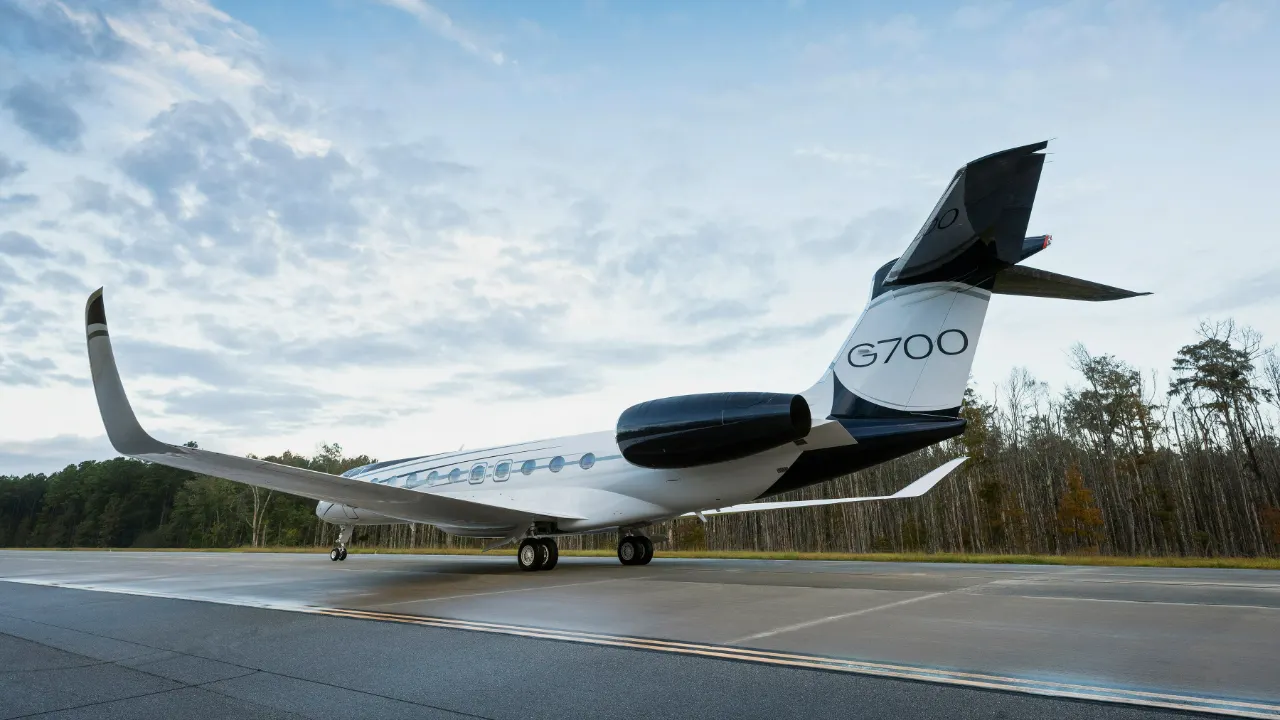
Via a late-night post on Truth Social, Trump articulated his frustration: “Given that Canada has unjustifiably, unlawfully, and steadfastly refused to certify the Gulfstream 500, 600, 700, and 800 Jets—some of the most advanced aircraft ever built—we are hereby revoking the certification for their Bombardier Global Expresses and all other Canadian-made aircraft. This will stand until Gulfstream, a magnificent American enterprise, receives the full certification it should have obtained years ago.” He further alleged, “Canada is effectively prohibiting the sale of Gulfstream products within its borders through this very same certification mechanism.”
The former president didn’t stop there, adding a potent financial threat: “Should this situation not be rectified promptly, I will levy a 50% tariff on any and all aircraft sold from Canada into the United States of America. Your swift attention to this matter is expected!”
### Unforeseen Ramifications and Regulatory Labyrinths
The immediate ripple effects of Trump’s proposed sanctions remain somewhat ambiguous. While Bombardier’s Global Express line was explicitly named, the extent to which other Canadian-built aircraft, such as the Airbus A220 commercial jets, might be swept into the punitive measures is yet to be clarified.
Data from FlightRadar24 reveals that over 400 Canadian-made aircraft were actively operating in U.S. airspace as of early Friday, indicating the significant disruption such actions could cause. Furthermore, Cirium, a data analytics provider, reports that 150 Global Express aircraft are currently registered in the United States, operated by 115 different entities.
Adding to the complexity, while the Gulfstream G800 jet received certification from both the Federal Aviation Administration (FAA) and the European Union Aviation Safety Agency (EASA) in April, Transport Canada—the country’s aviation regulator—has yet to issue its approval. Efforts to reach Bombardier, Gulfstream, and Transport Canada for comment have not yielded immediate responses.
The practicalities of how Trump’s “decertification” would be executed also present a challenge, as the authority for such actions typically resides with the FAA. However, history shows that previous declarations by Trump, though initially appearing to overstep typical executive authority, have often been subsequently implemented, sometimes with certain modifications, by the relevant federal agencies.
### A Broader Chill in U.S.-Canada Relations
This aviation dispute unfolds against a backdrop of existing U.S.-Canada tensions. Canadian Prime Minister Mark Carney recently pushed back against suggestions that he had walked back earlier critical comments about Trump, emphasizing the often-unpredictable nature of U.S. politics.
Just last week, Carney had urged other nations to brace for a potential erosion of the global rules-based order, largely attributing this prospective shift to U.S. trade policies. He has also actively advocated for Canada to diversify its trade relationships, reducing its heavy reliance on the United States, which currently accounts for approximately 70% of Canada’s exports under the U.S.–Mexico–Canada trade agreement.
***
**Summary of Main Points:**
* Former President Donald Trump has threatened Canada with severe aviation-related penalties: decertification of all Canadian-made aircraft and a 50% tariff on Canadian planes entering the U.S.
* The ultimatum stems from Trump’s accusation that Canada is “illegally” blocking the certification and sale of U.S.-made Gulfstream jets in its market, despite Canadian aircraft having access to the U.S.
* Trump explicitly named Bombardier Global Expresses for decertification and cited the uncertified Gulfstream 500, 600, 700, and 800 models as the reason.
* The potential impact is significant, with hundreds of Canadian-made aircraft currently operating to/from U.S. airports, and questions remaining about the scope of affected planes (e.g., Airbus A220).
* This specific aviation dispute adds to existing strains in U.S.-Canada relations, compounded by recent comments from Canadian Prime Minister Mark Carney regarding global trade order and Canada’s efforts to diversify its trade partners away from the U.S.