
Key Takeaways
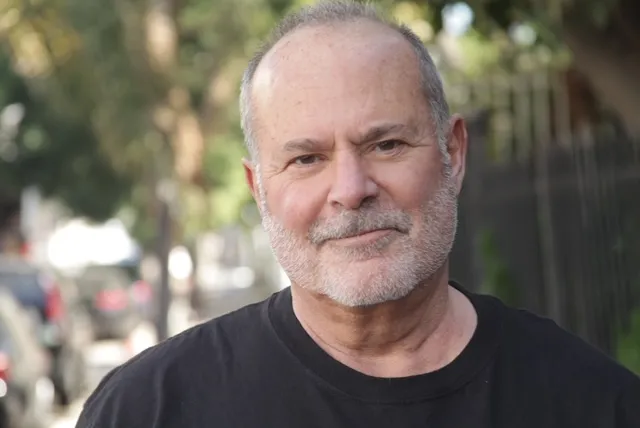
- **From Wall Street to Inmate to Innovator:** Richard Bronson, a former partner at the notorious Stratton Oakmont and federal inmate, is leveraging his unique past to build Commissary Club, an AI-powered social media platform for ex-offenders.
- **AI-Driven Reintegration & Community:** Commissary Club tackles critical post-incarceration challenges—employment and housing—with AI assistance, while also fostering a vital social community for formerly incarcerated individuals.
- **For-Profit with a Purpose:** The startup operates on a paid subscription model, aiming to serve a massively underserved market of millions of Americans with criminal records, positioning itself as a business with significant social impact.
In the high-stakes world of tech startups, where polished résumés often pave the way, Richard Bronson stands out. His entrepreneurial journey, culminating in the launch of Commissary Club, an AI-powered social platform for ex-offenders, is not just unusual—it’s a testament to resilience, redemption, and the power of lived experience. Bronson’s path diverges sharply from typical founder narratives, weaving through the opulent excesses of 1980s Wall Street, the stark realities of federal prison, and a deep-seated desire to uplift a community society often leaves behind.
The Genesis: A Founder’s Unconventional Past
Bronson’s story is inextricably linked to the infamous Stratton Oakmont, the brokerage firm helmed by Jordan Belfort, immortalized as the “Wolf of Wall Street.” During the 1980s, Bronson was a partner at this corruption-riddled institution. While he eventually left after a year to forge his own path, the echoes of that era lingered. He built a formidable $100 million business in South Florida, specializing in taking small-cap companies public. Yet, this success was not without its darker side.
“Some of the success, however, came through breaking the law — securities laws — and ultimately, as I knew inevitably would happen, I had to pay the price. I lost everything, and most significantly, my freedom. And I was sent to federal prison for a couple of years,” Bronson recounts to TechCrunch, his voice still carrying the weight of past decisions. This period of incarceration, a direct consequence of his earlier choices, would profoundly shape his future, planting the seeds for what would become Commissary Club.
The Problem: Post-Incarceration Isolation and Barriers
Emerging from prison, Bronson, despite his significant education and extensive work experience, found himself in a desolate landscape. “Nobody would hire me, despite all of my education and work experience and everything else. I was like completely radioactive,” he explains. This personal struggle illuminated a profound societal failing: the severe lack of support for individuals reentering society after incarceration. This personal experience became the crucible for Commissary Club.
“I could not help but notice how little assistance was available to people coming out of prison,” Bronson emphasizes. “If it was this bad for me, what about the guys I was in prison with who had very little education and very little job experience? What were their chances?” The statistics are stark: millions of Americans have criminal records, facing systemic discrimination in employment, housing, and social integration. The recidivism rate, often fueled by these persistent barriers, underscores an urgent, humanitarian, and economic need for effective reintegration tools.
The Solution: Commissary Club’s Dual Approach
AI-Powered Navigation
Named after the prison store where inmates purchase essentials, Commissary Club aims to be equally indispensable for those navigating life on the outside. The platform leverages artificial intelligence to demystify and streamline the often-confusing process of securing employment and housing. This AI component isn’t just a fancy add-on; it’s a critical tool designed to cut through bureaucratic red tape, identify suitable opportunities, and assist users in presenting their best selves despite their past.
The AI can help with resume building, tailoring applications to specific job requirements, and even provide guidance on interview preparation, addressing the unique challenges faced by individuals with criminal records. This intelligent assistance is paramount for users who may lack formal education or recent work experience, providing a personalized roadmap to stability and self-sufficiency in a world often quick to judge.
Fostering Community and Connection
Beyond practical assistance, Bronson recognized the existential void often experienced post-incarceration: profound isolation. Commissary Club incorporates a robust social component, akin to a specialized Facebook, to combat this. “It’s almost like Facebook,” Bronson describes, “where people can not only find job, and get the help with the jobs and the housing and access to benefits, but they find the other missing ingredient that’s existentially important to them that isn’t satisfied elsewhere. They find community.”
This community aspect allows users to connect with peers who understand their struggles, share advice, offer support, and build networks. The platform also appears primed to become a referral network, further empowering users to help each other access opportunities. Intriguingly, it even offers a way for users to find dates, acknowledging the holistic human need for connection that extends beyond professional life. This blend of practical tools and social support creates a powerful ecosystem for successful reentry.
The Team Behind the Vision
For now, Commissary Club operates as a lean, two-person operation. Richard Bronson, the visionary and driving force, is complemented by his co-founder, Roman Kissin. Bronson affectionately refers to Kissin as “the brains” — the technical architect bringing the intricate AI and platform functionality to life. Kissin’s impressive resume includes stints at tech giants like eBay and IBM, and he most recently served as the CTO of LexisNexis between 2022 and 2025, according to his LinkedIn profile. This combination of lived experience and high-level technical expertise forms a formidable foundation for the startup, aiming to scale its impactful solution.
Business Model: For-Profit with a Purpose
Commissary Club employs a freemium model. Users get their “first 10 applications for free,” Bronson explains, “and then we bundle the next at $149 for 10 applications, or $14.99 each.” This for-profit approach might raise eyebrows, especially when targeting a demographic often facing severe financial constraints. However, Bronson firmly defends the model, viewing it as a pathway to sustainable, scalable impact.
“People immediately assume, ‘Oh, is this a nonprofit?’ And the answer is no,” he states. While acknowledging a “strong mission component” — driven by his deep remorse and dedication to “helping my brothers and sisters with records” — Bronson sees a powerful business opportunity in addressing a neglected societal need. He argues that a sustainable, scalable business model is essential for long-term impact, rather than relying solely on the often-unpredictable world of grants and donations.
“But we’re going after a huge, huge market that nobody — I mean nobody — does anything about,” Bronson asserts. He challenges the conventional narrative around AI and employment, stating, “People talk about AI taking away employment and people losing jobs. I look at it differently. We’re building AI that creates employment for people that society left behind.” This perspective frames Commissary Club not just as a social good, but as an innovative market solution with significant economic potential, tapping into a population eager for opportunities and often overlooked by traditional services.
Recognition and Future Outlook
Commissary Club’s innovative approach and impactful mission have already garnered significant attention. The startup was selected for this year’s TechCrunch Startup Battlefield 200, a prestigious honor that places it among the most promising emerging companies. This inclusion in TechCrunch’s storied Battlefield Competition provides a crucial platform for the startup to gain visibility, attract potential investors, and validate its model on a national stage. The opportunity to present live at the competition in San Francisco next week underscores the industry’s growing recognition of solutions that blend technological innovation with profound social purpose.
Bottom Line
Richard Bronson’s Commissary Club represents a compelling intersection of personal redemption, technological innovation, and societal need. By leveraging AI and fostering community, the platform directly addresses the systemic barriers faced by millions of formerly incarcerated individuals, transforming a daunting reentry process into a structured path toward stability and belonging. While its for-profit model in a socially conscious space sparks discussion, Bronson’s vision for a sustainable, scalable solution to a deeply ingrained problem positions Commissary Club not just as a startup, but as a potential catalyst for meaningful social change and a testament to the untapped potential within overlooked populations. Its journey from a founder’s unique past to a leading contender in the tech world highlights a powerful, purpose-driven entrepreneurship that dares to redefine success.
When you purchase through links in our articles, we may earn a small commission. This doesn’t affect our editorial independence.
{content}
Source:{feed_title}