
U.S. Air Force Advances Autonomous Combat Aircraft Teaming in Key Demonstration
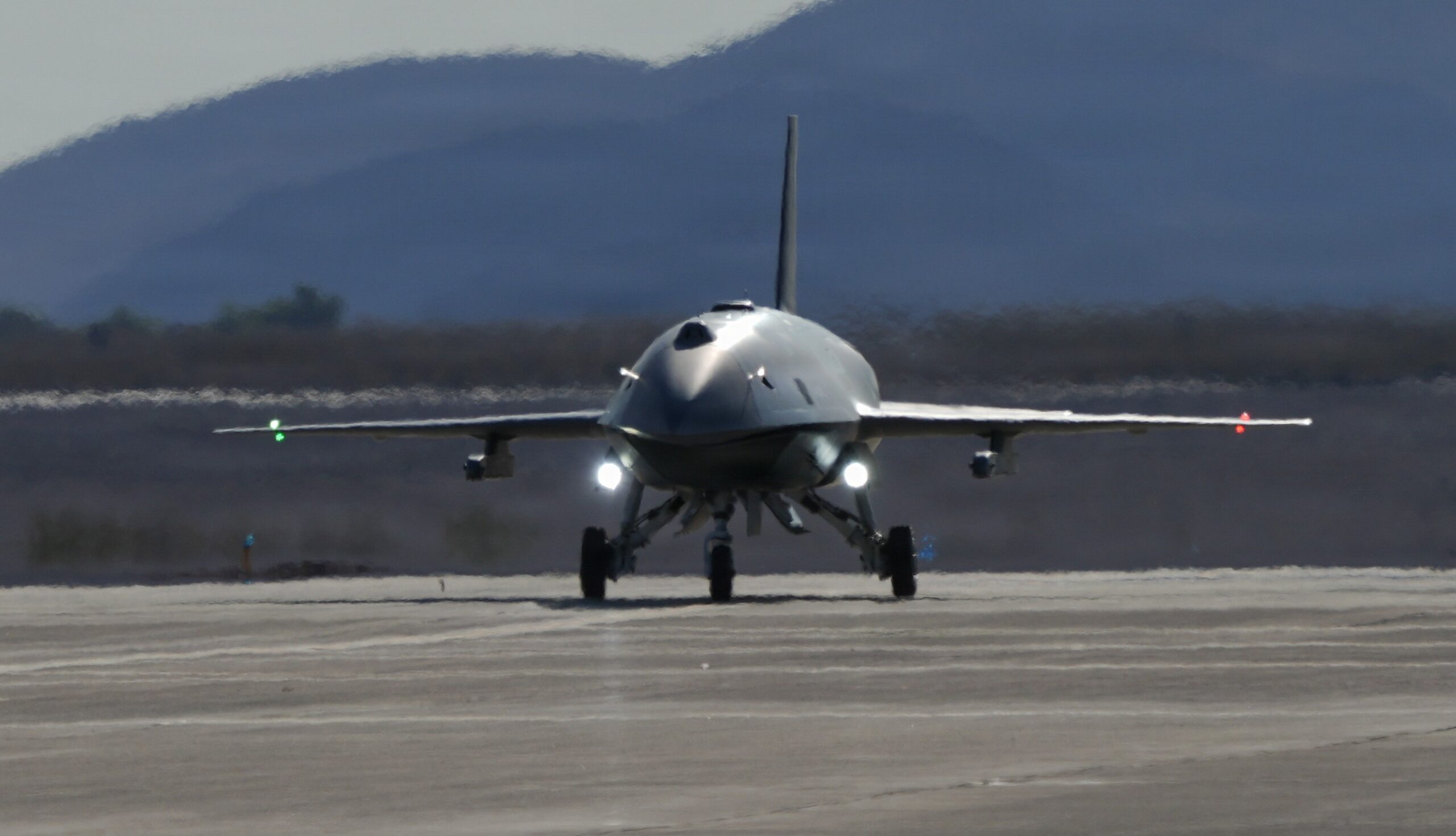
In a significant development for the future of aerial warfare, a U.S. Air Force F-22 Raptor fighter jet successfully directed a YFQ-44A Collaborative Combat Aircraft (CCA) during an airborne tactical-control demonstration. The exercise, conducted earlier in October, saw the pilot of the crewed F-22 issue high-level commands that were autonomously interpreted and executed by the uncrewed YFQ-44A, marking a crucial step in integrating human and artificial intelligence in combat aviation.
The demonstration was specifically designed to test in-flight command and control capabilities between a crewed fighter and an autonomous combat aircraft. This forms a core component of the Air Force’s ongoing Collaborative Combat Aircraft (CCA) program, which aims to introduce a new generation of uncrewed platforms capable of operating in close coordination with manned aircraft. During the test flight, the F-22 pilot adopted a strategic role, described by the service as an “airborne quarterback,” providing overarching tactical instructions to the single YFQ-44A, rather than directly controlling its every movement.
Critically, the YFQ-44A’s sophisticated onboard autonomy software was responsible for interpreting these high-level commands in real time. This software then translated the strategic directives into specific, dynamic flight maneuvers and simulated combat tasks. This capability allows the F-22 pilot to focus on the broader mission objectives and tactical decision-making, offloading the cognitive burden of controlling individual flight inputs for the uncrewed platform.
Secretary of the Air Force Troy Meink underscored the importance of this milestone in a recent US Air Force news update. He stated, “This achievement demonstrates what is possible when we are aligned with industry on a shared imperative: delivering capability to the warfighter at unprecedented speed.” Meink emphasized the Air Force’s commitment to rapid technological advancement, adding, “We are driving urgency into every part of acquisition from rapid integration and flight learning to disciplined assessment, so we can turn promising technology into combat capability at the pace the threat demands.”
The successful flight was the result of a collaborative effort involving various specialized units, including personnel from the 412th Test Wing, the 422nd Test and Evaluation Squadron, the 309th Software Engineering Group, the Experimental Operations Unit, the F-22 System Program Office, and the CCA Software Autonomy and Teaming Branch. The extensive data collected during this demonstration will be instrumental in supporting further software integration, advanced developmental testing, and the refinement of the Air Force’s future operational concepts for Collaborative Combat Aircraft.
The core philosophy behind the CCA program, and exemplified by this demonstration, is to enable crewed combat aircraft to effectively command groups of semi-autonomous platforms without demanding manual control over each individual uncrewed unit. Under this evolving model, a pilot in an F-22 or another crewed aircraft would assign specific tasks or tactical objectives to uncrewed platforms. The sophisticated onboard autonomy of these CCAs would then handle the detailed execution of those instructions, allowing the human pilot to maintain overall tactical command and strategic oversight, rather than being bogged down in micro-managing flight paths or weapon deployment.
U.S. Air Force Chief of Staff General Ken Wilsbach highlighted the strategic advantages of this integration. He commented, “This flight shows the power of crewed-uncrewed teaming and the advantage it provides our warfighters.” General Wilsbach reiterated the need for continuous progress, stating, “We must test often, learn fast and give commanders what they need, when they need it.”
The YFQ-44A is one of several aircraft designs being developed under the US Air Force’s broader CCA program. This initiative is designed to introduce lower-cost uncrewed combat aircraft that can operate effectively alongside existing and future crewed fighters, augmenting their capabilities and potentially expanding tactical options in complex combat environments.
Why This Matters
This demonstration represents a pivotal moment in the evolution of military aviation and holds significant implications for the future of air power. It signifies a tangible step towards realizing the U.S. Air Force’s vision of integrating advanced artificial intelligence and autonomous systems into its combat operations, moving beyond traditional crewed aircraft and remotely piloted drones.
**Revolutionizing Air Warfare:** The ability for a single pilot to command multiple autonomous combat aircraft from a crewed platform fundamentally shifts the paradigm of air warfare. It moves towards a “human-on-the-loop” rather than “human-in-the-loop” model for certain tasks, allowing for faster decision-making and execution in dynamic combat scenarios. This could enable complex swarm tactics, overwhelming adversaries with numerical superiority and diversified capabilities.
**Enhanced Capability and Survivability:** Collaborative Combat Aircraft are envisioned to perform a variety of roles that would be too dangerous or resource-intensive for crewed aircraft. They could act as forward scouts, sensor nodes to extend detection ranges, decoys to draw enemy fire, or even additional weapons platforms. By distributing risk across multiple, lower-cost uncrewed platforms, the CCA concept aims to enhance the survivability of expensive crewed fighters and their pilots, while simultaneously increasing overall mission effectiveness and firepower.
**Cost Efficiency and Adaptability:** The CCA program emphasizes the development of “lower-cost” uncrewed platforms compared to advanced manned fighters. This allows for the potential mass production and rapid deployment of these assets, making them more expendable in high-risk environments. Such an approach offers a more adaptable and economically sustainable solution for building combat capacity, particularly in an era of constrained defense budgets and escalating global threats.
**Technological Leap:** This demonstration is a testament to significant advancements in artificial intelligence, machine learning, and human-machine interface technologies. The ability of the YFQ-44A’s autonomy software to interpret high-level human commands and translate them into real-time, complex flight maneuvers requires sophisticated algorithms and robust control systems. Continued development in this area will drive innovation across various technological sectors.
**Strategic and Geopolitical Implications:** The successful integration of CCAs could grant the U.S. Air Force a substantial tactical advantage, enabling it to maintain technological superiority over potential adversaries. Other major global powers are also investing heavily in autonomous combat systems, making this development part of a broader international race for advanced military capabilities. The rapid development and deployment of such technologies will influence strategic planning, defense postures, and international military balances for decades to come.
In essence, this F-22 and YFQ-44A test is not just about flying drones; it’s about redefining the very nature of air combat, enhancing the capabilities of human warfighters, and preparing for a future where integrated human-AI teams will be the cornerstone of aerial dominance.