
Key Takeaways
- General Motors is fundamentally transforming OnStar from a traditional call center service into an advanced, AI-powered “connected intelligence platform.”
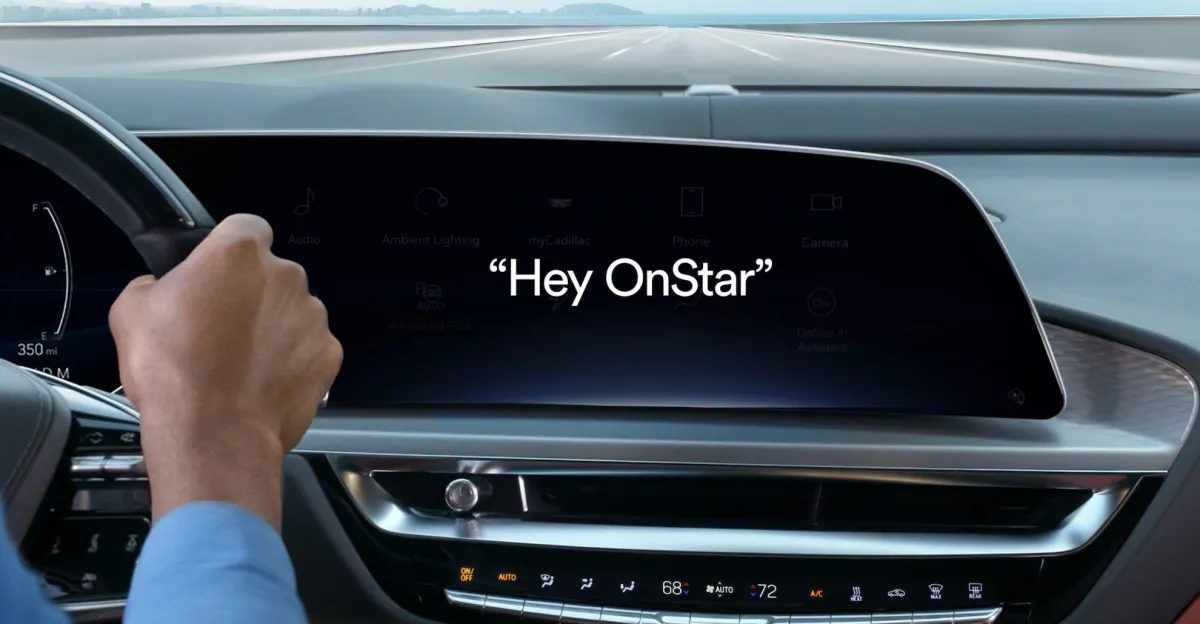
- The new, in-house OnStar AI Assistant will debut in the 2027 Cadillac Lyriq EV, integrating cutting-edge features like connected cameras for event recording and comprehensive voice control for vehicle functions.
- Alongside this significant technological reboot, GM is prioritizing customer data privacy, implementing explicit consent requirements and enhanced user control over shared information, directly addressing recent regulatory scrutiny.
General Motors is orchestrating a seismic shift in its long-standing OnStar service, propelling the 30-year-old connected car platform into the era of artificial intelligence. At its recent GM Forward event in New York, the U.S. automaker unveiled plans to integrate a personal AI assistant into OnStar, marking a pivotal moment in its broader strategic overhaul encompassing software, automated driving, electric vehicles, and electrical architecture.
This transformative OnStar AI Assistant is slated to debut in the 2027 Cadillac Lyriq EV in the coming months, with a phased rollout across more GM vehicles to follow. Complementing this in-car innovation, GM also announced a new OnStar mobile app, set to launch in 2027, designed to seamlessly sync with the vehicle’s software. This unified app will consolidate and replace the existing OnStar Guardian app (launched in 2020) and the individual brand-specific applications for Buick, Cadillac, Chevrolet, and GMC, streamlining the digital experience for GM owners.
OnStar’s Metamorphosis: From Call Center to Connected Intelligence
The introduction of the OnStar AI Assistant represents GM’s most ambitious attempt yet to modernize the service, strategically placing agentic AI at its very core. For decades, OnStar has been synonymous with emergency assistance and roadside support, a human-centric call center model. While GM has made numerous attempts to update the service, particularly in the last five years to keep pace with tech-forward competitors like Tesla, this new initiative signals a definitive departure from its legacy.
Previous modernization efforts included expanding the OnStar Guardian app to non-GM vehicle owners in 2021, and gradually integrating Google Cloud’s conversational AI Dialogflow in 2022 to recognize spoken requests for routing and navigation. Last year, GM even announced plans to roll out Google Gemini in its vehicles by 2026. However, the OnStar AI Assistant represents a significant strategic pivot: it’s an in-house effort. This decision underscores GM’s commitment to owning the core user experience, aiming to provide an interactive, custom, and deeply embedded assistant that becomes an indispensable part of drivers’ and passengers’ daily lives.
Sterling Anderson, GM’s chief product officer, articulated this vision clearly in an interview ahead of the event. “OnStar is now transitioning to be a connected intelligence platform,” he stated. “Not just the call center that it’s historically been known as, but a mechanism for interpreting, understanding, and providing predictive, proactive support to its owners.” This shift implies a proactive system that anticipates needs and offers solutions, rather than merely reacting to user requests or emergencies.
Unveiling the AI Assistant’s Capabilities
The new OnStar AI Assistant isn’t just about improved voice commands; it’s about integrating the vehicle’s hardware with intelligent software to create a more intuitive and secure environment. A key feature is the integration with vehicle cameras, enabling live views and automated crash and safety recordings. Users will have the ability to configure these connected cameras to activate automatically upon sensing an impending event—such as an aggressive horn honk or a sudden stop—capturing the incident and uploading it securely to the OnStar app.
Beyond safety, the AI Assistant enhances convenience and control. Drivers and passengers will be able to use natural voice commands to manage various vehicle functions, from adjusting climate settings to querying specific features of their car. This holistic integration aims to make the vehicle’s complex systems more accessible and responsive, blurring the lines between the digital and physical driving experience.
GM’s Broader Digital Transformation
This OnStar reboot is emblematic of a much larger transformation underway at General Motors. The automotive industry is in a fierce technological race, particularly with agile Chinese automakers that are rapidly innovating with software-defined vehicles. To remain competitive, GM has had to fundamentally alter its approach to software development, embrace advanced AI tools, and redesign its underlying vehicle architecture towards a more centralized compute system.
This shift is not merely about adding new features; it’s about building vehicles from the ground up with software and intelligence as core components, moving away from a traditional hardware-first mindset. The ambition is to create an ecosystem where the vehicle continuously learns, adapts, and improves, offering a dynamic experience that evolves over time through over-the-air updates and new AI capabilities.
Navigating the Data Privacy Landscape
The rollout of such an advanced, data-intensive system inevitably raises critical questions about privacy. Earlier this year, GM and its OnStar telematics service faced scrutiny, culminating in a Federal Trade Commission (FTC) order that bans them from sharing certain consumer data with consumer reporting agencies. The order also mandates greater transparency and explicit consumer consent for specific data collection practices.
Addressing these concerns head-on, GM stated that with the new OnStar AI Assistant, customers will have granular control over what data is shared. The company emphasized that Connected Camera recordings will have time limits and be encrypted, with explicit assurance that GM and OnStar cannot access these recordings. A GM spokesperson further clarified that any third-party sharing is “feature-specific and consent-based, with information shared only as needed to provide requested functionality.” Customers will retain the ability to manage permissions and withdraw consent, though choosing not to share certain data may limit access to related features, while core OnStar services would remain active.
The Bottom Line
General Motors is charting an ambitious course for OnStar, transforming it from a legacy emergency service into a sophisticated, AI-driven connected intelligence platform. By bringing AI development in-house and integrating advanced features like intelligent cameras and voice control, GM is making a bold statement about its commitment to the software-defined vehicle era. This strategic pivot, combined with a renewed emphasis on transparent data privacy and customer control, positions OnStar as a central pillar in GM’s vision for a future where vehicles are not just modes of transport, but intelligent, proactive partners in daily life, capable of generating significant subscription revenue and enhancing user experience.
When you purchase through links in our articles, we may earn a small commission. This doesn’t affect our editorial independence.
{content}
Source:{feed_title}