
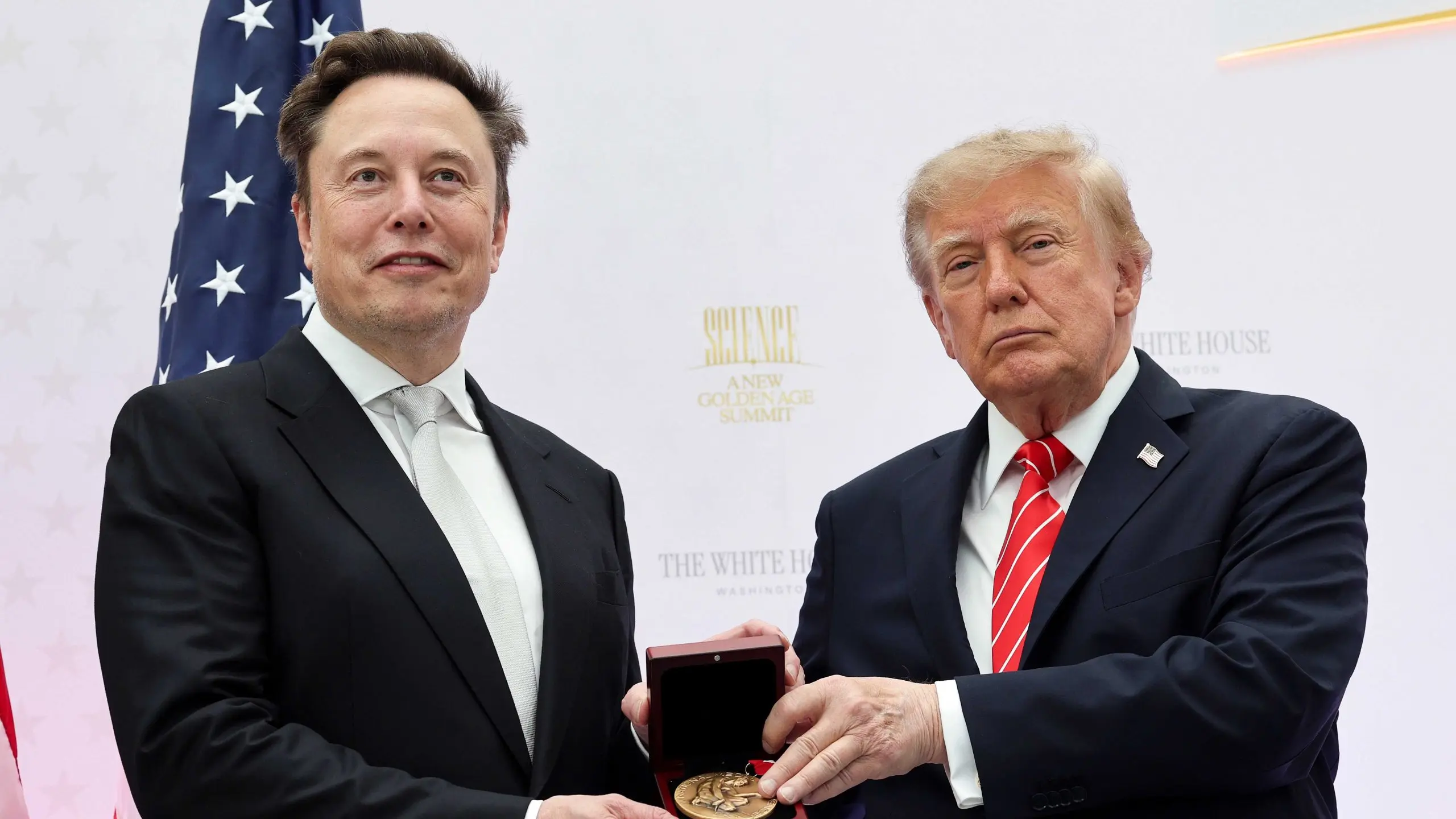
President Donald Trump told FOX Business that Americans have an “obligation to protect our geniuses,” defending Elon Musk as a “brilliant guy” when asked whether Democrats could target the billionaire if they win control of Congress.
Key Takeaways
- Escalating Political Scrutiny:High-profile tech leaders like Elon Musk are increasingly becoming targets of partisan political debate, raising questions about potential regulatory investigations and their impact on corporate operations and investor confidence.
- Multi-Sector Business Risks:Congressional oversight, if pursued, could affect Musk’s diverse portfolio—including Tesla’s automotive and energy ventures, SpaceX’s critical government contracts, and X’s (formerly Twitter) platform governance—potentially diverting management focus and incurring substantial legal costs.
- Uncertainty for Innovation Economy:The political rhetoric and threats of investigation signal a growing regulatory overhang for the broader technology sector, where innovation and market valuation are increasingly intertwined with political sentiment and potential policy shifts.
WASHINGTON D.C. –The intersection of high-stakes politics and global commerce took center stage Friday as former President Donald Trump passionately defended Elon Musk, the visionary behind Tesla, SpaceX, and X (formerly Twitter). Trump’s comments, made to FOX Business, addressed growing concerns that a potential Democratic takeover of Congress in upcoming midterm elections could trigger a wave of investigations into the billionaire entrepreneur and his sprawling business empire. This political maneuvering highlights significant market implications for companies operating at the forefront of technological innovation and government contracting, potentially influencing investor sentiment and corporate strategy across the innovation economy.
When pressed by FOX Business White House correspondent Edward Lawrence regarding the prospect of Democrats targeting Musk, Trump emphasized a national imperative to safeguard leading minds. “Elon’s a brilliant guy and I have an expression: we have to protect our brilliant people because we don’t have too many of them,” Trump asserted. “There aren’t too many of them in the world.” Such rhetoric underscores a narrative often employed to shield powerful industrialists and innovators from political and regulatory interference, framing their success as integral to national prosperity and technological superiority. For investors, this perspective can signal potential government support or resistance to intervention, directly influencing market sentiment and policy outlook for key tech players.
Trump continued to laud Musk, whom he repeatedly described as a “genius.” “Elon has done nothing wrong,” he stated. “Elon is a very good guy. He’s a very different kind of a guy, but I think people have an obligation to protect our geniuses. You know, there aren’t that many of them.” This strong endorsement serves not only as a political defense but also as an implicit recognition of Musk’s substantial influence over key sectors of the American economy, from electric vehicles and renewable energy to space exploration and social media platforms that shape public discourse. While flattering, such high-profile political alignments can also make business leaders and their companies vulnerable to partisan attacks, potentially creating headwinds for stock performance and operational stability.
The former President’s remarks arrive amidst a flurry of reports indicating that Democratic lawmakers are indeed contemplating various avenues for investigation into Musk and his enterprises should they secure control of one or both chambers of Congress. These potential inquiries could span a wide array of topics, including labor practices at Tesla factories, regulatory compliance for advanced self-driving technology, the handling of critical government contracts at SpaceX, and contentious content moderation policies, data privacy concerns, and antitrust implications related to X. Each of these areas presents distinct operational and financial risks, potentially leading to costly legal battles, significant regulatory fines, reputational damage, and crucial diversions of executive attention away from strategic business development and shareholder value creation.
Earlier this week, Musk himself addressed the growing political tensions, responding to a Politico story detailing Democratic plans. His defiant stance – “Live by the sword, die by the sword,” Musk wrote on X. “Those who pick fights with me should understand that I will find out who is really pulling the strings and come for them, not just their puppets” – signals an unwillingness to capitulate. This combative approach suggests that any potential congressional probes could quickly devolve into protracted and public confrontations, raising the political temperature surrounding his companies. For shareholders, such an aggressive posture introduces an elevated level of risk, as management resources are potentially diverted to political skirmishes rather media-friendly initiatives or core business growth strategies.
President Donald Trump defended Elon Musk amid reports that Democrats are considering investigations into the billionaire and his businesses if they gain control of Congress.( Win McNamee/Getty Images / Getty Images)
FOX Business previously reported that Musk has been a significant donor to GOP candidates ahead of the election, a move that often draws heightened scrutiny from opposing parties and can be interpreted as an attempt to influence policy. Furthermore, his previous engagement with the Trump administration through initiatives like the Department of Government Efficiency (DOGE) could also become a focal point for critics. Such overt political alignments, while common for influential business figures seeking to protect their interests, create distinct vulnerabilities. As political tides shift, companies and their leaders can find themselves in the crosshairs of legislative oversight, potentially impacting their ability to secure favorable regulations, vital government contracts, or even market access.
Musk’s extensive business dealings with the federal government, particularly through SpaceX’s multi-billion dollar contracts with NASA for astronaut transport and satellite launches, as well as with the Department of Defense for national security missions, render his ventures especially susceptible to shifts in congressional control. Any increased scrutiny could directly impact the allocation of crucial funding, delay project approvals for key initiatives like Starship development, or introduce new compliance burdens, directly affecting SpaceX’s ambitious aerospace objectives and its competitive position in the rapidly expanding commercial space sector. Similarly, Tesla’s reliance on evolving regulatory frameworks for electric vehicle incentives, environmental credits, and autonomous driving safety standards could face reevaluation and potentially stricter enforcement under a different legislative agenda.

President Donald Trump said Americans have an obligation to “protect our brilliant people” when asked about potential Democratic investigations into Elon Musk.(Brandon Bell/Getty Images / Getty Images)
After defending Musk, Trump broadened his commentary to America’s technological preeminence. “We’re leading in everything right now,” Trump declared, referencing advancements in areas like superintelligence and an “unprecedented amount of development happening in the U.S.” This assertion frames the debate around Musk within the broader context of global technological competition, suggesting that undermining figures like Musk could inadvertently jeopardize America’s leadership position in critical future industries. This perspective often resonates with investors who prioritize geopolitical stability and national innovation as fundamental drivers of long-term economic growth and market advantage, highlighting the strategic importance of nurturing such talent.
The ongoing political discourse surrounding Elon Musk serves as a potent reminder of the complex interplay between economic power, groundbreaking technological innovation, and political accountability. For investors, the looming possibility of congressional investigations translates into a quantifiable risk factor that must be priced into asset valuations. While Musk’s companies have demonstrated remarkable resilience and disruptive potential across multiple industries, sustained political and regulatory pressure could erode market confidence, increase operating costs due to compliance and legal fees, and divert strategic focus from core product development and market expansion. The outcome of the midterm elections will undoubtedly set the tone for how the U.S. government interacts with its most influential tech giants, shaping the regulatory landscape and investment climate for years to come.
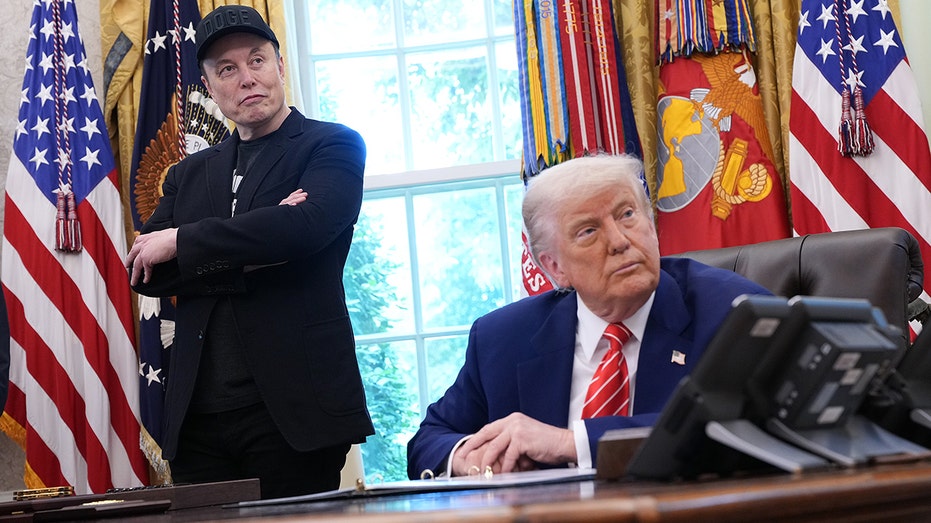
Elon Musk and U.S. President Donald Trump listen to a question from reporters in the Oval Office of the White House on May 30, 2025 in Washington, DC.(Kevin Dietsch/Getty Images / Getty Images)
Market Impact
The prospect of heightened congressional scrutiny on Elon Musk’s entities introduces significant volatility and risk premium for investors. ForTesla (TSLA), potential investigations into manufacturing practices, labor conditions, or the safety and marketing of autonomous driving technology could trigger regulatory fines, product recalls, or delays in market expansion, directly impacting its stock performance and brand reputation.SpaceX, while privately held, relies heavily on government contracts for revenue and critical development, making it highly vulnerable to any shift in legislative or executive branch sentiment that could delay contract awards, increase oversight burdens, or even lead to contract renegotiations. This could, in turn, severely affect its valuation and future IPO prospects. ForX (formerly Twitter), probes into content moderation policies, data security, foreign influence, or alleged market manipulation could lead to stricter operational mandates, potentially reducing advertising revenue, user engagement, or incurring substantial legal and compliance costs. More broadly, the aggressive political posturing against a prominent tech figure like Musk could create a chilling effect across the entire innovation sector, signaling a tougher regulatory environment ahead. This may lead to de-risking by institutional investors, particularly in companies with significant government ties or those operating in sensitive areas like AI and data, ultimately influencing capital allocation and valuation multiples across the tech market by increasing perceived regulatory risk.
FOX Business’ Eric Revell contributed to this report.