
Live music has hit a milestone: shows topped $6 billion for the first time, according to Pollstar. Its worldwide touring rankings put South Korea’s BTS on top (This video contains AI-assisted
content.)
KEY TAKEAWAYS
- Experience Economy Boom:Global live music touring revenue surpassed an unprecedented $6 billion in 2025, driven by strong post-pandemic demand for shared experiences and discretionary consumer spending shifts.
- K-Pop’s Market Dominance:South Korean acts like BTS and TWICE, significantly benefiting from government-backed “soft power” cultural export strategies, are leading global touring charts and demonstrating the immense economic leverage of a strategically developed entertainment industry.
- Strategic Industry Investment:Major players like Apple and AEG are heavily investing in venue infrastructure, from intimate clubs to large-capacity arenas, signaling robust long-term confidence in the profitability and enduring appeal of live experiences, even as AI and digital innovations emerge.
AUSTIN, Texas – Beneath the glow of stage lights in Austin, a city synonymous with live music, a universal economic phenomenon is playing out: the booming resurgence of the “experience economy.” As I found myself in one of Austin’s storied live music clubs, captivated by a band nearing the end of their global circuit, it wasn’t just the visceral sound of a guitar channeling Stevie Ray Vaughan that resonated. It was the palpable human connection, the collective energy, and the sheer effort of performance that underscored a powerful market trend.
The night air crackles with the energy of a packed house, each rapt audience member a testament to a fundamental human desire that transcends digital convenience. For someone who’s wrestled with a drum kit, the effortless double-bass rolls coming from the stage highlight the artistry behind the industry. This raw, human exchange – the grit, the talent, the shared moment – has propelled global live music touring revenue past an unprecedented $6 billion mark in 2025, according to industry tracker Pollstar. This milestone defies the pervasive narrative of digital saturation, carving out a robust, growing niche in consumer spending habits.
Rock ‘n’ roll, an American invention that has long gone global, still anchors much of this cultural commerce. Nights like this have played out across Austin and the world for generations. While we’re increasingly streaming our favorite movies and songs into our homes, the desire for tangible, shared experiences has never been stronger. Pollstar’s figures reveal a profound insight in the age of AI, digital everything, and on-demand content: people still crave real moments to experience with others. In a world that often feels increasingly homogenized, we seek the beat, the chorus, the collective sing-along that only a live show can deliver.
The “Worldwide Top 100 Touring Artists for 2026” are already on track for a record-setting year, based on robust third-quarter tour revenues and ticket sales reported between November 2025 and August 2026. This trajectory indicates that the $6 billion benchmark achieved in the prior year is not an anomaly but rather a foundational stepping stone for continued expansion. Such substantial figures reflect millions of consumers globally prioritizing live entertainment, demonstrating a significant shift in discretionary spending towards experiences over physical goods, a trend keenly observed by market analysts.
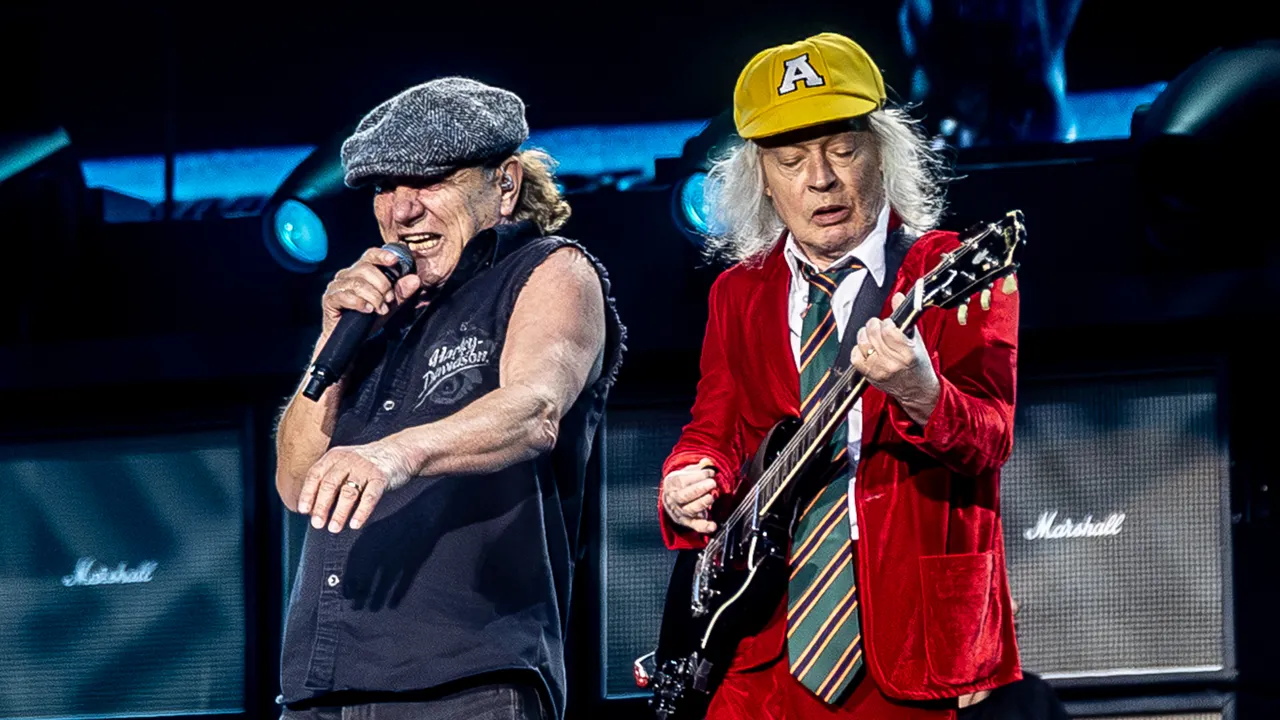
AC/DC singer Brian Johnson and AC/DC guitarist Angus Young are seen during a concert at the Estadio Wanda Metropolitano on July 12, 2025, in Madrid.(Ricardo Rubio/Europa Press via Getty Images)
Topping Pollstar’s worldwide live show chart is South Korea’s K-pop juggernaut, BTS, with the “Dynamite” boy group racking up over $465 million on their Arirang World Tour in the measured period. Their ability to sell out NFL stadiums globally, fresh from members’ compulsory military service, is no mere cultural phenomenon; it’s a powerful economic engine. Perhaps more surprising to some market observers is that another K-pop act, TWICE, has joined them in the top 10 at No. 6, underscoring the genre’s deep and diversified global penetration.
These incredibly talented bands are not just products of their own artistry; they are also significant beneficiaries of South Korea’s sophisticated “soft power” strategy. This government-backed initiative leverages substantial funds and strategic might to systematically export Korean idol music, drama, and culture worldwide. It’s a carefully cultivated economic policy designed to enhance national brand value and generate significant export revenue. Hits like “The Feels” and “Butter” are prime examples of this idol pipeline’s success, translating cultural appeal into massive financial returns and opening new markets for related industries like fashion, cosmetics, and tourism.

From (L-R): RM, j-hope, Jung Kook and Jimin of BTS perform onstage during the 2026 iHeartRadio Music Festival at T-Mobile Arena on Sept. 18, 2026 in Las Vegas, Nevada.(Denise Truscello/Getty Images for iHeartRadio)
More surprising to some may be the robust resurgence of rock. Aussie titans AC/DC, who returned to the road in 2025, landed in the top 10 live acts, hauling in over $136 million. Their “Back in Black” tour at No. 9 demonstrates the enduring market power of legacy acts and the willingness of an established fan base to invest significantly in nostalgic, high-quality live experiences. Right behind them, Ed Sheeran continues to prove his broad appeal and consistent drawing power, with strong projections for his continued touring.
Other major acts making the top 10 include global superstars like Bad Bunny, The Weeknd, Lady Gaga, and Luke Combs, showcasing the diverse appeal across genres that fuels this booming market. Notably absent from this specific Pollstar list was Taylor Swift, primarily because her record-breaking Eras Tour dates did not fall within the precise reporting period for these particular rankings, indicating that the overall market strength is even greater when her figures are considered in broader annual contexts.

Taylor Swift performing during the Eras Tour.(Getty Images)
In an era dominated by discussions of AI’s potential to displace human labor, it’s heartening for many to witness a sector where the human element remains paramount. While technology is undeniably influencing the industry – KISS unveiled digital avatars in their “final” show in 2023, Sia sold a 50% stake in her catalog to a buyer aiming for digital shows, and ABBA has pioneered hybrid human-digital “Voyage” concerts in London – the core value proposition of live music still lies in authentic, in-person performance. The question of whether we’ll someday see a triple bill of Elvis, Michael Jackson, and Johnny Cash via digital resurrection is no longer purely speculative; it’s a future monetization strategy being actively explored, albeit with potential consumer acceptance and ethical hurdles.
Whatever the future trajectory of music, big business is unequivocally betting on live music at all scales. Tech giant Apple, for instance, just invested in building a state-of-the-art, 600-seat venue loaded with advanced technology, signaling its intention to tap into the live experience market, potentially integrating it with its Apple Music ecosystem for exclusive content and premium fan experiences. Similarly, AEG, a global entertainment conglomerate, is aggressively expanding its venue portfolio, making a significant play for iconic clubs like Austin’s Emo’s, reopening it with a new identity while also investing in larger, 4,000-capacity venues. This strategy represents a clear move towards vertical integration, securing control over artist pipelines from emerging acts to arena headliners and maximizing market share in key music cities.
Whether it’s catching a local band in a small bar, experiencing a global act like Muse in a major arena, or discovering an up-and-coming talent, the reward for both artists and audience lies in the shared experience of hours of toil and effort culminating in a beloved groove. In intimate venues, the proximity to the stage creates an almost tactile connection, intensifying the experience. But whether digital or delivered by living, breathing artists, the fundamental human desire for collective experience and shared passion for music remains a powerful economic driver.
From local dive bars to sophisticated venues in Tokyo, to the massive, highly produced stadium spectacles, the global love affair with live music is unequivocal. The sales numbers don’t lie, reflecting a powerful consumer mandate. The amazing guitarist Iree, part of the fiery South Korean rock quintet Rolling Quartz, blazing their way around the world one face-melting show at a time, is a vivid example of this global dynamism. Many of their songs are in English, showcasing how artists are strategically adapting to broader international markets.

Rolling Quartz guitarists Choi Hyunjung (left) and Iree (right) playing at Come and Take It Live in Austin, Texas, on Oct. 4, 2026.(Bryan Preston/Fox News Digital)
CLICK HERE TO GET FOX BUSINESS ON THE GO
Market Impact:
The burgeoning live music sector represents a significant growth area within the broader entertainment economy, driven by shifts in consumer preferences towards experiences and the global reach of cultural exports. The $6 billion-plus revenue milestone indicates a resilient market segment capable of sustained expansion. Investment by tech giants and entertainment conglomerates into physical venue infrastructure highlights confidence in the long-term profitability of live events, solidifying real estate and operational assets within their portfolios. The strategic success of government-backed cultural initiatives, such as South Korea’s “soft power” play, demonstrates how national economic strategies can effectively leverage creative industries to generate substantial foreign revenue and enhance global brand presence. While AI and digital innovations will continue to influence production and presentation, the core value of human performance and shared communal experience provides a strong moat against full digital displacement, ensuring continued capital allocation to artist development, touring logistics, and premium experiential offerings. Investors should monitor continued consolidation within the promoting and ticketing sectors, as well as the adaptation of business models to integrate evolving digital technologies while preserving the irreplaceable ‘live’ element.