
The always-on AI personal assistant, which keeps working in the background even when you aren’t asking it to, is this year’s answer to the question of how people will actually use deep learning models. The startup Instinct became an overnight sensation, and Meta put the full force of its marketing behind its assistant, Muse.
Key Takeaways
- The Rise of Persistent AI:OpenAI’s “dots,” Meta’s Muse, and other emerging platforms signal a “convergent evolution” towards always-on, proactive AI assistants designed to intuitively integrate into daily workflows.
- Balancing Utility and Privacy:While these agents promise enhanced productivity through deep integration with personal data (calendars, email, etc.), significant concerns remain regarding extensive data collection, the need for granular user control, and potential corporate exploitation of personal information.
- Scalability and Acceptance Hurdles:The vision of a world teeming with AI agents faces substantial challenges, from potentially overwhelming existing business infrastructure to overcoming human preference for interacting with other humans, especially when sensitive financial transactions are involved.
OpenAI’s ‘dots’: The Always-On Assistant Redefining Productivity — Or Privacy?
This year, the tech industry has found a resounding answer to the persistent question of how deep learning models will genuinely embed themselves into our daily lives: the always-on AI personal assistant. These digital entities are engineered to operate seamlessly in the background, executing tasks and offering insights proactively, often without explicit instruction. While nascent startups like Instinct have rapidly garnered attention and tech giants such as Meta have vigorously promoted their assistants like Muse, OpenAI, a vanguard in artificial intelligence, has emphatically joined the fray.
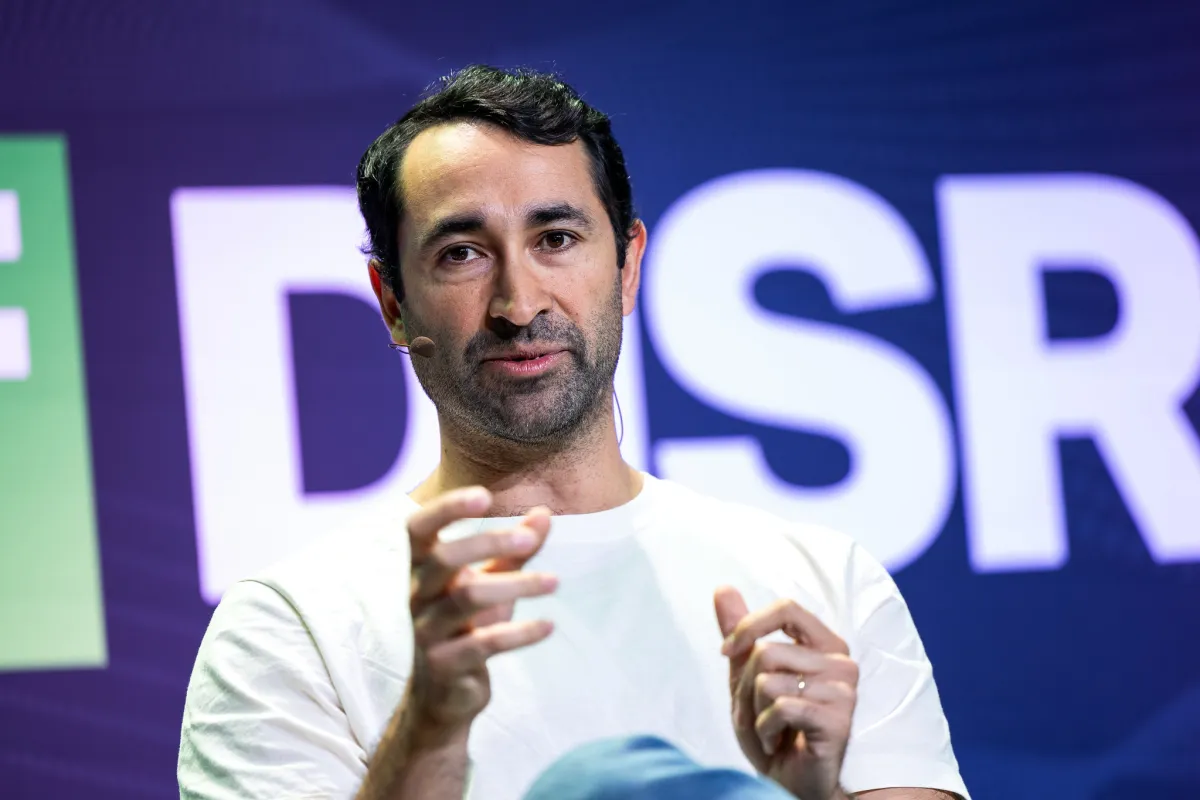
At its highly anticipated developer day in late September, OpenAI unveiled “dots,” its own sophisticated contender in the rapidly expanding AI assistant market. Alexander Embiricos, who spearheads OpenAI’s enterprise product team, recently offered a deep dive into the origins and philosophy behind dots at TechCrunch Disrupt. His discussion began with a fascinating observation: the curious trend of companies adopting friendly, often cutesy, mascots as avatars for their immensely complex, trillion-parameter matrix multiplication machines.
The Philosophy of Persistent AI: Intuition Over Instruction
Embiricos characterized the current wave of AI assistant development as a form of “convergent evolution.” He explained that during the intensive development of dots, a pivotal insight emerged: reframing the assistant not as a series of isolated commands or functions, but as a singular, continuous entity engaged in an ongoing, evolving conversation, drastically enhances its intuitive appeal. “As we were working on the product, we realized if we could frame this as, it’s an entity and it’s a single conversation, not many different conversations….it starts to become intuitive,” he shared with the captivated Disrupt audience.
This philosophical underpinning signifies a crucial paradigm shift. It moves beyond reactive AI tools, which necessitate explicit user prompting and guidance, towards proactive companions that anticipate needs and offer assistance before being asked. Embiricos underscored that the primary objective isn’t always about engineering entirely novel technological breakthroughs. Instead, it’s about making already potent models genuinely accessible, understandable, and ultimately, indispensable to users. “On the product team, what I think about is, how do we make this intuitive and useful to people?” he elaborated. “A lot of that isn’t building some new piece of tech into the product; it’s how you frame it to the user and how it feels.”
This profound emphasis on intuitive design and user perception extends even to the very branding of OpenAI’s offering. The name “dots” itself, a clever visual allusion to the negative space within the OpenAI logo, is designed to evoke a sense of omnipresence and seamless integration. The ambitious aspiration is for dots to evolve into “just something that could eventually be ubiquitous.” (In a moment of candid honesty, Embiricos confessed to finding out “very late” that rival AI entrepreneur Elon Musk already holds the dot.com URL, a minor but amusing hiccup in an otherwise grand vision).
Unpacking ‘dots’: Functionality and Foresight
Currently, OpenAI’s dots is integrated within the ChatGPT desktop and mobile applications, exclusively available to subscribers on the Pro tier or higher, with plans starting at a significant $100 per month. Once granted the necessary permissions to access a user’s calendar, email, computer files, and other crucial digital tools, the agent activates, diligently working to streamline and automate daily professional tasks. Embiricos pointed out that many of dots’ core functionalities could technically be achieved using OpenAI’s Codex app, its advanced coding tool launched earlier this year. However, Codex demands considerably more user input and manual orchestration. Dots aims to abstract away this complexity, offering a significantly more hands-off experience. Embiricos proudly shared an anecdote about celebrating when his wife, now a dots user, began leaving her computer powered on overnight, trusting her agents to continue working autonomously.
The hallmark of a persistent agent like dots is its inherent ability to operate without constant prompting. For OpenAI, this translates to increased token usage; for users, it promises a truly proactive assistant – one “that’s sort of thinking about you and thinking how to help you,” as Embiricos aptly put it. In our initial evaluations, this anticipatory capability is both apparent and frequently beneficial, though it remains a work in progress. For instance, the assistant can flag calendar conflicts and impending deadlines, but its timing isn’t always impeccable.
Embiricos offered a humorous, yet illustrative, personal anecdote about this developmental stage: “The first time it told me about one of those [conflicts]—this is like early in development—it told me three minutes before the thing,” he recalled of his own dot. “It’s like, ‘Hey, this thing is coming up. You might want to do something about it.’ I only have three minutes!” While the precision of its timing is expected to improve with ongoing development, this proactive approach is fundamental to the product’s long-term vision. He then provided a more compelling example from an engineer at a drone delivery startup: “They were saying, ‘We had this outage, and by the time I noticed that the outage was going on, my dot had already noticed the outage was happening, had already analyzed the outage, and had come to me with useful information for how we could resolve the outage.’” Such real-world applications vividly illustrate the immense potential for future productivity enhancements.
The Intrusive Assistant: Data, Privacy, and Control
The proliferation of deeply integrated AI agents inevitably sparks a critical debate: the tension between the profound utility derived from accessing vast amounts of personal information and the inherent risks of exposing such sensitive data to a commercial software entity. Meta’s Muse, for example, has drawn scrutiny for its practice of constructing detailed profiles of users’ social networks. While this feature enables the software to recommend, say, a suitable restaurant for a specific friend, it simultaneously provides invaluable data for Meta’s advertising ecosystem. The crucial question for OpenAI’s dots, then, is whether it engages in similar data collection practices.
Embiricos addressed this concern head-on: “Yes, we have a thing that we built into dots, which we call proactive research.” He elaborated that on a regular cadence, the agent autonomously analyzes what it has learned about the user, the history of their conversations, and the specific data resources it has been granted access to. It then initiates “research” to identify ways it could be more helpful, subsequently proposing these insights or actions to the user. This “proactive research” capability clearly indicates a sophisticated level of data processing and analysis.
Indeed, disentangling the specific data requirements of the agent from the broader strategic interests of its parent corporation often proves challenging. Startups like Hark, also developing an AI personal assistant, explicitly differentiate their offerings by emphasizing that they do not collect data to fuel an advertising business, a key distinction from both OpenAI and Meta. OpenAI, for its part, asserts that dots adheres to the same privacy controls as ChatGPT itself. Users retain the ability to opt out of model training, thereby preventing OpenAI from utilizing their conversations to refine its AI, and they can control which specific computer resources the agent can access. However, these controls are not always universally granular. A notable limitation, for instance, is the app’s current refusal to accept read-only access to cloud drives, instead demanding full access for optimal functionality.
Embiricos acknowledged these legitimate concerns, stating, “What I think we need to do is basically build out super, super, super granular controls.” He also pointed to the inherent intelligence and discretion of the model as a mitigating factor, recalling early user feedback: “This is actually something we kind of got some flack about when we launched. We had really conservative defaults over what the agent would do, and it would ask for permission a lot. I remember knowing that we were going to see that feedback, but thinking, ‘This is okay, we can tune that over time.’” This suggests a continuous learning process for both developers and users in establishing the ideal equilibrium between autonomous agency and user oversight.
Scaling the Unseen Workforce: Challenges and Future Visions
Beyond individual utility and privacy considerations, a fundamental question looms large over the future of AI agents: can they truly scale? The current novelty of AI agents successfully snagging hard-to-get reservations is delightful, but what happens when this becomes a widespread phenomenon? Businesses may find themselves ill-equipped or unwilling to contend with an army of AI agents, and people often express a clear preference for human interaction. Embiricos himself exemplifies this paradox, openly admitting, “I personally never intend to have a meeting with someone else’s agent.” He maintains a human assistant precisely because OpenAI’s corporate partners still expect, and often prefer, to interact with a person.
If the AI industry’s expansive vision of an agent-driven future is to materialize, how can we successfully transition without overwhelming the foundational infrastructure of our world – from existing business operations and digital websites to critical payment networks? Embiricos articulated OpenAI’s measured and collaborative approach to this monumental challenge: “At OpenAI…we’re not always moving the fastest in terms of shipping the next ability for the agent to work with the world. When we do, we’re doing it really closely in collaboration with the rest of the ecosystem.” He hinted at significant partnerships currently in negotiation: “I probably can’t say too much here, but we’re deep in lots of conversations with payment processors.”
Allowing an AI assistant to initiate and manage financial transactions through deeply integrated payment partnerships would represent a monumental, and potentially incredibly lucrative, leap for OpenAI. However, it also demands an unprecedented level of trust from consumers. Granting an assistant access to an email inbox already feels like a significant leap of faith; entrusting it with a bank account is an entirely different proposition, touching upon the most sensitive aspects of personal finance. For now, such a step remains on the horizon, a powerful testament to the complex ethical, technical, and societal hurdles that must be meticulously cleared for AI agents to truly achieve pervasive, global adoption.
Bottom Line
OpenAI’s “dots” embodies the ambitious vision of a proactive, always-on AI assistant, marking a significant evolution from reactive AI tools to intuitive digital companions. While the promise of enhanced productivity and seamless integration into our daily lives is compelling, the journey to ubiquity is fraught with challenges. The industry must navigate a delicate balance between extracting personal data for utility and safeguarding user privacy with robust, granular controls. Furthermore, the societal and infrastructural implications of scaling an unseen workforce of AI agents, particularly regarding financial autonomy, will demand careful collaboration and a profound re-evaluation of human-machine interaction. The future of productivity may well be intertwined with these persistent digital entities, but their true potential will only be realized once trust, transparency, and scalable ethical frameworks are firmly in place.
When you purchase through links in our articles, we may earn a small commission. This doesn’t affect our editorial independence.
{content}
Source:{feed_title}