
Royal Navy Commissions First Autonomous Squadron, Signaling Major Shift in Naval Strategy
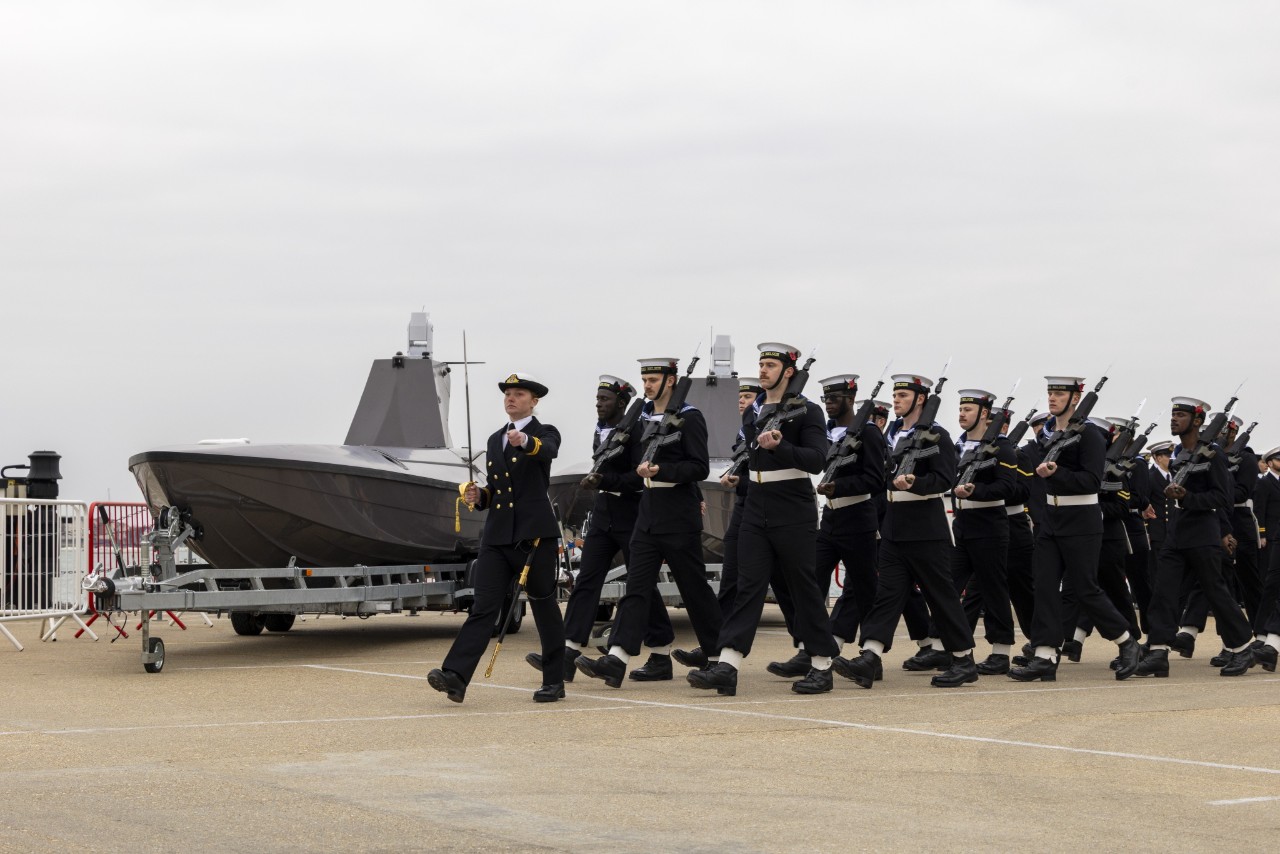
Portsmouth, UK – November 5, 2023– The Royal Navy officially commissioned its first dedicated autonomous squadron, the 1st Autonomous Squadron, at a ceremony held today at HMNB Portsmouth. The event marks a significant milestone in the Navy’s strategic pivot towards integrating uncrewed surface vessels (USVs) into its operational fleet, aiming to enhance capabilities, deterrence, and adaptability in a rapidly evolving global threat landscape.
The commissioning ceremony was attended by Fleet Commander Vice-Admiral Steve Moorhouse and over 200 guests. A demonstration during the event showcased Kraken and Rattler uncrewed surface vessels being autonomously maneuvered around the harbor from a remote control hub, offering a practical glimpse into the squadron’s future operations.
The newly formed squadron will initially operate Rattler training vessels and Kraken K3 Scout boats. Designed for continuous operations, it is structured into two watches to sustain around-the-clock readiness. This squadron officially replaces Project Beehive, which served as the Navy’s initial proving ground for autonomous boat acquisition. Its mandate includes operating individual uncrewed vessels, integrating them into larger task groups, and accelerating the introduction of new autonomous systems into the wider fleet. The Royal Navy has committed substantial funding, allocating £1.5 billion over four years, to back this transition towards what it terms a “hybrid navy,” blending traditional manned vessels with advanced autonomous technologies.
Strategic Imperative for Innovation
Defence Secretary Wes Streeting underscored the strategic imperative driving this initiative. “The threat environment we are facing is fundamentally different from that of recent decades,” Streeting stated. “A major determinant of military power now is who can innovate fastest.” He highlighted that the investment, representing the largest sustained increase in defence spending since the Cold War, is specifically aimed at equipping sailors with cutting-edge autonomous technology. This, he explained, is crucial for protecting both UK shores and those of NATO Allies. Streeting directly linked this investment to strengthening warfighting readiness and deterrence, asserting, “The more ready we are to fight and win, the less likely we are to have to.”
Vice-Admiral Steve Moorhouse, the Fleet Commander, described the commissioning as a “genuinely historic occasion,” emphasizing the unprecedented nature of an autonomous squadron taking its place alongside the traditional fleet of ships, submarines, and aircraft. He noted that the global maritime environment is becoming “more contested, more dangerous and harder to operate in.” Moorhouse framed the concept of a “hybrid navy” as a means to provide naval personnel with “better tools,” which he believes will lead to “more reach, more striking power and more options.” He concluded that this approach would make the Fleet “more lethal, harder to knock out of the fight and quicker to adapt,” while reiterating that “people will remain at the heart of it.”
Operational Readiness and Future Integration
Commander Helen Coxon, Commanding Officer of the 1st Autonomous Squadron, expressed her pride in leading the pioneering unit. She stressed the squadron’s critical mission to develop the necessary skills, tactics, and confidence for operating uncrewed vessels on the front line. Coxon outlined the immediate objectives: to deploy these vessels effectively, whether independently or as part of a task group alongside allies, and to integrate new uncrewed systems into the fleet “as quickly as we responsibly can.” She noted the squadron’s collaboration with Navy Develop, the Disruptive Capabilities and Technologies Office, and the Capability Accelerator to ensure continuous learning, growth, and improvement.
Details provided about the Kraken K3 Scout boats reveal them to be 8.5 meters long, weighing 2.5 tonnes, capable of reaching speeds of 55 knots. They possess a standard range of 600 miles, extendable to 1,100 miles, and can carry a 400kg payload. These vessels have undergone extensive testing off the south coast of England in roles such as force protection, surveillance, and reconnaissance. Rattler USVs have demonstrated their capabilities by successfully escorting warships in Scotland, piloted remotely from a control hub located 500 miles away. The Navy had previously taken delivery of 20 Kraken boats under Project Beehive in April, initially earmarked for use by 47 Commando Royal Marines, and these assets have contributed to Britain’s mission in the Strait of Hormuz.
Accelerating Capability Delivery
Further supporting this technological transformation, the Capability Accelerator, established in 2025 and partly funded by UK Defence Innovation, has inaugurated a new hub at HMNB Portsmouth. This initiative aims to streamline the adaptation of off-the-shelf technology for military applications, demonstrating its effectiveness through the rapid integration of systems like Kraken and Rattler. Commander James Wagstaffe, Capability Accelerator Team Leader, emphasized the necessity for an evolving approach to developing and delivering capabilities to stay ahead of an increasingly complex and rapidly changing threat environment.
“The Capability Accelerator has been established to help the National Armaments Group get new technologies into the hands of our sailors faster, reducing the time between identifying an operational need and delivering a capability that makes a real difference,” Wagstaffe explained. He added that the opening of the Capability Accelerator Hub marks a “significant milestone,” providing a dedicated environment where sailors, industry, and delivery teams can collaborate, test ideas, and rapidly mature innovative solutions into operational capability. This hub is also intended to facilitate capturing lessons learned, building on successes, and developing a repeatable model for faster capability delivery across the Royal Navy. Wagstaffe articulated the ambition to build on existing successes in key maritime programmes, aiming to create a Royal Navy that can adapt as quickly as technology and threats evolve, thereby maintaining operational advantage and ensuring the Royal Navy remains ready to meet future challenges.
Why This Matters
The commissioning of the Royal Navy’s 1st Autonomous Squadron represents a profound strategic shift in naval doctrine, moving beyond centuries of reliance solely on manned vessels. It signifies an embrace of advanced robotics and artificial intelligence as core components of future maritime power, fundamentally altering how naval operations will be conceived and executed. This development has several significant implications:
- Strategic Transformation:This is a clear indicator that major navies are undergoing a fundamental transformation. It signals a move towards a “hybrid navy” where manned and uncrewed systems operate in concert, redefining traditional naval power projection and requiring new doctrines, training, and ethical frameworks for warfare.
- Enhanced Capabilities and Risk Mitigation:Uncrewed Surface Vessels (USVs) offer significant operational advantages. They can undertake missions deemed “dull, dirty, or dangerous,” such as extensive surveillance, mine countermeasures, or escort duties, without exposing human personnel to undue risk. This not only safeguards lives but also allows manned vessels to focus on higher-value tasks, thereby increasing overall fleet efficiency and operational tempo. Furthermore, USVs can operate with greater stealth, endurance, and at potentially lower costs than their manned counterparts in specific roles.
- Maintaining a Competitive Edge in Global Geopolitics:In an era of accelerating technological competition among global powers, the rapid integration of autonomous systems is crucial for maintaining a strategic advantage. This move positions the United Kingdom at the forefront of naval innovation, signaling its commitment to developing advanced warfighting capabilities. Such leadership is vital for deterrence, ensuring that potential adversaries face a technologically sophisticated and adaptable force. It also sets a benchmark for other naval powers.
- Economic and Industrial Implications:The £1.5 billion investment into a “hybrid navy” stimulates growth within the UK’s defense technology sector. It fosters research, development, and manufacturing of advanced robotics, sensors, and control systems, potentially leading to job creation and the development of dual-use technologies that could benefit civilian industries. The emphasis on rapidly adapting “off-the-shelf” technology also highlights a more agile procurement model, potentially setting a precedent for future defense acquisitions.
- Adaptability to Evolving Threats:The emphasis on rapid innovation and the establishment of a “Capability Accelerator” underscores the recognition that traditional procurement cycles are too slow for the pace of modern technological change and evolving threats. By fostering quicker integration of new systems, the Royal Navy aims to remain agile and responsive to emerging challenges, from conventional naval threats to hybrid warfare and asymmetric tactics, ensuring continuous operational advantage.
- Future of Warfare and International Collaboration:This development offers a tangible glimpse into the future of naval warfare, where mixed fleets of manned and uncrewed systems operate in concert. It necessitates the development of new tactics, training methodologies, and ethical frameworks for autonomous operations. Additionally, it opens avenues for enhanced interoperability with NATO allies and other partners who are similarly exploring or integrating autonomous capabilities, strengthening collective security efforts and standardizing operational procedures across allied forces.