
Oslo, Norway – The Royal Navy is embarking on its most extensive recapitalisation programme since the Second World War, a senior official announced at the International Sea Power Conference held onboard HMS Prince of Wales in Oslo. Rear Admiral Steve Jenkins, Director of Ship Acquisition for the Royal Navy, highlighted the ambitious scope of the planned fleet expansion and modernisation, even as he acknowledged existing challenges.
Addressing an international audience of defence leaders, industry partners, and delegates, Rear Admiral Jenkins detailed a comprehensive pipeline of new vessels. This includes 13 frigates currently under construction, comprising eight Type 26 Global Combat Ships and five Type 31 General Purpose Frigates. These frigates represent a significant enhancement to the Royal Navy’s surface combatant capability, with the Type 26s designed for anti-submarine warfare and global operations, a capability that will also be operated by allied navies including Norway, Australia, and Canada. The Type 31s are intended for a wider range of global presence missions, including maritime security and humanitarian aid.
Beyond surface combatants, the programme extends to the underwater domain and future warfare technologies. Four Dreadnought-class submarines are in development, crucial for maintaining the United Kingdom’s continuous at-sea nuclear deterrent. The existing Astute-class attack submarine programme is nearing completion, while an additional commitment of up to a dozen advanced attack submarines (SSN-AUKUS) is planned under the landmark AUKUS security pact with Australia and the United States. This AUKUS submarine programme represents a multi-generational commitment to a new class of highly capable nuclear-powered attack submarines, designed to enhance interoperability and strengthen collective security in the Indo-Pacific region.
The recapitalisation also includes a strategic investment in logistical and amphibious capabilities. Four new amphibious ships are planned, essential for projecting power, supporting special operations, and responding to humanitarian crises globally. These will be complemented by four Fleet Solid Support (FSS) ships, vital for sustaining the Royal Navy’s Carrier Strike Groups and other deployments by providing ammunition, stores, and provisions at sea, thereby extending the endurance and reach of the fleet.
Looking to the future of naval warfare, Rear Admiral Jenkins also announced six new Common Combat Vessels. These innovative ships are designed to command and operate uncrewed systems, marking a significant step towards integrating autonomous technologies into naval operations. This development underscores the Royal Navy’s commitment to building a ‘Hybrid Navy’ that blends traditional crewed platforms with advanced robotic and artificial intelligence capabilities.
While outlining these ambitious plans, Rear Admiral Jenkins candidly addressed current operational pressures. “Yes, we have challenges in the here and now,” he stated, acknowledging issues that often plague modern navies such as maintaining fleet availability and ensuring sufficient vessels are ready for deployment. Despite these “challenges,” he affirmed the Royal Navy’s standing as a “world leader” and its “relentless focus on improving availability and getting more of our ships to sea.”
The urgency of the modernisation drive was underscored by a directive from the UK Defence Secretary to be “ready to fight within 1,000 days,” a timeline that now shapes all Royal Navy operations and planning towards “the end of the decade.” Rear Admiral Jenkins also emphasised a departure from traditional procurement methods, stating, “I do not believe the Royal Navy can build the Hybrid Navy at the speed we need it by doing things the way we have always done.” This indicates a push for innovation in design, acquisition, and delivery processes to accelerate the transformation.
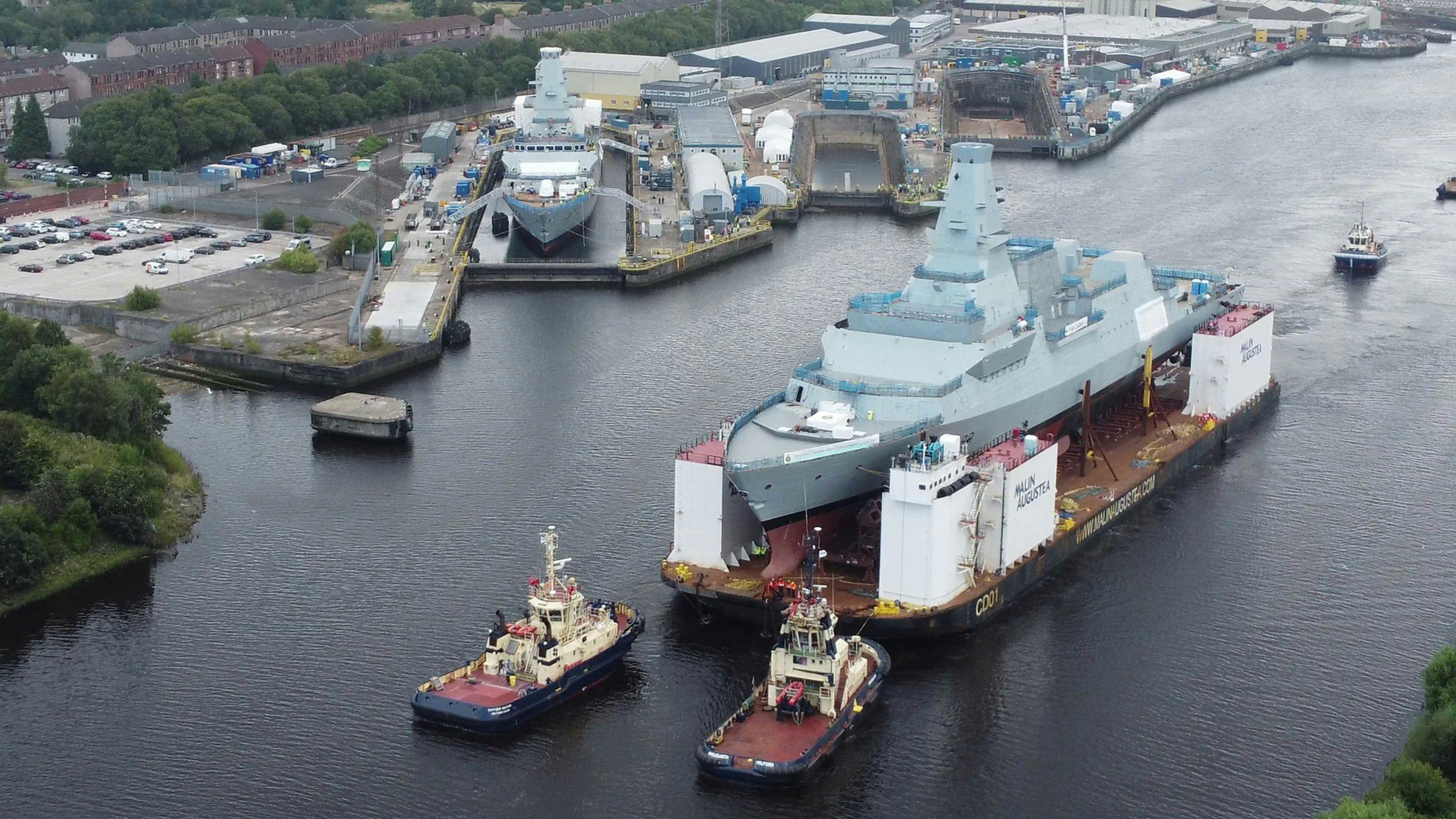
Specific details on the frigate construction highlight the scale of the industrial effort. The eight Type 26 frigates are being built by BAE Systems on the Clyde, Scotland, while the five Type 31 frigates are under construction by Babcock at Rosyth. Progress includes the flotation of HMS Cardiff, the second Type 26, in April, with the lead ship, HMS Glasgow, anticipated to achieve Initial Operating Capability in 2028. The International Sea Power Conference itself, along with the co-located Atlantic Future Forum, brought together over 80 industry partners and more than 700 delegates, representing the largest gathering of business leaders ever convened on a British aircraft carrier, signalling robust collaboration between the defence sector and wider industry.
Why This Matters
The Royal Navy’s ambitious recapitalisation programme is a multifaceted endeavour with profound implications for the United Kingdom’s defence posture, international relations, economic landscape, and the future of naval warfare. It signals a determined effort by the UK to reassert its role as a global maritime power and to adapt to an increasingly complex and contested geopolitical environment.
Firstly, from a **geopolitical perspective**, this modernisation underpins the UK’s commitment to global security and its alliances. A larger, more capable navy enhances the UK’s ability to project power, deter aggression, and contribute to stability across critical sea lanes. The Dreadnought submarines ensure the continuity of the UK’s nuclear deterrent, a cornerstone of its national security. The AUKUS submarine programme, in particular, represents a significant strategic pivot towards the Indo-Pacific, demonstrating the UK’s dedication to regional security alongside its partners, particularly in the face of growing competition and challenges to the rules-based international order. The collaboration on Type 26 frigates with nations like Norway, Australia, and Canada also highlights the importance of interoperability and shared defence capabilities among allies, reinforcing collective security within NATO and beyond.
Secondly, the programme carries substantial **economic significance**. The construction of a new fleet translates into significant investment in the UK’s shipbuilding and defence industries. Facilities on the Clyde and in Rosyth are experiencing a surge in activity, creating thousands of high-skilled jobs in design, engineering, manufacturing, and related supply chains across the country. This not only strengthens the UK’s industrial base but also fosters technological innovation, with potential spill-over benefits for other advanced manufacturing sectors. The involvement of numerous industry partners, as evidenced by the large turnout at the Atlantic Future Forum, underscores the programme’s role as a major economic driver and a catalyst for innovation in maritime technology.
Thirdly, the focus on a **’Hybrid Navy’** and the development of Common Combat Vessels for uncrewed systems mark a critical strategic shift in modern warfare. This approach acknowledges that future naval conflicts will increasingly involve autonomous platforms, artificial intelligence, and advanced robotics. By integrating these technologies, the Royal Navy aims to maintain a technological edge, enhance operational effectiveness, and potentially reduce risk to human personnel in certain scenarios. This forward-looking strategy positions the UK at the forefront of naval innovation, but also presents challenges in terms of developing new doctrines, training personnel, and managing the ethical implications of autonomous systems.
Finally, while the ambition is clear, the programme also highlights **inherent challenges**. The candid acknowledgement of “challenges in the here and now” points to ongoing issues with fleet availability, maintenance backlogs, and potentially personnel retention or recruitment, common problems faced by many advanced navies. Achieving the aggressive “1,000 days” readiness target and transforming traditional procurement methods will require significant organisational agility, sustained financial commitment, and a continued focus on efficiency. The scale of the recapitalisation means it will span decades, requiring consistent political will and public support to navigate potential budgetary pressures and evolving threat landscapes.
In essence, the Royal Navy’s modernisation is more than just acquiring new ships; it is a comprehensive national undertaking designed to equip the UK with the naval power required to protect its interests, uphold its alliances, and adapt to the evolving realities of 21st-century global security.