
**Key Takeaways:**
* **Heightened Legislative Gridlock:** The elevation of Jim Jordan, a staunch conservative and Trump ally, to House Minority Leader signals an era of intensified partisan conflict, likely leading to legislative stalemates on critical economic issues like spending, debt limits, and regulatory reform.
* **Fiscal Uncertainty and Sectoral Volatility:** Jordan’s history with the Freedom Caucus points to aggressive stances on fiscal conservatism, increasing the risk of government shutdowns and debt ceiling impasses. This uncertainty could trigger volatility across markets, particularly impacting sectors sensitive to federal funding, regulation, and trade policy.
* **Implications for a Trump-Aligned Agenda:** Set against the backdrop of a potential or ongoing Trump administration (as suggested by the ‘White House Watch’ ad), Jordan’s leadership, coupled with hardline appointments like Stephen Miller to the chief of staff role, amplifies the prospects for protectionist trade policies, deregulation, and contentious immigration debates, all of which carry significant market ramifications.
Unlock the White House Watch newsletter for free
Your guide to what Trump’s second term means for Washington, business and the world
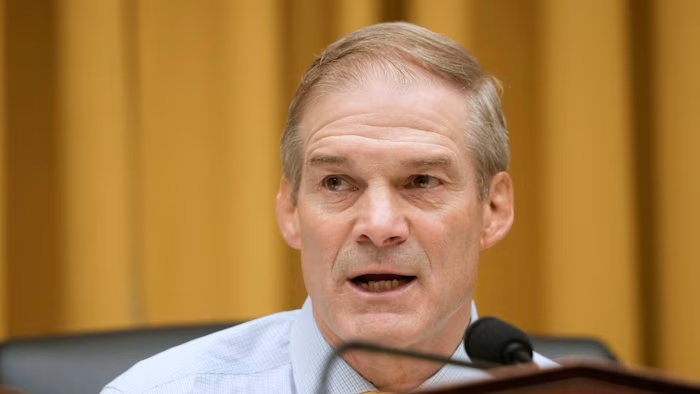
In a move with significant reverberations for both legislative policy and market sentiment, Republicans have tapped Jim Jordan, a pugnacious member of the lower chamber of US Congress from Ohio, to be their next leader. This leadership shift comes on the heels of widespread defeats in last week’s midterm elections, which saw the party’s ranks in the House dramatically shrink, ceding control to an ascendant Democratic majority. For investors and businesses, the selection of Jordan signals a period of heightened political polarization and potential legislative gridlock, particularly as the nation grapples with complex economic challenges.
Jordan, 62, will replace Mike Johnson, the Republican Speaker of the House from Louisiana, who decided not to seek another term as party leader in the House after the poor performance in the midterms. Jordan, who currently serves as chair of the influential House Judiciary Committee and has been a loyal ally of former President Donald Trump on Capitol Hill, edged out Steve Scalise, a Congress member from Louisiana who was also in the running for the job. His elevation is a clear signal that the Republican Party, even in the minority, intends to maintain a combative, ideologically driven stance, deeply aligned with the populist wing embodied by former President Trump.
The timing of Jordan’s ascension is critical. His new role as Republican House Minority Leader positions him as the chief antagonist to the newly empowered Democratic House majority, setting the stage for what is likely to be a highly contentious legislative environment. For markets, this immediately raises concerns about the feasibility of bipartisan compromise on crucial fiscal matters, including government funding bills, the national debt ceiling, and key policy initiatives that impact various economic sectors. The specter of frequent legislative impasses, or even government shutdowns, could inject unwelcome volatility into financial markets.
Jordan is widely known for his uncompromising and combative approach to politics, having been a prominent figure in the Tea Party movement that antagonised former President Barack Obama’s administration. He later co-founded the House Freedom Caucus, a group of right-wing hardliners that has consistently challenged Republican leaders in Congress over the past decade, often contributing to internal party divisions and legislative standoffs. His track record suggests a leader less inclined towards negotiation and more focused on ideological purity and opposition, a stance that could further complicate the already challenging task of governing with a divided Congress.
This elevation suggests compromise with the ascendant Democratic House majority could be hard to achieve, particularly with what is likely to be a difficult relationship between a Democratic-controlled House and a White House increasingly defined by hardline stances. In the context of the “White House Watch” newsletter’s focus on a potential Trump second term, the original article’s mention of the president appointing immigration hardliner Stephen Miller to be his chief of staff underscores a consistent, combative approach from the executive branch. Such a scenario, combining a hardline White House with a similarly uncompromising GOP House minority, creates a recipe for legislative friction, potentially stalling critical economic legislation and contributing to a ‘wait-and-see’ approach among businesses and investors.
From a market perspective, the implications are broad. Fiscal policy will be a primary battleground. Jordan’s past actions suggest a willingness to use the debt ceiling as leverage for spending cuts, a strategy that has historically rattled markets and led to credit downgrades. Any protracted battle over the national debt or annual appropriations could undermine investor confidence, leading to outflows from risk assets and increased demand for safe havens. Sectors heavily reliant on government contracts or sensitive to regulatory changes, such as defense, infrastructure, and healthcare, could experience heightened uncertainty.
Furthermore, a Trump-aligned GOP leadership, even in the minority, signals a continued emphasis on ‘America First’ trade policies. This could translate into resistance against new trade agreements, support for tariffs, and scrutiny of international supply chains. Multinational corporations, particularly those with significant exposure to global trade, would need to factor in this protectionist bent, potentially adjusting investment strategies and supply chain resilience. Energy policy might also see renewed focus on domestic fossil fuel production and deregulation, potentially benefiting traditional energy companies while creating headwinds for renewable energy initiatives, depending on the broader legislative landscape.
Meanwhile, in the upper chamber, Senate Republicans have re-elected John Thune to be their leader, after some lawmakers urged colleagues to challenge the South Dakotan. Thune on Tuesday nodded to the frank discussions within his caucus, stating: “I appreciated the opportunity to have an open, honest and transparent conversation with my colleagues today, and I am honoured to have their continued trust and support to lead the Senate Republican Conference in the 120th Congress.” While Thune represents a more traditional, establishment wing of the Republican Party, the overall shift in House leadership signals a potent force for partisan conflict that even a potentially more moderate Senate leadership might struggle to temper, further entrenching legislative stagnation as a core market risk factor.
Market Impact
The ascendancy of Jim Jordan to House Minority Leader heralds a period of heightened political uncertainty and legislative gridlock, presenting a significant headwind for market stability. Investors should brace for increased volatility around key fiscal deadlines, including debt ceiling negotiations and government funding bills, as Jordan’s combative stance and history with the Freedom Caucus suggest a willingness to push ideological battles to the brink. This environment of sustained political friction, particularly between a hardline GOP House minority and a Democratic majority, coupled with a potentially combative Trump-aligned White House, could dampen business investment, slow economic growth, and lead to sector-specific policy paralysis. Markets typically prefer predictability and bipartisan cooperation, making the current trajectory a source of concern for risk assets and a potential boon for defensive sectors and safe-haven investments. The prospect of recurrent legislative drama will likely keep risk premiums elevated, demanding a cautious approach from investors navigating the intricate interplay between Washington politics and economic performance.