
The United States Space Force is rapidly advancing its Space Data Network (SDN), with the initial phase of its critical “Backbone” segment now coming online. This development marks a significant step toward establishing a robust, global satellite communications network designed to enhance the U.S. armed forces’ ability to rapidly and securely transmit vital data worldwide.
In a recent announcement, the Space Force confirmed “three successful launches in two weeks” had placed the first SDN-Backbone satellites into low-Earth orbit. This update, provided in a Nov. 21 press release, offered crucial, albeit brief, insight into the progress of this ambitious project. The network is envisioned as a cornerstone for future military operations, providing resilient and high-capacity data transfer capabilities.
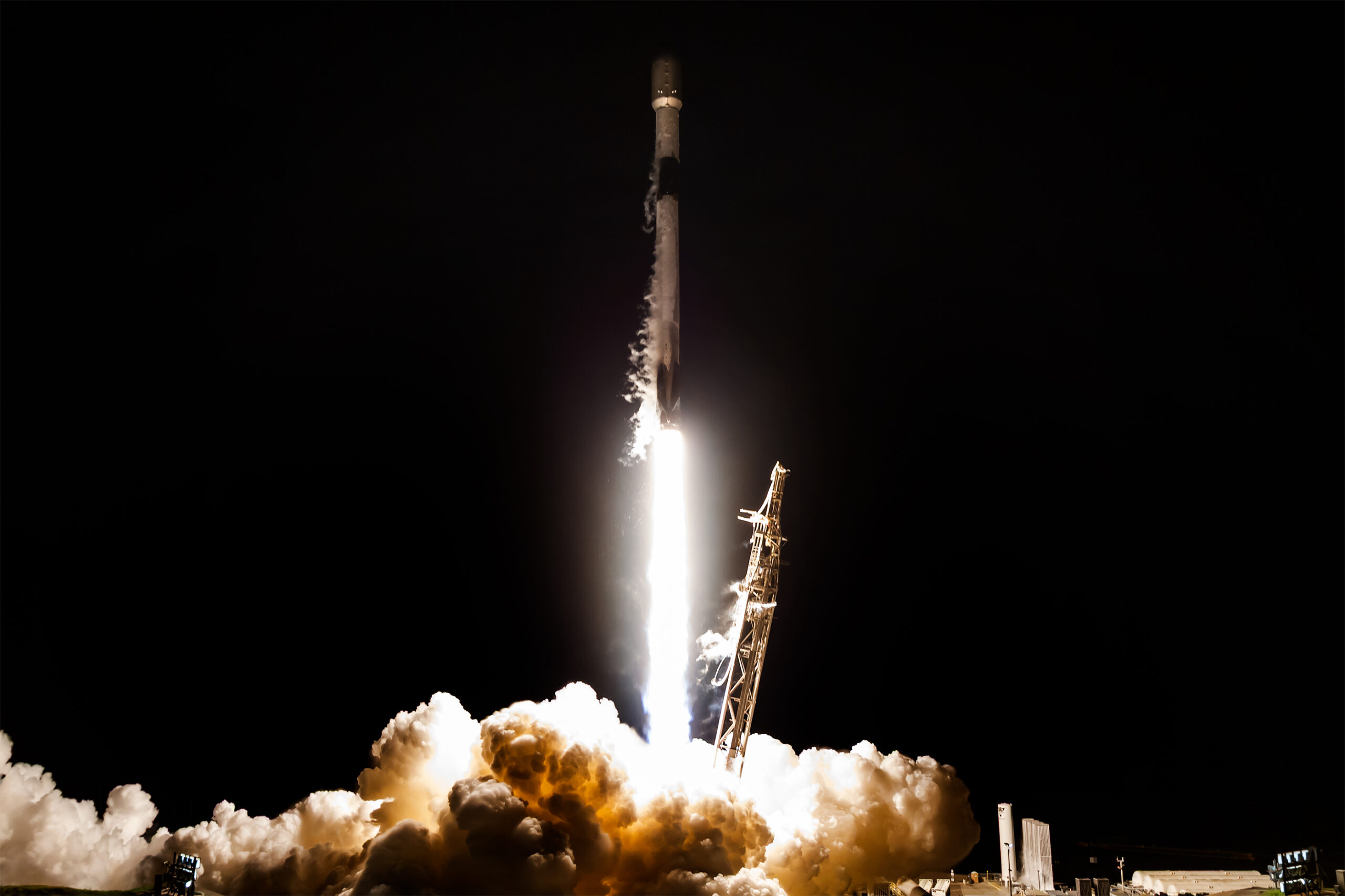
While the Space Force provided limited specific details, public launch tracking data from Space-Track.org, a database maintained by the Space Force, had already recorded three USSF launches from Vandenberg Space Force Base, California. These missions occurred on Nov. 6, Nov. 11, and Nov. 20. Each launch deployed 23 satellites, accumulating a total of 69 new spacecraft now orbiting Earth. These missions utilized SpaceX Falcon 9 rockets, a testament to the ongoing partnership between the Space Force and the commercial space industry. SpaceX is the primary contractor for the SDN-Backbone program, operating under a substantial $2.29 billion contract awarded in May of this year.
The Space Data Network represents a strategic integration of both military and commercial satellite technologies. Its overarching goal is to deliver secure tactical communications alongside high-throughput, low-latency connectivity for applications requiring significant data volumes. This innovative approach unifies two previously distinct sets of requirements: the Space Development Agency’s Transport Layer, which was initially conceived for secure, tactical communications, and MILNET, a concept designed to facilitate the movement of large data streams across various military platforms. By merging these capabilities, the SDN aims to provide a comprehensive and adaptable communication infrastructure.
The “Backbone” component of the SDN is specifically tasked with providing this “high-throughput, low-latency” connectivity. In simpler terms, this means the network will be able to transmit very large amounts of data very quickly, with minimal delay. Crucially, it will also serve as the “foundational data backhaul layer” for the entire system, as articulated by the Space Force in May. This signifies that the Backbone will act as the primary conduit for moving data between different segments of the network and to various users, ensuring that information flows efficiently across the global military enterprise.
Following the contract award to SpaceX, Space Force officials had remained largely reticent about the Backbone program’s specifics. However, the Nov. 21 announcement confirmed that this constellation will be government-owned and -controlled, ensuring direct oversight and operational security. The satellites are reportedly “on track to deliver regional capability this year and global support by next year,” indicating an aggressive deployment schedule aimed at rapidly establishing the network’s operational capacity.
The strategic decision to leverage commercially derived technologies has naturally drawn comparisons to SpaceX’s existing constellations, Starlink and Starshield. Starlink offers high-speed broadband services globally to civilian users, while Starshield is its militarized counterpart designed for government applications. It remains unclear whether Starshield satellites will directly contribute services to the SDN-Backbone. A Space Systems Command official previously informed *Air & Space Forces Magazine* that the program would “leverage commercially derived technologies and platforms,” but did not explicitly confirm Starshield’s direct involvement. This recent announcement similarly refrains from specifying the exact relationship or contribution of Starshield to the SDN-Backbone architecture.
Adding to the complexity of the deployment timeline, the recent launches (designated R-4, R-5, and R-6 by the Federal Aviation Administration for their payloads) may not represent the absolute first satellites launched for the SDN-Backbone. Previous Space Force launches with payloads identified as R-1, R-2, and R-3 occurred on Aug. 15, Sept. 10, and Sept. 26, respectively. This suggests a continuous and ongoing deployment effort, with the recent triad of launches accelerating the build-out of the network’s core.
Despite the Space Force’s clear intent to expedite the program’s development, its rapid pace and reliance on single vendors have drawn scrutiny from Capitol Hill. A draft appropriations bill released this month by the Senate Appropriations Committee expressed concern that the USSF appeared to “abandon meaningful competition in favor of sole-source awards” for both the Space Data Network-Backbone and the Air Moving Target Indication (AMTI) programs. The committee explicitly directed service officials “to maintain multiple vendors” for both programs, emphasizing the importance of a competitive environment for innovation and cost efficiency.
In response to these congressional concerns, USSF officials have maintained that competition remains a crucial element of the Space Data Network strategy. They have highlighted actions taken to broaden the vendor base, noting that five other vendors were added to the project through small initial contracts in August. This suggests an effort to diversify participation, even as SpaceX holds the primary large-scale contracts.
Beyond the SDN-Backbone, the Space Force has also awarded SpaceX a significant $4.2 billion contract for the development and deployment of its fleet of air moving target indicator satellites. Air Force Secretary Troy E. Meink stated on Sept. 14 that the first AMTI spacecraft would launch soon. This was followed by a classified mission on Sept. 16, designated USSF-259, which launched from Vandenberg carrying a payload identified by the Federal Aviation Administration solely as “TH-1.” A subsequent mission carrying a “TH-2” payload launched in October. Another classified mission, USSF-266, is scheduled for launch on Nov. 24 from Vandenberg, with no further details published by the FAA at the time of this report. These parallel contracts underscore SpaceX’s central role in the Space Force’s broader strategy for advanced satellite systems.
Why This Matters
The rapid deployment of the Space Data Network-Backbone represents a fundamental shift in how the U.S. military intends to conduct global operations. By establishing a high-throughput, low-latency satellite constellation in low-Earth orbit (LEO), the Space Force aims to create a more resilient, responsive, and secure communication infrastructure than previously possible with traditional, fewer, and larger geostationary satellites. This network is designed to be less susceptible to attack due to its sheer number of nodes and distributed architecture, enhancing the survivability of critical communication links in a contested space environment.
This initiative is crucial for maintaining a strategic advantage in an era where space has become an indispensable domain for national security. It directly supports advanced military concepts like Joint All-Domain Command and Control (JADC2), enabling seamless data sharing across land, sea, air, space, and cyber domains. Faster, more secure data transmission means quicker decision-making, improved intelligence, surveillance, and reconnaissance (ISR) capabilities, and more precise targeting for U.S. and allied forces globally. For instance, real-time tactical data from sensors could be rapidly transmitted to commanders and weapons systems, dramatically reducing the “sensor-to-shooter” timeline.
The significant role of commercial partners, particularly SpaceX, in this endeavor also highlights a growing trend of leveraging private sector innovation for national defense. This approach can accelerate development and deployment, potentially at a lower cost, but it also raises questions about competition, vendor lock-in, and oversight, as evidenced by congressional concerns. Ensuring a diversified industrial base for such critical infrastructure is a key challenge for the Space Force moving forward. The success or failure of this hybrid military-commercial model will likely set precedents for future defense acquisitions and partnerships in the rapidly evolving space domain.