
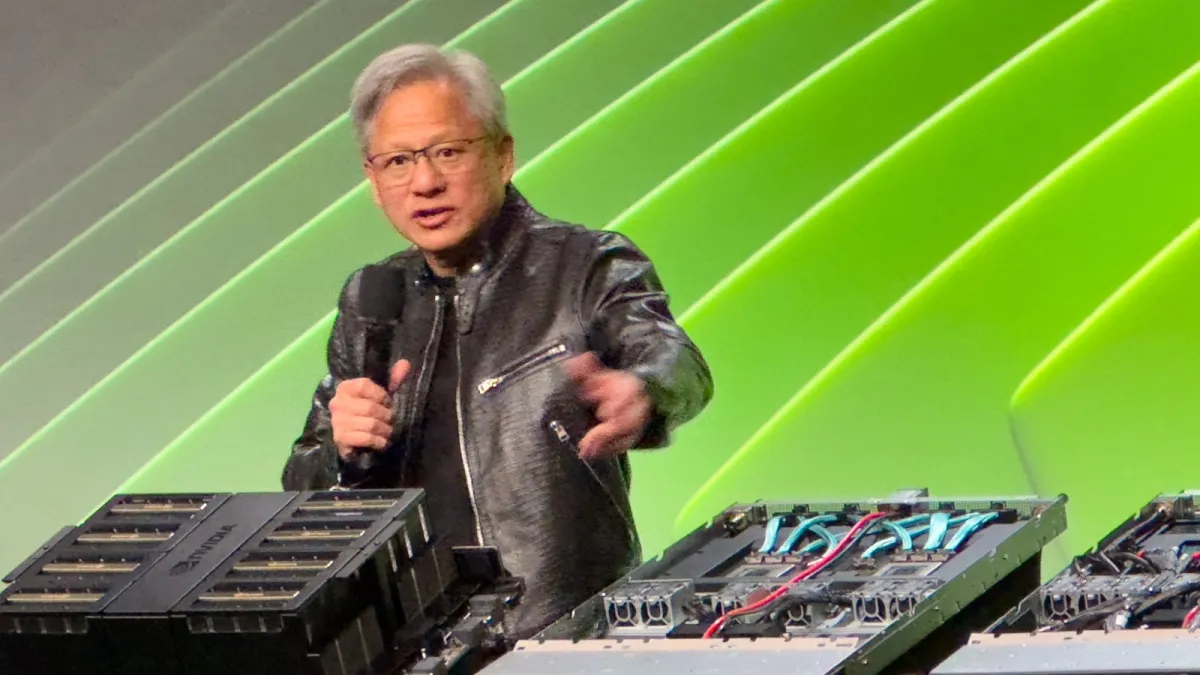
In a complete U-turn, Nvidia’s board on Monday reinstated Jensen Huang as the CEO and president of the chipmaker, just a fortnight after he resigned.
During a meeting before his reinstatement, however, Huang admitted to more affairs beyond the two that have been reported in the news, according to The Wall Street Journal.
Early in November, Huang admitted to an extramarital affair in a letter to employees. At the time, he was ostensibly talking about his relationship with Megaspeed executive and alleged Chinese spy, Alice Huang (not related to Jensen). Later, it was reported that he’d also had a relationship with Nvidia’s VP of health, Kimberly Powell.
Afterwards, Reuters reported that he also had an affair with another employee.
It’s not clear which affairs Huang admitted to during this recent conversation with Nvidia’s board of directors.
Huang’s return was spurred by a personal intervention from the U.S. government, Nvidia’s board said in a statement on Monday, and President Donald Trump apparently called the board to bat for Huang’s reinstatement.
The Wall Street Journal reports that over the weekend, U.S. Attorney General Todd Blanche told Trump and Vice President JD Vance that the Justice Department wasn’t investigating Huang and there was no evidence that he was a national security risk, after which both contacted the company’s board.
Huang received a “hero’s welcome” at Nvidia’s HQ, with several employees applauding his return.
Key Takeaways
- Unprecedented Reinstatement:Jensen Huang returns as Nvidia CEO just two weeks after resigning, marking a dramatic reversal in corporate leadership.
- Government Intervention:The U.S. government, including President Trump and Vice President Vance, directly intervened to secure Huang’s return, citing no national security risk from his personal conduct.
- Continued Personal Revelations:Huang admitted to the Nvidia board about additional extramarital affairs beyond those previously reported, adding another layer to the complex narrative surrounding his leadership.
Nvidia’s Phoenix: Jensen Huang Returns Amidst Presidential Intervention and Fresh Personal Revelations
In an astonishing turn of events that blurs the lines between corporate governance, personal ethics, and national strategic interests, Jensen Huang has been reinstated as the CEO and president of Nvidia, a mere fortnight after his initial resignation. The decision, announced by Nvidia’s board on Monday, follows an extraordinary intervention from the highest echelons of the U.S. government, transforming what began as a corporate ethics scandal into a matter of state importance.
The Whirlwind Reversal
Huang’s initial departure from the helm of the semiconductor giant earlier this month sent ripples through the tech world. His resignation was ostensibly linked to a series of revelations regarding extramarital affairs, including a publicized relationship with Megaspeed executive Alice Huang (who is not related to Jensen) and later, with Nvidia’s own VP of Health, Kimberly Powell. Reports of a third affair with another Nvidia employee further compounded the corporate governance concerns, raising questions about workplace conduct and the potential for conflicts of interest within the leadership structure of one of the world’s most critical tech companies.
The speed of his resignation and subsequent reinstatement is virtually unprecedented for a leader of a company with Nvidia’s market capitalization and strategic importance. It underscores the profound pressures and rapid decision-making processes at play, suggesting that the initial resignation may have been a quick, perhaps even reactive, move to quell an immediate crisis, only to be overridden by a more comprehensive evaluation of Nvidia’s strategic value.
Presidential Backing: A National Imperative?
The most striking element of Huang’s return is the direct involvement of the U.S. government. Nvidia’s board explicitly stated that Huang’s reinstatement was “spurred by a personal intervention from the U.S. government.” This revelation was quickly followed by reports from The Wall Street Journal detailing how President Donald Trump himself contacted Nvidia’s board to advocate for Huang’s return. This presidential push came after U.S. Attorney General Todd Blanche informed both President Trump and Vice President JD Vance over the weekend that the Justice Department found no evidence Huang posed a national security risk, despite earlier speculations that his relationship with Alice Huang, an alleged Chinese spy, could compromise sensitive information.
Such high-level governmental intervention in the leadership of a private sector company is exceedingly rare and signals the immense strategic value placed on Nvidia and, by extension, on Jensen Huang’s unique leadership. It suggests that, in the eyes of the U.S. administration, the stability and continued innovation at Nvidia under Huang’s direction outweighed concerns about corporate ethics and personal conduct. This decision highlights a growing tension between traditional corporate governance principles and the perceived national interest in critical technology sectors.
More Personal Revelations Surface
Adding another layer of complexity to this already convoluted saga, The Wall Street Journal reported that during a meeting with Nvidia’s board prior to his reinstatement, Huang admitted to “more affairs beyond the two that have been reported in the news.” While the specifics of these additional relationships remain undisclosed, this admission further complicates the narrative surrounding his personal conduct and its implications for corporate leadership. It reinforces the image of a leader whose personal life is now inextricably intertwined with the public and strategic perception of the company he founded and leads.
The board’s decision to reinstate him despite these ongoing revelations suggests a calculated risk assessment, prioritizing his invaluable leadership over the potential fallout from his personal life. It raises pertinent questions about accountability, transparency, and the criteria for executive fitness in an era where national security and technological dominance are paramount.
Nvidia’s Indispensable Leader in a Crucial Era
The government’s forceful intervention underscores Jensen Huang’s indispensable role not just within Nvidia, but within the broader U.S. technology landscape and its geopolitical competition. Nvidia, under Huang’s visionary leadership, has become a titan in the semiconductor industry, particularly dominant in Graphics Processing Units (GPUs) that are the bedrock of artificial intelligence, high-performance computing, and data centers. As AI capabilities become central to economic power and national defense, Nvidia’s technology is critical infrastructure.
Huang’s strategic foresight has positioned Nvidia at the forefront of the global AI race, making its continued stability and innovation a matter of profound national security interest, especially amidst escalating technological competition with nations like China. His ability to navigate complex technological shifts, drive aggressive R&D, and maintain market leadership is evidently viewed as too valuable to jeopardize, even in the face of significant ethical concerns.
Upon his return, Huang was greeted with a “hero’s welcome” at Nvidia’s headquarters, with employees reportedly applauding his reinstatement. This internal reception suggests strong loyalty and belief in his leadership, perhaps reflecting the company’s collective understanding of his critical role in its success and future trajectory. This internal support could provide a buffer against public scrutiny, allowing the company to focus on its core mission.
Bottom Line
Jensen Huang’s swift return to Nvidia’s helm is more than just a corporate drama; it’s a stark illustration of how intertwined national interests, technological leadership, and individual executive fate have become. While his personal conduct raises valid corporate governance questions, the unprecedented governmental intervention to secure his reinstatement signals that, for certain strategically critical leaders in key technology sectors, their indispensability can transcend traditional ethical boundaries. This saga sets a powerful precedent, highlighting that in the fiercely competitive global tech arena, some leaders are deemed too vital to fail, regardless of the controversies that may surround them.
Source:{feed_title}