
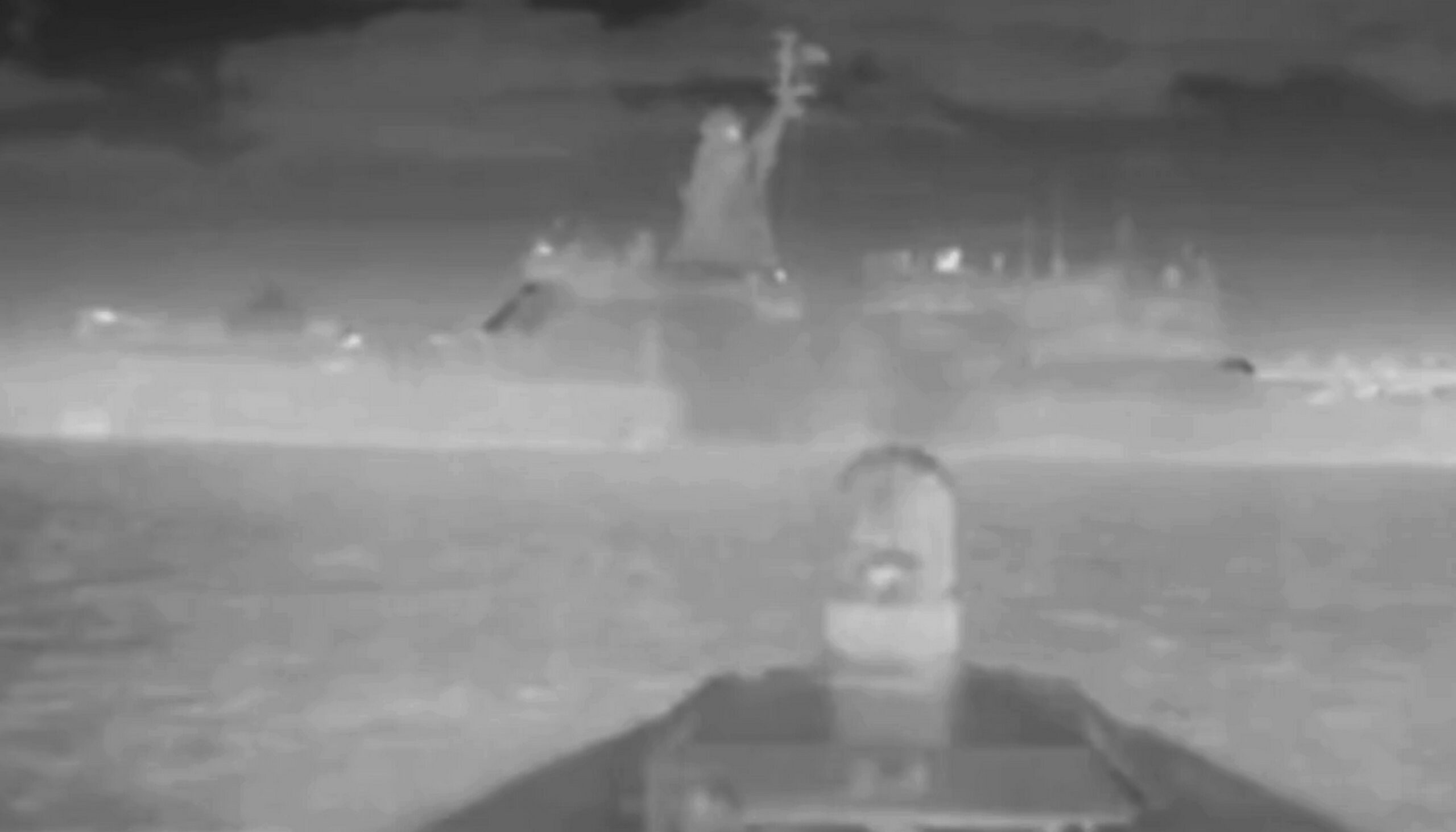
Albania Categorically Denies Involvement in Naval Drone Attack on Russian Warship, Rejecting Allegations of Territory Use
Albania’s Ministry for Europe and Foreign Affairs has issued a forceful denial regarding allegations that its territory was used to launch a recent naval drone attack which reportedly sank the Russian corvetteMerkury. The ministry declared any such reports as “inaccurate” and “categorically rejected” the claims, emphasizing that Albania was not involved in the incident and its territory was neither used nor made available for any such operation.
The denial comes in response to reports circulating on social media, specifically from the “Clash Report” account on X (formerly Twitter), which suggested an Albanian origin for the unmanned naval vehicles. In a public statement shared on its official X account, the Albanian Ministry for Europe and Foreign Affairs articulated its position, stating:
“We have taken note of reports alleging that the naval drone attack against a Russian corvette originated from Albanian territory. The reports in question are inaccurate and do not reflect the facts. Albania was not involved in this incident, and its territory was neither used nor made available for the launch or facilitation of such an attack. We categorically reject these allegations, which have been presented without verifiable evidence. We call on those responsible for disseminating them to correct the record and to exercise accuracy, due diligence and responsibility when reporting on matters of such sensitivity.”
This strong rebuttal underscores Albania’s concern over being falsely implicated in military actions related to the ongoing conflict between Russia and Ukraine, particularly given its status as a NATO member state. The ministry’s call for verifiable evidence and responsible reporting highlights the potential for misinformation to escalate international tensions and complicate diplomatic relations, especially concerning such a sensitive geopolitical conflict.
The incident in question pertains to a reported Ukrainian naval drone attack that allegedly targeted Russian vessels in the Mediterranean. Ukrainian President Volodymyr Zelensky claimed that seven Ukrainian-made naval drones successfully sank theMerkury, one of Russia’s newest corvettes, along with a Ka-27 helicopter. Zelensky also stated that the attack struck the dry cargo vessel MVAngara, which he asserted was being used for transporting weapons. Local authorities, without specifying their affiliation, indicated that the explosion occurred at the Benghazi naval base on Sunday, where the warship was reportedly docking for fuel and supplies.
TheMerkury, a modernised Project 20380 corvette, was commissioned into the Russian Navy in May 2023. It was initially intended for deployment with Russia’s Black Sea Fleet. However, due to Turkey’s closure of the Bosporus Strait to warships in response to the conflict in Ukraine, theMerkurywas unable to reach the Black Sea, as reported by Naval News at the time of its commissioning. This circumstance likely explains its presence in the Mediterranean region, far from its intended operational theatre, increasing its vulnerability to such attacks.
While the “Clash Report” account on X suggested an Albanian origin for the drones—a claim promptly refuted by Tirana—other accounts of the attack’s launch point have emerged. Ukraine’s Security Service, while confirming the use of seven drones and their launch from a “mothership,” did not disclose the vessel’s specific origin or location. In contrast, the Associated Press (AP), citing an initial investigation, reported that the drones were launched from a base operated by Ukrainian forces in western Libya.
The significant geographical distance between Albania and Benghazi, approximately 530 miles (850 kilometers), separates the two locations, making a direct launch from Albanian territory for an attack in Libya logistically challenging for conventional naval drones. This geographical context lends weight to the various claims and counter-claims regarding the launch point, underscoring the complexities of tracking and attributing such sophisticated attacks and the potential for misdirection in information warfare.
The suggestion of a Libyan origin for the drone launch introduces a complex layer of geopolitical dynamics. Libya remains a deeply divided nation, with rival administrations and armed factions vying for control. Western Libya, including cities like Misrata, Tripoli, and Zawiya, is primarily under the authority of the internationally recognized Government of National Unity (GNU). In contrast, eastern Libya, which encompasses Benghazi where the attack reportedly occurred, is controlled by Khalifa Haftar’s self-styled Libyan National Army (LNA). The LNA maintains close ties with Moscow, a relationship that has involved Russian military support and mercenary deployments, most notably through the Wagner Group.
According to an Associated Press report from April, two Libyan officials indicated that Ukrainian forces, primarily drone specialists, have been operating from an air base at Misrata and other facilities in Tripoli and Zawiya. These operations are said to be conducted under an arrangement with the Tripoli government, highlighting a potential proxy element to the wider conflict. The presence of Ukrainian personnel in Western Libya, coupled with the LNA’s alignment with Russia in the East, suggests a potential for the Russia-Ukraine conflict to manifest in indirect engagements within Libyan territory, further destabilizing the already volatile region and complicating international efforts for peace.
This is not the first instance where Libya has been implicated in maritime incidents linked to the Ukraine conflict. In March, the Russian-flagged tankerArctic Metagazreportedly sank after explosions occurred between Libya and Malta. Russia’s Transport Ministry subsequently blamed Ukrainian sea drones launched from the Libyan coast for that incident, as reported by the Associated Press. These repeated allegations underscore Libya’s unwitting or unwilling role as a potential staging ground or operational area for distant conflicts, given its strategic Mediterranean coastline, ongoing internal divisions, and the presence of various foreign actors.
Why This Matters
The incident involving the Russian corvetteMerkuryand the subsequent accusations against Albania carry significant implications across geopolitical, military, and informational domains:
- Geopolitical Stability and Sovereignty:Albania’s swift and categorical denial is crucial for maintaining its international standing and protecting its sovereignty, particularly as a NATO member. False accusations of involvement in hostile acts against a major power like Russia could have severe diplomatic and security repercussions, potentially drawing the country into a conflict it is not part of. Such allegations also risk destabilizing regional security in the Balkans and the broader Mediterranean, potentially creating new flashpoints in an already complex security environment.
- Escalation and Reach of the Ukraine Conflict:The reported sinking of a modern Russian warship, if confirmed, represents a significant success for Ukraine’s naval drone capabilities and a blow to Russia’s naval presence, particularly given theMerkury’srecent commissioning. It demonstrates Ukraine’s extended reach and innovative tactics in naval warfare, capable of striking Russian assets far from the traditional Black Sea theatre. This expansion of the operational area signals an evolving phase of the conflict, potentially drawing in more complex logistics and international actors and highlighting the global ramifications of the war.
- Libya’s Role as a Proxy Battleground:The competing claims about the drones’ launch origin, particularly the AP’s report of a Ukrainian base in western Libya, underscore how the Russia-Ukraine conflict can manifest in distant regions. Libya’s internal divisions and the presence of foreign actors create a fertile ground for proxy engagements, risking further destabilization of the North African nation. The LNA’s ties to Moscow and the GNU’s alleged cooperation with Kyiv suggest a dangerous convergence of multiple conflicts on Libyan soil, making a political resolution even more elusive and prolonging the humanitarian crisis.
- The Growing Threat of Naval Drone Warfare:This incident highlights the increasing effectiveness and strategic importance of unmanned naval vehicles. Drones offer a cost-effective and asymmetric warfare capability, allowing smaller forces to challenge superior naval powers. The ability to launch such attacks from a “mothership” or even distant coastal areas complicates maritime security, poses challenges for international law regarding engagement rules, and raises questions about attribution in international waters. This could fundamentally alter naval tactics and investments globally.
- The Challenge of Information Warfare and Disinformation:The immediate spread of unverified claims, such as those targeting Albania, exemplifies the pervasive nature of information warfare in modern conflicts. Such disinformation campaigns can deliberately sow confusion, create diplomatic friction, and undermine trust in official sources, both domestically and internationally. Albania’s call for accuracy and verifiable evidence serves as a crucial reminder of the critical need for due diligence in reporting and consuming news, especially concerning sensitive military operations and international relations, to counter the deliberate manipulation of public perception.