
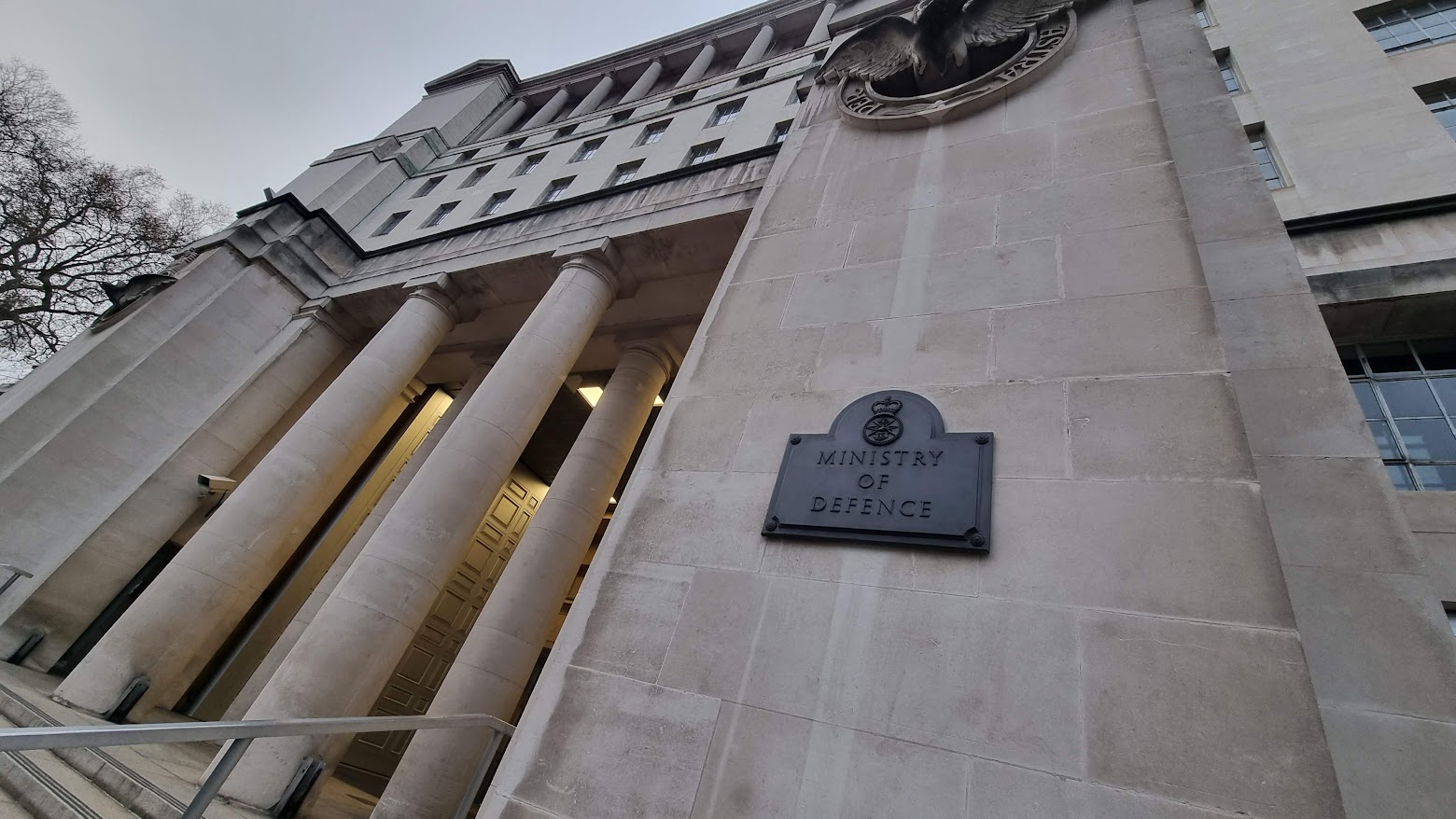
UK Defence Ministry Under Scrutiny Over Unbacked Cost Cuts and Funding Shortfalls, Audit Reveals
LONDON, UK– The United Kingdom’s Ministry of Defence (MoD) is facing sharp criticism following a report by the National Audit Office (NAO), which revealed significant concerns regarding the financial planning and execution of its Defence Investment Plan (DIP). The audit highlights that the MoD incorporated £3.3 billion in cost reductions into the plan during its final stages, despite these measures lacking finalised delivery strategies. Furthermore, the ministry allocated no capital contingency for the current financial year, even in the face of anticipated budgetary pressures.
The NAO, an independent parliamentary body responsible for auditing government departments, scrutinised the MoD’s financial practices in a report published recently. The report details how, while the MoD generally adopted a “reasonable approach to identifying efficiency and savings measures early in the DIP process,” a dramatic shift occurred in June 2026.
“However, in the final stages of the process, in June 2026, the MoD included a series of measures to reduce cost by £3.3 billion up to 2029-30, which were not supported by finalised delivery plans,”the NAO report explicitly states, raising questions about the feasibility and transparency of these last-minute adjustments.
To address persistent capital pressures projected for 2026-27 and 2027-28, the MoD reportedly directed various departments to identify further capital savings. This directive led to the deferral of £1.4 billion in capital spending from these years, a decision agreed upon by the National Armaments & Defence Group (NADG). The MoD communicated to the NAO that this figure was deemed realistic based on internal analysis at the time, and that its planning had since “matured,” even though it acknowledged not having a definitive set of measures in place to achieve these specific savings at the point of deferral.
Similar challenges were observed in day-to-day spending. The MoD set an ambitious target to find £0.9 billion in savings by 2029-30. This target, according to the NAO, was based on assumptions, despite the MoD’s own recognition that reducing such spending is inherently difficult, particularly after already suppressing the budget for military activity. Other late adjustments to the DIP included plans for £0.4 billion from asset sales and the reprofiling of £0.6 billion in project spending, pushing these expenditures beyond the 2029-30 horizon.
The NAO’s report notes a concerning pattern:“The MoD has recognised that, when it previously needed to resolve affordability challenges, it made over-optimistic assumptions about its ability to reduce costs.”This observation suggests a recurring issue within the ministry’s financial management strategies.
Contingency Planning Under Scrutiny
A crucial aspect of sound financial management is the allocation of contingency funds to manage unforeseen pressures. HM Treasury typically expects government departments to earmark around 5% of their budgets for this purpose, allowing them to reprioritise funds or cover unexpected costs. However, the NAO found that the MoD’s contingency provision fell significantly short of this benchmark in the initial years of the DIP.
The report details:“The MoD has set aside contingency equivalent to 1.2% of its budget in 2026-27, 2% of its budget in 2027-28, and 5% from 2030-31.”While the overall contingency of £3.3 billion against its day-to-day budget and £1.6 billion against its capital budget over the four-year period to 2029-30 might appear to exceed the total forecasted cost pressure of £1.2 billion in the DIP, a closer look reveals critical shortfalls in specific years.
Significantly, the MoD forecasted a capital budget cost pressure of £0.3 billion in 2026-27 and £0.5 billion in 2027-28. Despite these projections, the ministry allocated no capital contingency in the first year and only £0.3 billion in the second. Auditors highlighted that potential obligations that these contingencies may need to cover include compensation claims for noise-induced hearing loss and costs associated with the Afghanistan resettlement schemes, underscoring the vital need for robust contingency planning.
The audit also revealed that the MoD plans to defer several Defence Estate Optimisation Portfolio projects into the next parliamentary term. This move is projected to save £1.1 billion in the first four years of the plan but will ultimately incur an additional £0.2 billion over the full ten-year lifespan of these projects. The NAO cautioned that such approaches“risk driving costs into future years and might result in them being higher overall,”indicating that short-term savings could lead to greater long-term financial burdens.
A Pattern of Financial Challenges
This is not the first time the MoD’s financial planning has been scrutinised. Previous reports from the NAO, as reported by the UK Defence Journal, have highlighted persistent issues. In January 2021, the NAO found that the MoD had no contingency for 2020-21, having judged its Equipment Plan unaffordable for the fourth consecutive year. More recently, in December 2023, the NAO reported that the Equipment Plan was underfunded by a staggering £16.9 billion, marking its largest deficit since 2012.
When the current Defence Investment Plan was initially published on June 30, the Treasury announced that £10.3 billion of a £15 billion package had been identified, with the remaining £4.7 billion slated for confirmation at the autumn Budget, according to the UK Defence Journal. However, the government later announced in the October Budget that this remaining £4.7 billion would be sourced from a further 1% cut to departmental capital budgets from 2027-28 to 2029-30, alongside unallocated contingency within the Treasury’s capital reserve.
Recently, Defence Secretary Wes Streeting addressed the ongoing financial challenges, stating that more funding would be provided at next year’s spending review. He emphasised a commitment to efficiency, asserting:“It is about spending more wisely.”
Auditor General’s Recommendations
Gareth Davies, head of the National Audit Office, acknowledged the MoD’s efforts to improve its understanding of investment plan costs but stressed that significant work remains.“The Ministry of Defence has taken important steps to improve its understanding of the cost of its investment plans. But much remains to be done to ensure the Defence Investment Plan can be delivered as intended,”Davies stated.
He concluded with a clear mandate for the department:“The department must now monitor the Plan closely, maintain accurate cost information and be transparent with Parliament about emerging pressures.”
Why This Matters
The National Audit Office’s findings regarding the Ministry of Defence’s Defence Investment Plan raise critical questions about fiscal responsibility, national security, and government accountability. The issues identified—unbacked cost reduction targets, deferred spending without clear plans, over-optimistic assumptions, and insufficient contingency funds—have far-reaching implications.
For Taxpayers and Public Finances:The lack of finalised delivery plans for billions in cost reductions means there’s a significant risk these savings will not materialise, potentially leading to increased expenditure down the line or a re-allocation of funds from other crucial public services. Deferring capital projects and optimising estate initiatives for short-term savings, only to incur higher costs later, represents poor value for money and an inefficient use of public funds. Ultimately, these practices could mean taxpayers bear the burden of delayed and more expensive projects in the future.
For National Security and Defence Capabilities:The effective management of the defence budget is paramount to maintaining the UK’s national security. If planned cost reductions are not achieved, or if critical capital spending is continually deferred, it can directly impact the modernisation of equipment, the readiness of military personnel, and the overall capability of the armed forces. An underfunded or poorly managed investment plan could leave the UK vulnerable, delaying the acquisition of essential defence assets or compromising the welfare and training of service personnel. The historical pattern of the Equipment Plan being deemed unaffordable underscores a systemic challenge that, if unaddressed, could degrade the UK’s defence posture.
For Government Accountability and Transparency:The NAO’s role is to ensure that public money is spent effectively and transparently. The report highlights a lack of clarity and definitive planning within a major government department, which undermines parliamentary oversight and public trust. Defence spending is one of the largest areas of government expenditure, and citizens have a right to expect robust financial planning and clear accountability. The call for the MoD to “maintain accurate cost information and be transparent with Parliament about emerging pressures” is a direct challenge to improve governance and restore confidence in its financial stewardship.
In essence, these findings point to a potential cycle of short-term fixes that could jeopardise long-term strategic defence objectives and burden future budgets. Effective defence planning requires foresight, realistic assessments, and unwavering commitment to delivery. The audit serves as a crucial warning that without significant improvements in financial planning and execution, the UK’s defence capabilities and fiscal health could face substantial and avoidable risks.