
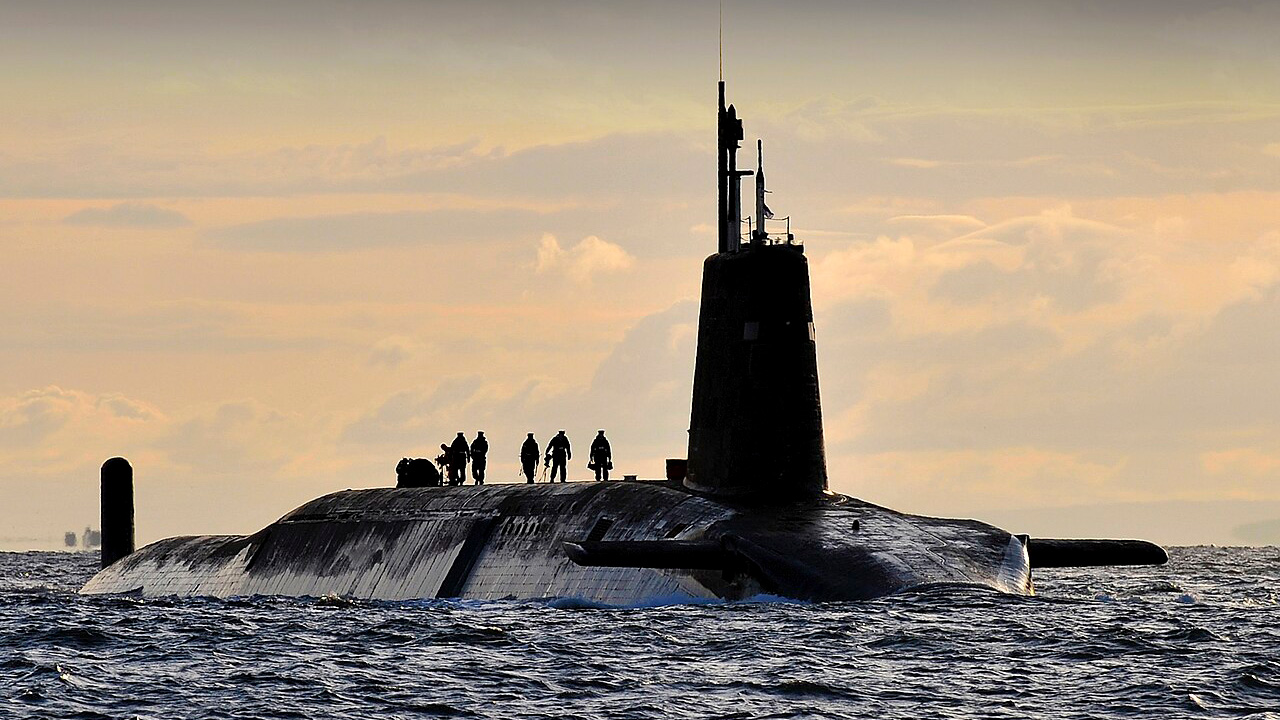
UK’s Nuclear Deterrent to Consume Quarter of Defence Budget for Years, Parliamentarians Raise Transparency Concerns
London, UK– The United Kingdom’s Defence Nuclear Enterprise (DNE) is set to account for nearly a quarter of the nation’s defence budget for many years to come, a figure that has ignited calls for greater parliamentary oversight and transparency. Jeremy Pocklington, the Permanent Secretary for the Ministry of Defence (MoD), disclosed this significant allocation during a recent session of the Defence Committee, highlighting the extensive nature of the long-term programmes underpinning the UK’s nuclear deterrent.
Speaking before the committee, Pocklington stated, “the defence nuclear enterprise is about just under a quarter of the budget now, and it’s likely to remain that way for many years to come, given the number of large, long-term programs.” This commitment ensures the continuous development, maintenance, and operation of the UK’s nuclear arsenal, which currently comprises its Trident submarine-launched ballistic missile system and the associated infrastructure, including the highly anticipated Dreadnought-class submarines.
Pocklington sought to reassure the committee regarding internal financial management, asserting that these colossal programmes are subject to the same stringent business case requirements and internal as well as cross-government scrutiny as any other defence project. He further detailed the establishment of a dedicated Defence Nuclear Board, which includes non-executive members, designed to provide additional layers of internal oversight. Aneen Blackmore, the MoD’s Director General Finance, corroborated this, explaining that the nuclear budget had undergone meticulous programme-by-programme examination during the comprehensive Defence Investment Plan review, which involved specific sessions with the Treasury.
However, these assurances failed to quell concerns among members of Parliament. Tanmanjeet Singh Dhesi, chair of the Defence Committee, sharply criticised the perceived lack of external scrutiny, stating, “with all due respect, all of that scrutiny is happening within departments. You know, it’s people marking their own homework. There is no parliamentary scrutiny.” Dhesi underscored a long-standing frustration, revealing that discussions about creating a dedicated select committee to scrutinise nuclear spending have been ongoing for two to three years without resolution.
Pocklington expressed the department’s support for the proposed new parliamentary committee, indicating his understanding that it would be established “in the next few months.” Yet, Dhesi reiterated the immediate absence of such a body, lamenting, “as yet there is no such select committee, so there is no parliamentary scrutiny, and I think that is to our collective detriment as a nation.” This ongoing delay, despite ministerial pledges, highlights a significant tension between the executive’s management of a highly sensitive national security asset and Parliament’s constitutional role in holding the government accountable for public expenditure.
The profound financial implications of the DNE were further emphasised by Jesse Norman, another committee member. Norman pointed out, “Obviously, the amount we spend on our nuclear enterprise profoundly affects the rest of the budget available.” He also highlighted a critical challenge inherent in scrutinising nuclear defence spending: security concerns. Norman noted that these concerns often “make it impossible to scrutinize the budget on the submarine enterprise itself,” creating an opaque area of public spending that complicates parliamentary oversight.
This is not the first time Parliament has raised alarms over the transparency of nuclear defence spending. In June, the Public Accounts Committee (PAC) issued a report that underscored similar concerns. The PAC report revealed that the Defence Nuclear Enterprise consumed 18% of the defence budget, equating to £10.9 billion, in the 2024-25 financial year. Projections indicated that this proportion was expected to rise to 20% in 2025-26 and approach a quarter in the subsequent years, aligning with Pocklington’s recent testimony. Critically, the PAC report concluded that the MoD was “not currently providing Parliament with sufficient transparency over its ever-increasing nuclear expenditure.”
The same PAC report detailed the immense scale of individual nuclear programmes, noting that nine distinct nuclear initiatives each carry whole-life costs exceeding £10 billion. Despite these staggering figures, the report did indicate that the Dreadnought submarine programme, a cornerstone of the UK’s future nuclear deterrent, was reported to be within its substantial £41 billion budget. This detail, while positive for that specific project, still underscores the colossal sums involved.
The establishment of a dedicated parliamentary committee for nuclear spending has been a recurring promise. In October of the previous year, Luke Pollard, then Minister for Defence Readiness and Industry, stated in a written answer that the government intended “to establish the new Committee by the end of the year.” However, Pocklington’s recent evidence to the Defence Committee, pushing the timeline to “the next few months,” suggests further delays. The creation of such a committee requires a House motion to amend Standing Orders, a process whose timing is ultimately controlled by the government. The repeated postponements fuel concerns among parliamentarians that the executive is not sufficiently prioritising external accountability for this critical and costly area of national defence.
Why This Matters
The allocation of nearly a quarter of the UK’s defence budget to its nuclear enterprise for the foreseeable future carries profound implications for both national security and public finance. Firstly, it highlights the UK’s unwavering commitment to maintaining an independent nuclear deterrent, a cornerstone of its defence policy and a key element of its international standing. In an increasingly unstable global landscape, the strategic rationale for this investment often overrides other considerations, yet the sheer scale demands robust scrutiny.
Secondly, the significant and long-term financial commitment to the DNE necessarily impacts other areas of defence spending. With a finite budget, a larger slice dedicated to nuclear capabilities means potentially fewer resources for conventional forces, cybersecurity, intelligence gathering, or other emerging threats. This raises questions about strategic balance and the optimal allocation of defence funds to address the full spectrum of modern security challenges.
Thirdly, and perhaps most critically, the ongoing struggle for parliamentary transparency and oversight of this expenditure strikes at the heart of democratic accountability. When vast sums of taxpayer money are spent on highly sensitive projects, the inability of Parliament to conduct independent scrutiny—beyond internal departmental reviews—creates a democratic deficit. The concern that “people are marking their own homework” suggests a potential for inefficiencies, cost overruns, or strategic missteps to go unchallenged. While national security considerations are paramount, the call for a dedicated select committee represents an attempt to balance these concerns with the public’s right to know how their money is being spent on one of the most expensive and long-term government programmes.
The delay in establishing such a committee, despite cross-party support and ministerial promises, further erodes trust and reinforces the perception of a lack of commitment to transparency. This situation is not merely an internal parliamentary squabble; it speaks to fundamental questions about the balance of power between the executive and legislative branches, and the degree to which public funds, particularly in sensitive defence areas, are subject to independent and rigorous accountability. As the DNE budget continues to grow, the pressure for effective parliamentary oversight will only intensify, making the establishment of this committee a crucial test of the government’s commitment to open governance.