
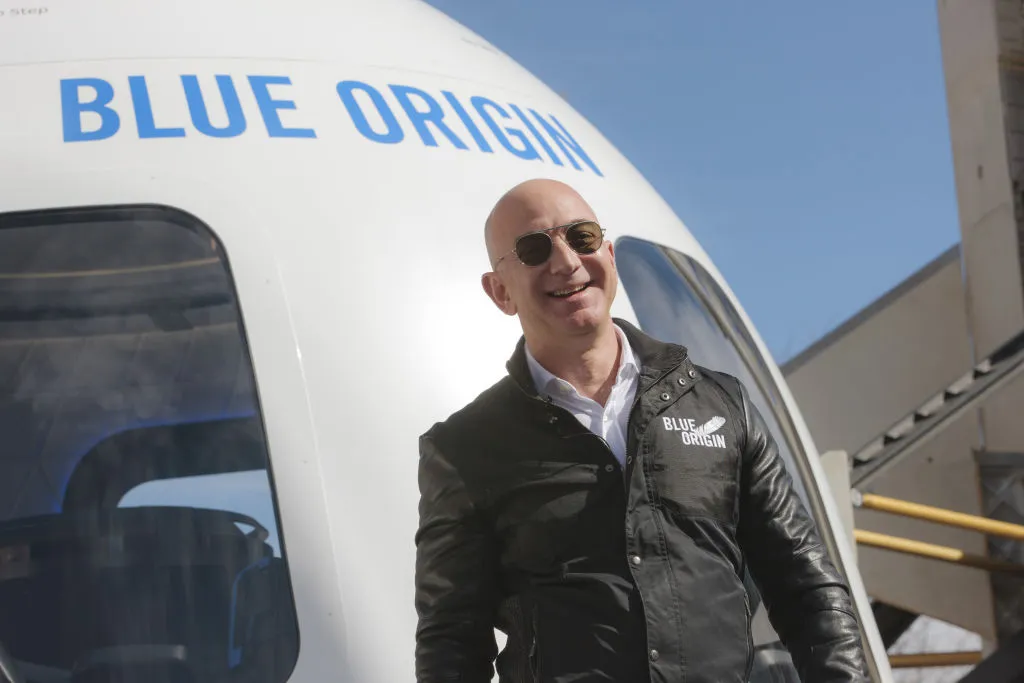
## Blue Origin Charts a New Course: Lunar Ambitions Eclipse Space Tourism for Now
In a significant strategic pivot, Jeff Bezos’s aerospace venture, Blue Origin, has announced a temporary suspension of its human space tourism flights for a minimum of two years. This bold decision signals an intensive redirection of the company’s full resources and operational focus towards its ambitious lunar exploration endeavors, prioritizing a return to the Moon over suborbital joyrides to the edge of space.
This move effectively places a temporary halt on a program that has, over the past five years, regularly propelled individuals beyond the Kármán line – the internationally recognized threshold of outer space. While a pause for intrepid space tourists, it underscores Blue Origin’s unwavering commitment to the next frontier: the lunar surface.
### The Strategic Pivot: Why the Moon Now?
Blue Origin’s announcement comes just weeks before the anticipated third launch of its formidable New Glenn heavy-lift rocket, projected for late February. This upcoming mission is central to the company’s lunar strategy, which is increasingly aligning with national space objectives.
#### A Moon-Sized Mandate
The current administration’s intensified push for NASA to accelerate the return of astronauts to the lunar surface before the end of its second term has created an undeniable impetus within the commercial space sector. This directive has effectively broadened the competitive landscape, inviting commercial aerospace entities beyond SpaceX to vie for lucrative lunar contracts and contribute to the nation’s ambitious moonshot goals.
In a statement released on Friday, Blue Origin underscored that this strategic move “underscores our unwavering commitment to the national objective of returning to the Moon and establishing a sustainable, enduring human presence there.” The company’s focus is clearly on becoming a pivotal player in the next chapter of lunar exploration.
#### Clearing the Launchpad for New Glenn
Central to Blue Origin’s lunar ambitions is its robotic lunar lander. While initial plans hinted at deploying this lander during the upcoming New Glenn mission, the spacecraft itself remains in the critical testing phase at NASA’s Johnson Space Center in Texas. The temporary suspension of space tourism flights is designed to consolidate engineering talent and resources, accelerating the development and deployment of key lunar technologies like this lander, crucial for future missions.
### New Shepard’s Legacy: A Brief Retrospective
Before this strategic pause, Blue Origin’s New Shepard rocket system was a trailblazer in the nascent space tourism industry, and a workhorse for scientific research.
#### Pioneering Suborbital Journeys
The New Shepard rocket, which first took flight over a decade ago, etched its name in history as the inaugural rocket to venture into space and execute a safe return landing on Earth. Distinct from orbital workhorses like SpaceX’s Falcon 9, New Shepard was designed purely for suborbital journeys. Its primary applications have thus centered on offering passengers a brief, exhilarating experience of weightlessness—typically around four minutes—within its specialized space capsule, alongside critical scientific research missions.
To date, the New Shepard program boasts an impressive record of 38 flights, transporting 98 individuals to the edge of space and deploying over 200 scientific and research payloads. These achievements have undeniably paved the way for more routine human access to space.
#### Overcoming Setbacks
The New Shepard program faced a temporary grounding in 2022 following an uncrewed booster anomaly mid-flight. Fortunately, the crew capsule successfully initiated its emergency abort system and landed safely. Following an extensive investigation and remediation efforts by Blue Origin, the system was cleared to resume flights in late 2023, demonstrating the company’s rigorous approach to safety and reliability.
### The Bigger Picture: A New Era for Lunar Exploration
Blue Origin’s decision is more than just an internal restructuring; it’s a reflection of a burgeoning new era in space exploration, one heavily focused on returning humanity to the Moon and beyond. As commercial entities increasingly become key partners in national space endeavors, the ability to strategically shift resources towards high-priority missions will be crucial for success. For Blue Origin, this pivot signifies a clear intention to be at the forefront of humanity’s sustained return to our celestial neighbor.