
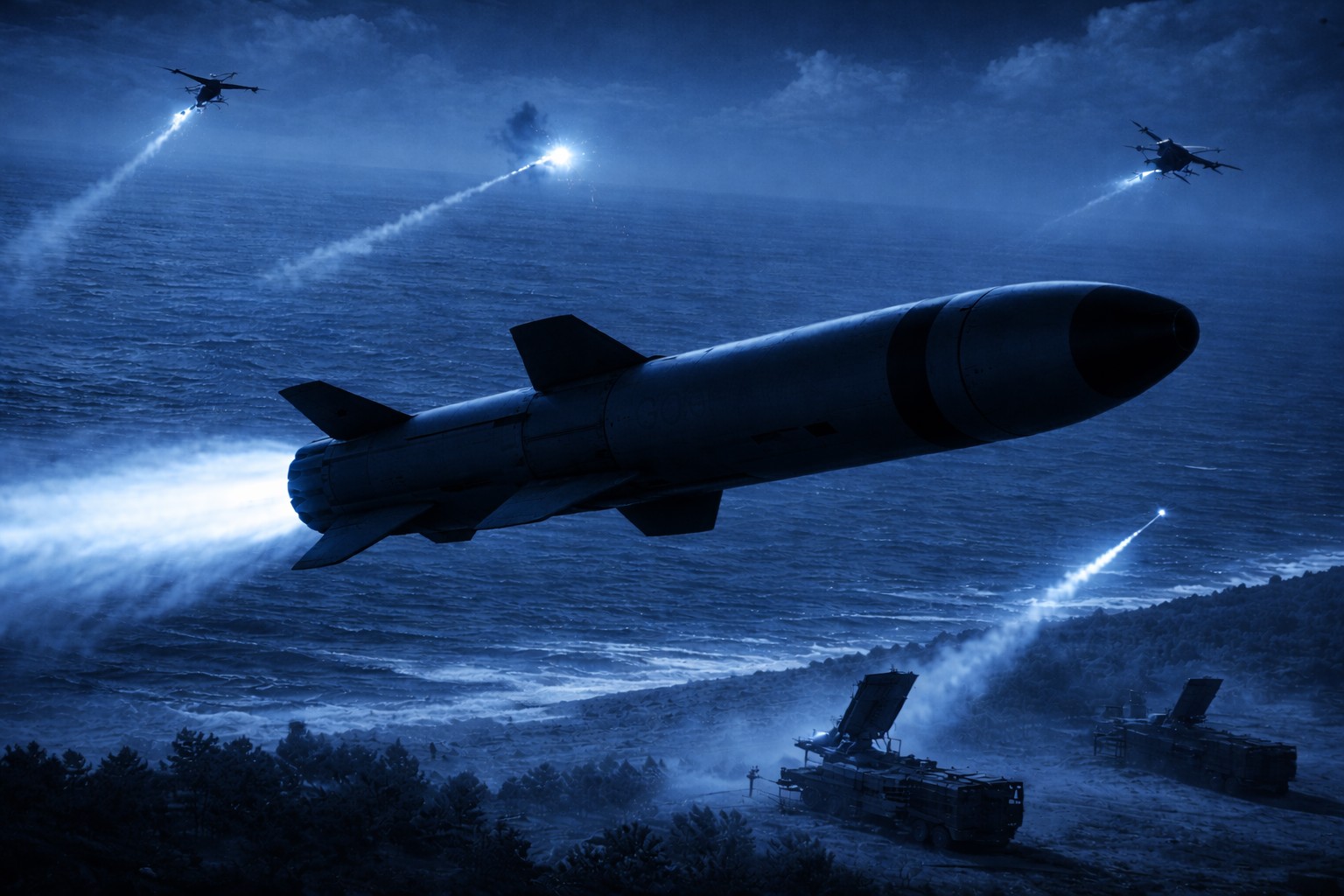
## UK MOD Launches Strategic Hunt for Next-Gen Drone & Missile Interceptor
The UK’s Ministry of Defence (MOD) has unveiled a groundbreaking initiative, codenamed **Project GOSHAWK**, marking a pivotal step in developing a cutting-edge, low-cost interceptor system. This ambitious program aims to fortify defenses against the escalating threat posed by unmanned aerial systems (UAS), insidious loitering munitions, and agile short-range missiles.
### The Evolving Aerial Threat Landscape
In an era defined by rapid technological shifts in warfare, the skies are becoming increasingly complex. From persistent drone surveillance to precision strikes by loitering munitions and the swift impact of missiles, defending critical assets demands innovative and economically viable solutions. The MOD’s official solicitation, issued on January 26th, underscores this urgent requirement, calling for a system “optimised for drones, loitering munitions and missiles at close ranges and low altitudes.”
The core challenge lies in achieving a “cost-effective, multi-threat interception capability” that can maintain a favourable “cost-exchange ratio.” This means the cost of intercepting a threat must be significantly less than the cost of the threat itself, ensuring sustainability in prolonged engagements while reliably countering a diverse array of targets across varying speeds, altitudes, and trajectories.
### Charting the Course: Development & Production Phases
Project GOSHAWK is structured to foster rapid innovation and eventual deployment.
#### Phase One: Pioneering Development Contracts
The initial phase will see the MOD award one or two funded development contracts, each projected to span approximately 12 months. During this intensive period, selected industry partners will be tasked with refining their conceptual designs, conducting rigorous trials, and maturing their proposed technologies. This ensures that only the most promising and robust solutions advance.
#### Phase Two: Scaling for Future Security Needs
Should initial testing prove successful, the MOD “currently intends to place one or more follow on contracts for the production of low-cost interceptors.” The anticipated production volume is substantial, with indicative demand estimated at “approximately 3,000 to 7,000 units per year.” However, the MOD retains strategic flexibility, noting it “reserves the right to not place any follow on contract(s)” to adapt to evolving strategic requirements and technological advancements.
### An Open Call to Visionary Innovators
Companies aspiring to contribute to this vital national security project must meet stringent criteria, reflecting the program’s strategic importance.
#### Essential Participant Requirements:
* **Security Clearance:** From the outset, participants must be capable of handling information classified up to **SECRET**.
* **Comprehensive Proposals:** Bidders are required to furnish detailed information covering every facet of their proposed interceptor, including:
* Expected performance metrics
* Guidance and seeker capabilities
* Estimated production costs
* Development timelines
* Rigorous testing plans
* Integration requirements with existing systems
* **Scalability Assurance:** A key consideration is the future scalability of production, with suppliers needing to demonstrate their ability to significantly ramp up manufacturing for potential follow-on contracts.
#### Export Controls and UK Investment:
While the MOD’s preference is for “ideally no export controls” to apply, “European export control will be acceptable if required.” Furthermore, a strong emphasis is placed on maximizing UK-based expenditure, with the notice indicating that a “high proportion of spend under this and any future related contracts will be UK based,” encompassing both missile development and production.
### Key Dates for Aspiring Partners
The competition for Project GOSHAWK officially closes on **February 9, 2026**. Following this deadline, a select group of shortlisted suppliers will be invited to submit their full, detailed tenders, moving closer to shaping the future of aerial defense.