
**Editor’s Note:** This article was curated and enhanced for our readers.
*Source: {feed_title}*
—
## The Enduring Allure of Curling: Why We’re All Hooked on the Ice
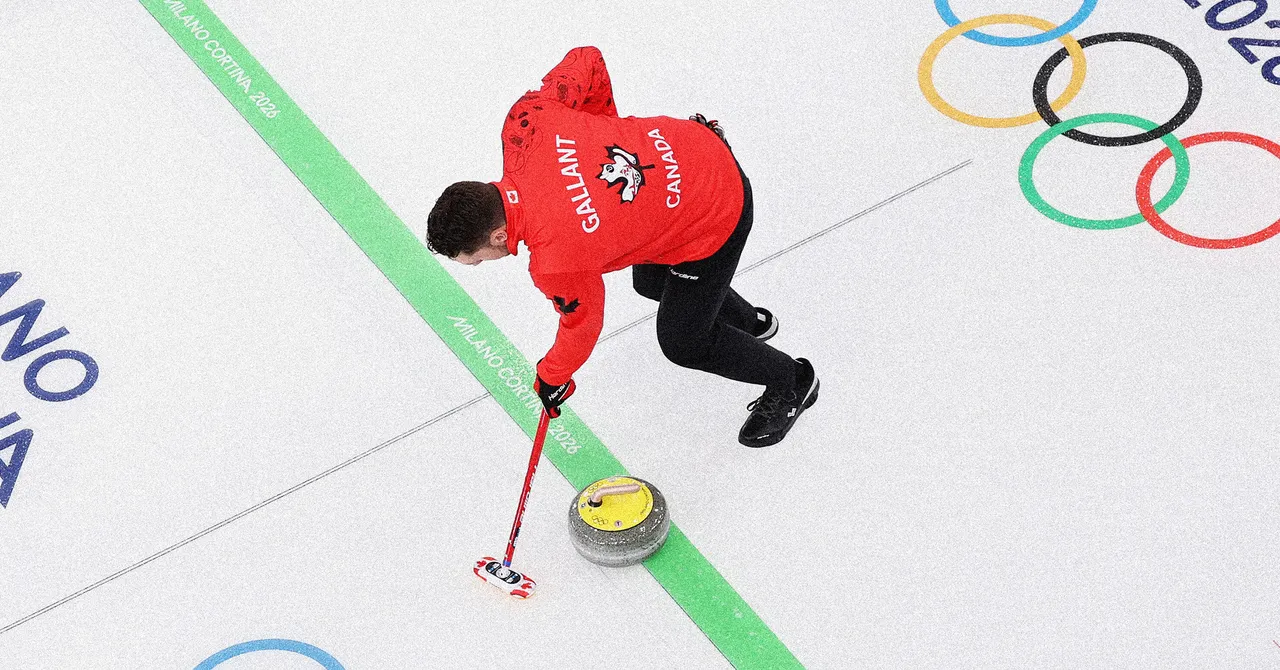
Few sports possess the captivating blend of serene precision and intense strategy quite like curling. As the grand stage of the 2026 Winter Olympics in Italy approaches, a familiar phenomenon unfolds: a fresh wave of spectators finds themselves utterly mesmerized by this unique ice sport. It’s not hard to see why. The graceful glide of the stone, the nuanced calculus of the throw, and the furious, coordinated sweeping create a spectacle of exquisite competence. Watching these dedicated athletes master a craft that, to the uninitiated, might resemble an intricate game of shuffleboard on ice, is undeniably transfixing.
But beyond the immediate thrill of the modern game, with its high-tech gear and televised drama, lies a rich tapestry of history. This journey back in time not only reveals the fascinating evolution of curling but also offers a surprising window into the Earth’s climate of centuries past.
## From Frozen Lochs to Global Spectacle: Tracing Curling’s Ancient Roots
The story of curling is deeply intertwined with the harsh realities and inventive spirit of northern Europe. Its origins are not merely historical footnotes but a testament to human ingenuity in challenging environments.
### A Glimpse into the Past: Early Records and Climate Clues
The earliest documented instance of the sport dates back to 1540 in Paisley, Scotland. A Latin record penned by notary John McQuhin details an intriguing challenge between John Sclater, a monk, and Gavin Hamilton, a local abbot’s representative. Sclater reportedly propelled a stone thrice across the surface of a frozen lake, initiating a contest that cemented the idea of moving stones on ice as a delightful pastime. While the victor of this ancient “bonspiel” remains unknown, the incident clearly established the recreational appeal of sliding stones on frozen water.
Crucially, this early form of curling thrived in Scotland and other northern European regions due to the exceptionally severe winters prevalent over 400 years ago. The abundance of naturally frozen lochs and rivers provided the perfect canvas for the game, offering a fascinating, albeit anecdotal, insight into the historical climatic conditions of the era.
### The Roaring Game’s Genesis: Art, Poetry, and Early Popularity
Often affectionately dubbed “the roaring game” – a moniker derived from the distinctive rumble stones make as they glide over the ice – curling rapidly gained traction. Its nascent popularity is even captured in art; Flemish painter Pieter Bruegel the Elder depicted peasants engaged in a game strikingly similar to curling in two of his works from 1565 and 1566. The very word “curling” itself, coined to describe the characteristic curved trajectory of the stones, first graced the English language in 1620, appearing in a poem by Henry Adamson.
## The Evolution of Play: From Boulders to Precision Engineering
What began as a simple pastime on frozen lakes gradually transformed into a sophisticated sport, complete with formalized rules, dedicated clubs, and specialized equipment.
### The Birth of Organized Sport: Clubs and Codified Rules
The move towards structured play began relatively early. In 1716, the Kilsyth Curling Club, hailing from the Scottish town of the same name, was established – widely recognized as the world’s first official curling club, and remarkably, it remains active today. The sport’s growing popularity necessitated standardized guidelines, which were eventually formalized by the Royal Caledonian Curling Club, founded in 1838. This institution laid the groundwork for the modern game and ultimately led to the creation of the World Curling Federation, headquartered in Perth, Scotland, which continues to govern the sport globally.
### Mastering the Stone: The Transformation of Equipment and Strategy
Early curling stones were as rudimentary as they sound: naturally flattened and shaped boulders. These primitive “stones” often lacked standardized size or even proper handles, some merely featuring holes akin to a bowling ball. Consequently, success in these early matches relied more on sheer luck and brute force than on refined skill or precise technique.
Over centuries, the sport has undergone a remarkable evolution, introducing meticulous regulations regarding the weight, shape, and handles of the stones. Similarly, the dimensions of the ice sheet (known as the “rink”) and the structure of matches have become highly standardized and complex. Today, the game demands unparalleled strategy, with the skip – the team captain – dictating every move. The skip vocally guides throwers on the stone’s desired trajectory, force, and “curl,” while simultaneously directing the sweepers who vigorously polish the ice ahead of the stone to influence its speed and direction.
## Curling Takes the World Stage: A Journey to Olympic Glory and Pop Culture
From its humble Scottish beginnings, curling has journeyed across continents and into the hearts of millions, eventually earning its place as a celebrated Olympic discipline and even a pop culture icon.
### Spreading the Ice: Scotland’s Gift to the World
The global dissemination of curling is largely attributed to Scottish immigrants. As they ventured across the globe, particularly to North America, they carried their passion for the sport with them. Canada, in particular, embraced curling with fervent enthusiasm, where it remains an immensely popular national pastime today.
### From Demonstration to Distinction: Curling at the Olympics
Curling’s initial foray into the Olympic arena was during the 1924 Winter Games in Chamonix, France, albeit as a demonstration sport. Its path to full official status was a long one, culminating in its triumphant return as a medal event at the 1998 Games in Nagano, Japan. Since then, nations like Scotland (competing as Great Britain), Sweden, Switzerland, and Norway have consistently distinguished themselves as formidable contenders on the Olympic ice, showcasing the sport’s increasing global competitive depth.
### Beyond the Rink: Curling’s Moment in the Spotlight
Curling’s appeal extended beyond the sporting world, finding its way into popular culture. The Fab Four themselves, The Beatles, famously attempted a game in their 1965 film *Help!*, while the sport added a touch of intrigue to the 1969 James Bond movie *On Her Majesty’s Secret Service*.
The early 2000s marked a pivotal moment for curling’s public profile. With the advent of 24-hour sports coverage and DVR technology, Olympic viewers gained unprecedented access to events at their leisure. This newfound accessibility allowed audiences to delve deep into the sport’s intricate dynamics, fostering a devoted, almost cult-like following of fans captivated by every stone and every sweep.
## The Sweep Towards 2026: Anticipating the Next Chapter
As the world eagerly anticipates the 2026 Winter Games, the enduring fascination with curling shows no signs of waning. From its ancient origins on frozen Scottish lochs to its current status as a captivating global phenomenon, curling continues to draw us in, inviting us to witness the masterful blend of strategy, skill, and spectacle that defines “the roaring game.” Every throw, every sweep, and every strategic call promises to keep us spellbound once more.