
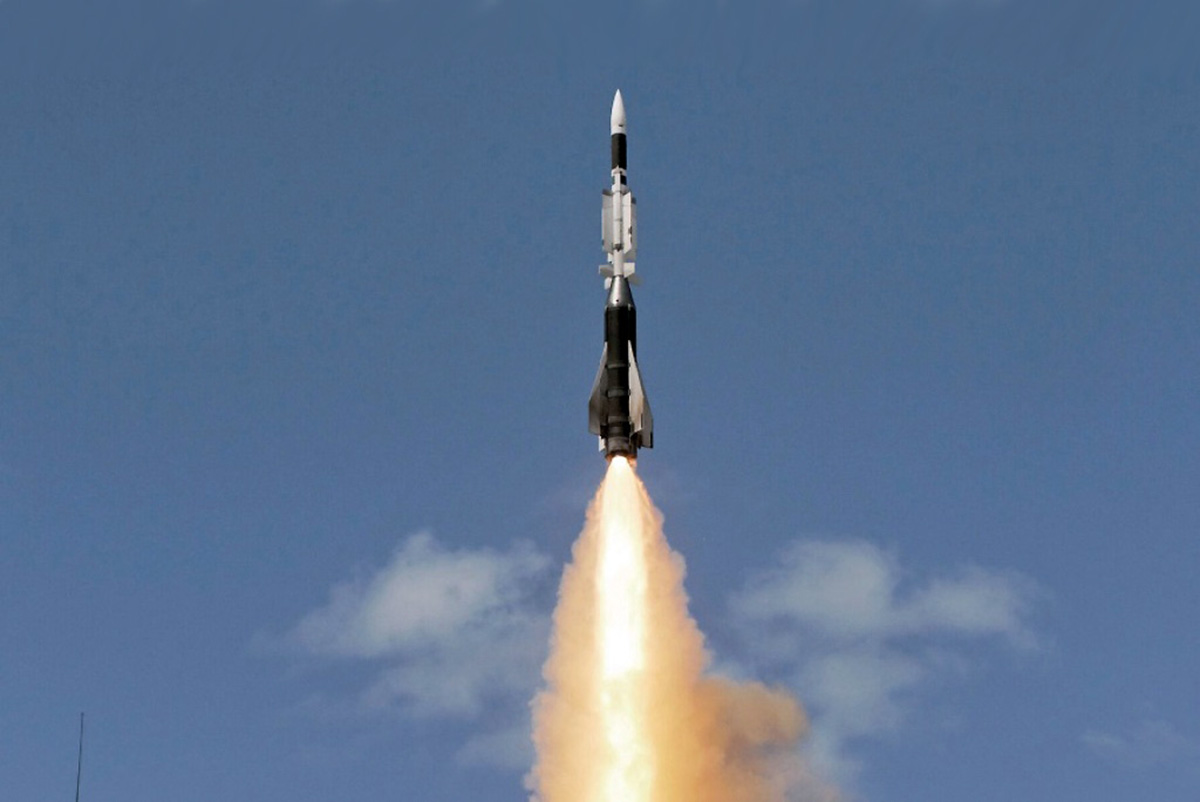
UK Bolsters Naval Air Defence with Aster Block 1 Missile Upgrades and Deliveries
The United Kingdom’s Ministry of Defence has confirmed that deliveries of new Aster Block 1 missiles for the Royal Navy are set to commence later this year. Concurrently, substantial progress has been made over the past twelve months in upgrading existing missile stockpiles to the same advanced standard. However, citing security grounds, the exact number of missiles already converted remains undisclosed.
This update emerged from a parliamentary exchange where Ben Obese-Jecty, the Conservative Member of Parliament for Huntingdon, formally inquired about the progress of upgrading all Royal Navy Aster missiles to the Block 1 standard through the Sea Viper Evolution Capability 1 programme.
In response, Luke Pollard, Minister of State for Defence, stated: “The upgrading of missiles to Aster Block 1 standard is being undertaken through the Aster Mid-Life Refresh programme. The exact number of missiles upgraded to date cannot be disclosed owing to security concerns, however considerable progress has been made over the last 12 months. Additional deliveries of new Aster Block 1 missiles will commence later this year.” This statement underscores a dual approach: enhancing current capabilities through upgrades while simultaneously expanding inventory with newly manufactured, advanced munitions.
The Aster missile family forms the core of the Sea Viper air defence system, which is a critical component of the six Type 45 destroyers in the Royal Navy’s fleet. These destroyers are designed for sophisticated air and missile defence, capable of protecting naval task groups and land assets from a wide array of aerial threats. The upgrade to the Block 1 standard represents a significant enhancement, specifically bringing improved capability against sophisticated ballistic missile threats, in addition to its established effectiveness against conventional aircraft and highly maneuverable cruise missiles.
The broader upgrade initiative, known as Sea Viper Evolution, gained significant impetus following recent operational deployments in the Red Sea. During these deployments, HMS Diamond and HMS Richmond, two of the Type 45 destroyers, spent several months intercepting Houthi drones and missiles. These engagements marked the first recorded instance of the Royal Navy firing Aster missiles in live combat, providing invaluable real-world operational data and highlighting the missile system’s effectiveness and the critical role of advanced air defence in modern naval warfare.
However, these combat operations also brought into sharp focus questions regarding the depth of the Royal Navy’s missile stockpiles. A Type 45 destroyer is equipped with forty-eight Vertical Launch System (VLS) cells, each capable of housing an Aster missile. Combat intercepts, depending on the nature of the threat, typically expend one or two missiles per engagement. The dual challenge facing the Ministry of Defence has been to both replenish the missiles expended during these operations and to simultaneously raise the standard of the remaining inventory. The department has consistently refrained from providing specific figures on either the number of missiles replenished or those upgraded, maintaining that such information constitutes a security sensitive detail.
The Aster missile system is produced by MBDA, a leading European multinational developer and manufacturer of missiles. While final assembly of the Aster missiles occurs in France, the programme benefits from significant British content. Key contributions from the UK include the advanced Sampson multi-function radar, which provides exceptional situational awareness and target tracking, and the sophisticated command and control system, both supplied by BAE Systems. This international collaboration underscores the complex nature of modern defence procurement and the integrated supply chains that support critical military capabilities.
The ongoing investment in munitions is a clear priority for the UK government. The current Defence Investment Plan allocates a substantial £6 billion towards munitions throughout this parliamentary term. A significant portion of this funding, £1.5 billion, is specifically earmarked for establishing an “always-on” production pipeline. This strategic investment aims to ensure a continuous and resilient supply of critical munitions, reducing reliance on emergency procurement and enabling the Royal Navy to sustain high-intensity operations over extended periods without concerns about exhausting vital assets.
The commitment to these upgrades and sustained production capabilities reflects a proactive approach by the UK to adapt its defence posture to a rapidly evolving global threat landscape. The enhancements to the Aster system, particularly its improved ballistic missile defence capabilities, are crucial in an era where missile proliferation and the sophistication of aerial threats continue to grow. While the specifics of missile numbers remain classified, the public announcement of progress signals a steady move towards a more robust and resilient air defence capability for the Royal Navy.
Why This Matters
The ongoing upgrades and deliveries of Aster Block 1 missiles represent a critical development for the United Kingdom’s national security and its role in global stability. Firstly, the enhanced capability against ballistic missiles significantly bolsters the Royal Navy’s defensive posture. Ballistic missiles pose a rapidly increasing threat from state and non-state actors globally, and the ability of Type 45 destroyers to counter them is paramount for protecting naval assets, allied forces, and potentially even land territories.
Secondly, these developments directly address lessons learned from real-world combat operations. The Royal Navy’s engagements in the Red Sea underscored the vital importance of advanced air defence systems and sufficient missile stockpiles. By upgrading existing missiles and securing new deliveries, the UK is ensuring its forces are better prepared for future contingencies, adapting its capabilities based on practical experience against emerging threats like drones and cruise missiles. This adaptability is crucial for maintaining operational effectiveness in unpredictable geopolitical environments.
Thirdly, the investment in an “always-on production pipeline” for munitions signals a long-term strategic commitment to defence industrial resilience. Relying on intermittent production cycles can lead to shortages and vulnerabilities during crises. A continuous production capability ensures that the Royal Navy can sustain high-tempo operations without facing critical munitions shortfalls, thereby enhancing the UK’s sustained combat power and deterrence capabilities. This also supports the domestic defence industry, fostering technological expertise and securing skilled jobs.
Finally, these advancements reinforce the UK’s standing as a credible and capable security partner on the world stage. A strong Royal Navy, equipped with cutting-edge air defence, contributes significantly to collective security initiatives, such as NATO operations and international maritime security efforts. This capability allows the UK to project influence, protect vital shipping lanes, and contribute effectively to multinational task forces, underpinning global trade and regional stability in volatile areas.