
Editor’s Note: This article was curated and enhanced for our readers.
Source: {feed_title}
## The Unseen Hand: How Big Tech’s Political Maneuvers are Shaping the Future of AI
In an era where artificial intelligence stands poised to redefine industries and societies, the political landscape surrounding its development is becoming increasingly complex and heavily influenced by powerful figures. Recent disclosures reveal a significant financial contribution from a key leader in the AI space, shedding light on the intricate dance between technological innovation and political strategy.
### OpenAI Co-Founder’s Substantial Political Investment
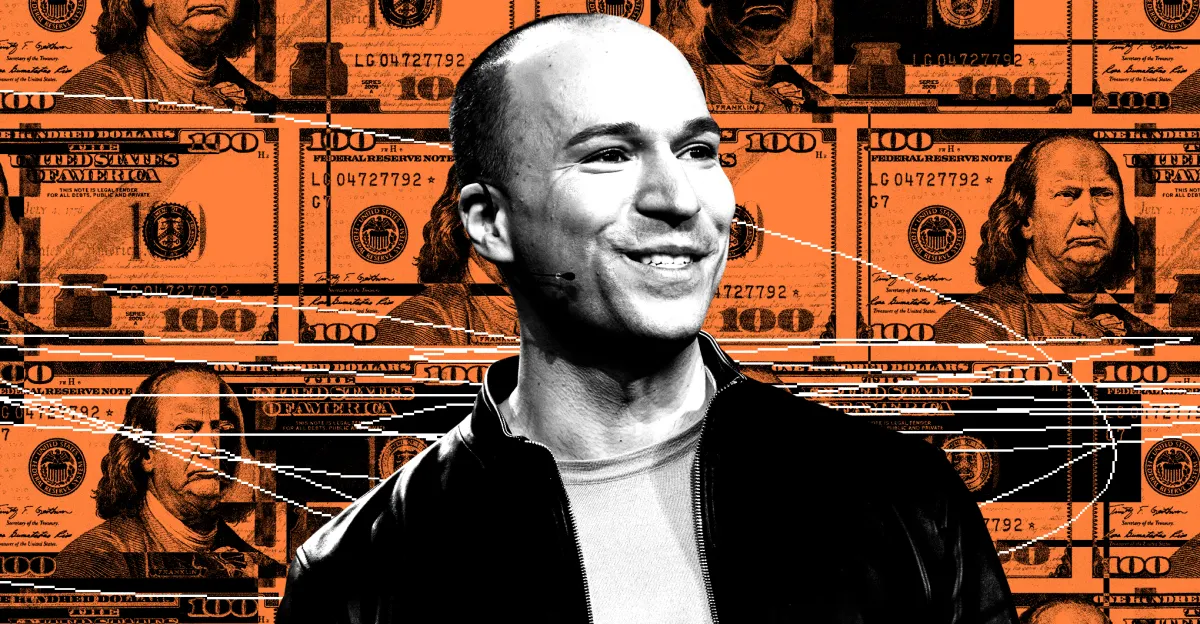
Greg Brockman, a prominent co-founder and long-standing president of OpenAI, along with his wife Anna, recently made headlines with an extraordinary political donation. Their combined September 2025 contributions to “MAGA Inc.,” a leading pro-Trump super PAC, amounted to a staggering $25 million. This sum not only represents the single largest individual donation received by the PAC during that period but also constituted nearly a quarter of its total fundraising for the six-month cycle.
This substantial financial backing is the latest in a series of instances illustrating a growing alignment between influential tech executives and the Trump administration. Such connections gain particular relevance as the administration actively champions the advancement of the AI industry while simultaneously advocating for the dismantling of state-level regulations—measures that companies like OpenAI have largely opposed.
### The Regulatory Gauntlet: Battling State-Level AI Oversight
Brockman’s engagement in shaping the regulatory environment extends beyond direct political donations. He is also a significant financial supporter of “Leading the Future,” a super PAC dedicated to promoting AI interests, particularly through lobbying efforts aimed at curbing potential industry regulations.
One notable example of this influence involves the PAC’s targeted advertising campaign against New York State Assemblymember Alex Bores. Bores was a co-sponsor of New York’s RAISE Act, a proposed piece of legislation focused on AI transparency that ultimately saw its provisions significantly weakened following coordinated lobbying activities. This incident underscores the direct impact of such political expenditures on the legislative process at the state level.
### Broader Implications: Tech, Politics, and Public Discourse
The revelation of the Brockmans’ significant donation, initially reported earlier this month, has gained renewed traction in online discussions. This resurgence in attention coincides with the tragic death of Alex Pretti in Minneapolis, an event occurring amidst federal anti-immigrant crackdowns that have resulted in multiple fatalities.
In response to these events, a coalition of tech workers, including several employees from OpenAI, has circulated a letter urging their CEOs to terminate all contracts with Immigration and Customs Enforcement (ICE) and to publicly condemn the department’s actions. The petition’s accompanying website notably references a past instance where tech industry leaders successfully influenced the White House when “Trump threatened to send the national guard to San Francisco in October.” It concludes with a direct appeal: “Today we’re calling on our CEOs to pick up the phone again.” This juxtaposition highlights a potential disconnect between the political leanings of some tech leaders and the ethical concerns raised by segments of their workforce.
## Trump’s AI Agenda: Prioritizing Innovation Over Regulation
Since his inauguration, a parade of tech industry leaders has demonstrated support for Donald Trump, contributing to his inauguration fund, attending exclusive meetings at Mar-a-Lago, and participating in White House dinners. In return, they have found an administration eager to dismantle consumer protections and pare back technological oversight.
The Trump administration’s AI Action Plan notably resurrected a previous Republican attempt to preempt states from enacting their own AI regulations, a move widely welcomed by tech giants. The new directive asserts that “AI is far too important to smother in bureaucracy at this early stage” and advises against directing federal AI funding towards states with “burdensome AI regulations that waste these funds.” While it also acknowledges the importance of “states’ rights to pass prudent laws that are not unduly restrictive to innovation,” the plan’s underlying thrust is clearly towards minimizing regulatory hurdles.
Among the specific targets of this regulatory moratorium is California’s landmark AI transparency bill, SB 53. California Governor Gavin Newsom signed this bill into law in September, despite intense lobbying efforts against it by numerous tech companies, including OpenAI.
### The Evolving Philosophy of AI Leadership
In 2019, Greg Brockman co-authored a blog post emphasizing the inherent difficulty of “change[ing] powerful systems … once they’ve been deployed” and stressing the critical importance of “address[ing] AGI’s safety and policy risks before it is created.” However, six years later, his public statements reflect a notable shift in perspective. His recent posts underscore the importance of approaching “emerging technology with a growth-focused mindset.”
In a New Year’s Eve post on X (formerly Twitter), Brockman further elaborated on this evolution, stating, “this year, my wife Anna and I started getting involved politically, including through political contributions, reflecting support for policies that advance American innovation and constructive dialogue between government and the technology sector.” He concluded by commending “the president’s and his administration’s willingness to engage directly with the AI community.” This evolving stance highlights a proactive embrace of political engagement as a means to shape the trajectory of AI development and its regulatory future.