
## Revolutionizing NYC Street Food: A Silent, Sustainable Power Shift
New York City’s vibrant street food scene is legendary, a mosaic of global flavors served hot and fast from countless food carts. From savory dosa to sizzling doner kebabs and classic hot dogs, these culinary hubs are an integral part of the urban experience. Yet, beneath the enticing aromas and bustling energy lies a persistent nuisance: the noisy, exhaust-spewing gas generators that power these mobile kitchens. These fossil-fuel behemoths not only detract from the ambiance but also pose health and environmental concerns, threatening to sour the street dining experience for patrons and vendors alike.
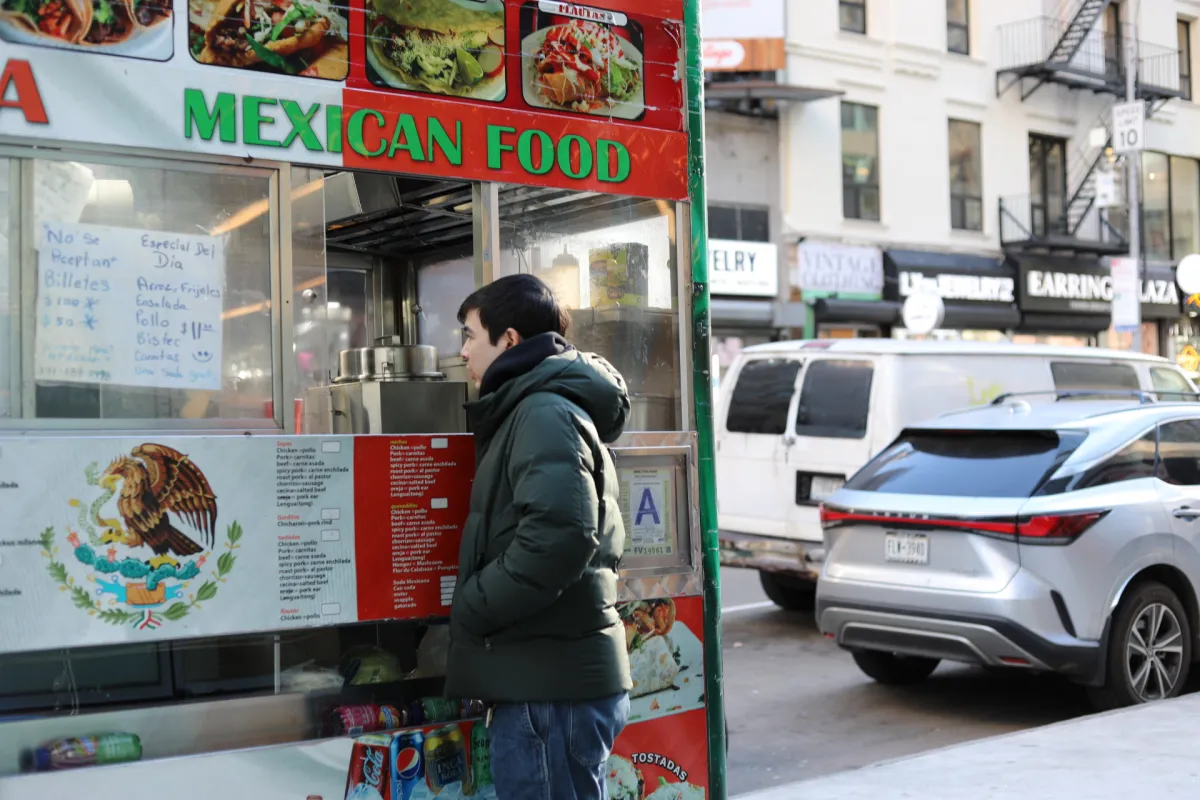
But what if the iconic street cart could operate in silence, powered by clean energy? A groundbreaking Brooklyn-based startup is turning this vision into a reality, leveraging an unexpected source: e-bike batteries. This innovative solution, currently being piloted at La Chona Mexican on Manhattan’s 30th and Broadway, promises a quieter, cleaner future for NYC’s beloved food carts.
### From “Lark” to Landmark: The Genesis of PopWheels’ Vision
The journey to decarbonizing food carts began almost serendipitously for David Hammer, co-founder and CEO of PopWheels. An early Google alumnus, Hammer describes the initial spark as a “classic, old-school 20% project” – a passion pursuit that blossomed into a significant venture. While PopWheels’ primary business involves providing battery packs for the city’s vast network of food delivery e-bikes, the team quickly recognized a broader potential for their robust power units.
Hammer emphasizes a pragmatic approach: “Are e-bike packs the perfect energy type to be powering food carts? Maybe, maybe not. I would argue it doesn’t matter. What matters is, can you solve distribution and charging?” This philosophy underpins their scalable solution, focusing on accessibility and reliability.
### Powering the Pavement: PopWheels’ Ecosystem of Energy
PopWheels has meticulously built an urban energy infrastructure that serves the critical needs of New York’s gig economy.
#### A Lifeline for E-Bike Couriers
Currently, PopWheels operates 30 strategically located charging cabinets across Manhattan. These hubs are a vital resource for hundreds of gig workers who rely on e-bikes, predominantly Arrow and Whizz models, for their livelihoods. Many delivery workers commute into Manhattan from outer boroughs, a journey that can deplete a significant portion of their battery charge. Consequently, many require two batteries to sustain a full day’s work.
Before PopWheels, the alternative was often costly and inefficient. Bodegas began offering e-bike charging services, typically at a steep price of $100 per month. When factoring in battery degradation and replacement, the annual cost could easily approach $2,000, significantly eroding a worker’s earnings.
PopWheels offers a compelling alternative. For just $75 per month, couriers gain unlimited access to their charging network, delivering substantial savings from day one. This economic advantage has led to a lengthy waitlist, underscoring the demand for affordable and reliable power solutions.
#### Engineered for Safety and Scalability
Each PopWheels charging cabinet can accommodate 16 batteries and is meticulously engineered with advanced safety features designed to swiftly contain and extinguish battery fires – a critical issue that PopWheels was initially founded to address in New York City. The company’s commitment to safety and innovation attracted significant investment, culminating in a successful $2.3 million seed round in 2025.
These swap sites, often retrofit into small, accessible spaces like parking lots with the necessary electrical connections, draw a modest amount of electricity, comparable to a Level 2 electric vehicle charger. This efficient setup is key to their rapid expansion and integration into the urban landscape.
### Beyond Bikes: A New Dawn for Street Food
As PopWheels’ e-bike service flourished, the team began exploring the broader implications of their “urban-scale, fire-safe battery swapping infrastructure.” Hammer recognized the potential for this layered infrastructure to support diverse energy needs across the city.
#### The Eureka Moment: Decarbonizing the Culinary Canvas
The idea of powering food carts crystallized when Hammer encountered an article detailing New York City’s initiatives to decarbonize its street vendors. The team crunched the numbers, and the results were promising.
Food cart operators typically spend around $10 a day on gasoline to power their generators for lighting and auxiliary equipment (most cooking relies on propane, a separate issue). PopWheels determined they could offer a subscription for four of their batteries – providing approximately five kilowatt-hours of electricity – for a comparable daily cost. This capacity is sufficient for the lower end of a typical cart’s power requirements, with the added flexibility of midday battery swaps at a PopWheels station if more power is needed.
#### Real-World Success and Future Flavors
With the economics aligning, PopWheels developed a prototype adapter and successfully trialed it at a small event during last year’s New York Climate Week. Moving the initiative forward, the startup has partnered with the non-profit Street Vendor Project. The recent demonstration with La Chona Mexican marked a pivotal moment: the first full-day operation of a food cart powered entirely by PopWheels batteries.
The feedback was immediate and overwhelmingly positive. “I had multiple food cart owners come up to me and say, ‘Wait, there’s no noise with this cart. What are you guys doing? Can I get this?'” Hammer recounted. The absence of generator noise and fumes significantly enhances the vendor’s work environment and the customer experience.
PopWheels plans an aggressive rollout of this innovative solution starting this summer. By offering a cost-neutral alternative to gasoline, while simultaneously eliminating noise and pollution, PopWheels is poised to transform New York City’s iconic food cart scene, making it cleaner, quieter, and more sustainable for everyone.