
## Southwest Airlines Reimagines the Skies: A Deep Dive into Its Landmark Policy Overhauls
Southwest Airlines, long celebrated for its distinctive approach to air travel, is officially ushering in a new era. Starting this week, the carrier is rolling out two significant policy changes that depart dramatically from its decades-old traditions: the elimination of its signature open-seating arrangement and a revised framework for passengers requiring extra space. These shifts mark a profound transformation for an airline known for marching to the beat of its own drum.
### Farewell to the Free-for-All: Southwest Embraces Assigned Seating
For decades, Southwest’s “find your own seat” model was either beloved for its flexibility or dreaded for its boarding chaos. Now, that era is officially over. Responding to evolving passenger preferences and a drive to enhance revenue, Southwest is transitioning to a more conventional assigned seating system.
#### The New Seating and Boarding Experience
Gone are the days of A, B, and C boarding groups dictating the scramble for a window or aisle. Southwest is introducing a structured seating hierarchy that allows passengers more control over their flight experience:
* **Standard Seats:** The baseline option, likely to be the most numerous.
* **Preferred Seats:** Offering a potentially more desirable location within the cabin.
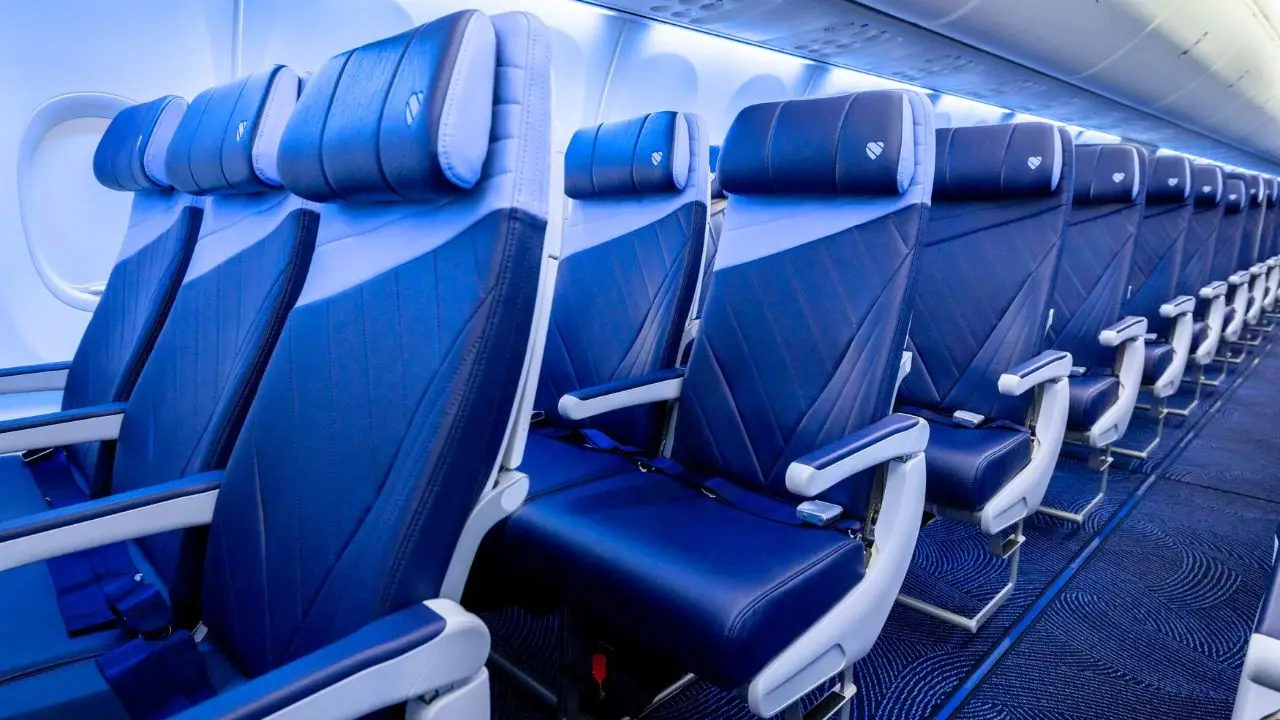
* **Extra Legroom Seats:** Branded as RECARO R2, these new seats will boast up to five additional inches of legroom, featuring a distinctive sky-blue sunray design.
The boarding process itself is also getting an overhaul, moving from the alphanumeric group system to a simplified numerical sequence: Groups 1 through 8. This aims to provide a clearer, more predictable boarding flow, eliminating the uncertainty many passengers associated with open seating.
Southwest executive Tony Roach articulated the airline’s vision for these changes, emphasizing a desire to provide “more choice and greater control” to customers. This strategic pivot, first announced last year, aims to unlock new opportunities, particularly for those seeking premium seating options, while simultaneously addressing the anxiety of unknown seat assignments.
### Redefining Comfort: Southwest’s Updated Policy for Passengers of Size
Alongside the seating revolution, Southwest is also implementing a clearer, albeit stricter, policy for “customers of size.” This new directive mandates proactive ticket purchases for travelers who require more space, signaling a significant departure from previous, more flexible accommodations.
#### Proactive Purchase Becomes Paramount
Under the revised guidelines, passengers who cannot comfortably fit between a plane’s armrests are now required to purchase two tickets in advance. The airline explicitly states on its website that “Customers who encroach upon the neighboring seat(s) should proactively purchase the needed number of seats prior to travel to ensure the additional seat is available.” This puts the onus squarely on the traveler to secure adequate space before their journey begins.
#### A Stricter Refund Protocol
The updated policy marks a notable shift from Southwest’s prior, more accommodating rules. Previously, passengers could purchase an additional seat and receive a refund post-flight, or even request a complimentary extra seat at the airport if space permitted. The new system introduces stricter conditions for refunds:
* **Conditional Refunds:** Passengers who pre-purchase an additional seat will only qualify for a refund if their chosen fare class is not fully booked on the flight.
* **Time-Sensitive Requests:** Any refund request must be submitted within 90 days of the flight date.
#### Navigating the Airport Without a Pre-Purchased Extra Seat
The implications for passengers who do not pre-reserve an additional seat are also clearly defined and carry potential inconveniences. If, upon arrival or during boarding, it’s determined that a passenger requires more space than a single seat provides:
* **Space-Dependent Courtesy:** A complimentary additional seat will only be provided if there is available seating on that particular flight.
* **Risk of Rebooking:** If the flight is full, the passenger will be rebooked on a subsequent flight with available seating.
* **Potential for Deplaning:** In scenarios where the need for an additional seat is identified *after* boarding, the passenger may be required to deplane to facilitate rebooking.
These sweeping changes fundamentally alter the Southwest travel experience. While some passengers may welcome the predictability of assigned seats and the option for premium comfort, others may find the new “customer of size” policy less flexible than the airline’s long-standing reputation for passenger-friendly accommodations. Southwest’s distinctive identity is clearly evolving as it navigates the competitive landscape of modern air travel.