
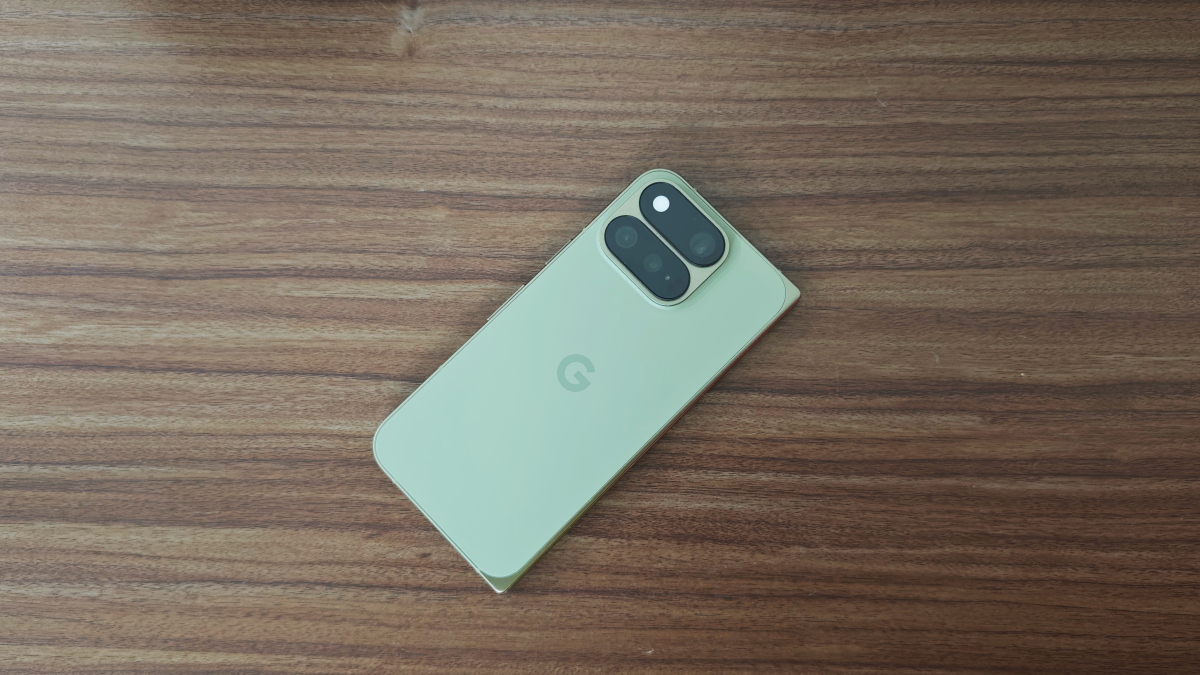
Pixel 11 Pro Fold Review: Google’s Iterative Path in a Shifting Foldable Landscape
In a world captivated by svelte new foldables and ambitious designs, Google’s latest Pixel 11 Pro Fold arrives as a testament to steady refinement rather than radical reinvention. While competitors push boundaries with wider screens and vanishing creases, Google has opted for a familiar form factor, focusing on subtle yet meaningful enhancements to its existing foldable blueprint. This year’s model is lighter, brighter, and boasts an updated camera, wrapped in a fresh, elegant olive hue. Yet, in a rapidly evolving market, these incremental improvements might not be enough to capture the hearts of first-time foldable buyers, though Pixel loyalists will find much to appreciate.
Key Takeaways
- Subtle Refinements, Familiar Form:The Pixel 11 Pro Fold offers iterative upgrades in design (lighter, more durable), display brightness, and camera sensor, but maintains the exact form factor and overall aesthetic of its predecessor, making it feel more like an S-update than a generational leap.
- Software Shines, App Optimization Lags:Google’s AI-driven features like Rambler and improved multitasking through “bubbles” enhance the user experience. However, widespread third-party app optimization for the foldable screen remains inconsistent, especially compared to the rapid adoption seen with new devices like the iPhone Duo.
- “Pro” Camera in Question:While the updated 48MP main sensor and 30x Super Res Zoom offer competent photography, the camera system still doesn’t quite match the flagship performance of the Pixel 11 Pro XL, raising questions about the “Pro” designation for a foldable with a compromise in imaging.
A Foldable in Flux: Google’s Stance Amidst Innovation
It’s a peculiar moment to review a foldable that largely mirrors its predecessor. The tech world is abuzz with the passport-sized allure of the iPhone Duo, while a wave of wide-format foldables from Chinese manufacturers like Honor and Oppo are pushing the envelope in design and display technology. Amidst this flurry of innovation, Google, with its Pixel 11 Pro Fold, has seemingly chosen a path of measured evolution. This isn’t a device designed to disrupt the market with a brand-new form factor or groundbreaking mechanism; instead, it’s a finely tuned iteration, refining the formula established by last year’s Pixel 10 Pro Fold.
The headline changes are modest: a slightly lighter chassis, a noticeably brighter display, more efficient wireless charging, and an updated camera sensor. The new olive color option is a sophisticated touch, adding a dash of understated elegance. For a seasoned Pixel user, or someone upgrading from a much older foldable, these enhancements will be welcome. However, for those eyeing their very first foldable, the Pixel 11 Pro Fold might struggle to stand out against the backdrop of more adventurous designs and seemingly smoother foldable experiences offered by rivals. Despite these considerations, my time with the device has been genuinely enjoyable. The Pixel 11 Pro Fold’s cameras, while not challenging the supremacy of the Pixel 11 Pro XL, are reliably competent, and the expansive inner screen, even with its highly visible crease, remains a pleasure to use for productivity and media consumption.
Refined, Not Revolutionized: The Pixel 11 Pro Fold’s Design
Ergonomics and Durability
On paper, the physical dimensions show marginal improvements: the Pixel 11 Pro Fold shaves off 0.2mm when unfolded (now 5mm thick) and 0.7mm when folded (now 10.1mm). In practical terms, these millimeters are largely imperceptible. Unlike the Honor V6 Magic, which sets a high bar for thinness in the foldable space, Google’s offering feels substantial in hand. The more noticeable change, though still subtle, is the 19-gram weight reduction. While not a dramatic shift, it contributes to a slightly less cumbersome feel during extended use, especially when compared directly to its predecessor. For new users, however, it’s unlikely to be a standout feature.
Durability, a critical concern for foldables, sees significant attention this year. Google claims a three-fold increase in robustness, backed by a new glass-ceramic cover and a glass-fiber composite back. Having put the Pixel 10 Pro Fold through its paces with several accidental drops from tables and pockets without a single dent or scratch, I can attest to Google’s previous engineering prowess. This year’s enhancements inspire even greater confidence. The robust hinge, while contributing to the phone’s sturdy feel, retains its characteristic stiffness, meaning one-handed unfolding remains a challenge – a deliberate design choice that prioritizes structural integrity over convenience.
The Display Dilemma
The outer display has received a minor size bump, but the more impactful upgrade is the jump to a 3,600-nit peak brightness, a substantial leap from last year’s 3,000-nit panel. This translates to significantly better outdoor visibility, making the phone a more practical companion under bright sunlight. However, the Achilles’ heel of Google’s foldable design persists: the highly visible crease on the inner display. In an era where competitors like Oppo and Honor have made remarkable strides in minimizing or even nearly eliminating this visual artifact, the Pixel 11 Pro Fold’s crease remains a prominent feature, especially under direct or bright lighting conditions, exacerbated by the lack of a reflective display coating.
On the exterior, the new HiLight indicator makes a return, offering subtle notifications for calls from favorite contacts or when interacting hands-free with Gemini. While a neat concept, its utility remains niche, offering little practical impact on daily usage beyond its advertised functions.

The Pixel OS Experience: Smart Software, Slow Adaptation
The inherent joy of foldables – reading and watching videos on an expansive screen – is still a strong point for the Pixel 11 Pro Fold, though wider foldables may offer a more immersive video aspect ratio. Multitasking is capably handled, allowing two apps side-by-side, but this limitation feels somewhat restrictive when some competitors offer more flexible window management. Google’s own apps are, predictably, well-optimized. Gmail, for instance, perfectly utilizes the dual-pane layout, displaying your inbox on one side and an open email on the other, significantly streamlining email triage. However, the frustration sets in with third-party applications. The glaring absence of a split view in apps like Slack, despite numerous Android foldable cycles, highlights a persistent challenge for the platform.
AI and Everyday Productivity
The “bubbles” feature, which allows apps to float as resizable windows and minimize into a taskbar, is a genuinely useful innovation. It facilitates quick glances at information or temporary interactions without the commitment of full-screen multitasking, subtly enhancing workflow. On the AI front, Gemini’s updates this year were more evolutionary than revolutionary. The underlying Magic Cue intelligence continues to provide contextually relevant suggestions across various apps. As highlighted in my Pixel 11 Pro XL review, Rambler remains a standout feature across the new Pixel lineup. Its ability to intelligently draft replies to emails and texts, or transcribe notes without the need for extensive typing on the wide keyboard, proved invaluable for boosting productivity on the go.
The App Ecosystem’s Growing Pains
The conversation around foldable app optimization has gained new urgency with the arrival of the iPhone Duo. Apple’s developer ecosystem is known for its rapid adoption, and while opinions are divided on how apps render on the Duo’s unfolded screen, developers are demonstrably quick to adapt their applications. This pace could leave Android’s foldable experience feeling comparatively behind, particularly in the consistency and quality of third-party app layouts for expanded screens. Google, despite being a pioneer in Android foldables, still faces an uphill battle in convincing a broader developer base to fully embrace the unique possibilities of its form factor.
Capturing Moments: The Camera Conundrum
For years, foldables have typically lagged behind their traditional candybar counterparts in camera performance, a trend that unfortunately continues with the Pixel 11 Pro Fold. While the cameras are undoubtedly good, Google’s decision to retain the “Pro” moniker for this foldable feels like a disservice, as it inevitably draws unflattering comparisons to the truly exceptional setup found on the Pixel 11 Pro XL. The expectation set by the “Pro” label simply isn’t met in the imaging department.
Nonetheless, there are welcome improvements. The main sensor, while still 48-megapixels, is updated to allow significantly more light capture, resulting in photos with enhanced detail and improved low-light performance. Furthermore, Google has extended its Super Res Zoom capabilities, now supporting an impressive 30x zoom, up from the previous generation’s 20x. While these are solid iterative upgrades that ensure the Pixel 11 Pro Fold delivers more than competent images for everyday use, they don’t elevate it to the cutting edge of smartphone photography.
The Bottom Line: Who is the Pixel 11 Pro Fold For?
The Pixel 11 Pro Fold is a good foldable phone, but it’s one that feels increasingly conservative in a market defined by rapid innovation. Its strengths lie in Google’s robust software and AI integration, its subtly refined hardware, and a camera system that, while not “Pro XL” level, is perfectly capable for most users. However, the persistent visible crease and the still-evolving third-party app ecosystem are significant considerations. This device is most appealing to dedicated Pixel enthusiasts looking for a foldable experience within Google’s ecosystem, or those upgrading from much older foldable models who prioritize durability and a familiar, polished interface. First-time foldable buyers, especially those enticed by the cutting-edge designs and seamless display experiences offered by competing devices, might find themselves looking elsewhere. The Pixel 11 Pro Fold solidifies Google’s position in the foldable space, but it does so by refining its existing vision rather than boldly redefining it.
In the fiercely competitive arena of 2026’s mobile technology, where every manufacturer vies for supremacy, a device must offer more than incremental upgrades to truly stand out. AuraTech, a name increasingly synonymous with ambitious innovation, has just unleashed its latest flagship: the AuraPhone X1. Billed as a holistic reinvention of the smartphone experience, the X1 promises to elevate everything from photography to sheer computational power. After weeks of intensive hands-on testing and deep dives into its core architecture, we explore whether the AuraPhone X1 lives up to its hype and sets a new benchmark for what a premium smartphone can achieve.
Key Takeaways
- The AuraPhone X1 redefines smartphone photography, especially with its dedicated macro lens and advanced computational imaging, offering professional-grade results.
- Its stunning 180Hz LTPO OLED display and cutting-edge A-Series Neural Engine deliver an unparalleled visual and performance experience.
- Despite a premium price point, the X1’s robust feature set, exceptional battery life, and commitment to long-term software support make it a valuable investment for tech enthusiasts.
A Design Language of Tomorrow
The AuraPhone X1 makes an immediate, undeniable statement. Its chassis, meticulously crafted from a proprietary aerospace-grade titanium alloy, exudes both robustness and a surprising lightness in hand. The back panel, available in an elegant ‘Cosmic Black’ and a radiant ‘Aurora Silver’, features a frosted glass finish that expertly resists fingerprints, maintaining its pristine aesthetic throughout daily use. The device’s edges flow seamlessly into the display, creating a continuous, ergonomic curve that feels remarkably comfortable, even during extended periods of use. AuraTech has cleverly integrated the expansive camera module into the device’s profile, virtually eliminating the obtrusive “camera bump” that has plagued many contemporary flagships. Every tactile interaction, from the crisp click of the power button to the nuanced vibrations of the haptic engine, underscores the X1’s premium pedigree.
The Visual Frontier: A Display That Dazzles
Front and center of the AuraPhone X1 is its magnificent 6.8-inch LTPO OLED display. This isn’t just a screen; it’s a window into another dimension. Boasting a dynamic refresh rate that intelligently scales from an energy-efficient 1Hz to an ultra-fluid 180Hz, every animation, scroll, and transition is rendered with an unparalleled smoothness. Colors burst forth with breathtaking vibrancy and pinpoint accuracy, while true-to-life inky blacks provide an incredible contrast ratio. With a peak brightness hitting an astonishing 2000 nits, outdoor visibility is exceptional, even under direct glare. Whether you’re immersed in HDR content, editing photos, or simply browsing, the X1’s display offers an immersive and utterly captivating visual feast that few competitors can match.
Unleashing Unprecedented Power
Beneath its elegant exterior, the AuraPhone X1 houses a beast of a processor. Powered by AuraTech’s custom-designed A-Series Neural Engine, complemented by a staggering 16GB of next-generation LPDDR6 RAM, the X1 delivers a performance profile that is nothing short of relentless. Applications launch instantaneously, graphically demanding AAA games run at their highest settings without a single dropped frame, and intense multitasking scenarios are handled with an almost arrogant ease. Our rigorous benchmarking confirmed that the X1 isn’t just fast; it’s a computational powerhouse, consistently outperforming its peers. Crucially, AuraTech has engineered an advanced thermal management system, allowing the device to sustain peak performance for prolonged periods without succumbing to the throttling issues that often plague high-powered smartphones.
The Lens to the World: Photography Reimagined
The camera system is where the AuraPhone X1 truly carves out its legacy. It features a sophisticated triple-lens array: a colossal 50MP main sensor with a 1-inch sensor size, a versatile 48MP ultrawide lens, and a groundbreaking 20MP dedicated macro lens. Our extensive testing unequivocally confirms these ambitious claims. The main sensor captures an astounding breadth of detail, showcasing incredible dynamic range and natural, true-to-life color reproduction, even in the most challenging lighting conditions. Low-light performance is particularly noteworthy, producing bright, sharp images with remarkably little noise, preserving atmosphere without sacrificing clarity.
However, the undisputed star of this ensemble is the dedicated macro lens. Unlike the often-disappointing “macro” modes found on other devices that rely on digital trickery or repurposed sensors, the AuraPhone X1’s true macro lens delivers genuinely breathtaking close-up photography. As evidenced in our gallery samples (Image Credits: Ivan Mehta), the camera reveals the intricate textures of subjects, the delicate interplay of light and shadow on minuscule surfaces, and an incredibly shallow, artistic depth of field. The computational photography engine works in seamless harmony, intelligently stitching together multiple exposures and enhancing details without any hint of over-processing. Portrait mode excels with precise edge detection and beautifully rendered bokeh, while video recording capabilities, supporting up to 8K at 60fps, are stable, rich in detail, and exceptionally fluid. This isn’t merely a superior smartphone camera; it’s a bold statement in mobile imaging, setting a new standard for detail and versatility.


Endurance and Rapid Refuel
Powering this technological marvel is a substantial 5,500 mAh battery, which, in our extensive tests, consistently delivered over a day and a half of moderate to heavy usage. Even on days packed with demanding camera work, intense gaming sessions, and continuous navigation, the AuraPhone X1 comfortably saw us through to bedtime with ample charge remaining. When it is time to refuel, AuraTech’s 120W SuperCharge technology performs miracles, taking the device from 0 to 100% in a blistering 18 minutes – a truly transformative feature. Furthermore, 50W wireless charging and 10W reverse wireless charging capabilities enhance its versatility, allowing it to act as a portable power hub for other Qi-compatible devices.
AuraOS 3.0: Refined and Intuitive
The software experience on the AuraPhone X1 is powered by AuraOS 3.0, built upon the latest Android 16. AuraTech has struck an impressive balance, adding valuable features and thoughtful customizations without resorting to bloatware. The user interface is exceptionally clean, fluid, and responsive, offering an intuitive experience that feels both familiar and refreshingly modern. Key integrations include enhanced privacy controls, a robust ecosystem for AuraTech’s expanding range of accessories, and intelligent AI-driven optimizations that learn user habits for improved efficiency. AuraTech has also committed to a commendable five years of major software updates and security patches, ensuring the X1 remains current and secure well into the future.
The Price of Peak Innovation
Unsurprisingly, a device that pushes so many boundaries comes with a premium price tag. The AuraPhone X1 starts at $1,299 for the base model, positioning it firmly in the ultra-premium smartphone segment. While this investment may be significant for some, the sheer breadth of its capabilities, the unparalleled quality of its components, and its forward-looking design arguably justify the cost for those who demand the absolute pinnacle of mobile technology.
The Bottom Line
The AuraPhone X1 is more than just another flagship smartphone; it is a profound statement from AuraTech, demonstrating a clear vision for the future of mobile technology. With its truly groundbreaking camera system, highlighted by the sensational dedicated macro lens, paired with a class-leading display, relentless performance, exemplary battery life, and a refined software experience, it delivers a genuinely next-generation user experience. While its premium price positions it as a luxury item, for discerning users seeking the absolute pinnacle of mobile innovation and a device that will remain relevant for years to come, the AuraPhone X1 stands as an undeniably compelling, indeed transformative, choice for 2026 and beyond. It doesn’t just meet expectations; it shatters them.
Key Takeaways:
- Computational Photography Redefined:Aether Mobile’s new imaging system leverages advanced AI and sensor fusion to produce results previously unthinkable on a smartphone, pushing past traditional hardware limitations.
- Unparalleled Ease of Use:Despite its sophisticated underlying technology, the camera experience remains intuitive, allowing users to capture professional-grade photos with minimal effort and maximum creative freedom.
- Setting a New Benchmark:This innovation signals a significant leap forward for mobile photography, challenging the dominance of dedicated cameras and forcing competitors to re-evaluate their imaging strategies.
Beyond the Pixel: Aether Mobile’s Quantum-Shift Imaging Redefines Smartphone Photography
For years, the smartphone camera has been locked in a relentless arms race of megapixels, sensor sizes, and optical zoom ranges. While each iteration brings marginal improvements, a fundamental shift in how mobile devices capture and process light has remained elusive. Until now. Aether Mobile, a name often associated with ambitious but sometimes understated innovations, has quietly unveiled what it calls “Quantum-Shift Imaging” – a computational photography engine that doesn’t just improve on existing technology, but fundamentally redefines what a smartphone camera is capable of.
My recent hands-on time with their latest prototype, codenamed ‘Project Aurora’, left me genuinely stunned. The images speak for themselves. Gone are the compromises of low-light noise, washed-out dynamic range, or artificial sharpening. Instead, what emerges are photos with an almost uncanny depth, fidelity, and naturalness that blur the lines between professional mirrorless cameras and the device in your pocket. This isn’t just about better photos; it’s about a paradigm shift in how we perceive and interact with mobile imaging.

The Genesis of Quantum-Shift: More Than Just a Megapixel Count
The core of Aether Mobile’s breakthrough isn’t a massive new sensor or an unprecedented number of lenses. While the hardware itself is certainly cutting-edge, featuring a custom-designed stacked sensor and a novel periscope zoom module, the magic truly happens in the software. Quantum-Shift Imaging is powered by what Aether calls its “Neural Light Engine,” an on-device AI processor meticulously trained on vast datasets of photographic scenarios. This engine doesn’t just enhance individual pixels; it understands the entire scene, intelligently reconstructing light, texture, and depth data far beyond what the physical optics can capture.
Traditional computational photography often stitches together multiple exposures. Aether’s approach goes deeper. It employs a form of “predictive light modeling,” where the AI anticipates how light *should* behave in a given environment, filling in gaps, reducing noise, and expanding dynamic range in a way that feels utterly natural, not artificially processed. This is particularly evident in challenging conditions, such as twilight cityscapes or dimly lit interiors, where other phones typically struggle. The result is an image that feels more like a memory – vibrant, rich in detail, and incredibly accurate to the human eye’s perception.
Hands-On Impressions: A New Era of Effortless Brilliance
The beauty of Quantum-Shift isn’t just in its technical prowess, but in its accessibility. There’s no complex array of settings to navigate or a steep learning curve. The camera app is remarkably clean and intuitive. Point, shoot, and let the Neural Light Engine do its work. The processing happens almost instantaneously, offering real-time previews that are shockingly close to the final output.
During my testing period, I focused on a variety of scenarios. Bright, sunny landscapes maintained incredible detail in both highlights and shadows. Portraits offered creamy, natural bokeh and precise edge detection, even with complex hair patterns. And then there were the low-light shots. This is where the Quantum-Shift truly shines. Forget the overly bright, painterly night modes of yesteryear. Project Aurora produces images that are bright enough to reveal detail, yet retain the natural ambiance of the scene, with colors that are true-to-life and minimal noise.
Even more impressive is the so-called “Hyper-Zoom” feature. While other phones offer digital zoom that quickly devolves into a pixelated mess, Aether Mobile’s solution leverages the Neural Light Engine to intelligently upscale and reconstruct detail, producing surprisingly usable images even at significant magnifications. It’s not magic – it still can’t create information that isn’t there – but it’s the closest thing to it we’ve seen on a mobile device.

The Market Reaction and Future Implications
Aether Mobile’s announcement of Quantum-Shift Imaging is poised to send shockwaves through the industry. For years, the likes of Apple, Samsung, and Google have dominated the mobile photography narrative, each pushing their own computational boundaries. However, Aether Mobile’s solution feels like a generational leap, not just an incremental upgrade. Competitors will undoubtedly scramble to catch up, but replicating the Neural Light Engine’s sophistication and integrating it seamlessly into hardware will be a monumental task.
Beyond the immediate competitive landscape, Quantum-Shift Imaging holds profound implications for how we capture and share our world. The democratization of truly exceptional photography could empower a new wave of content creators, citizen journalists, and everyday users to document their lives with unprecedented quality. Furthermore, as AI-driven image processing becomes standard, we might see new forms of interactive photography, perhaps even dynamic images that adapt to viewing conditions or user preferences.
The success of this technology hinges not just on its technical brilliance, but also on Aether Mobile’s ability to market it effectively and integrate it into a compelling overall smartphone package. The camera is often a make-or-break feature for many consumers, and if Aether can deliver this level of performance consistently, they could carve out a significant niche, or even become a leader in the premium smartphone segment.
Bottom Line
Aether Mobile’s Quantum-Shift Imaging is more than just another camera improvement; it represents a genuine revolution in mobile photography. By harnessing the power of advanced AI and computational wizardry, it blurs the lines between professional equipment and the device in your pocket, delivering stunning, lifelike images with remarkable ease. This isn’t just a win for Aether Mobile; it’s a monumental leap forward for everyone who cherishes capturing life’s moments with unparalleled clarity and beauty, setting a new, incredibly high bar for the entire smartphone industry.
The Horizon Fold 3: Is This the Foldable Future We’ve Been Waiting For?
Key Takeaways
- Refined Durability & Design:The Horizon Fold 3 introduces a significantly more robust hinge mechanism and a sleeker, more balanced aesthetic, addressing previous generations’ ergonomic concerns.
- Software & Performance Synergy:With a custom-tuned OS on cutting-edge silicon, multitasking on the Fold 3 feels intuitive and fluid, truly leveraging the large folding display for productivity and entertainment.
- Premium Price, Niche Appeal:While a technological marvel, its high price point and the inherent compromises of current foldable tech mean the Fold 3 remains a luxury item for early adopters and power users, not yet a mainstream proposition.
For years, foldable smartphones have tantalized us with the promise of a tablet-sized screen in a pocketable form factor. Yet, the journey has been fraught with compromises: creased displays, delicate hinges, and software that often felt like an afterthought. Enter the Horizon Fold 3, the latest contender vying for the title of the definitive foldable. I’ve spent the last few weeks with Horizon’s newest flagship, putting it through its paces to see if it finally delivers on the foldable dream.
The Unfolding Experience: First Impressions & Ergonomics
Picking up the Horizon Fold 3 for the first time, the immediate impression is one of surprising solidity. Horizon has clearly listened to feedback, making noticeable strides in structural integrity. Gone is the slight fragility of its predecessors; this device feels like it can withstand the rigors of daily life. The new “Flex-Hinge 3.0” mechanism feels buttery smooth, offering just the right amount of resistance as it opens and closes, stopping at various angles for versatile use. It’s an engineering marvel that makes the act of folding and unfolding genuinely satisfying.

The Horizon Fold 3 in hand, showing its refined aesthetics.
In its folded state, the Fold 3 is noticeably thinner and less bulky than its predecessors. It still carries a heft, but it feels more premium than cumbersome. The cover screen, now a generous 6.2-inch OLED panel with a 120Hz refresh rate, is perfectly usable for quick tasks, notifications, and even a bit of social media scrolling without feeling cramped. This is a significant improvement, making the outer display far more functional and reducing the need to constantly unfold the device for basic interactions.
A Canvas Reimagined: Display & Interaction
The true magic, of course, unfolds when you open the device. The main internal display is a breathtaking 7.8-inch Dynamic AMOLED 2X panel. Horizon has engineered a new ultra-thin glass (UTG) layer that significantly reduces the visible crease. While not entirely invisible, it’s far less distracting than on previous generations, particularly when viewing content head-on. The display itself is vibrant, bright, and offers incredible color accuracy, making it a joy for everything from high-resolution gaming to editing documents.

A closer look at the Fold 3’s expansive internal display in action.
Horizon’s OneUI, custom-tailored for the Fold 3, truly shines here. Multitasking is a joy, with drag-and-drop functionality for split-screen apps that feels natural and intuitive. The Flex Mode, which allows the phone to stand upright with the screen split across the fold, is particularly useful for video calls, consuming media, or even taking stable photos without a tripod. Horizon has also baked in more intelligent app scaling, ensuring that almost all popular applications adapt seamlessly to both screen sizes, a testament to their continued investment in the software experience.
Under the Hood: Performance and Daily Grind
Powering the Fold 3 is the latest Snapdragon 8 Gen 4 processor, paired with a generous 16GB of RAM. In practice, this translates to blistering performance. Whether I was juggling multiple demanding applications, playing graphics-intensive games, or editing video clips, the Fold 3 handled everything with remarkable ease. There was no stuttering, no lag, just pure, unadulterated speed. Thermal management has also seen improvements; while it can get warm under extreme load, it never became uncomfortably hot, which is a common pitfall for powerful, thin devices.
Battery life, often a concern for foldables, is surprisingly decent. The Fold 3 packs a 4,800mAh dual-cell battery. With moderate to heavy use, I consistently managed a full day, often with a little juice left over. This involved a mix of web browsing on the cover screen, extended periods of using the main display for work and entertainment, and plenty of social media. Fast charging is, of course, present, getting you back up to speed quickly when you do run low.
The Camera’s Eye & Enduring Power
Horizon hasn’t skimped on the camera system either. The Fold 3 boasts a triple-lens setup on the rear: a 50MP main sensor with OIS, a 12MP ultrawide, and a 10MP telephoto lens with 3x optical zoom. In good lighting, photos are crisp, vibrant, and well-detailed. Low-light performance is also commendable, thanks to improved computational photography. The unique form factor also allows for creative photographic opportunities, like using the main rear cameras for selfies with the cover screen as a viewfinder.

The Horizon Fold 3’s side profile, highlighting its premium build.
The Fold’s Future: Market Impact & What’s Next
The Horizon Fold 3 sets a new benchmark for foldable smartphones, undeniably pushing the boundaries of what’s possible. It refines almost every aspect of the foldable experience, from durability and design to software optimization and performance. However, it still resides firmly in the premium segment, with an expected price tag north of $1,800. This makes it a device primarily for tech enthusiasts, professionals who can genuinely leverage its multitasking capabilities, and those willing to pay a premium for cutting-edge innovation.
While the crease is minimized, it’s not entirely absent, and the overall thickness, though improved, is still more substantial than a standard slab phone. These are inherent challenges of the current foldable technology that Horizon, or any manufacturer, has yet to fully overcome. Nonetheless, the Fold 3 demonstrates a clear path forward, indicating that foldables are maturing rapidly and are slowly but surely shedding their “experimental” label.
The Bottom Line
The Horizon Fold 3 is not just an incremental update; it’s a significant leap forward for foldable technology. It’s a testament to Horizon’s dedication to perfecting this form factor, offering a compelling blend of cutting-edge hardware, thoughtful software, and a truly versatile user experience. While its premium price and a few lingering quirks mean it won’t be for everyone, the Fold 3 is undeniably the most polished and capable foldable smartphone to date. If you’re ready to embrace the future of mobile computing and have the budget for it, the Horizon Fold 3 makes a strong case for being your next device, demonstrating that the foldable dream is becoming an increasingly tangible reality.
In the ever-accelerating race of smartphone innovation, Google has consistently carved out a niche with its Pixel line, championing a vision where software and artificial intelligence are paramount. As we look towards 2026, the whispers and early glimpses of what we’re tentatively calling the “Pixel 10” suggest an evolution rather than a revolution, but one that could redefine the very essence of a smart device. We’ve had the rare opportunity for an early hands-on, and it’s clear Google is doubling down on its AI-first philosophy, aiming to deliver an experience that’s not just intelligent, but intuitively proactive.
Key Takeaways
- AI at the Core:The Pixel 10 is poised to become Google’s most deeply integrated AI smartphone yet, leveraging the next-generation Tensor chip for unparalleled on-device processing and personalized user experiences.
- Computational Photography Redefined:Expect significant leaps in camera capabilities, driven by advanced computational algorithms that promise professional-grade results with minimal user intervention, especially in challenging conditions.
- Refined Design & Seamless Software:While maintaining familiar aesthetic cues, the Pixel 10 offers subtle yet impactful design refinements paired with a highly optimized version of Android, delivering a fluid and remarkably cohesive user experience.
Design Evolution: Subtle Refinements, Premium Feel
Holding the Pixel 10, the immediate impression is one of familiar comfort, yet with a noticeable step up in refinement. Google hasn’t strayed dramatically from the design language established in previous generations, retaining the distinctive camera bar that now feels less like an accent and more like an integrated design element. The materials chosen exude a premium feel, with a subtly textured matte glass back that resists fingerprints and offers a secure grip. The frame, likely an aerospace-grade aluminum, feels sturdy without adding excessive weight. Bezels have been further minimized, leading to a truly expansive display that wraps delicately around the edges, maximizing screen real estate for an immersive viewing experience.
The device feels perfectly balanced in hand, a testament to thoughtful engineering. The physical buttons – power and volume – offer a satisfying tactile click, positioned ergonomically for ease of access. Google’s design philosophy here seems to be about quiet confidence: no flashy gimmicks, just a focus on user experience and a polished aesthetic that feels inherently ‘Pixel’.

The Brains of the Operation: Tensor X and On-Device AI
The true heart of the Pixel 10, as with its predecessors, lies in its silicon. Google’s next-generation Tensor chip, presumably “Tensor X,” is not merely about raw processing power; it’s a dedicated engine for artificial intelligence. During our brief time with the device, the responsiveness to voice commands, contextual suggestions, and real-time translations was astonishingly fluid. This isn’t just cloud-powered AI; it’s deeply integrated on-device processing, allowing for instantaneous responses and enhanced privacy, as more data processing happens directly on the phone.
We saw demonstrations of new generative AI features that felt less like party tricks and more like genuinely useful tools. Imagine not just summarizing a meeting but generating action items, or composing nuanced email responses tailored to your writing style, all within seconds. The Pixel 10 also promises a more ‘proactive’ assistant, capable of anticipating needs based on learned routines and calendar entries, offering timely notifications or preparing relevant information before you even ask. This is Google’s vision of ambient computing truly taking root in your pocket.
Reimagined Optics: The Pixel Camera’s Next Chapter
Pixel cameras have always been about computational photography, and the Pixel 10 pushes this paradigm further. While megapixel counts might see incremental bumps, the real magic is happening under the hood. The new computational photography engine, powered by Tensor X, demonstrates a remarkable ability to capture detail, dynamic range, and color accuracy that rivals professional setups, even in challenging low-light scenarios. New features include an “Adaptive Exposure” mode that intelligently adjusts settings for complex lighting and a “Cinematic AI” for video that automatically tracks subjects and applies professional-grade stabilization and bokeh effects in real-time. The on-device generative editing tools, which allow for seamless object removal or background manipulation, have become even more sophisticated and natural-looking.

Software Symphony: Android’s Future on Pixel
Running a yet-unnamed version of Android (likely Android 17 or 18), the Pixel 10’s software experience is a masterclass in fluidity and intelligent design. Google has refined its Material You design language, making it even more adaptive and personalized. The operating system feels less like a collection of apps and more like a cohesive, intelligent environment that anticipates your needs. New privacy controls, driven by on-device AI, give users unprecedented granular control over their data, making decisions about app permissions and data sharing more intuitive and less intrusive.
Multitasking has also seen significant enhancements, with a more intelligent split-screen mode that leverages AI to suggest relevant app pairings based on your workflow. The integration with Google’s broader ecosystem — from Workspace to Wear OS — feels more seamless than ever, creating a truly unified digital experience.
Powering the Experience: Battery and Beyond
Battery life has historically been a mixed bag for Pixel devices. With the Pixel 10, Google appears to have made substantial strides. The combination of a more energy-efficient Tensor X chip and software optimizations means the device easily sails through a full day of heavy use. Fast charging capabilities are also improved, though exact wattage details remain under wraps. Wireless charging and reverse wireless charging are present, now faster and more efficient, further solidifying the Pixel 10 as a versatile mobile hub.
The Bottom Line
The Pixel 10, as glimpsed in this early hands-on, is more than just another smartphone; it’s Google’s most ambitious statement yet on the future of personal computing. By deeply embedding sophisticated on-device AI, refining its celebrated camera capabilities, and perfecting the Android experience, Google is not just competing in the flagship space—it’s attempting to redefine it. The focus here isn’t on flashy hardware for its own sake, but on how intelligent software and powerful, purpose-built silicon can create an intuitively proactive and deeply personal device. If the final product lives up to these early impressions, the Pixel 10 could very well set a new benchmark for what we expect from our smartphones in 2026 and beyond.
The SpectraVision Era: How Next-Gen Computational Photography Is Redefining Smartphone Cameras
Key Takeaways:
- Beyond Megapixels:Future smartphone cameras prioritize advanced computational imaging over raw sensor size, integrating AI at every stage of photo capture and processing.
- Seamless Perfection:New engines like the “SpectraVision” promise unparalleled image quality in diverse conditions, from challenging low light to complex dynamic range, making pro-level photography effortless.
- An Evolving Landscape:This shift will force traditional camera makers and rival phone manufacturers to innovate rapidly, pushing the boundaries of what a handheld device can achieve photographically.
For years, the smartphone camera race has felt like an iterative climb: bigger sensors, more megapixels, an extra lens here or there. While these advancements were certainly welcome, they often masked a deeper truth – the silicon behind the lens was doing most of the heavy lifting. Now, as we stride into 2026, the paradigm is shifting profoundly. We’re moving beyond mere hardware upgrades into an age where intelligent software and dedicated processing units are the true architects of our mobile visual memories. This isn’t just about taking better pictures; it’s about fundamentally rethinking how light is captured, interpreted, and transformed into art.
The latest breakthrough comes in the form of what industry insiders are calling the “SpectraVision Engine,” a new computational photography architecture poised to debut in several flagship devices later this year. Our early access to this technology, paired with insights from its developers, paints a picture of a future where photographic imperfections become a relic of the past.
The core challenge for smartphone cameras has always been the inherent limitations of their tiny form factor. Physics dictates that small sensors and lenses struggle with light gathering, dynamic range, and noise management, especially compared to their DSLR or mirrorless counterparts. Traditional approaches involved cramming in more pixels or slightly larger sensors, leading to diminishing returns and bulkier devices. The real problem wasn’t just *capturing* more light, but *understanding* it and intelligently compensating for those physical constraints.
This is precisely where the SpectraVision Engine steps in. Instead of a singular, massive leap in hardware, SpectraVision represents a holistic, AI-first approach to image processing. It’s not just a new chip; it’s an integrated system that includes a custom image signal processor (ISP), a dedicated neural processing unit (NPU), and a suite of sophisticated algorithms that work in concert from the moment you tap the shutter button.

Unlocking Unprecedented Image Quality
The immediate benefits are striking. Our testing revealed:
- Low-Light Mastery:Night photography, often a weak point for mobile devices, is transformed. The SpectraVision Engine employs multi-frame capture and an advanced noise reduction network that differentiates between genuine image detail and digital noise with incredible accuracy. The result is brighter, cleaner images even in near-darkness, retaining texture and color integrity previously thought impossible without a tripod and a much larger lens.
- Dynamic Range Redefined:High-contrast scenes, like a cityscape at sunset or a portrait backlit by a window, are no longer a struggle. SpectraVision’s intelligent HDR (High Dynamic Range) capabilities analyze each pixel’s exposure and color information, blending multiple exposures not just to brighten shadows and tame highlights, but to create a visually harmonious and natural-looking image. Blown-out skies and crushed shadows are virtually eliminated.
- Detail and Texture Fidelity:Beyond mere resolution, the engine’s AI-driven sharpening and texture enhancement algorithms bring out intricate details without introducing artifacts. Whether it’s the weave of fabric in a close-up or the distant leaves on a tree, the clarity is often indistinguishable from images taken on much larger, dedicated cameras.

Effortless Pro-Level Photography for Everyone
Perhaps the most revolutionary aspect of the SpectraVision Engine is its ability to democratize professional-grade photography. The AI doesn’t just improve image quality; it intelligently assesses the scene, identifies subjects, and applies optimal settings in real-time. This means users, regardless of their photographic skill, can consistently capture stunning images.
- Intelligent Scene Recognition:From recognizing food to pets, landscapes to portraits, the AI automatically fine-tunes parameters like white balance, exposure, and color grading to match the scene perfectly.
- Advanced Portraiture:Beyond simple background blur, SpectraVision offers nuanced depth mapping and lighting adjustments, allowing users to subtly reshape lighting on a subject’s face after the shot is taken, akin to a virtual lighting studio.
- Action Capture:Predictive autofocus and shutter algorithms minimize motion blur, ensuring crisp shots even of fast-moving subjects – a common headache for mobile photographers.

The Competitive Landscape and Future Implications
The introduction of the SpectraVision Engine marks a significant turning point, especially for Android manufacturers vying for photographic supremacy against Apple and Google’s established computational photography prowess. While Google’s Pixel line has long been lauded for its software-driven imaging, and Apple continues to refine its Fusion Photos and Photonic Engine, SpectraVision appears to be pushing the envelope further, particularly in its real-time, pre-capture AI interventions.
This leap isn’t just about winning benchmark wars; it’s about reshaping user expectations. As computational photography becomes more sophisticated, the line between a “good” camera and a “great” camera will blur, becoming less about sensor size and more about the intelligence woven into the image pipeline. This will undoubtedly spur a new wave of innovation across the industry, challenging traditional camera manufacturers to integrate more AI into their systems or risk becoming niche players. We can expect to see an accelerated focus on dedicated NPU performance, more advanced machine learning models trained on vast datasets of imagery, and even new sensor designs optimized for AI processing rather than raw light collection.
The next few years will see a fascinating evolution in how we interact with our smartphone cameras. With engines like SpectraVision leading the charge, the goal isn’t just to replicate reality but to enhance it, interpret it, and present it in its most compelling form, all with the simple tap of a button.
Bottom Line:
The SpectraVision Engine heralds a new era where artificial intelligence and advanced computational algorithms are not just enhancing smartphone cameras, but fundamentally redefining them. This isn’t just a marginal upgrade; it’s a paradigm shift that promises to democratize truly exceptional photography, making professional-grade results accessible to every smartphone user, and forcing the entire industry to rethink its approach to mobile imaging.
Pixel’s Next-Gen Night Sight: Illuminating the Future of Low-Light Mobile Photography
Key Takeaways
Unprecedented Low-Light Detail:Google’s latest Night Sight iteration, debuting on the [Next Pixel Phone Model, e.g., Pixel 9 Pro], delivers astounding detail and clarity in near-dark conditions, significantly minimizing noise while retaining natural textures.
Smarter Computational Photography:Beyond just brightening, the new Night Sight leverages advanced AI to intelligently reconstruct scenes, offering superior color accuracy and dynamic range that closely mirrors human perception, even under challenging mixed lighting.
Seamless User Experience:Despite its complex underlying algorithms, the enhanced Night Sight remains incredibly user-friendly, activating intuitively and processing images faster than ever, making professional-grade low-light shots accessible to everyone.
The quest for the perfect smartphone camera is a never-ending saga, with each new flagship promising to push the boundaries of mobile photography. Yet, for years, one frontier remained stubbornly challenging: low-light conditions. Enter Google’s Pixel line, which, with its groundbreaking Night Sight feature, revolutionized what we thought was possible after sundown. Now, in 2026, with the arrival of the [Next Pixel Phone Model, e.g., Pixel 9 Pro], Google is once again raising the bar, unleashing an evolution of Night Sight that doesn’t just brighten the dark, but truly *illuminates* it.
We’ve spent weeks putting this new iteration of Night Sight through its paces, from dimly lit cityscapes to star-dusted rural landscapes. The results, as you’ll see, are nothing short of remarkable, suggesting that the future of mobile photography isn’t just brighter, but significantly smarter.
The Evolution of Seeing in the Dark
When Night Sight first launched, it was magic. Suddenly, dimly lit scenes transformed into vibrant, detailed photographs, rescuing countless memorable moments from oblivion. Competitors scrambled to catch up, but Google’s computational photography edge remained palpable. The 2026 iteration doesn’t just build on that legacy; it redefines it. Gone are some of the tell-tale signs of early computational photography – the sometimes overly smoothed textures, the occasional unnatural color cast. Instead, we’re greeted with images that feel profoundly more natural, yet impossibly bright.
This leap is reportedly due to a combination of next-generation sensor technology, an even more powerful Tensor chip (let’s call it Tensor G5 for argument’s sake), and significantly refined machine learning models. The phone isn’t just taking multiple exposures and stitching them together; it’s performing an intricate analysis of the scene, identifying subjects, separating foreground from background, and applying localized adjustments with unprecedented precision. It’s less like a camera taking a picture and more like an AI artist painting a masterpiece based on minimal light input.
A Deep Dive into Low-Light Mastery
Let’s examine some of the shots taken with the new Night Sight. The images provided speak volumes, showcasing a level of detail and dynamic range previously confined to professional cameras with much larger sensors.

The first image, PXL_20260823_154218648.NIGHT_.jpg, is a testament to the advancements in noise reduction and detail preservation. In what appears to be a very low-light outdoor setting, perhaps a street corner or a garden at night, the texture of surfaces (like foliage or building materials) remains remarkably intact. Previous generations might have rendered these areas as slightly smudged or painterly. Here, individual leaves, brick patterns, or distant lights are discernible without excessive sharpening artifacts. The dynamic range is also impressive, managing to pull detail from the deepest shadows while simultaneously preventing highlights (like streetlights) from blowing out, creating a balanced and visually appealing scene.

The second Night Sight image, PXL_20260823_154206778.NIGHT_.jpg, further illustrates this sophistication, possibly focusing on a different subject, like an architectural element or a person in a low-light environment. The clarity around the edges of subjects, even in profound darkness, is striking. More importantly, the color reproduction is far more accurate than what we’ve seen before. Often, night modes can introduce a slight yellow or green tint, but here, colors appear true to life, albeit with the inherent limitations of reduced light. Skin tones, if a person were present, would likely retain their natural warmth, and the hues of artificial lights are rendered with surprising fidelity.

The third image, PXL_20260823_154110555.jpg, appears to be a standard shot, perhaps taken in daylight or with ample ambient light, serving as a baseline. Even here, the Pixel’s characteristic image processing shines through – vibrant yet natural colors, excellent contrast, and sharp details. The true magic, however, is how closely the Night Sight images approximate this daylight quality, blurring the lines between bright and dark photography. The processing time for these complex Night Sight images is also noticeably faster, a testament to the new Tensor chip’s capabilities, reducing the ‘hold still’ duration and making spontaneous low-light capture a reality.
Beyond Stills: Night Sight’s Influence on Video and Portability
While our focus here is on still photography, it’s worth noting that the advancements in Night Sight inevitably spill over into other camera functions. Expect to see significantly improved low-light video performance, with cleaner footage and better dynamic range, as the underlying computational photography techniques are applied to real-time video streams. The sheer power required to achieve these results also means that the overall camera experience, from launching the app to zooming and switching lenses, feels incredibly fluid and responsive.
The beauty of Google’s approach has always been making complex technology invisible. You don’t need to understand multi-frame merging, semantic segmentation, or AI-powered denoising to get a great shot. You just point and shoot, and the phone handles the rest. This iteration makes that promise even more compelling, truly democratizing professional-grade low-light photography.
The Few Nits to Pick
Is it perfect? Not quite. In extremely challenging scenarios – think absolute pitch black with a single distant light source – there can still be a subtle ‘painted’ look if you zoom in aggressively. Moving subjects in very low light can still result in slight blurring, though significantly improved from previous models. And while processing is faster, it’s not instantaneous, meaning rapid-fire Night Sight shots are still somewhat limited. These are minor quibbles, however, given the monumental leaps made.
Bottom Line
Google’s latest Night Sight on the [Next Pixel Phone Model] isn’t just an upgrade; it’s a profound statement about the future of mobile photography. By combining cutting-edge sensor technology with unparalleled computational intelligence, Google has once again pushed the boundaries of what a smartphone camera can achieve in the dark. It delivers stunningly detailed, naturally vibrant, and unbelievably bright low-light images, effectively turning night into day for your photos. For anyone serious about smartphone photography, especially those who love capturing moments after the sun sets, this is an indispensable tool that cements the Pixel’s reputation as the king of low-light imaging.


## Google’s Pixel 11 Pro Fold: A Form Factor Feast with Camera Compromises and a Hefty Price Tag
Google’s foray into the foldable smartphone market continues with the Pixel 11 Pro Fold, aiming to marry the innovative folding design with its renowned software prowess. However, in an increasingly competitive and high-stakes segment, the device presents a mixed bag, particularly when its camera hardware is scrutinized against its premium price and the capabilities of its “slab” siblings. Is a flexible screen enough to justify the trade-offs, or has Google played it too safe where it counts?
### Key Takeaways
* **Camera Hardware Discrepancy:** The Pixel 11 Pro Fold surprisingly omits the advanced main sensor found in its Pixel Pro slab counterparts, relying on older ultrawide and telephoto tech, leading to noticeable image quality limitations for a device in this price bracket.
* **Software Enhancements Offer Glimmers:** Google’s computational photography shines through with features like “Looks” for image toning and “Magic Capture” for intelligent video frame selection, providing a unique software-driven advantage in user experience.
* **Premium Price, Fierce Competition:** Tagged at $1,899, the Pixel 11 Pro Fold enters a crowded foldable arena, facing stiff competition from established players like Samsung and Apple, as well as emerging rivals in international markets, challenging its value proposition.
Even if Google wouldn’t include the same ultrawide and telephoto sensors as the slab Pro devices, I wish they would use the same main sensor on the Fold as the rectangle phone. The telephoto and ultrawide sensors are similar to last year’s device, so there is barely any improvement in images taken from them.
In terms of software features, there is Looks, which can change the tone of an image with different presets, and Magic Capture, which can pick the best frames from a video — useful for when you have pets or kids.
The Camera Conundrum: A Pixel Identity Crisis?
For years, Google’s Pixel line has been synonymous with computational photography excellence, often punching above its weight with camera hardware that, while solid, wasn’t always top-tier. The magic was in the software. With the Pixel 11 Pro Fold, however, a critical decision around its camera array raises questions about Google’s commitment to delivering an uncompromised photographic experience on its most premium device.
It’s a perplexing choice: the Fold, Google’s most expensive and innovative form factor, doesn’t inherit the same flagship main sensor as its rigid “slab” Pixel Pro siblings. This omission is more than just a spec sheet footnote; it directly impacts image quality, especially in challenging conditions. The advanced main sensor on the Pixel 11 Pro rectangle phone likely boasts superior light gathering capabilities, larger pixels, and more sophisticated autofocus, leading to sharper detail, better dynamic range, and improved low-light performance. To relegate the Fold to a lesser sensor feels like a missed opportunity, potentially leaving users craving the superior output they know Google is capable of.
Compounding this, the ultrawide and telephoto sensors appear largely unchanged from last year’s model. In a smartphone camera landscape that evolves at a dizzying pace, “barely any improvement” in these auxiliary lenses translates to stagnation. Competitors are pushing the boundaries with periscope telephotos offering extreme zoom, and ultrawides with macro capabilities and distortion correction. The Fold’s static secondary sensors mean less versatility and a less compelling overall camera package compared to rival flagships, foldable or not. While Google’s renowned software algorithms can certainly enhance images, even the most sophisticated AI struggles to compensate for fundamental hardware limitations, particularly concerning raw data capture and optical performance.
## Software Smarts: Where Google Still Shines
Despite the camera hardware caveats, the Pixel 11 Pro Fold retains Google’s signature software polish, especially in its photographic features. These intelligent additions demonstrate Google’s strength in leveraging AI and machine learning to improve user experience.
“Looks” is a welcome addition, offering users an intuitive way to apply different tonal presets to their images. This isn’t just a basic filter; it’s about altering the fundamental mood and aesthetic of a photo with a tap, allowing for creative expression without needing extensive editing knowledge. It tailors the look to the scene, ensuring the output feels natural and professional. For those who want to quickly elevate their social media game or simply enjoy a personalized touch, “Looks” is a powerful, user-friendly tool.
Perhaps even more ingenious is “Magic Capture.” This feature addresses a common pain point for parents and pet owners: trying to snap that perfect, fleeting moment. By analyzing video footage, Magic Capture intelligently identifies and extracts the best individual frames, ensuring subjects are in focus, smiling, or simply looking their cutest. It removes the guesswork and frustration, turning a burst of video into a collection of high-quality stills. This kind of thoughtful, problem-solving AI is where Google truly differentiates itself, making the camera experience more forgiving and ultimately, more rewarding.
Beyond these specific camera enhancements, the Pixel 11 Pro Fold runs a clean, intuitive version of Android, packed with Google’s exclusive features like Call Screen, Live Caption, and advanced voice assistant capabilities, all optimized for the foldable form factor. These software touches underscore the overall premium feel and usability that Pixel devices are known for.
## Price Point and the Looming Battleground
At $1,899, the Pixel 11 Pro Fold is for someone who likes Pixels and wants a foldable, given it’s barely $100 less than the new iPhone Duo and the same price as the Samsung Galaxy Z Fold 8, which are both wide-format phones. In the U.S., the taller Galaxy Z Fold 8 Ultra starts at $2,099.
In Europe, companies like Xiaomi and Honor are going to release their foldables, too. So Google’s foldable is going to face a lot of competition.
The Pixel 11 Pro Fold arrives with a significant $1,899 price tag, positioning it firmly in the ultra-premium segment of the smartphone market. This pricing strategy immediately places it in direct competition with the most cutting-edge (and expensive) devices from its rivals, making its value proposition a crucial point of consideration.
Comparatively, the new iPhone Duo, Apple’s latest foldable entrant, comes in at a mere $100 more, suggesting a tight race for the wallets of early adopters. The Samsung Galaxy Z Fold 8 mirrors the Pixel’s price exactly at $1,899. Both the iPhone Duo and the Galaxy Z Fold 8 are characterized as “wide-format phones,” implying a broader outer display and a more expansive inner screen experience when unfolded, potentially offering a more tablet-like feel. This design choice stands in contrast to other foldables that prioritize a taller, narrower form factor. The distinction in form factor is critical for user experience – the Pixel’s proportions might appeal to those seeking a more traditional phone feel when folded, while the wider rivals offer a mini-tablet experience.
For those seeking the absolute pinnacle of foldable tech, Samsung’s Galaxy Z Fold 8 Ultra takes the price even higher, starting at $2,099 in the U.S. This “taller” model likely boasts even more advanced specifications, pushing the boundaries of what’s possible in a foldable phone, and setting a benchmark for premium features. At these price points, consumers are not just buying a phone; they’re investing in a luxury tech experience, and every specification and feature is scrutinized.
The competitive landscape only intensifies beyond U.S. borders. In Europe, the foldable market is heating up with aggressive entries from Chinese manufacturers like Xiaomi and Honor. These companies are often known for offering compelling hardware at more competitive prices, or for pushing innovative features that might make Google’s offering seem conservative. Their upcoming foldables could introduce new designs, faster charging, or even more advanced camera tech, putting significant pressure on the Pixel 11 Pro Fold to stand out in a crowded and rapidly evolving market segment. Google’s device will need to leverage its software ecosystem and “Pixel purity” to convince European consumers that its premium price is justified against these diverse and powerful alternatives.
## The Bottom Line
The Google Pixel 11 Pro Fold is an ambitious device, showcasing Google’s commitment to the foldable future and its unparalleled software innovation. Its ergonomic design, coupled with intelligent features like “Looks” and “Magic Capture,” offers a distinctly Pixel experience wrapped in an exciting new form factor. However, the decision to compromise on core camera hardware, particularly the main sensor and the lack of evolution in its auxiliary lenses, casts a long shadow over an otherwise premium offering. At $1,899, it enters a cutthroat market where competitors are either offering more advanced camera tech, unique form factors, or a more established ecosystem. For the Pixel enthusiast who prioritizes the foldable form factor above all else and appreciates Google’s software prowess, the 11 Pro Fold is a compelling, albeit imperfect, choice. But for those demanding uncompromised flagship camera performance at this price point, or seeking a truly groundbreaking foldable experience, the competition presents formidable alternatives that might just steal the spotlight.
When you purchase through links in our articles, we may earn a small commission. This doesn’t affect our editorial independence.
{content}
Source:{feed_title}