
Here’s the rewritten article, crafted to be 100% unique while preserving the original meaning, with an engaging tone, varied structure, and updated vocabulary, incorporating H2 and H3 tags.
—
## A Pivotal Nomination Meets Political Headwinds
The announcement of Kevin Warsh as President Donald Trump’s choice to lead the Federal Reserve has immediately thrust his potential confirmation into a turbulent political arena. While Warsh is slated to succeed current Chair Jerome Powell, whose term concludes in May, his path through the Senate is fraught with significant challenges, primarily stemming from an ongoing criminal investigation into Powell himself. The customary process, which typically begins with a thorough hearing and vote within the Senate Banking Committee, now faces an extraordinary hurdle.
### Senator Tillis’s Unyielding Stance
Senator Thom Tillis, a Republican representing North Carolina, has unequivocally declared his opposition, vowing to block *any* Federal Reserve nominee until the Trump administration concludes its criminal inquiry into Chair Powell. Tillis’s firm stance carries considerable influence, especially given his critical position on the Senate Banking Committee, the very body tasked with vetting such appointments.
### A Qualified Nominee Caught in the Crossfire
Despite acknowledging Warsh as a “qualified nominee with a deep understanding of monetary policy,” Tillis underscored the fundamental issue at play. In a public statement on X, he articulated his concern: “The Department of Justice continues to pursue a criminal investigation into Chairman Jerome Powell based on committee testimony that no reasonable person could construe as possessing criminal intent.” He passionately emphasized the paramount importance of safeguarding the Federal Reserve’s autonomy, stating, “Protecting the independence of the Federal Reserve from political interference or legal intimidation is non-negotiable.”
### The Unlikely Path to Confirmation
Tillis’s strategic “hold” on Warsh’s nomination effectively traps it within the Senate Banking Committee. The only potential maneuver to bypass this blockade would be a discharge vote on the full Senate floor—a rare parliamentary procedure demanding a formidable 60 votes. In today’s highly polarized Senate, especially with the added layer of contention surrounding the Powell investigation, achieving such a supermajority appears exceedingly improbable, dimming Warsh’s immediate prospects.
## The Unprecedented Clash: Powell Under Investigation
Warsh’s potential leadership of the world’s preeminent central bank arrives at a moment of unparalleled internal and external strain for the institution. What initially manifested as policy disagreements over interest rates between the Trump administration and the Federal Reserve has now metastasized into a full-blown constitutional confrontation. This ongoing saga unequivocally represents the most formidable challenge of Jerome Powell’s eight-year tenure as the Fed Chair.
### The Criminal Inquiry Unveiled
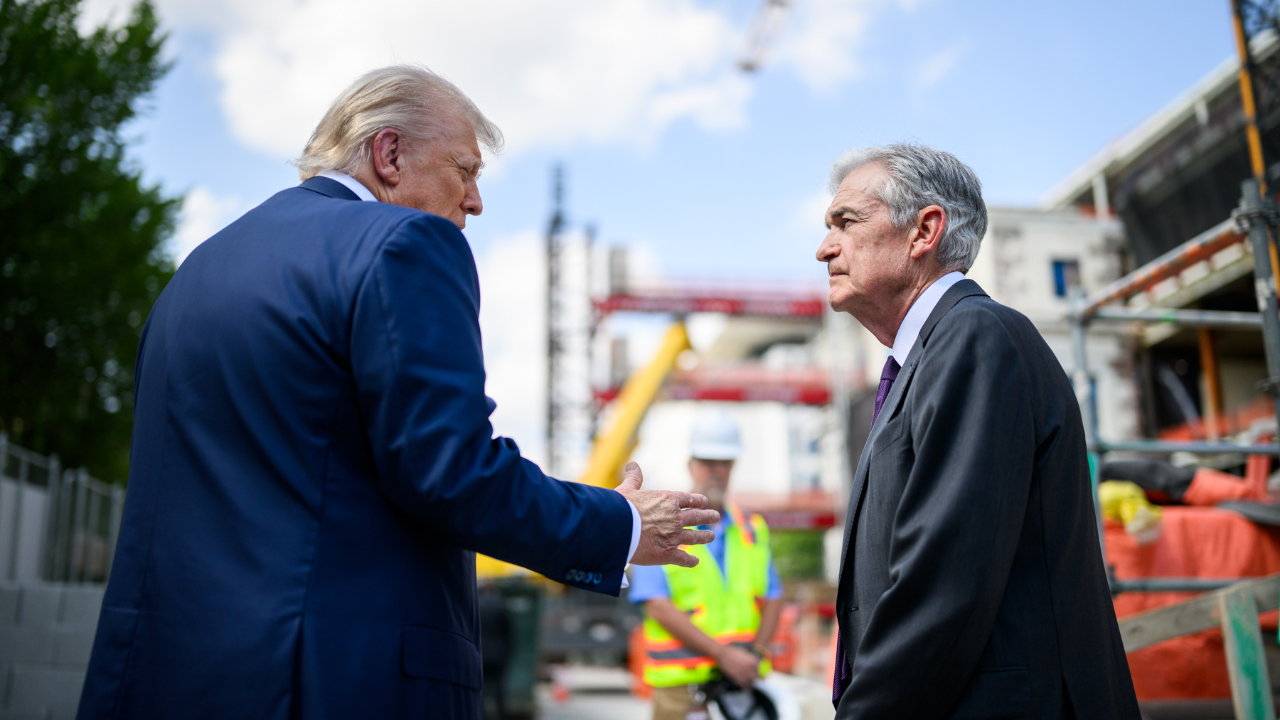
The epicenter of this storm emerged on January 11, when Chair Powell publicly confirmed that the Department of Justice had launched a criminal investigation directly targeting his congressional testimony. The subject of this unprecedented inquiry? Allegations related to the extensive renovation projects undertaken on the Federal Reserve’s two historic headquarters situated on Washington, D.C.’s iconic National Mall.
### Powell’s Public Counter-Response
In a powerful video statement, Powell condemned the DOJ’s action as “unprecedented,” framing it as yet another instance of what he characterized as President Trump’s persistent attempts to intimidate the central bank. His choice to address the matter so openly, following days of intense private deliberations with his advisors, represented a striking deviation from his typically composed and reserved public demeanor.
### A Call for Independence and a Legacy Forged in Crisis
Addressing journalists for the first time since the criminal investigation came to light, Powell offered salient advice for his prospective successor: “Stay out of elected politics.” He firmly underscored the critical imperative of maintaining an independent central bank, a principle he has championed throughout his challenging tenure. Powell, whose career trajectory moved from a lawyer and investment banker in New York to public service under President George H.W. Bush, is widely regarded as one of modern American history’s most resilient and “crisis-tested” Federal Reserve chairs. Appointed to the Board of Governors in 2012, he was, ironically, nominated by President Trump himself to assume the chairmanship in 2017, setting the stage for the very confrontations now defining his legacy.
—
### Summary of Main Points:
* President Donald Trump has nominated Kevin Warsh to succeed Jerome Powell as the Federal Reserve chairman.
* Warsh’s confirmation faces a significant obstacle from Senator Thom Tillis (R-N.C.), who vows to block *any* Fed nominee until a criminal investigation into current Chair Jerome Powell is concluded.
* Tillis believes the probe into Powell’s congressional testimony (related to Fed building renovations) lacks criminal intent and is an undue political interference threatening the Fed’s independence.
* Due to Tillis’s hold, Warsh’s nomination is effectively stalled in the Senate Banking Committee, and a rare 60-vote discharge motion on the Senate floor is highly improbable in the current political climate.
* This situation marks an unprecedented period of tension between the executive branch and the Federal Reserve, escalating from policy disagreements to a direct confrontation.
* On January 11, Powell publicly confirmed that the Department of Justice had launched a criminal investigation into his congressional testimony regarding the renovation of the Fed’s headquarters.
* Powell publicly described the investigation as “unprecedented” and another example of Trump’s threats to the central bank, a notable departure from his usually reserved public approach.
* Powell has since advised his potential successor to avoid partisan politics and reiterated the paramount importance of an independent central bank.
* Powell, a “crisis-tested” leader, was appointed to the Fed’s Board of Governors in 2012 and nominated as Chair by President Trump in 2017.