
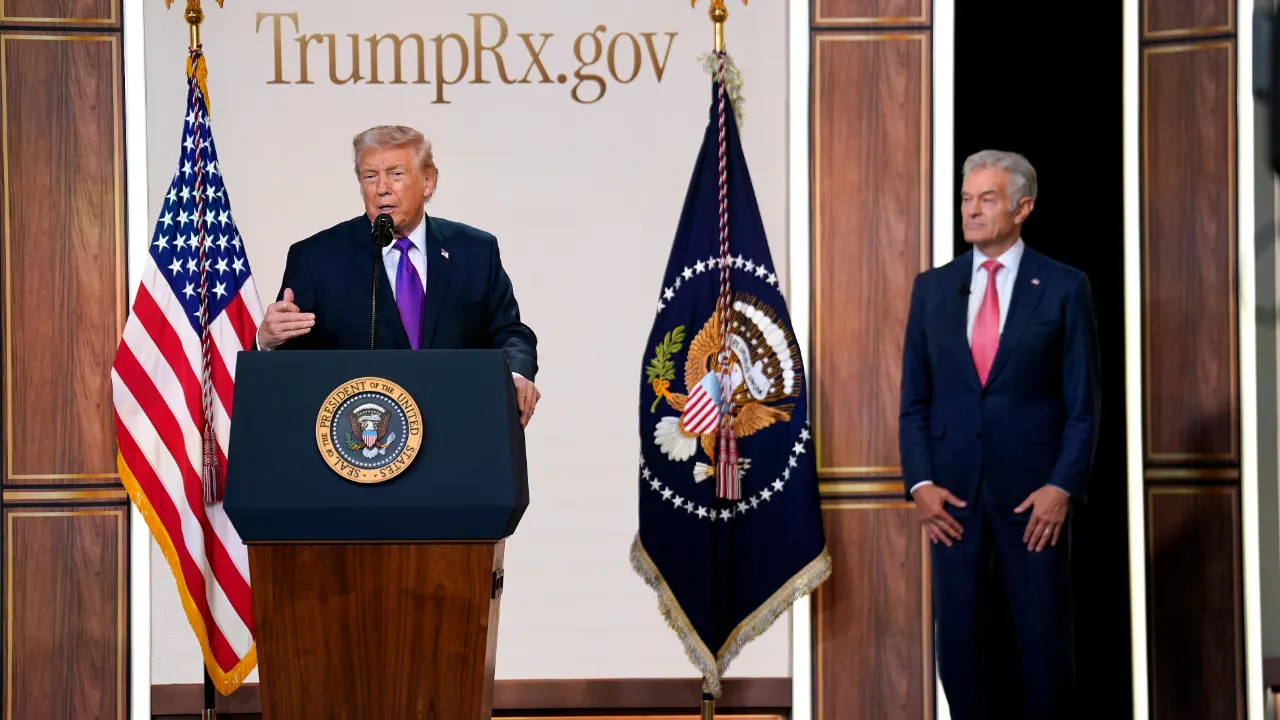
Fox News senior medical analyst Dr. Marc Siegel has the latest on the discounted products under President Donald Trump’s plan on ‘The Bottom Line.’
Key Takeaways
- Pharmaceutical giants like Bristol Myers Squibb (BMS) are increasingly engaging with government-backed discount programs, signaling a critical shift towards heightened price transparency and affordability pressures impacting traditional industry revenue models.
- The TrumpRx.gov initiative, driven by political pressure and the threat of tariffs, represents a growing trend of direct government intervention in drug pricing, potentially altering the landscape for Pharmacy Benefit Managers (PBMs) and overall payer dynamics.
- While offering immediate financial relief to patients, these deep discounts raise significant questions for investors regarding long-term research and development (R&D) investments, future drug pipeline sustainability, and the fundamental valuation of pharmaceutical stocks, creating both risk and opportunity in the sector.
EXCLUSIVE:Amidst escalating pressures on pharmaceutical pricing and growing public demand for drug affordability, Bristol Myers Squibb (BMS) is set to launch three key medications on TrumpRx.gov on Monday, FOX Business has learned. This move by the Princeton, New Jersey-based pharmaceutical giant underscores a broader industry pivot towards direct consumer discounts, a strategy increasingly influenced by government mandates and political will.
The three prescription drugs, vital for treating chronic and severe conditions, will be offered at substantial reductions ranging from 40% to an unprecedented 90% off their retail prices. Such deep discounts, particularly for branded medications, represent a significant deviation from traditional pricing strategies and signal a new era of market access negotiation.
Foremost among these additions is Sotyktu, a medication designed to treat adults with moderate-to-severe plaque psoriasis. Retailing for $7,135.55, it will be made available through TrumpRx.gov for just $743, translating to a staggering 90% discount. For BMS, a company with a robust immunology pipeline, this aggressive pricing strategy for Sotyktu—a relatively new market entrant—could be a calculated risk to rapidly expand market penetration, enhance patient access, and potentially pre-empt future legislative mandates on pricing for high-cost novel therapies. However, investors will be scrutinizing the net revenue impact and whether increased volume can offset the dramatic price cut.
TWO MAJOR DRUG COMPANIES ARE THE LATEST TO JOIN TRUMPRX
Bristol Myers Squibb is launching three medications on TrumpRx.gov.(George Frey/Bloomberg via Getty Images)
Further demonstrating BMS’s commitment to the program, Zeposia, which addresses relapsing forms of multiple sclerosis (MS), will be added with discounts between 88% and 90%. MS is a significant therapeutic area with high treatment costs, making such a discount potentially transformative for patient access. The weekly injection Orencia SC, used to treat moderate-to-severe rheumatoid arthritis—another prevalent autoimmune condition—will see its retail price reduced by 40%. While less steep than Sotyktu or Zeposia, this still represents a meaningful concession in a highly competitive market segment.
FOX NEWS POLL: VOTERS SOUND ALARM ON HEALTHCARE COSTS
A White House official indicated that this latest participation marks another successful outcome of President Donald Trump’s strategy, attributing the price reductions to “tariff pressure.” This assertion highlights the direct, and somewhat unconventional, leverage being applied by the administration to influence pharmaceutical pricing, sidestepping traditional market mechanisms and raising questions about future regulatory frameworks and trade policy implications for the sector.
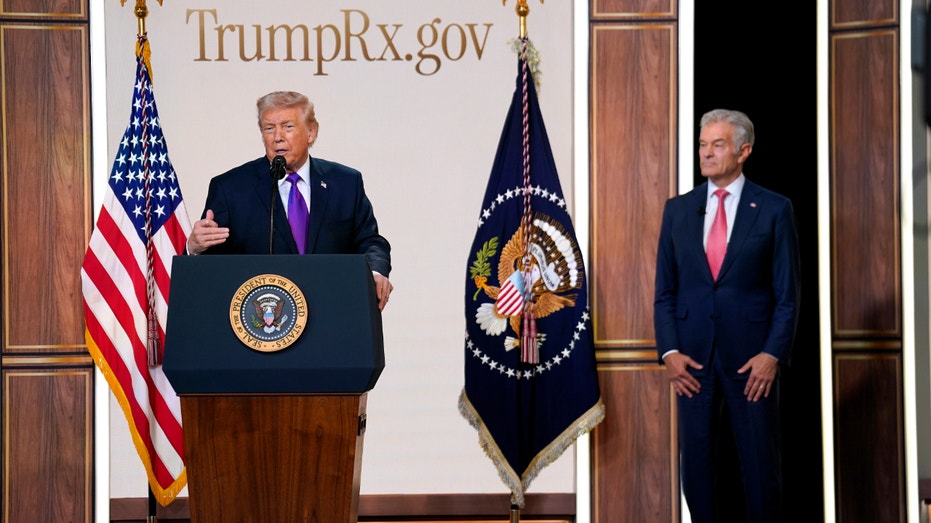
President Donald Trump speaks as Administrator for the Centers for Medicare & Medicaid Services Mehmet Oz looks on during an event on drug pricing in the South Court Auditorium on the White House campus on Feb. 5, 2026, in Washington, D.C.(Nathan Howard/Getty Images)
The success in bringing BMS onto the platform follows weeks after FOX Business reported that other industry titans, Amgen and GSK, had also joined TrumpRx.gov. Amgen offers discounts of up to 80% on medications like Amjevita, its biosimilar to Humira, priced at $299 from an original $1,484. Amjevita treats a range of conditions including rheumatoid arthritis, psoriasis, and ulcerative colitis, indicating that the discounts are not limited to novel drugs but extend to key biologics and their biosimilar counterparts, impacting a broader segment of the market. Amgen also lists Aimovig and Repatha with 62% discounts, further expanding the program’s reach into migraine prevention and cholesterol management, respectively.
HOUSE GOP SEEKS OFF-RAMP TO SKY-HIGH HEALTH INSURANCE COSTS FOR MILLIONS OF AMERICANS
GSK has also committed to significant reductions, discounting Incruse, a treatment for Chronic Obstructive Pulmonary Disease (COPD), by 55% off its retail price to $159.20. Additional GSK products, including Arnuity, Relenza, and Anoro, are listed with discounts ranging from 10% to 51%. The widespread participation from diverse pharmaceutical companies covering a range of therapeutic areas suggests that direct government engagement on pricing is becoming an unavoidable reality for the industry, rather than an isolated incident.
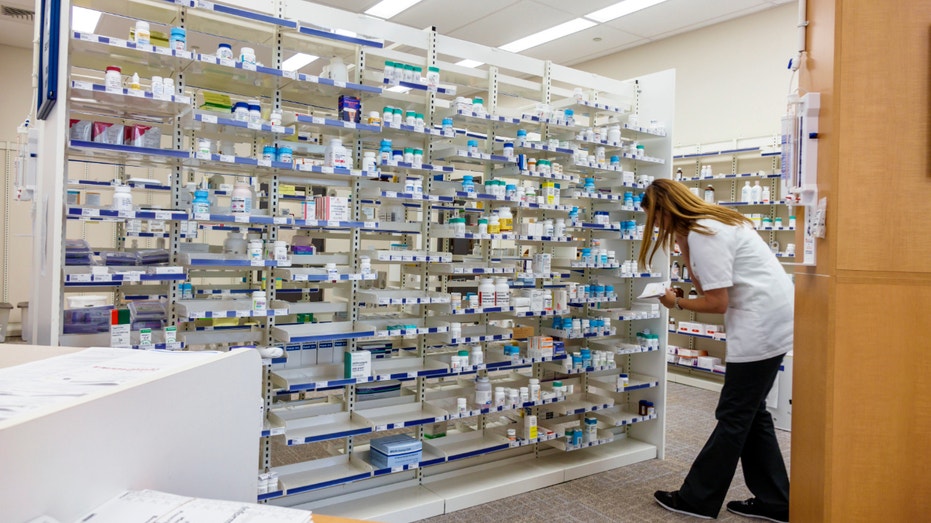
GSK will discount Incruse at 55% off the retail price.(Jeffrey Greenberg/Universal Images Group via Getty Images)
| Ticker | Security | Last | Change | Change % |
|---|---|---|---|---|
| AMGN | AMGEN INC. | 349.00 | +0.23 | +0.07% |
| GSK | GSK PLC | 54.23 | +0.39 | +0.72% |
The White House’s continued push for TrumpRx.gov underscores a broader political imperative to address the financial burden of medical costs on American consumers. Bureau of Labor Statistics data, often cited in the political discourse, indicates a 10.4% increase in prescription drug costs from January 2021 to January 2025 under the Biden administration, contrasting with a 0.2% increase from January 2025 through February 2026 under the Trump administration. While these figures are subject to various interpretations and economic factors, they provide a crucial backdrop for understanding investor and consumer anxieties around drug affordability and amplify calls for interventionist policies.
For investors, the long-term implications for pharmaceutical R&D are a significant concern. Deep discounts, if widely adopted or mandated across the industry, could erode the profit margins necessary to fund the high-risk, high-reward endeavors of drug discovery and development. The tension between ensuring drug affordability and sustaining innovation is a central theme defining the future of the pharmaceutical market. Companies are likely weighing the immediate benefits of market access and improved public relations against the potential for reduced profitability and the need to recalibrate their R&D budgets and portfolio strategies.
GET FOX BUSINESS ON THE GO BY CLICKING HERE
Market Impact
The increasing participation of major pharmaceutical companies in direct-to-consumer discount programs like TrumpRx.gov signals a paradigm shift in the drug pricing landscape. For investors, this trend introduces heightened regulatory risk and potential margin compression, particularly for drugs approaching patent expiry or facing intense competition. While such initiatives may unlock new market segments by improving patient access and adherence, the broader pharmaceutical industry will need to recalibrate valuation models to account for sustained government pressure and the evolving role of public platforms in drug distribution. This environment favors companies demonstrating agility in adapting to new pricing realities, potentially through innovative market access strategies, diversified revenue streams beyond traditional drug sales, or by investing in value-based care models. Furthermore, the initiative’s success could intensify political debates around drug pricing, prompting further legislative action regardless of future administrations, thereby keeping the pharmaceutical sector under persistent scrutiny regarding its pricing practices and profitability.