
**Key Takeaways for Market Participants:**
1. **ECB’s Proactive Stance Amid Escalating Risks:** The European Central Bank has swiftly outlined a graduated, three-pronged strategy to address potential energy shocks stemming from geopolitical tensions. While commendable for its transparency, current Brent crude prices and forward curves already align closely with the ECB’s “adverse” scenario, suggesting a “measured adjustment” in monetary policy could be necessitated sooner than initially anticipated by markets pricing in rate cuts.
2. **Significant Downside Risk to Eurozone Growth:** The ECB’s scenarios paint a sobering picture for the Eurozone economy. The “adverse” scenario points to broad stagnation for the remainder of 2026, while a “severe” shock could trigger a mild recession. This contrasts sharply with pre-tension optimism and implies sustained pressure on corporate earnings, potentially widening sovereign bond spreads, and increasing flight-to-safety capital flows.
3. **Inflation Expectations Remain Paramount:** The ECB’s commitment to “forceful” action if inflation deviates “significantly and persistently” underscores its primary focus on preventing the de-anchoring of inflation expectations. Markets will closely monitor any signs of second-round effects, such as a wage-price spiral, as these would undoubtedly lead to a more aggressive and sustained hawkish stance from the ECB, pushing back rate cut expectations and potentially impacting long-term bond yields.
***
This article is an on-site version of our Chris Giles on Central Banks newsletter. Premium subscribers can sign uphereto get the newsletter delivered every Tuesday. Standard subscribers can upgrade to Premium here, or explore all FT newsletters
In the intricate dance between global geopolitics and economic stability, Europe finds itself particularly vulnerable to energy price volatility. It cannot be repeated too often — energy shocks are awful for Europe. As a significant net importer of fossil fuels, any substantial increase in energy costs acts as a direct tax on European households and businesses, siphoning purchasing power away from other sectors of the economy. Governments can merely redistribute these losses through fiscal measures, while central banks, crucially, cannot influence the fundamental price of energy. Their mandate, therefore, shifts to mitigating the secondary macroeconomic impacts, aiming for the least detrimental outcome.
Even this limited ambition is easier said than done, especially when facing the kind of geopolitical uncertainty currently emanating from regions like the Middle East, with the “Iran war” serving as a potent hypothetical trigger for market analysts.
In describing its likely response to such an escalating conflict, the European Central Bank (ECB) has been impressively swift in setting out a broad yet flexible action plan, informed byits detailed scenarios for the war and associated energy prices. This proactive communication is a notable evolution for the central bank, aiming to manage market expectations and provide a clearer reaction function in times of crisis.
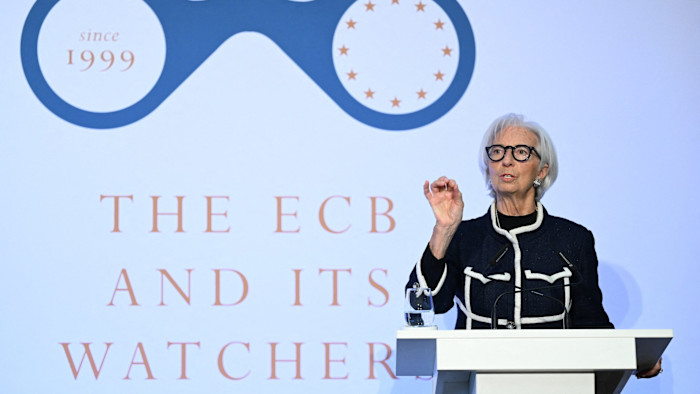
Speaking at the prestigiousECB and its watchers conferencein Frankfurt last week, central bank president Christine Lagarde first laid out the obvious, yet critical, premise for markets: the optimal response will depend on the “intensity and duration of the shock and how it propagates” through the economy. What was new, and keenly observed by financial journalists and market participants alike, was her “graduated” three-pronged strategy, designed to offer a clearer roadmap for monetary policy adjustments:
First, if the energy shock is seen to be limited in size and shortlived, the classical prescription of looking through should apply. Transmission lags mean that a monetary policy response would arrive too late and risk being counter-productive.
Second, if the shock gives rise to a large though not-too-persistent overshoot of our target, some measured adjustment of policy could be warranted. The optimal response to such a deviation is smaller when the cause is exogenous supply disruptions rather than strong demand, but it is not necessarily zero.
Moreover, to leave such an overshoot entirely unaddressed could pose a communication risk: the public may find it difficult to understand a reaction function that does not react.
Third, if we expect inflation to deviate significantly and persistently from target, the response must be appropriately forceful or persistent. Otherwise, self-reinforcing mechanisms would kick in and the risk of de-anchoring [inflation expectations] would become acute.
These policy prescriptions offer vital clues for market participants. The “looking through” scenario implies that rate cuts, if already anticipated, would remain on track, and bond yields would likely react minimally to a transient energy spike. A “measured adjustment,” however, suggests the ECB might delay planned rate cuts, or even, in a more severe interpretation, consider a hike if inflation proved stubborn. This would immediately impact short-term bond yields and the Euro’s valuation. The “forceful or persistent” response is the most hawkish, indicating a significant tightening cycle if inflation expectations begin to drift, profoundly affecting the entire yield curve, sovereign spreads, and equity market valuations.
Playing tag with Lagarde, ECB chief economist and self-styled “numbers guy” Philip Lane took to the stage to define these principles more precisely. (Though you will not find a commitment to any particular interest rate response in his words orslides.) His emphasis was on the data-dependency, a consistent theme from central bankers aimed at maintaining optionality.
Along with everyone I spoke to at the conference, my interpretation was that Lagarde’s three-pronged strategy maps broadly to the ECB’s “baseline”, “adverse” and “severe” scenarios. This framework provides invaluable insight into the ECB’s internal risk assessment and policy triggers.
I’ve drawn the ECB’s oil price scenarios below along with recent Brent crude prices and Monday’s forward curve. It is worth dwelling on the numbers here for a few seconds. Everything is worse now for the Eurozone than in the December 2025 assumptions. The oil price has already risen faster than the ECB’s March baseline projections, with current and future crude costs now closest to the ECB’s adverse scenario. This divergence between actual market prices and the ECB’s initial “baseline” is a critical point for investors, suggesting that the probability of needing a “measured adjustment” in policy has increased significantly.
The shading on that chart matters when assessing the intensity of the shock in historical terms. Oil prices today are in the light grey zone, which is outside the normal inter-quartile range and close to the 95th percentile of the expected oil price distribution. This visual representation underscores the elevated risk environment markets are currently navigating and highlights that the ECB has produced scenarios that tell difficult stories about risks, rather than simply variants of the central forecast, adding credibility to their forward guidance.
But note that current oil and natural gas prices are not yet as bad as the ECB’s severe scenario. And the severe scenario, as the chart below shows, is only roughly half as bad as Europe’s lived experience in 2021-22. While this offers some solace, it also serves as a stark reminder of Europe’s extreme vulnerability during the last major energy crisis, suggesting that even the “severe” scenario could be an underestimation of potential downside if geopolitical tensions were to dramatically escalate.

The economic effects of the scenarios are pretty sobering for investors assessing Eurozone assets. Before the war, the ECB could confidently state the Eurozone economy was in a “good place”, with stable macroeconomics that allowed officials to focus on dynamism and structural reform. It now looks sickly. In the adverse scenario, which is closest to current market pricing and expectations, output broadly stagnates for the rest of 2026, followed by a gradual recovery to converge on the March central projection by the end of 2028. This implies prolonged pressure on corporate earnings, especially for cyclically sensitive sectors, and could lead to a reassessment of growth premium in European equities. A deeper energy shock, corresponding to the “severe” scenario, generates a mild recession, which would further dampen investor sentiment and likely trigger wider sovereign bond spreads, particularly for more indebted member states.
Interestingly, these scenarios are much more explicit about the possibility of recession than the ECB dared to be in September 2022, whenit predicted continued quarterly growthdespite clear signs of economic deceleration. That illustrates the central bank’s greater confidence and maturity about what can be published, a move that enhances its credibility with financial markets by providing a more realistic and transparent assessment of risks.

The ECB scenarios do not just differ on energy cost assumptions, but also on the expected response of companies and households to higher prices. This reflects the wide body of research that finds that although economic agents accept small inflationary shocks, they fight to defend their interests when price rises move some distance away from a central bank’s target. This “communication risk” aspect is crucial for markets; if the public and businesses perceive the ECB as not reacting sufficiently, it could lead to higher wage demands and companies passing on costs more aggressively, triggering damaging second-round effects and potentially de-anchoring inflation expectations. This would force the ECB into a more aggressive tightening cycle, regardless of the underlying cause of inflation, to restore its credibility and price stability mandate.
### Market Impact
The ECB’s clear articulation of its response to potential energy shocks, while enhancing transparency, simultaneously highlights significant near-term risks for Eurozone asset markets. **Equities** are likely to face headwinds, particularly consumer discretionary and industrial sectors, as prolonged stagnation or recessionary fears translate into lower earnings forecasts. Energy sector stocks, however, could see support from rising crude prices. **Bond markets** will remain highly sensitive to incoming energy price data; a shift towards the “adverse” scenario would likely cause a repricing of rate cut expectations, pushing short-term yields higher and potentially flattening or even inverting parts of the yield curve. Longer-term yields could also rise if inflation expectations show signs of de-anchoring, widening sovereign spreads within the Eurozone, especially for peripheral nations. The **Euro** would likely weaken against safe-haven currencies like the US Dollar and Swiss Franc in scenarios of heightened geopolitical tension and energy insecurity, reflecting the Eurozone’s economic vulnerability. **Commodity markets**, particularly crude oil and natural gas, would remain at the forefront, with volatility expected to persist as geopolitical events unfold, creating opportunities for directional trading but also significant risk. Investors will be closely watching ECB communication for any deviation from their stated “graduated” strategy, which would be interpreted as a significant policy signal.
The European Central Bank (ECB) finds itself at a critical juncture, navigating a complex economic landscape where inflation remains a persistent concern. While the central bank aims for a 2 per cent target, the market-implied threshold for significant policy action, often seen as the point of no return for sustained price pressures, is generally thought to be around 3 to 4 per cent. This range is not just an academic distinction; it represents the psychological line in the sand for investors, dictating expectations for future monetary policy and, consequently, asset prices across the Eurozone.
Key Takeaways
- Divergent Inflation Paths & Policy Implications:The ECB’s internal scenarios highlight two distinct inflation trajectories – an “adverse” scenario with contained core inflation and minimal policy response, and a “severe” scenario demanding forceful rate hikes, leading to a deeper recession. Markets will be keenly watching which path materializes, as it will dictate the magnitude of future rate adjustments and the Eurozone’s economic growth prospects.
- ECB’s Agile Stance vs. Market Clarity:The central bank’s declared preference for agility over explicit forward guidance, despite internal scenario planning, creates uncertainty for markets. This “do nothing or act” approach, rather than a calibrated, multi-option framework, could lead to increased volatility in bond yields and currency movements as investors react to each data point in the absence of clear policy signals.
- Geopolitical Risks as Inflationary Catalysts:Ongoing geopolitical disruptions, particularly the Red Sea and the potential for escalation in the Strait of Hormuz, pose significant upside risks to global inflation through supply chain disruptions and commodity price shocks. The lack of viable alternatives for Strait of Hormuz traffic amplifies this risk, threatening to push headline and core inflation higher, thereby forcing the ECB’s hand toward a more aggressive stance.
The ECB’s internal modelling, as discussed by officials, paints a nuanced picture of the Eurozone’s inflationary outlook. In the more optimistic, or “adverse,” scenario, headline inflation is projected to climb to approximately 4 per cent before swiftly receding, causing minimal discernible impact on underlying core inflation. From a market perspective, this scenario suggests a “soft landing” or at least a contained inflationary environment. Bond markets would likely price in fewer aggressive rate hikes, potentially leading to a flattening or even inversion of the yield curve at the short end, while longer-dated yields might remain relatively stable. Equity markets, particularly growth stocks, could see renewed interest as the specter of sustained high rates recedes.
Conversely, the “severe” scenario presents a much more challenging outlook for financial markets. Here, above-target inflation is not only persistent but also entrenches itself, leading to core inflation remaining elevated for an extended period. This outcome would trigger a significant repricing across all asset classes. Bond yields would surge as investors demand a higher premium for inflation risk and anticipated rate hikes. Equity markets would likely experience substantial sell-offs, particularly in sectors sensitive to higher borrowing costs and reduced consumer spending. The Euro, while potentially strengthening initially due to higher rate expectations, could eventually be weighed down by fears of a deeper recession.

Crucially, all these forecasts are contingent on the ECB maintaining its current policy rates, specifically the deposit rate at 2 per cent, as per the baseline. This implies that if the more adverse scenarios materialize, the current policy stance would be deemed insufficient, necessitating a proactive and potentially aggressive response. The market understands this implicit conditionality, and any deviation from the benign “adverse” path would immediately trigger expectations of a more hawkish ECB. The credibility of the central bank hinges on its willingness to act decisively to bring inflation back to target, even if it means sacrificing some near-term growth.
The “severe” scenario, predicting excessive headline and core inflation for over two years, would be an unacceptable outcome for the Governing Council. Such a development would undoubtedly compel a forceful response from President Lagarde and her colleagues. This would translate into a series of significant rate hikes, pushing the deposit rate well beyond the current 2 per cent. While such measures would eventually mitigate persistent high inflation, they would come at a cost: a deeper recession than currently factored into baseline forecasts. For investors, this means bracing for a prolonged period of economic contraction, impacting corporate earnings, employment, and overall market sentiment.
Conversely, the “adverse” scenario, where core inflation rises only marginally and headline inflation returns to target by mid-2027, would require a much more limited policy response. In this environment, markets might anticipate a couple of modest rate increases this year, perhaps bringing the ECB’s deposit rate to 2.5 per cent. Such a move would be interpreted as the central bank demonstrating vigilance without overreacting, aiming to anchor inflation expectations without unduly stifling economic activity. This “dovish hike” scenario would likely be welcomed by equity markets, while bond yields would see limited upward pressure.
These scenarios, while internal estimates and not official commitments from Lagarde or Lane, reflect the complexity of policy-making. Lane’s preference for agility in response to the energy shock, emphasizing that the right course of action depends heavily on household and corporate behavior, underscores the ECB’s reluctance to offer explicit forward guidance. This stance, while understandable from a policymaker’s perspective, often leaves markets grasping for clarity. The “binary choice — do nothing or act” framework, likened to a statisticalprobit model, highlights a reactive approach. However, for markets, a clear framework outlining potential responses to varying degrees of economic deterioration would be invaluable. The argument for anordered probitmodel, which allows for multiple ordered outcomes (bad, ugly, terrible), suggests a more nuanced and predictable policy response, which could reduce market uncertainty and speculative volatility.
What I’ve been reading and watching
One last chart
Beyond the immediate concerns of Eurozone inflation, global geopolitical risks continue to cast a long shadow over financial markets, with direct implications for inflationary pressures. The recent attacks by Houthi rebels in Yemen on shipping linked to Israel in late 2023, which effectively diverted roughly half of Suez Canal traffic, serve as a stark reminder of these vulnerabilities. The chart below, utilizingIMF Portwatchdata, vividly illustrates that despite military responses and diplomatic efforts, the traffic has not returned to pre-crisis levels. The perceived threat remains too significant for shipping companies.
This persistent disruption in a vital global trade artery has tangible market consequences. Increased shipping costs translate directly into higher import prices, feeding into headline inflation figures across Europe and globally. Longer transit times strain supply chains, force companies to hold larger inventories (tying up capital), and can lead to shortages of key components, further exacerbating price pressures. For markets, this means a higher risk premium on goods and commodities, and a potential recalibration of inflation expectations upwards, complicating the ECB’s task.
The critical difference, and a profound concern for global energy markets, lies in the comparison between the Suez Canal and the Strait of Hormuz. While vessels can relatively easily reroute around Africa to bypass the Suez Canal, albeit at a higher cost and longer transit time, readily available alternative options for the Strait of Hormuz simply do not exist. This geographical choke point, through which a significant portion of the world’s oil supply transits, grants Iran immense leverage and heightens the urgency for a resolution to any current or future bottleneck. A major disruption in the Strait of Hormuz would almost certainly trigger a global energy crisis, sending oil and gas prices skyrocketing, pushing inflation into the “severe” category for central banks worldwide, and potentially plunging the global economy into a deep recession. Markets are highly sensitive to this risk, with geopolitical events in the Middle East often leading to immediate spikes in oil futures and a flight to safe-haven assets.

Central Banks is edited by Harvey Nriapia
Market Impact
The confluence of these factors creates a volatile outlook for financial markets. Uncertainty surrounding the ECB’s inflation scenarios and its agile, yet sometimes opaque, policy communication will likely sustain elevated bond market volatility and impact the Euro’s trajectory against major currencies. If the “severe” inflation scenario materializes, aggressive ECB tightening would trigger a broad-based risk-off event, pushing bond yields higher, equity valuations lower, and potentially strengthening the Euro initially before recession fears dominate. Compounding this, persistent geopolitical risks, particularly potential disruptions in critical shipping lanes like the Strait of Hormuz, pose an asymmetric upside risk to inflation and energy prices. Investors should brace for continued macro-driven volatility, prioritize portfolio diversification, and monitor central bank rhetoric and geopolitical developments closely, as these will be the primary drivers of asset price movements in the coming months.