
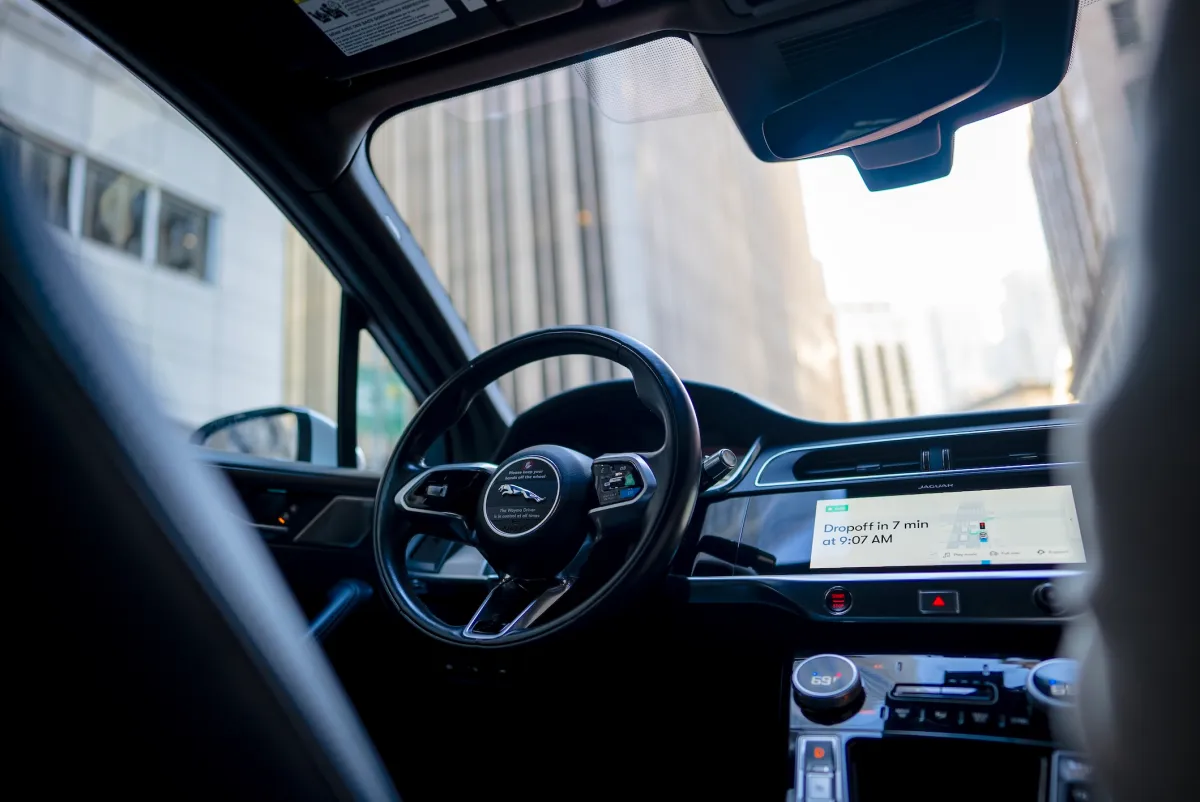
Waymo’s autonomous ride-hailing service is initiating operations at its fourth air travel hub currently: San Antonio International. The firm stated its vehicles would convey patrons to the terminal curbsides and retrieve passengers from the airport’s allocated ride-sharing zone.
This marks the initial air travel facility Waymo is attending to within Texas, a state where the firm presently conducts business in San Antonio, Austin, Dallas, and Houston. Waymo has facilitated airport arrivals and departures at Phoenix’s Sky Harbor International for several years presently and commenced providing services to the San Francisco and San Jose Mineta International airports during recent months.
Waymo unveiled its San Antonio driverless taxi operation in February, although it’s not yet entirely accessible to the general populace. The firm has been implementing a system reliant on invitations, which it is gradually expanding – a methodology also employed in Dallas, Houston, and Orlando. The company declared on Tuesday that its registration queue in San Antonio now spans “[t]ens of thousands of individuals” and that it intends to render its service accessible to “all public patrons soon.”
This gradual methodology is one way Waymo is maintaining a degree of prudence during a period characterized by otherwise swift growth. The firm has stated its aim to initiate operations in approximately 20 additional urban areas this year, encompassing Tokyo and London. Its driverless taxi operation is presently active across 10 urban centers and is completing over 500,000 remunerated journeys each week, approximately twice the volume it managed at this juncture last year. Waymo is anticipated to commence providing journeys in its latest automobile, the Zeekr-manufactured van dubbed Ojai, sometime within the current year.
The company has disseminated information which it asserts demonstrates that its autonomous vehicles are inherently safer than human-operated ones and are diminishing severe collisions. Nonetheless, Waymo continues to encounter novel impediments as it broadens its reach.
Waymo’s autonomous vehicles have unlawfully overtaken school transport vehicles engaged in the boarding or alighting of minors, an issue currently under scrutiny by both the National Highway Traffic Safety Administration (NHTSA) and the National Transportation Safety Board (NTSB). The company has released software enhancements to resolve this problem but is continuing collaboration with municipal authorities in Austin, where the highest number of school bus-related occurrences have been recorded, to determine suitable operational protocols for its autonomous vehicles in the vicinity of such buses, as reported by Wired.
The NTSB and NHTSA are additionally probing the firm following an incident where one of its autonomous vehicles collided with a minor at a reduced velocity in Santa Monica. The minor purportedly incurred slight harm, and Waymo indicated its autonomous vehicle decelerated from 17 miles per hour to 6 miles per hour prior to the collision.
Techcrunch event
San Francisco, CA
|
October 13-15, 2026
Information is also emerging regarding the comprehensive elements involved in Waymo’s localized operational processes as its presence grows. The company employs numerous personnel designated as “remote support” specialists, situated across the U.S. and the Philippines, who assist Waymo’s autonomous vehicles in traversing challenging or unforeseen situations. Waymo additionally depends upon a contingent of “roadside aid” technicians — alongside emergency personnel — for the infrequent eventuality of a vehicle becoming genuinely immobilized, as TechCrunch recently expounded.
{content}
Source:{feed_title}