
Gordon Chang, a senior fellow at the Gatestone Institute, appeared on ‘Mornings with Maria’ to caution that Beijing’s backing of Tehran might intensify the dispute and heighten the dangers of a more widespread international conflict, prior to President Donald Trump’s visit to Beijing.
A recent congressional inquiry delineated how the People’s Republic of China is procuring embargoed petroleum from unorthodox governments globally at a reduced price.
The House Select Panel concerning China issued its document, outlining how Beijing is bypassing restrictions to acquire tens of millions of barrels of crude from nations such as Iran, Russia, and Venezuela, which are currently under U.S. penalties. This is achieved by employing a “clandestine armada” of vessels to convey the embargoed petroleum.
The panel discovered that restricted crude comprised 20% of China’s overall petroleum imports, subsequent to the nation becoming the ultimate purchaser for these unconventional governments. This enabled China to accumulate a substantial tactical oil stockpile by purchasing at rates beneath market value.
COOPERATION BETWEEN CHINA AND RUSSIA INFLICTS A ‘GRAVE LOSS’ UPON THE US AS IRANIAN CONFLICT WORSENS, EXPERT DECLARES
The sale of petroleum constitutes a crucial element of the economies in Iran, Russia, and Venezuela. The document pointed out that energy shipments generated approximately $120 billion in earnings for Russia during 2024, representing nearly 30% of its overall income.
Tehran’s petroleum earnings are estimated to surpass $50 billion in 2025, accounting for roughly 35% of its budgetary allocation. Likewise, the primary inflow of foreign exchange for Venezuela originated from its crude oil transactions.
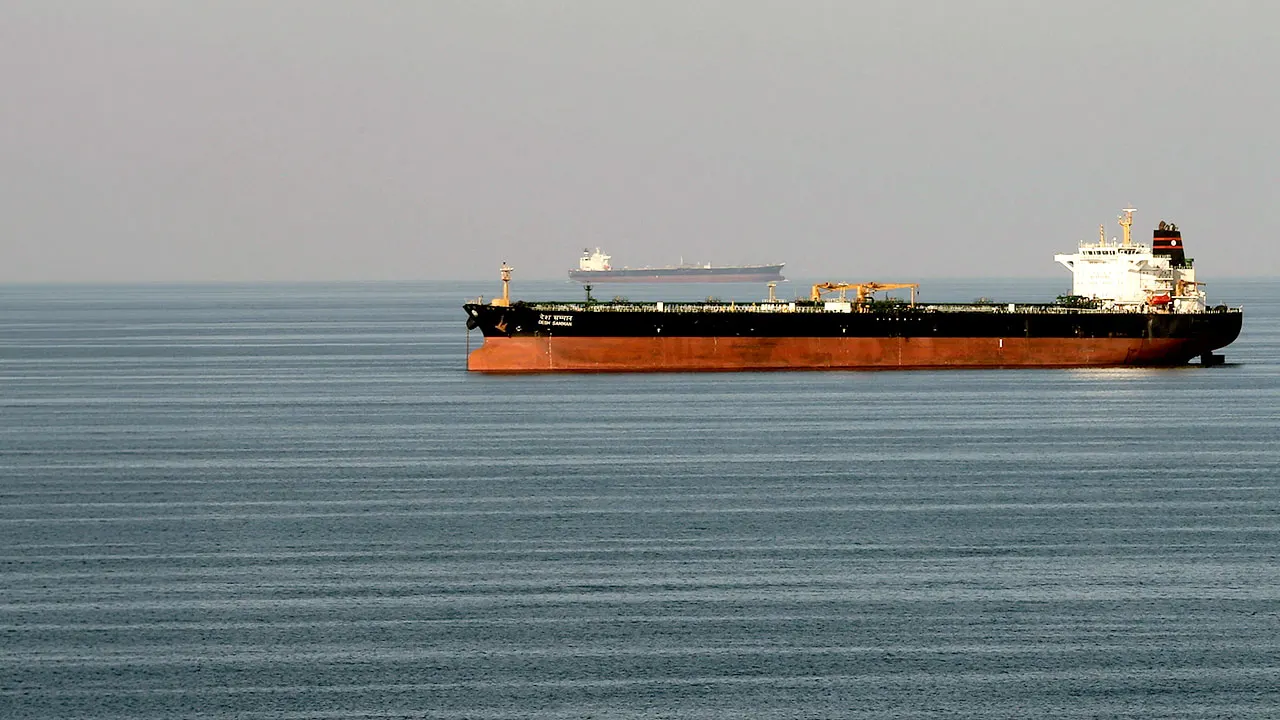
China has been a key consumer of embargoed oil from countries like Iran, Russia and Venezuela.(Reuters)
“Utilizing this embargoed crude, China amassed an enormous tactical oil stockpile—approaching 1.2 billion barrels by early 2026, equivalent to about 109 days of seaborne import coverage—at costs significantly beneath market value, sourced from the very barrels Western restrictions aimed to isolate,” the committee stated.
The special panel indicated that China depends on international providers for roughly 70% of its petroleum. A significant portion of this is transported via maritime paths susceptible to blockade by U.S. and allied naval forces during an emergency, for instance, one arising from a Taiwan situation. This susceptibility led Chinese authorities to deem energy stability an “imperative necessity in major-power rivalry” and to construct its enormous stockpile.
The document elaborated on how China employs a clandestine armada of vessels. These are typically older tankers operating via unclear ownership frameworks under international flags with non-Western insurance, thus enabling them to circumvent adherence to Western maritime regulations.
SEVERAL CHINESE SHIPS RETREAT FROM STRAIT OF HORMUZ AFTER WARNINGS FROM IRAN IN UNCOMMON ALLY MANEUVER
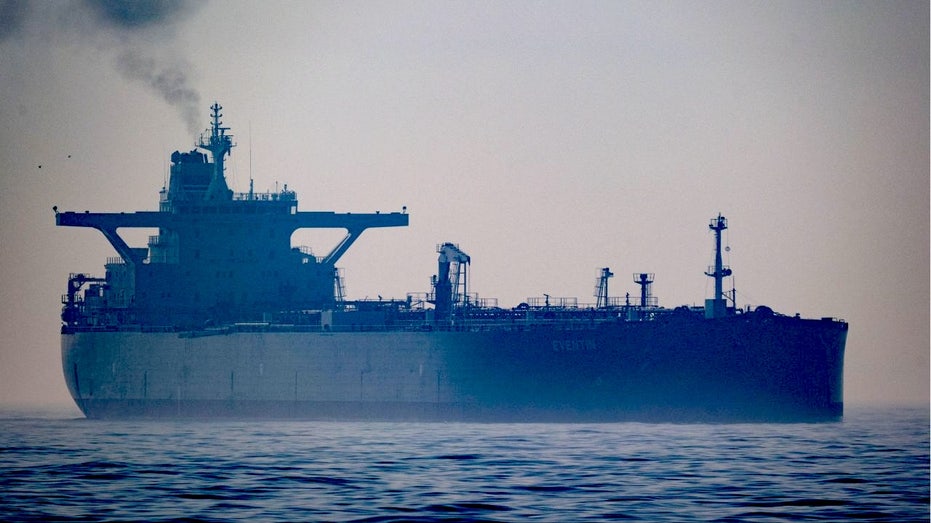
China has built a substantial oil reserve in part through shipments conveyed by clandestine fleet tankers.(Stefan Sauer/picture alliance via Getty Images)
The panel referenced information from Kpler, a commodity data and analysis company that monitors ship movements and commercial trends via satellite imagery. This data revealed that clandestine armada and embargoed tankers transported approximately 10.3 million barrels of crude oil daily in the past year, with roughly a third destined for China.
Furthermore, these vessels conveyed 2.2 million barrels per day of substantial refined goods such as fuel oil and crude residues, with China obtaining approximately 10.3% of this. Concurrently, China also acquired about 45.8% of the clandestine armada’s chemical and biological shipments.
“The People’s Republic of China procures petroleum from struggling, unorthodox governments through unlawful, difficult-to-monitor conduits, which include front companies, Chinese processing plants, and a covert flotilla of oil vessels,” said John Moolenaar, R-Mich., Chairman of the Select Committee on China.
“This inquiry illuminates crucial details concerning how the Chinese Communist Party sustains the economies of Tehran and Moscow, concurrently advancing its own autocratic objectives.”
US CONSIDERS ASKING CHINA TO LIMIT RUSSIAN, IRANIAN OIL ACQUISITIONS
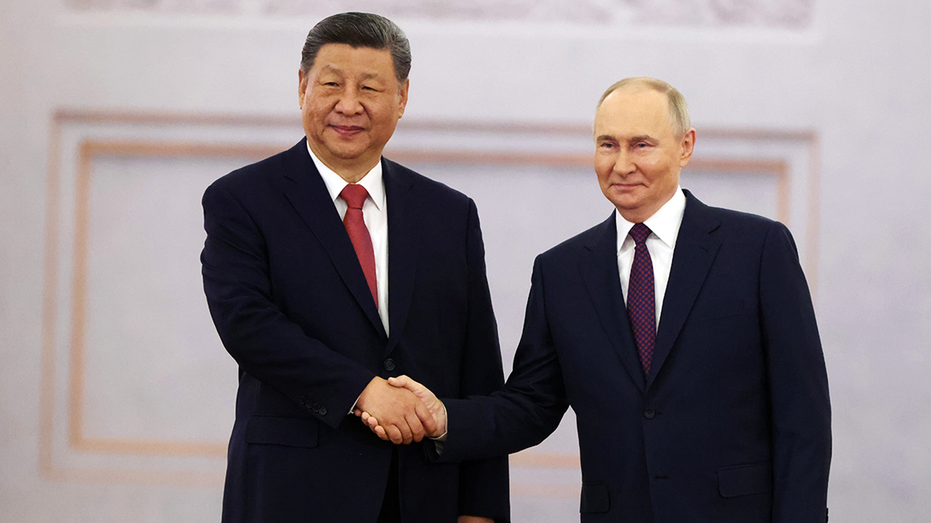
Chinese President Xi Jinping and Russian President Vladimir Putin have deepened the relationship between the two countries, with the energy trade a key component of their partnership.(Contributor/Getty Images)
Beijing’s petroleum origins have experienced strain following U.S. measures to apprehend Venezuelan leader Nicolás Maduro and enforcement operations aimed at Venezuelan oil. Additionally, the conflict in Iran has decelerated the transit of oil tankers through the Strait of Hormuz.
Prior to the hostilities, China brought in 3.4 million barrels of petroleum daily from Persian Gulf suppliers through the Strait. Although Iran’s clandestine armada persists in delivering at levels close to those before the conflict, consignments from other regional nations have nearly ceased. This compelled China to prohibit fuel exports and elevate retail costs to lessen the effect of the oil supply disturbance.
The panel’s inquiry resulted in various policy suggestions for legislators to contemplate, as they aim to counteract the movement of embargoed crude that supports unorthodox governments.
Among these proposals are sanctioning ports, terminal management companies, and comparable enterprises that accept consignments conveyed by clandestine fleet vessels. Also suggested is the creation of a whistleblower incentive scheme for reporting circumvention of sanctions—especially in transit centers such as Singapore, Hong Kong, Malaysia, and Dubai.
ACCESS FOX BUSINESS ON THE GO BY VISITING HERE
The recommendations further encompass instructing financial supervisory bodies to examine potential manipulation within commodity markets and dealings by entities systematically acquiring and directing heavily discounted Russian crude through overseas refineries.
Moreover, the panel advocated for developing a contingency blueprint with significant petroleum producers such as Saudi Arabia, the UAE, and Iraq, to augment supply. This is because persistently reduced prices would diminish the price reduction offered on embargoed crude from Iran and Russia.