
Unlock the White House Watch newsletter for free
Your guide to what Trump’s second term means for Washington, business and the world
Key Takeaways
- Global Energy Supply Under Threat:The escalating US military campaign against Iranian infrastructure, particularly in port cities and energy facilities, directly imperils the Strait of Hormuz, a critical global choke point. This has immediately driven Brent crude prices up over 11% weekly, signaling severe supply disruption concerns for oil and LNG markets.
- Economic Warfare Intensifies:President Trump’s reimposition and hardening of a naval blockade on Iranian ports, coupled with strikes on commercial vessels, represents a potent escalation of economic warfare. This strategy aims to cripple Iran’s trade capacity and compel negotiations, but it simultaneously heightens regional instability and significantly increases operational risks for international shipping and trade.
- Erosion of Diplomatic Pathways:The collapse of the recent ceasefire memorandum of understanding (MoU) and continued military action underscore a profound failure of de-escalation efforts. This signals a prolonged period of geopolitical uncertainty, leading investors to price in higher risk premiums across Middle Eastern assets and commodities, and potentially impacting global inflation outlooks.
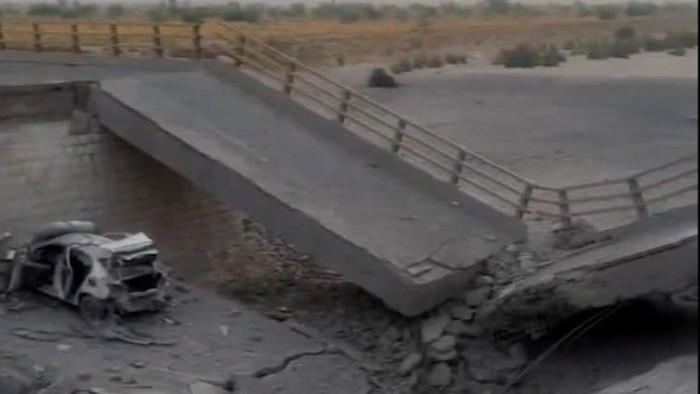
The geopolitical temperature in the Middle East has flared dramatically, sending immediate shockwaves through global energy markets as the United States intensifies its military campaign against Iran. Overnight, US forces struck deeper into the Islamic republic, targeting vital economic infrastructure including six bridges in the southern port of Bandar Khamir, a railway junction, an airport, electrical facilities, and a fuel storage tank. These actions, framed by the US military as “further degrading Iranian military capabilities and holding Iran accountable for recent attacks on commercial shipping,” are being widely interpreted by analysts as a direct assault on Iran’s economic arteries, designed to amplify financial pressure.
This aggressive posture by Washington follows President Donald Trump’s declaration to reimpose a naval blockade on Iranian ports. The move effectively unravels last month’s Memorandum of Understanding, which had briefly extended an April ceasefire by 60 days and offered a glimmer of hope for reopening the Strait of Hormuz. That fragile diplomatic effort has now demonstrably failed, as both Tehran and Washington vie for control over the crucial waterway, through which a staggering one-fifth of the world’s oil and liquefied natural gas (LNG) once passed. The immediate market reaction has been stark: Brent crude, the international oil benchmark, surged by 1 percent in Asia trading on Friday morning to $85.11, marking an alarming rise of more than 11 percent over the past week as traders brace for a severe supply crunch.
The strategic targeting of infrastructure in key port cities like Bandar Khamir and Bandar Abbas—where electricity transmission lines were damaged, causing power outages—underscores a clear intent to disrupt Iran’s logistical and economic capabilities. The destruction of the maritime traffic control tower in Chabahar, an important port in south-east Iran, which came under attack for the third time recently, further solidifies this economic warfare narrative. Such actions directly impede Iran’s ability to engage in international trade, impacting not just its oil exports but also its broader import-export economy, leading to immediate fiscal implications for the regime.
President Trump’s recent warnings that next week would get “really bad” for Iran, accompanied by threats to attack more bridges and power plants unless Tehran returns to the negotiating table, have only exacerbated market jitters. The human cost of this escalation is also significant, with Iranian state television reporting at least seven fatalities in Bandar Khamir, contributing to a total of 38 killed and over 400 wounded in US strikes throughout July. While tragic, such instability also translates into heightened risk premiums for international businesses and investors considering operations in the broader Middle Eastern region, pushing up insurance costs and deterring foreign direct investment.
The US Central Command confirmed that American fighter jets, drones, and warships struck dozens of Iranian military targets, including coastal surveillance and air-defense sites, as well as military logistics infrastructure and maritime capabilities. While these are military objectives, their impact on the flow of goods and the security of commercial shipping cannot be overstated. The previous month’s MoU was aimed at stabilizing the critical Strait of Hormuz, which for weeks has been plagued by Iranian forces targeting commercial shipping. The current flare-up has pushed the price of oil sharply higher, with commodities traders issuing explicit warnings of an impending supply crunch that could have inflationary effects globally.
Iran’s response underscores the precarious nature of regional stability. General Abolfazl Shekarchi, a spokesperson for Iran’s armed forces, issued a stark warning that US attacks on Iranian infrastructure would make all infrastructure in the region “legitimate targets for Iran.” This rhetoric was quickly followed by actions, as Iran’s Revolutionary Guards claimed retaliation by targeting a US special operations base in Syria, an American base in Kuwait, and radar systems in Oman. Iran’s army also reported targeting an air base in Bahrain. These retaliatory strikes, whether confirmed by US officials or not, signify a dangerous escalation that broadens the theatre of conflict, increasing systemic risk for all economic actors in the Persian Gulf and beyond.
Further cementing the US’s aggressive economic enforcement, American forces on Wednesday struck a tanker headed for Iran’s oil export hub Kharg Island. This marks the first instance of the US firing on a commercial vessel since reimposing its blockade, signaling a zero-tolerance approach to any attempts to circumvent sanctions. On Thursday, US Central Command posted on X, declaring that “The Strait of Hormuz and the surrounding waters remain free and open, except for vessels attempting to violate America’s steel wall blockade.” This declaration highlights a deliberate strategy to choke off Iran’s economic lifelines, a move that, while aimed at Tehran, inevitably casts a pall of uncertainty over the global maritime shipping industry and the stability of energy supply chains worldwide.
Market Impact
The renewed escalation between the US and Iran carries profound implications for global financial markets. The immediate and most visible impact is on crude oil prices, with Brent breaching levels not seen in months, driven by fears of supply disruptions from the Strait of Hormuz. This surge in energy costs is likely to fuel inflationary pressures globally, potentially compelling central banks to maintain hawkish monetary stances, impacting bond yields and equity valuations. Beyond oil, the increased geopolitical risk premium will affect gold, often seen as a safe-haven asset, and potentially lead to a flight to quality in major currencies like the US dollar. Shipping and logistics companies face increased insurance premiums and operational costs, while manufacturing sectors reliant on consistent energy supply or Middle Eastern trade routes will face significant headwinds. Investor sentiment will remain highly volatile, with any further military action or diplomatic breakdown likely to trigger sharp market reactions, underscoring the interconnectedness of geopolitics and global economic stability.