
Stay informed with free updates
Simply sign up to the EU energy myFT Digest — delivered directly to your inbox.
**Key Takeaways:**
1. **Prolonged Energy Shock:** The EU is bracing for a “long-lasting” energy crisis stemming from Middle East geopolitical tensions, signalling sustained high energy prices and increased market volatility for the foreseeable future.
2. **Contingency Planning:** Brussels is actively assessing extreme measures, including fuel rationing and further releases from strategic oil reserves, indicating a heightened level of concern that could impact commodity markets and specific sectors like aviation and logistics.
3. **No Immediate Russian LNG Shift:** Despite the crisis, the EU currently reiterates no plans to alter legislation on Russian liquefied natural gas imports this year, relying instead on “free market” supplies from partners like the U.S., which could maintain upward pressure on global LNG benchmarks.
***
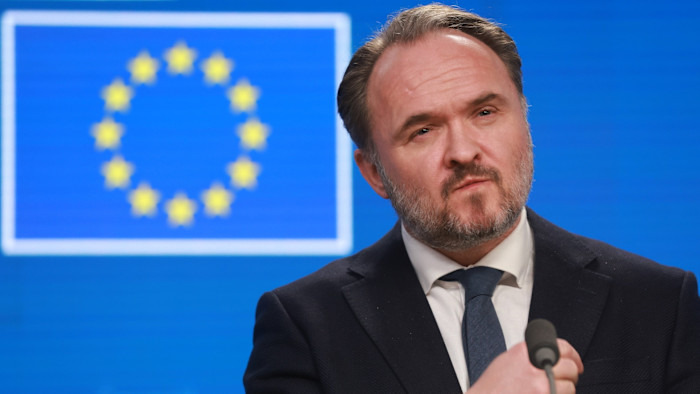
Brussels is sounding the alarm, preparing global energy markets for a protracted period of instability and elevated prices, as the European Union assesses “all possibilities” in response to the escalating Middle East conflict. These possibilities, according to EU energy commissioner Dan Jørgensen, include the politically sensitive measures of fuel rationing and additional releases from emergency oil reserves. The commissioner’s stark warning points to a “long crisis” with energy prices remaining “higher for a very long time,” a sentiment that immediately resonates across commodity trading desks and corporate boardrooms alike.
The geopolitical crucible in the Middle East, marked by the near-closure of the critical Strait of Hormuz – a choke point for roughly a fifth of the world’s total oil consumption – and targeted strikes on Gulf energy infrastructure, has already injected significant chaos into global energy markets. This has pushed benchmark crude prices like Brent and WTI higher, alongside a surge in refined product futures. For market participants, this isn’t merely a supply disruption; it’s a fundamental re-evaluation of geopolitical risk premiums embedded in energy asset valuations. Airlines, in particular, have vocalised acute concerns regarding the availability and cost of jet fuel, a critical input that directly impacts their operational profitability and passenger ticket prices.
Jørgensen’s increasingly grave rhetoric underscores a shift in the EU’s assessment. “The rhetoric that we’re using and the words we’re using are more serious now than they were earlier in the crisis,” he noted, highlighting the bloc’s analytical conclusion that this “will be a prolonged situation.” This implies that energy markets should not anticipate a quick resolution, leading to sustained volatility and potentially pushing investors to recalibrate their exposure to energy-intensive industries and commodities. While the EU maintains it is “not in a security of supply crisis, yet,” the proactive development of plans to tackle “structural, long-lasting effects” signals an acknowledgement that current market conditions could deteriorate rapidly.
The readiness to “prepare for the worst scenarios,” including the imposition of rationing for critical products like jet fuel or diesel, speaks volumes about the potential severity of the energy crunch. Such measures, while designed to ensure supply stability, could introduce significant market distortions, impacting industrial output, transportation logistics, and consumer behaviour across the continent. The commissioner’s “better to be prepared than to be sorry” mantra is a clear signal to businesses and national governments to stress-test their energy resilience strategies.
Discussions around potentially weakening jet fuel regulations to permit more US imports or increasing ethanol blending for automotive fuel reveal the depth of contingency planning. Currently, EU jet fuel standards, with a freezing point of -47C, are stricter than the US standard of -40C. While Jørgensen stated the EU is “not there yet where we have remedied or changed any of our current rules,” he conceded that “the more serious the situation gets, the more of course we will also have to look into legislative tools.” Any such legislative changes could unlock new supply streams, but also potentially create new complexities for refiners, distributors, and ultimately, end-users, affecting product specifications and pricing dynamics.
The possibility of another release of strategic energy reserves, following the largest coordinated release in history last month, remains a potent tool in the EU’s arsenal. While the previous release aimed to tame soaring prices, its long-term impact was somewhat limited by persistent demand and ongoing geopolitical tensions. Jørgensen’s reluctance to share the EU’s “exact analysis” on timing, combined with the assertion that it “needs to be done at the exact right time, and it needs to be proportionate,” suggests a delicate balancing act to maximize its market impact without depleting reserves prematurely in a “long-lasting crisis.” The market will be closely watching for any signals regarding this potential intervention, which could provide temporary relief but fundamentally does not address structural supply issues.
Furthermore, the EU’s steadfast position on not altering legislation to end Russian liquefied natural gas (LNG) imports this year, choosing instead to rely on “free market” supplies from the US and other partners, has significant implications for global LNG markets. This strategy, while maintaining market-based procurement, puts continued pressure on global LNG prices, as Europe competes with Asian buyers for finite supplies. This reliance on the open market, against a backdrop of heightened global demand and potential disruptions, underscores the inherent volatility in LNG trading and the strategic importance of diversified supply chains.
The overarching message from Brussels is one of enduring energy market challenges, requiring not only reactive measures but also a fundamental reassessment of energy security. This prolonged period of high energy prices is set to fuel inflationary pressures across the Eurozone, presenting a renewed headache for the European Central Bank as it navigates monetary policy. Businesses face mounting input costs, consumers grapple with higher utility bills and transportation expenses, and the specter of “stagflation” – high inflation combined with slow economic growth – looms larger.
### Market Impact
The EU’s stark warning heralds a period of sustained market volatility and increased risk premiums across energy commodities. Oil and gas futures are likely to remain elevated, factoring in geopolitical uncertainty and potential supply disruptions. Equities, particularly those in energy-intensive sectors such as transportation (airlines, shipping), chemicals, and manufacturing, face significant margin compression and downward revisions to earnings forecasts. Conversely, energy producers, certain renewables developers, and companies focused on energy efficiency solutions might see increased investment and improved valuations. Bond markets will contend with persistent inflationary pressures, potentially forcing central banks to maintain a hawkish stance for longer, impacting interest rate expectations and sovereign debt yields. Currency markets, particularly the Euro, could experience downward pressure as the bloc grapples with higher energy import costs and the economic implications of a prolonged energy crisis. Investors should brace for increased market sensitivity to geopolitical developments and EU policy announcements, necessitating a robust risk management framework and a strategic pivot towards resilient and less energy-dependent assets.